
Q1. When was Matias H. Aznar Memorial College of Medicine established?
+It was established in the summer of 1946 as Southwestern Colleges, with the Doctor of Medicine Program opening that same school year with 14 students and 6 faculty members.

 Philippines | Est. 1946
Philippines | CHED unique institution identifier number 7071; full government recognition from 1952 | English medium
Expert will call you within 2 hours
People mostly just call it MHAM for short. It is genuinely one of the older medical colleges covered in guides like this one, founded in the summer of 1946, at a moment when the entire Philippines was still working through the rehabilitation that followed the destruction of the Second World War. So, this college's founding is tied to a genuinely specific, difficult national moment, not a peacetime institutional expansion.
The founders, Don Matias Hipolito Aznar II and his wife Doña Anunciacion Barcenilla Aznar, were both pharmacists by profession, and their stated vision was to establish a school of medicine genuinely within reach of ordinary people, not just the wealthy. In the school year 1946 to 1947, the Doctor of Medicine Program opened its doors with just fourteen pioneering students and six faculty members, a genuinely small, specific founding cohort worth knowing given how much the college has grown since.
Here is a fact most guides skip entirely. The college's journey to its current legal structure ran through a specific piece of national legislation. Full government recognition of the Doctor of Medicine Program came from the Department of Education in 1952, but it was the Medical Act of 1965, passed by the Philippine Congress, that required every medical college in the country to convert into a non-profit institution. MHAM completed this conversion and registered with the Securities and Exchange Commission in 1970, taking the name Southwestern University-Matias H. Aznar Memorial College of Medicine, Inc. So, the college's current legal form traces to a specific, dated, nationally mandated reform, not a voluntary rebranding.
The college was originally established as Southwestern Colleges before adopting its current name, and it holds a unique institution identifier, number 7071, from the Commission on Higher Education. It is currently led by the founder's own youngest daughter, continuing a genuinely direct family lineage from the college's original 1946 founders through to its present-day leadership.
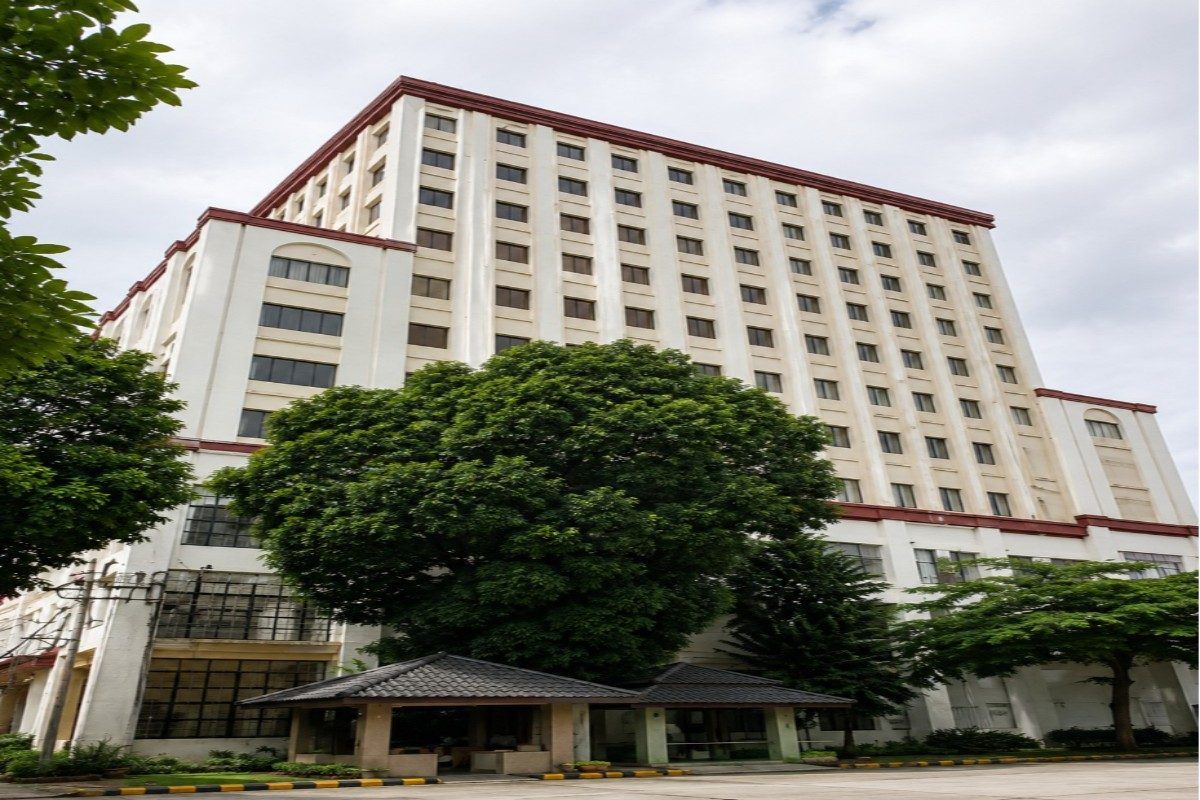
MHAM's permanent site sits on R. Duterte Street, in the Banawa area of Guadalupe, Cebu City, though the college was temporarily located at Redemptorist Plaza in Barangay Camputhaw, Cebu City, before settling at its current address. Cebu City itself is one of the Philippines' major urban centres outside Manila, giving students access to a genuinely large city environment while studying at a smaller, more historic institution.
Faculty at MHAM comprises 44 full-time and 149 part-time doctors, a genuinely large part-time clinical teaching base typical of Philippine medical colleges that draw heavily on practising physicians from the surrounding city. The campus includes more than 25 classrooms, and the college has described plans for a newer, purpose-built memorial building intended to also support the introduction of paramedical courses.
Here is a genuine information gap worth stating plainly. Unlike some other medical colleges covered in guides like this one, no specific named affiliated or teaching hospital for MHAM's clinical training appears consistently in the publicly available sources reviewed. So, applicants seriously considering MHAM should treat confirming the exact hospital partnerships used for clinical rotations as an essential step before applying. The Doctor of Medicine programme at MHAM follows the Philippines' broader national medical education structure, generally involving a pre-medicine bachelor's degree before MD study proper, followed by a period of internship, with instruction running in English throughout.
The college provides separate hostel accommodation for male and female students, though staying in college housing is not compulsory. NEET remains a genuine requirement for Indian applicants here, exactly as it does for MBBS study in most other countries, and Indian graduates would still need to clear the FMGE or NExT exam to practise medicine back in India, alongside the Philippines' own Physician Licensure Examination if choosing to practise there first.
Consultancy sources describe the college as offering food catering to international students specifically, including Indian cuisine, alongside the standard local options, a genuinely practical, welcoming detail worth knowing for applicants concerned about adjusting to life in a new country. Cebu City itself offers considerably more in terms of shopping, entertainment, and general urban amenities than a smaller, more remote Philippine city could provide, giving MHAM's own students a genuinely different day-to-day experience from studying at a college located in a quieter, more rural part of the country.
Given how much of MHAM's own specific institutional detail remains genuinely under-documented, particularly around its exact tuition figures and named teaching hospital, prospective applicants are strongly encouraged to treat this profile as a genuine starting point for further research, not a complete picture on its own. Reaching out directly to the college's own admissions office, requesting a full, written breakdown of fees, and confirming the exact clinical training arrangements in writing, are all genuinely sensible steps before making a final decision about MHAM specifically.
Fee figures here represent a genuine, honest gap worth being upfront about rather than glossing over. What follows is the general Philippine private-school reference range, clearly labelled as not MHAM-specific.
Cost Item | Amount | Notes |
Tuition Fee (MHAM-specific) | Not consistently published | Multiple sources describe it as "low" or "affordable" without a specific confirmed figure |
Tuition Fee (general Philippine private MD reference) | PHP 150,000-300,000/year | A general range for private Philippine medical schools broadly; not confirmed as MHAM's own rate |
Total 4-Year Reference (MD proper only) | PHP 600,000-1,200,000 (approx.) | Indicative only, based on the general reference range above |
Hostel Fees | Described as "low" | Separate boys' and girls' hostels available; specific figures not published |
Additional Fees | Laboratory fees, uniforms, instruments, books | Specific amounts not published; request an itemised breakdown directly |
Total Cost | Genuinely unclear from available sources | Direct confirmation with MHAM is essential before budgeting |
Note: this is one of the less publicly documented fee structures covered in guides like this one. Request a full, itemised, written fee schedule directly from MHAM before making any financial commitment.
Most lists mention MHAM only briefly among older Philippine medical colleges. However, they do not explain its genuinely documented post-war founding mission, or the real gaps that still need confirming. The reason is simple. It is about a real founding story, and honest, unresolved questions.
MHAM is not like most other medical colleges when it comes to its founding mission. In fact, its own founders, both practising pharmacists, built the college specifically during the Philippines' post-World War II rehabilitation period. Furthermore, they had an explicitly stated mission to make medical education reachable for ordinary people, not just the elite. As a result, this college's founding mission is genuinely documented and specific, not a vague historical claim.
The family leadership continuity also matters more than most guides let on. For example, most decades-old institutions do not trace leadership continuity at all. MHAM is currently led by the youngest daughter of its original 1946 founders, a genuine, documented continuity spanning nearly 80 years. Moreover, this college's institutional identity remains directly connected to the family that built it, not passed through a series of disconnected administrations.
One thing most other blogs miss, or gloss over, is how much genuinely is not published here. In addition to the missing tuition figure, no specific named affiliated teaching hospital could be confirmed either. Since these gaps are real and significant, MHAM should be approached with considerably more direct due diligence than some other institutions in comparable guides.
No hidden charges, no donation. The full picture of costs at MBBS in Matias H Aznar Memorial College of Medicine.
Tuition Fee
3.80 lakh INR ($9,500 USD),
PHP 150,000-300,000/year, indicative only
Hostel Fee
₹1.20 lakh (approx. ₱80,000 to ₱85,000) per year,
₹10,000 per month
Food & Meals
PHP 2,500 and PHP 9,000 per month
per month
Insurance
Approximately USD 100 per year (around ₹9,000 or PHP 5,800)
per year
Donation
No donation
No hideen fees
Total Estimated Cost
PHP 430,000 to PHP 550,000 ($7,500 to $9,500 USD)
6- year
25–35%
Average FMGE first-attempt pass rates for students from many overseas medical universities. Students from structured programs consistently score higher.
Students returning to India need to clear the FMGE/NExT exam. MBBS in Matias H Aznar Memorial College of Medicine integrates exam-oriented coaching into the regular curriculum so students are prepared from day one.
A structured program that takes you from foundational sciences to clinical mastery.
In addition, this stage builds the base knowledge needed for the Doctor of Medicine programme itself
First, a four-year bachelor's degree provides the scientific foundation before MD study begins
Furthermore, this stage draws on a genuinely large part-time clinical faculty base of 149 practising doctors
Next, Anatomy, Physiology, and Biochemistry form the scientific foundation for everything that follows
Moreover, this stage runs through Cebu City's wider clinical and hospital network
Then, Medicine, Surgery, and allied clinical subjects are covered; confirm named teaching hospital arrangements directly
Also, interns rotate through clinical departments before receiving the final degree and pursuing licensure
Finally, a compulsory internship year follows completion of the MD proper, matching the Philippines' standard structure
Furnished hostel rooms with Wi-Fi, laundry, 24/7 security, and Indian mess on or near campus.
Indian restaurants and mess facilities serving vegetarian and non-vegetarian home-style food daily.
Strong Indian community with cultural events, festival celebrations, and peer support groups.
Students get hands-on clinical training in government and private hospitals affiliated with the university.
Practical information for students planning to study at MBBS in Matias H Aznar Memorial College of Medicine.
Prepare for all seasons. Thermal wear for winters, light clothing for summers. University provides heating in hostels.
Student visa processed with university invitation letter. Direct and connecting flights from major Indian cities.
Health insurance included in fees. Medical facility on campus plus city hospitals easily accessible.
Local SIM cards available. WhatsApp and video calls keep you connected with family back home.
Average monthly expenses of $150–$250 covering food, transport, and personal needs.
University library, online databases, and study groups. Seniors mentor juniors through academic challenges.
Our team guides you through every step — from application to arriving on campus.
The first step is to have a free phone counselling session. This is not a sales promotion or sales pitch. Here, we analyse all the universities mentioned side by side. We go through FMGE rates, total fees, city life, and whether the USMLE or NExT path better suits your goals. Most students walk out of this call with a clear first choice and a backup.
Once you pick a university, we will hand you a Philippines-specific document checklist. It is not a generic list. Every item on it is there for a reason, either for the university application, the 9(f) visa conversion, or the ACR I-Card registration. We check everything before a single paper goes anywhere.
Your application goes directly to the university through our partner channel. Most students get an acceptance letter within 10 to 21 days. However, December intake applications move faster than June ones, so timing matters. We follow up on all applications and will be in touch if there is any delay.
Once you receive your offer letter, we will have an in-depth discussion with you on the fees charged. The first instalment of fees will be deposited without any ambiguity. What you pay, when you pay, and what it covers, all of it is clear before any money moves.
Indian students do not need a pre-departure visa for the Philippines. You enter visa-free for 30 days. However, the 9(f) Student Visa conversion must start within the first week of arrival; it is time-sensitive. We also advise on the best flight route, whether Cebu or Manila, depending on your university.
About a week before you fly, we do a full pre-departure briefing. We cover accommodation options, campus location, Indian food sources near your university, how to transfer money from India, which SIM card to buy, and what the first week on campus actually looks like—students who attend this briefing land in the Philippines significantly less stressed than those who skip it.
On arrival day, our local team in the Philippines meets you at the airport, whether in Cebu or Manila. You are not landing in a new country alone. Someone who knows the ground is there from the first minute.
Within the first week, the 9(f) visa conversion process starts. Our team submits your documents to the Bureau of Immigration and closely tracks your application. The ACR I-Card, your official alien registration card, is processed at the same time. This step is strictly managed because delays here cause real problems later.
By the end of Week 2, your university enrollment is complete, your hostel room is confirmed, and your BS pre-medical orientation is done. You know your timetable, your faculty, and where everything is. Furthermore, our team has already flagged your NMAT preparation schedule, so there will be no surprises at the bridge stage.
After enrollment, our on-the-ground team in the Philippines stays in contact throughout all six years. If there is a university issue, a hostel problem, a visa renewal, or a health concern, there is a local contact to call. Moreover, from Year 3 onward, our FMGE and USMLE coaching track begins, because academic support does not stop at the airport.
Admission Helpline — Contact our counsellors for step-by-step assistance.
“The faculty here is incredibly supportive. The clinical training during hospital rotations has given me real confidence in patient care.”
“Affordable fees without compromising on quality. The campus facilities and hostel life made my transition abroad very smooth.”
“English medium instruction and WHO-recognized curriculum were the deciding factors for me. No regrets so far — excellent experience overall.”
“The university helped with everything from visa to accommodation. Hospital exposure from year three has been invaluable for my FMGE prep.”
“Just cleared my licensing exam on the first attempt. The structured coaching and mock exams during final year were a game-changer.”
“Safe campus, good food options, and a strong Indian student community. The teaching methodology is very practical and hands-on.”
It was established in the summer of 1946 as Southwestern Colleges, with the Doctor of Medicine Program opening that same school year with 14 students and 6 faculty members.
MHAM's own specific tuition figures are not consistently published; general Philippine private medical school rates run roughly PHP 150,000 to 300,000 a year, but this is not confirmed as MHAM's own rate.
Yes, English is the standard medium of instruction across Philippine medical education, including at MHAM.
Yes, a valid, qualifying NEET score is required for Indian applicants under India's own national rules.
No specific named affiliated teaching hospital was found in the sources reviewed; confirm this directly with MHAM before applying.
Don Matias Hipolito Aznar II and his wife Doña Anunciacion Barcenilla Aznar, both pharmacists, founded it in 1946 to make medical education accessible to ordinary people.
The founder's own youngest daughter currently leads MHAM, continuing a direct family lineage from the original founders.
On R. Duterte Street, in the Banawa area of Guadalupe, Cebu City, Philippines.
Yes, MHAM provides separate hostels for male and female students, though staying there is not compulsory.
Following the Medical Act of 1965, MHAM converted to non-profit status and registered with the SEC in 1970.
Our expert counsellors will guide you through the complete admission process — from documents to airport pickup.