
Q1. When was St. Luke's College of Medicine established?
+It was established in 1994, though its base hospital, St. Luke's Medical Center, was founded considerably earlier, in 1903.
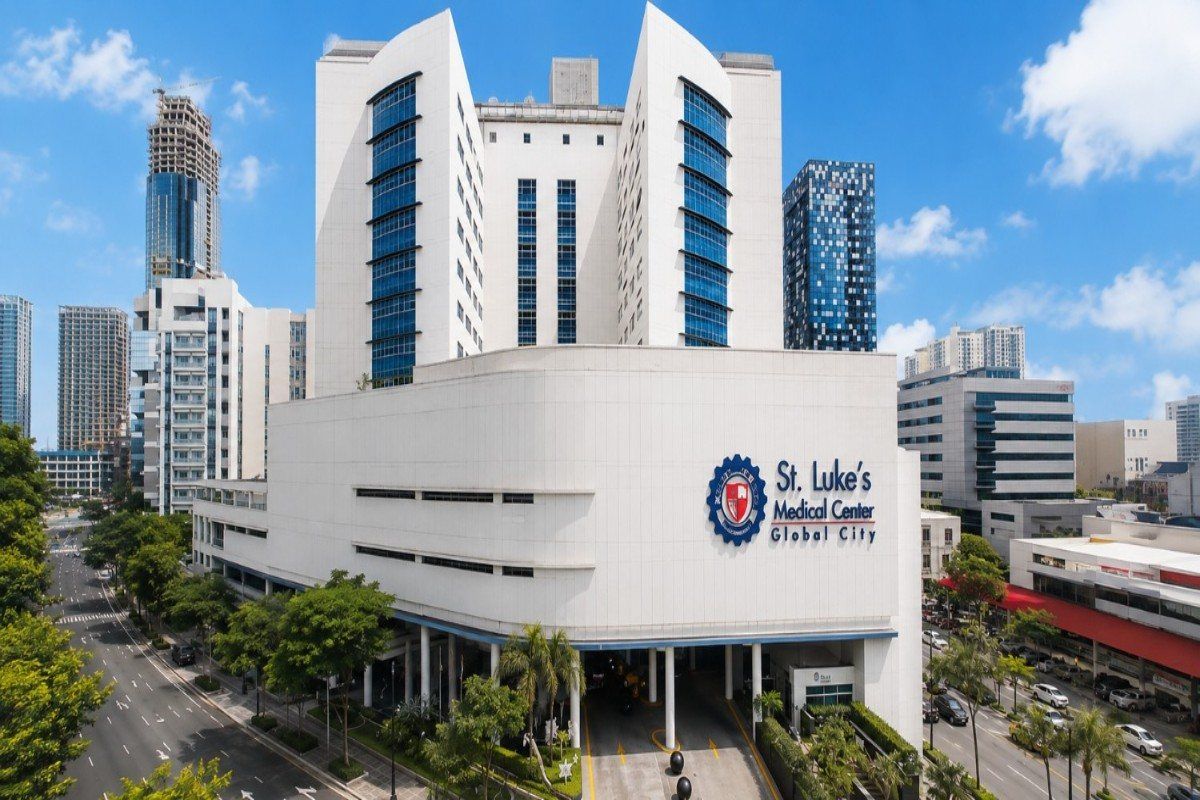
 Philippines | Est. 1994
Philippines | Philippines' Commission on Higher Education (CHED) | English medium
Expert will call you within 2 hours
People mostly just call it SLMCCM-WHQM, or St. Luke's College of Medicine, for short. It was established in 1994, situated directly behind St. Luke's Medical Center, its own base teaching hospital, in Quezon City, Metro Manila. Here is a fact most guides skip entirely, and it is genuinely one of the most remarkable individual stories covered in guides like this one. The college's own name specifically memorialises William Howard Quasha, a real, documented historical figure whose own life reaches well beyond medicine or education alone.
William H. Quasha was born on 19 May 1912, in New York, to Jewish Russian immigrants. He served as a lieutenant colonel in the US Army, working on General Douglas MacArthur's own staff during the Second World War, where he specifically served as an enemy property custodian and war crimes prosecutor, helping protect American holdings in the Philippines. Beyond his military and legal career, Quasha was also an industrial psychologist and mechanical engineer, co-authoring the Revised Minnesota Paper Form Board Test, a genuinely real, still-used psychological assessment tool for mechanical aptitude, a remarkable achievement entirely separate from his own later medical philanthropy.
Quasha eventually became President and Chairman of St. Luke's Medical Center itself, and remained deeply involved in Filipino civic life, serving with the Boy Scouts of the Philippines' Manila Council from 1949, later receiving the Silver Buffalo Award from the Boy Scouts of America in 1974, and helping facilitate Fulbright Scholarships under Philippine President Fidel Ramos. Upon his death on 12 May 1996, Quasha donated his entire estate to St. Luke's, a real, specific, documented act of philanthropy directly explaining why this college carries his name as a memorial.
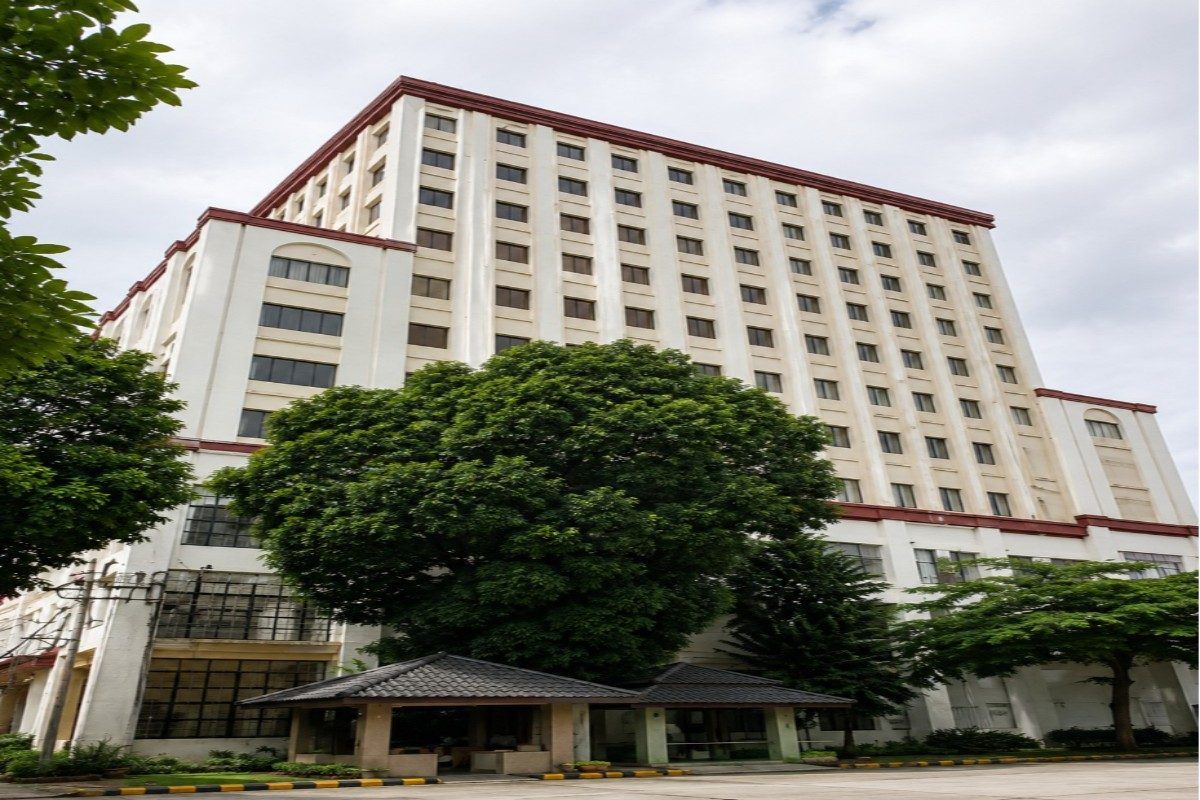
The College of Medicine's own dedicated 14-storey building was completed in June 1997, just a year after Quasha's own death, featuring five air-conditioned lecture halls alongside smaller classrooms, discussion rooms, and five basic science laboratories equipped for dissection and other practical work. The college opened its own formal scholarship programme in 2005, a real, genuinely generous offering described by at least one source as unmatched by any other Philippine medical school, providing free tuition, free miscellaneous fees, and free electronic books to students who maintain a General Weighted Average of 85 percent or higher, with no individual grade falling below 80 percent.
Here is a genuinely notable, specific statistic worth knowing directly. SLMCCM-WHQM reports an average passing rate of 99.13 percent in the Philippine physician licensure exams since August 2015, a genuinely impressive, specific figure worth knowing, though it should still be treated as a reported statistic rather than independently verified. St. Luke's Medical Center itself, the college's own base hospital, was established considerably earlier, in 1903, giving students access to one of the most prestigious and well-known hospitals anywhere in the Philippines, predating the medical school itself by more than nine decades.
The college's own curriculum integrates three years of discipline-based subjects with two years of clinical internship, completed directly at St. Luke's Medical Center. A genuinely useful, specific detail is that fifth-year students serve as interns at the Medical Center automatically, something students from other Philippine medical schools typically need to separately apply for. SLMCCM-WHQM also offers international clinical observership opportunities for medical students from other countries, alongside a Master of Science in Molecular Medicine programme, run jointly with St. Luke's own Research and Biotechnology Division.
As with other Philippine medical schools covered in comparable guides, admission requires applicants to hold a prior baccalaureate degree, consistent with the country's own standard graduate-entry medical education structure. The college is accredited by the Philippines' own Commission on Higher Education, CHED, and is organised around specific departments led by esteemed consultants across different medical fields, guided by the institution's own stated core values of stewardship, professionalism, integrity, commitment, and excellence.
Quezon City itself is genuinely the most populous city within Metro Manila, giving students at SLMCCM-WHQM real, practical access to the wider Philippine capital region's own extensive healthcare infrastructure, business districts, and cultural amenities. This urban setting means students train within a genuinely large, well-resourced metropolitan healthcare system, quite different from studying at a medical school in one of the Philippines' smaller, more provincial cities.
The college's own stated vision, to become a globally recognised institution by 2030, reflects a real, ongoing institutional ambition beyond its own already well-established domestic reputation. Combined with its genuinely remarkable namesake's own documented act of philanthropy, its specifically generous scholarship structure, and its reported strong licensure exam outcomes, SLMCCM-WHQM presents a distinctive profile among Philippine medical schools worth understanding fully before applying, particularly for students specifically drawn to its close, structural integration with one of the country's most prestigious hospitals.
Fee figures here are reported with genuine specificity, worth setting out clearly.
Cost Item | Amount | Notes |
Tuition Fee (annual, specific figure) | Approx. PHP 200,000-250,000/year | Approx. USD 3,500-4,500/year, per a detailed medical education reference source |
Full Scholarship (for qualifying students) | Free tuition, free miscellaneous fees, free e-books | Available to students maintaining a GWA of 85%+, with no individual grade below 80% |
General Bangladesh/Philippine Private-School Reference (for context only) | USD 25,000-40,000 total, all-inclusive | A general reference range for private medical schools broadly; specific SLMCCM total not independently confirmed |
Additional Charges | Miscellaneous and laboratory fees | May apply on top of base tuition; confirm directly |
Application Documents | Standard transcripts, NMAT results, and identification | Confirm the college's own current, specific document requirements directly |
Total Cost | Approx. USD 3,500-4,500/year, tuition only, per the more detailed source | Confirm the current, exact figure and total programme cost directly with SLMCCM-WHQM |
Note: no capitation fee is confirmed at any stage. Given the college's own genuinely generous scholarship programme, ask directly about eligibility before assuming the full tuition rate applies to your own situation.
Most lists mention this college only briefly, treating its own name as a simple institutional label. However, they do not explain the genuinely remarkable, real individual story behind that name, or how specifically generous its own scholarship programme actually is. The reason is simple. It is about a real, extraordinary founder's memorial most guides skip entirely, and a genuinely concrete, documented scholarship offer.
SLMCCM-WHQM is not like most other medical schools when it comes to the story behind its own name. In fact, William H. Quasha was a genuinely remarkable individual, a US Army officer, war crimes prosecutor, co-author of a still-used psychological assessment tool, and civic leader, who ultimately donated his entire estate to St. Luke's upon his death in 1996. Furthermore, this is a real, documented act of personal philanthropy directly explaining the college's own name, not an arbitrary or purely commercial naming choice.
The college's own scholarship structure also matters more than most guides let on. For example, most guides describing medical school scholarships mention them only in vague, general terms. SLMCCM-WHQM's own programme specifically covers free tuition, free miscellaneous fees, and free electronic books for students maintaining a GWA of 85 percent or higher. Moreover, this is described by at least one source as more generous than any other Philippine medical school offers, a genuinely specific, concrete claim worth knowing directly.
One thing most other blogs miss is the college's own automatic internship arrangement. In addition to standard clinical training, SLMCCM-WHQM's own fifth-year students serve as interns at St. Luke's Medical Center automatically, without needing to separately apply, unlike students from other Philippine medical schools who typically must apply for this same opportunity. Since this represents a real, structural advantage tied directly to studying at this specific college, applicants get a genuinely concrete benefit worth weighing.
No hidden charges, no donation. The full picture of costs at MBBS in St. Luke's Medical Center College of Medicine William.
Tuition Fee
Approx. PHP 200,000-250,000/year (approx. USD 3,500-4,500/year)
Approx. USD 3,500-4,500/year
Hostel Fee
not publicly
not publicly
Food & Meals
does not publish a fixed
/month
Insurance
not publicly
/year
Donation
No Donation
No Hidden fee
Total Estimated Cost
Approx. USD 3,500-4,500/year, tuition only; confirm total programme cost directly
6 year
25–35%
Average FMGE first-attempt pass rates for students from many overseas medical universities. Students from structured programs consistently score higher.
Students returning to India need to clear the FMGE/NExT exam. MBBS in St. Luke's Medical Center College of Medicine William integrates exam-oriented coaching into the regular curriculum so students are prepared from day one.
A structured program that takes you from foundational sciences to clinical mastery.
● Furthermore, this stage builds the scientific foundation for the clinical years that follow
● Next, the first three years cover discipline-based basic science subjects, using the college's own dedicated laboratories and lecture halls
● Moreover, fifth-year students serve as interns automatically, without needing to separately apply, unlike students from other schools
● Then, the final two years comprise clinical internship, completed directly at St. Luke's Medical Center
● Also, Indian graduates would still need to clear the FMGE or NExT exam to practise medicine back in India
● Finally, graduates complete the standard Philippine MD structure and pursue the national physician licensure exam
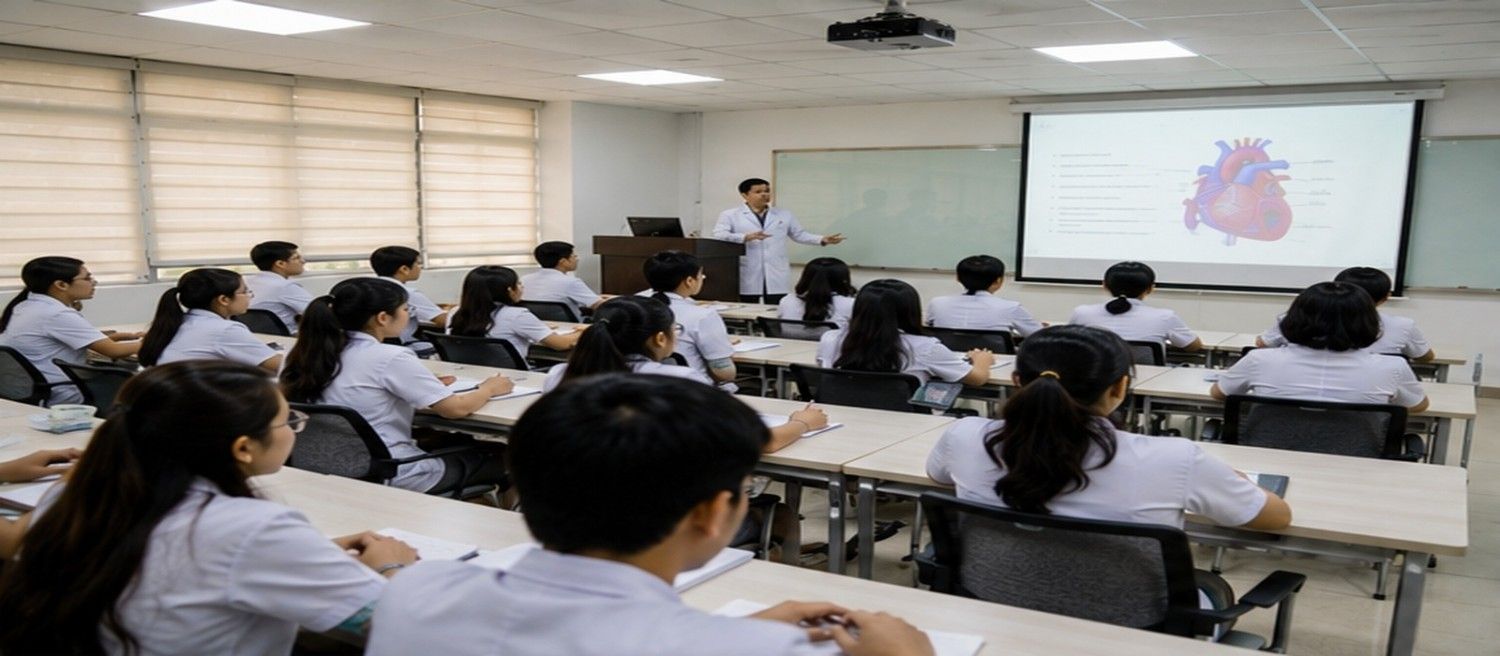
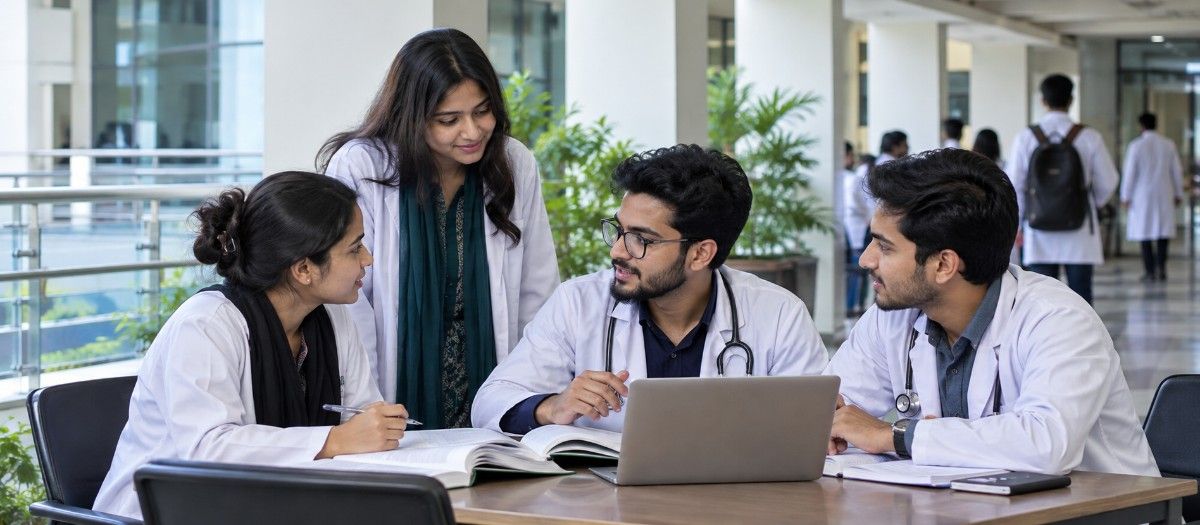
Furnished hostel rooms with Wi-Fi, laundry, 24/7 security, and Indian mess on or near campus.
Indian restaurants and mess facilities serving vegetarian and non-vegetarian home-style food daily.
Strong Indian community with cultural events, festival celebrations, and peer support groups.
Students get hands-on clinical training in government and private hospitals affiliated with the university.
Practical information for students planning to study at MBBS in St. Luke's Medical Center College of Medicine William.
Prepare for all seasons. Thermal wear for winters, light clothing for summers. University provides heating in hostels.
Student visa processed with university invitation letter. Direct and connecting flights from major Indian cities.
Health insurance included in fees. Medical facility on campus plus city hospitals easily accessible.
Local SIM cards available. WhatsApp and video calls keep you connected with family back home.
Average monthly expenses of $150–$250 covering food, transport, and personal needs.
University library, online databases, and study groups. Seniors mentor juniors through academic challenges.
Our team guides you through every step — from application to arriving on campus.
The first step is to have a free phone counselling session. This is not a sales promotion or sales pitch. Here, we analyse all the universities mentioned side by side. We go through FMGE rates, total fees, city life, and whether the USMLE or NExT path better suits your goals. Most students walk out of this call with a clear first choice and a backup.
Once you pick a university, we will hand you a Philippines-specific document checklist. It is not a generic list. Every item on it is there for a reason, either for the university application, the 9(f) visa conversion, or the ACR I-Card registration. We check everything before a single paper goes anywhere.
Your application goes directly to the university through our partner channel. Most students get an acceptance letter within 10 to 21 days. However, December intake applications move faster than June ones, so timing matters. We follow up on all applications and will be in touch if there is any delay.
Once you receive your offer letter, we will have an in-depth discussion with you on the fees charged. The first instalment of fees will be deposited without any ambiguity. What you pay, when you pay, and what it covers, all of it is clear before any money moves.
Indian students do not need a pre-departure visa for the Philippines. You enter visa-free for 30 days. However, the 9(f) Student Visa conversion must start within the first week of arrival; it is time-sensitive. We also advise on the best flight route, whether Cebu or Manila, depending on your university.
About a week before you fly, we do a full pre-departure briefing. We cover accommodation options, campus location, Indian food sources near your university, how to transfer money from India, which SIM card to buy, and what the first week on campus actually looks like—students who attend this briefing land in the Philippines significantly less stressed than those who skip it.
On arrival day, our local team in the Philippines meets you at the airport, whether in Cebu or Manila. You are not landing in a new country alone. Someone who knows the ground is there from the first minute.
Within the first week, the 9(f) visa conversion process starts. Our team submits your documents to the Bureau of Immigration and closely tracks your application. The ACR I-Card, your official alien registration card, is processed at the same time. This step is strictly managed because delays here cause real problems later.
By the end of Week 2, your university enrollment is complete, your hostel room is confirmed, and your BS pre-medical orientation is done. You know your timetable, your faculty, and where everything is. Furthermore, our team has already flagged your NMAT preparation schedule, so there will be no surprises at the bridge stage.
After enrollment, our on-the-ground team in the Philippines stays in contact throughout all six years. If there is a university issue, a hostel problem, a visa renewal, or a health concern, there is a local contact to call. Moreover, from Year 3 onward, our FMGE and USMLE coaching track begins, because academic support does not stop at the airport.
Admission Helpline — Contact our counsellors for step-by-step assistance.
“The faculty here is incredibly supportive. The clinical training during hospital rotations has given me real confidence in patient care.”
“Affordable fees without compromising on quality. The campus facilities and hostel life made my transition abroad very smooth.”
“English medium instruction and WHO-recognized curriculum were the deciding factors for me. No regrets so far — excellent experience overall.”
“The university helped with everything from visa to accommodation. Hospital exposure from year three has been invaluable for my FMGE prep.”
“Just cleared my licensing exam on the first attempt. The structured coaching and mock exams during final year were a game-changer.”
“Safe campus, good food options, and a strong Indian student community. The teaching methodology is very practical and hands-on.”
It was established in 1994, though its base hospital, St. Luke's Medical Center, was founded considerably earlier, in 1903.
A US Army officer, war crimes prosecutor, and industrial psychologist who later became President and Chairman of St. Luke's Medical Center; he donated his entire estate to St. Luke's upon his death in 1996, directly leading to the college being named in his memory.
Yes, applicants must hold a completed baccalaureate degree, consistent with the Philippines' own standard graduate-entry medical education structure.
Yes, English is the medium of instruction.
The Philippines uses its own National Medical Admission Test (NMAT) rather than NEET for admission; Indian applicants would still need to clear the FMGE or NExT exam after graduation to practise in India.
Reported at approximately PHP 200,000 to 250,000 a year, roughly USD 3,500 to 4,500, per a detailed medical education reference source; confirm the current, exact figure directly.
Yes, a genuinely generous full scholarship, covering free tuition, miscellaneous fees, and electronic books, is available to students maintaining a General Weighted Average of 85% or higher, with no grade below 80%.
St. Luke's Medical Center, the college's own base hospital, with fifth-year students serving as interns there automatically.
99.13%, on average, in Philippine physician licensure exams since August 2015, per the college's own reported figures.
In Quezon City, Metro Manila, directly behind St. Luke's Medical Center, its own base hospital.
Our expert counsellors will guide you through the complete admission process — from documents to airport pickup.