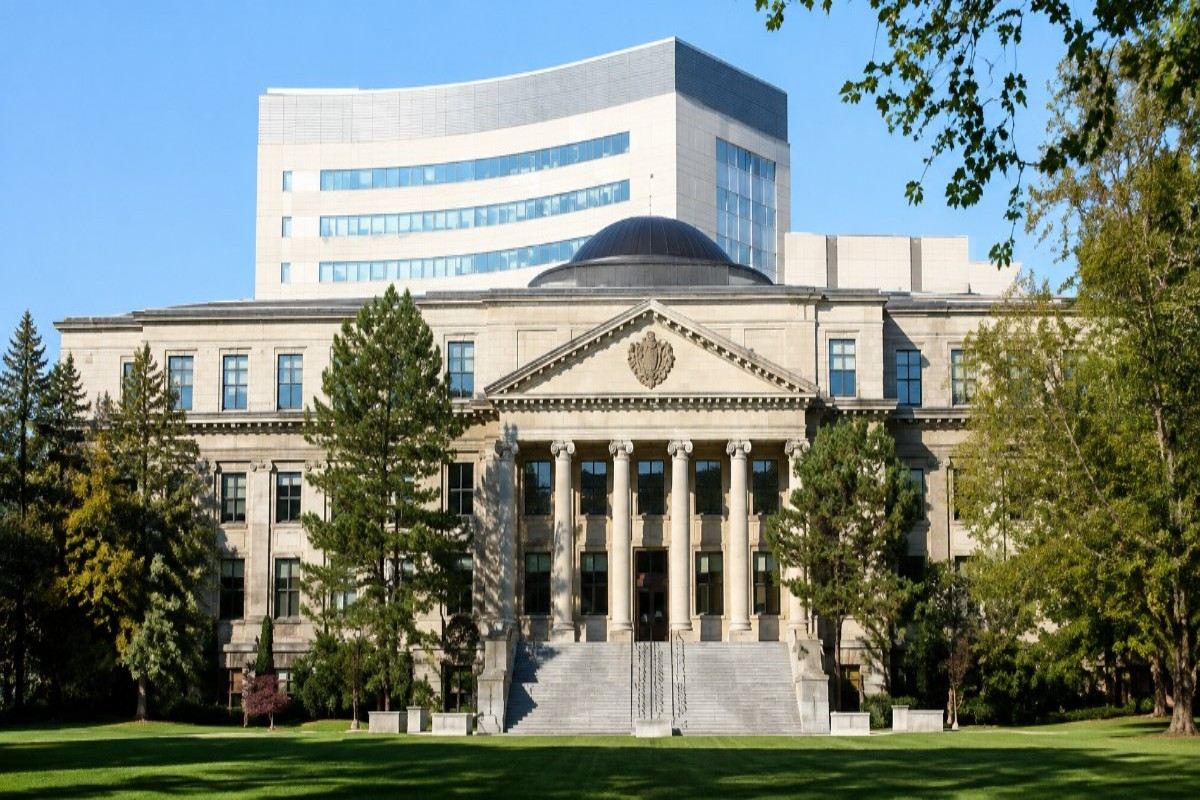
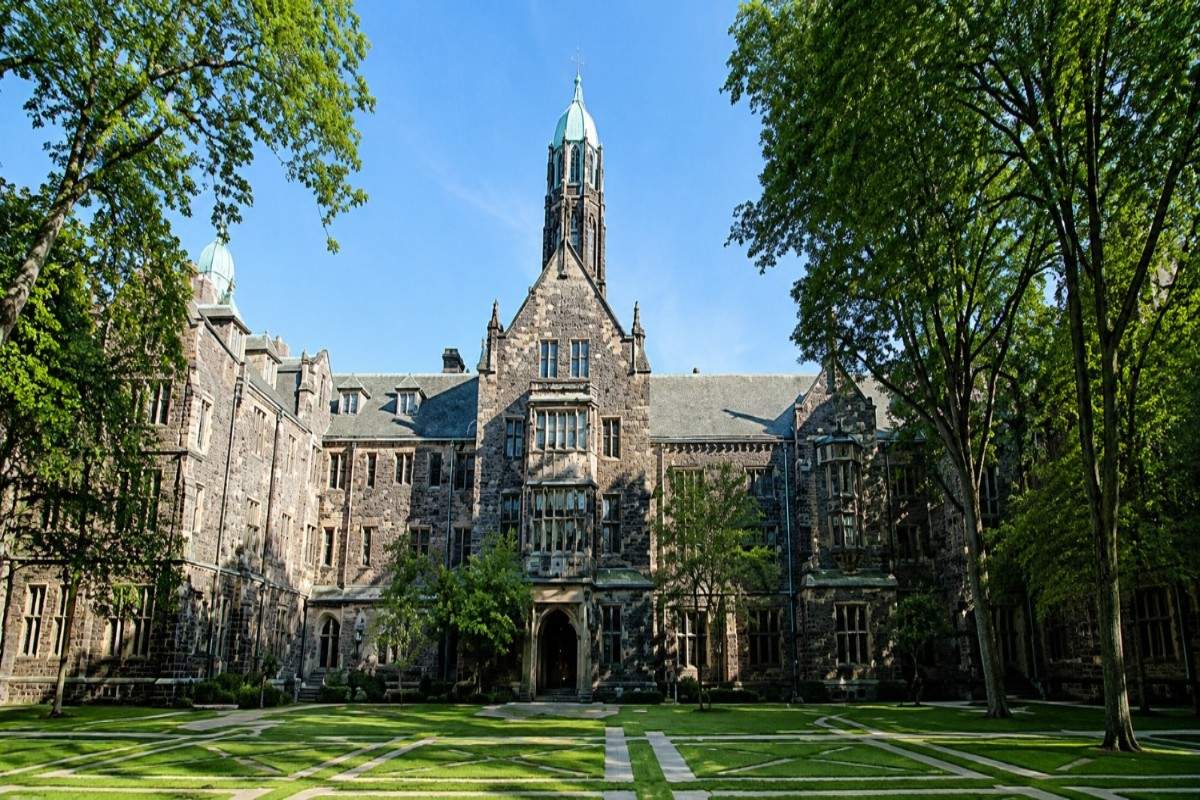
People mostly just call it uOttawa Medicine for short. It was established in 1945, and it holds a genuinely specific historical distinction. It was the first medical school anywhere in North America to offer its MD program in both English and French. So, this is not a bilingual option added on later as an afterthought. Bilingualism has been built into this school's own foundation from the very start, shaping everything from its lecture halls to its clinical placements, right through to the present day.
As Canada's largest bilingual medical school, uOttawa's current MD program admits roughly 160 students a year, split into 44 students in the French stream and 116 in the English stream. Courses are offered in both languages, so students can attend classes and sit their examinations in whichever language they have chosen from the start. This is a genuinely large-scale commitment to bilingual education, not a small side program tacked onto a larger English-only school. Bilingual students, where relevant, are often given priority in clinical rotations too, showing that the university actually uses its bilingual structure in real, practical training, rather than treating it as a marketing point alone.
Here is a genuinely important point worth being upfront about, since sources on this specific question actually conflict with each other. Several detailed sources state plainly that only Canadian citizens and permanent residents of Canada are eligible to apply to uOttawa's MD program. This restriction is explicitly confirmed for the combined MD/PhD and MD/Masters pathways as well. However, at least one other detailed source describes international applicants as being considered, though only for a very small number of seats, reviewed on a genuine case-by-case basis. Given this real conflict between sources, any international applicant, including from India, should confirm uOttawa's current international eligibility status directly with the Faculty of Medicine's own admissions office before assuming either position is correct. This is genuinely one of the more complicated eligibility pictures among Canadian medical schools, and it deserves direct confirmation rather than guesswork.
The Faculty was also the first medical school in Canada to build a full e-curriculum, weaving technology into every level of learning. This was a genuinely early move for its time, well before digital learning tools became standard practice at most other Canadian medical schools. In addition, uOttawa's own teaching methodology was deliberately built to blend the best of Canadian medical training with more flexible, technology-supported approaches, giving graduates skills that go beyond simply memorising textbook material.
Clinical training runs through a genuinely varied set of named institutions, each carrying its own real significance. These include The Ottawa Hospital itself, the University of Ottawa Heart Institute, described as Canada's largest and foremost cardiovascular health centre, Hôpital Montfort, Ontario's own French-language academic hospital, and Bruyère Continuing Care, which focuses specifically on ageing, rehabilitation, and palliative care. So, the bilingual structure of the program carries through directly into which hospital a student trains at, not just which language their lectures run in. French-stream students, for example, gain a genuinely essential training relationship with Hôpital Montfort specifically, since it operates as Ontario's dedicated French-language academic hospital.
The program itself runs four years, comprising 147 weeks of instruction in total, with 72 of those weeks devoted specifically to clinical work. It splits into two main phases. Pre-clerkship, covering Years 1 and 2, focuses on biomedical sciences, foundational knowledge, and skill development, structured around six multidisciplinary units. Clerkship, covering Years 3 and 4, comprises core rotations in internal medicine, surgery, paediatrics, obstetrics and gynaecology, psychiatry, family medicine, and acute care, alongside mandatory selective rotations and a required one-month placement in a rural setting. This mandatory rural rotation is a genuinely distinctive feature, ensuring every graduate carries direct, structured rural clinical experience, not just optional exposure squeezed in if time allows.
Since this is graduate-entry only, applicants need a completed undergraduate degree before they can apply, along with a competitive MCAT score submitted through the standard Canadian medical school application process. There is no direct-entry route straight from high school here, which is a real difference from many MBBS-style programs described elsewhere. Applicants must also choose their preferred stream, English or French, at the point of application itself, and this choice shapes the whole of their training experience from that point forward.
Ottawa itself is genuinely well suited to a bilingual medical school, since it sits directly on the border between Ontario and Quebec, Canada's two largest English-speaking and French-speaking provinces. As Canada's own capital city, Ottawa is also home to the country's federal government, several major national research institutions, and a genuinely large public service workforce, giving medical students a real, practical setting in which both official languages are used every day, not just inside the university's own classrooms. This everyday bilingual environment makes it considerably easier for students to build genuine fluency in their second language over the course of their degree, rather than relying purely on classroom instruction alone.
uOttawa's Faculty of Medicine also places real emphasis on research alongside its teaching mission. The university maintains strong ties to Ottawa's own network of federal research bodies and national health institutions, giving MD students genuine opportunities to take part in research projects during their degree, should they choose to. This research strength, combined with the university's own bilingual teaching tradition and its close relationship with Ottawa's cluster of major hospitals, gives graduates a genuinely well-rounded foundation, whether they go on to practise clinically, pursue further specialisation, or move into academic medicine and research themselves.
Cost Breakdown
Fee figures here follow the standard Ontario medical school pattern for the domestic Canadian students who are confirmed to be eligible. Since international eligibility genuinely conflicts across sources, this table focuses on the confirmed domestic Canadian rate, with international costs treated separately below given the real uncertainty involved.
Cost Item | Per Year (CAD) | Notes |
Tuition Fee (Domestic) | CAD 26,899-26,900 | Approx. CAD 26,900 per year |
Incidental Fees | CAD 2,000 | Covers transit pass, health/dental insurance, athletic fees |
Application Fee (OMSAS) | CAD 220 base + university-specific fee | Paid once, through Ontario's central application system |
Books and Equipment (Year 1) | CAD 1,500-2,500 | Largely a Year 1 cost; drops considerably in later years |
Total 4-Year Estimate (Domestic) | — | Approx. CAD 117,100-118,100 over 4 years |
International Tuition | Not officially confirmed | Reported as considerably higher, if seats are offered at all |
Note: figures are in Canadian dollars. No capitation fee and no donation is asked at any stage for domestic Canadian students. International cost figures could not be confirmed given the genuine, unresolved eligibility conflict across sources.
Why uOttawa Deserves a Harder Look Than You've Given It
Most lists mention uOttawa as just another Ontario medical school. However, they do not explain what actually makes it different. The reason is simple. It is genuinely built around two languages, not one, and that changes almost everything about how the program runs.
uOttawa is not like most other Canadian medical schools. In fact, it was the very first in the whole of North America to teach medicine in both English and French. Furthermore, this bilingual structure carries all the way through to clinical training, not just lectures. As a result, French-stream students train specifically at Hôpital Montfort, Ontario's own French-language academic hospital. Graduates prove this bilingual commitment is real by training and working comfortably in both official languages, not just one.
The international eligibility question also matters more than most guides let on. For example, most sources say this program only takes Canadian citizens and permanent residents. However, at least one other source describes a small number of case-by-case international seats instead. Moreover, this is genuinely unresolved, not settled fact. So, any applicant outside Canada should confirm this directly with uOttawa before assuming either answer applies to their own situation.
One thing most other blogs miss is the mandatory rural placement. In addition to the standard clinical rotations, every uOttawa graduate completes a required one-month rotation in a rural setting. Since this is built directly into the core curriculum, not offered as an optional extra, every graduate leaves with real, structured rural clinical experience already in hand.