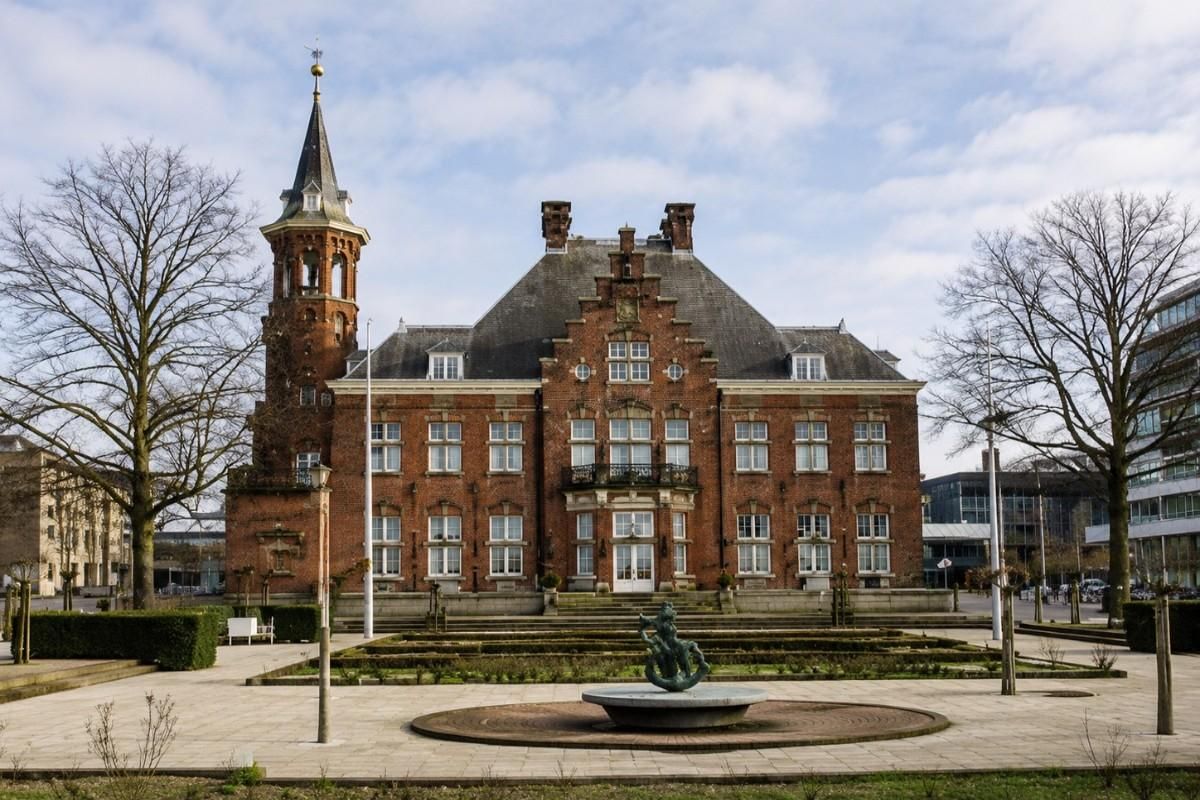
Radboud University is a research university in the eastern Dutch city of Nijmegen. The medical school is called the Faculty of Medical Sciences, and in Dutch it is known as Faculteit der Medische Wetenschappen. The faculty works hand in hand with Radboud university medical center, better known as Radboudumc. Together they form one of the largest health care and research campuses in the country. Students who join the Medicine programme at Radboud spend six years moving between lecture halls, small group rooms, skills labs, and the wards of Radboudumc. The degree is a Bachelor of Medicine followed by a Master of Medicine, and the full course leads to the Dutch title of arts, which means physician.
The Faculty of Medical Sciences was set up in 1951. The wider university dates back to 1923 and was founded as a Catholic university, which gave it a strong focus on patient values, ethics, and care for the whole person. That history still shapes how medicine is taught in Nijmegen today. Students hear early on that a good doctor must be a skilled clinician, a curious scientist, and a caring human being. This idea guides the way courses are built, the way tutors teach in small groups, and the way exams test not only facts but also thinking and communication.
The Dutch city of Nijmegen is located on the Waal river, not far from the German border. Even though it is one of the oldest cities in the Netherlands, it still manages to maintain a dynamic student atmosphere. Due to the fact that approximately one in six persons in the city are students, cafes, sports groups, and cultural events are designed to cater to the needs of students. Many student services are located on the main campus of the university, which is known as Heyendaal. This location is home to the Radboudumc, the science faculties, and the Faculty of Medical Sciences. From a lecture on cell biology to a skills lab in the hospital, a student in their first year of medical school can walk from one place to another in less than ten minutes. Because the campus is so small, it is simple and commonplace for students, researchers, and medical professionals to collaborate on projects.
At Radboud University, the Bachelor of Medicine program takes three years to complete. Dutch is the language of instruction, and it is a full-time curriculum that is worth 180 credits in European currency. The first two years of the program are comprised of a combination of early clinical topics and fundamental scientific subjects like anatomy, physiology, biochemistry, and pharmacology. Beginning in their first year, students get the opportunity to interact with patients, either for brief visits to general practice clinics or in the hospital. Beginning with this early engagement, kids are able to connect the knowledge they have gained from books to real-world situations. Additionally, the third year is referred to as the transition year. Longer patient contacts, increased practical skills, and a research project that teaches the student how to read and write like a scientist are some of the ways that it brings the student closer to engaging in clinical work. Because the majority of reading is done in English and all of the teaching for the bachelor's degree is done in Dutch, students are expected to be fluent in both languages.
The Master of Medicine takes another three years and is also 180 European credits. Almost all of the master is clinical. Students rotate through the main hospital departments such as internal medicine, surgery, paediatrics, obstetrics and gynaecology, neurology, psychiatry, family medicine, and public health. Rotations happen at Radboudumc and at partner hospitals across the region, from Nijmegen out to Arnhem, Den Bosch, Tilburg, and Venlo. In the final year students do a longer senior clerkship in a chosen field and a scientific project that often leads to a first publication. At the end of the master, the graduate can register as a basisarts, or basic doctor, and can start applying for specialist training.
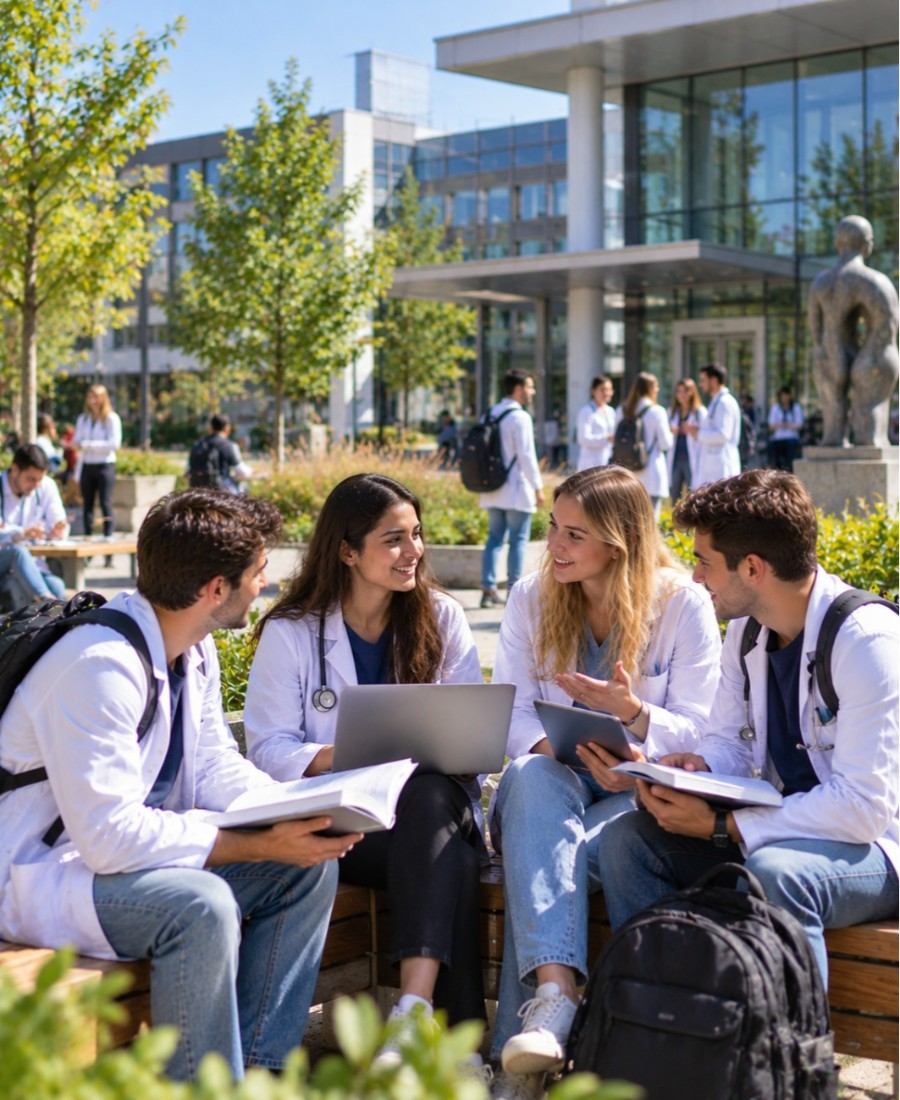
Teaching at Radboud is known for a small group style. Groups of eight to twelve students meet with a tutor several times a week to work through cases. This asks students to think, to explain, and to defend their ideas rather than just listen. The Keuzegids Universiteiten 2026, a well known Dutch student guide, again gave Radboud Medicine the Topopleiding label, which marks it as one of the best medical programmes in the country. Radboudumc is also a busy academic hospital with strong groups in radiology, immunology, oncology, neuroscience, and personalised health. Students can join research projects from year one through honours tracks and student assistant jobs.
Admission to medicine at Radboud is not open. Like every Dutch medical school, the programme uses the numerus fixus system. The government sets a fixed number of first year places each year, and all applications go through the national Studielink portal by 15 January. Selection is decentral, which means Radboud picks its own students based on school grades, motivation, and tests of study skills and behaviour. Only a small share of places goes to non EEA candidates, and every applicant must show strong Dutch language skills, usually at NT2 level two or C1, before the course starts. Because clinical work with Dutch patients begins early, the language rule is strict and there is no English track for medicine in Nijmegen.
Life in Nijmegen is often praised by students. Rent is lower than in Amsterdam or Utrecht, the city is safe, and cycling is the main way to move around. Student housing is offered through providers such as SSHN, and rooms cost about 450 to 700 euros a month. There are Indian, Turkish, and Asian shops in the centre, and the international office at Radboud runs orientation events, buddy schemes, and language cafes. The Medical Faculty Association Nijmegen, called MFVN, is the main student body for medicine. It sells textbooks and lab coats, runs study groups, and organises parties, sports, and yearly conferences. Many students also join Nijmegen Student Chaplaincy, the sports centre Radboud Sports Centre, or one of the many student houses that shape social life in the city.
After graduation, Radboud alumni work as family doctors, hospital specialists, public health doctors, and clinical researchers across the Netherlands and abroad. The Dutch Master of Medicine is recognised across the European Union under the Professional Qualifications Directive, which makes it easy to move to Germany, Belgium, or Scandinavia for training. Graduates who want to work in India need to register with the National Medical Commission and pass the FMGE or NExT screening exam. Those who aim for the United Kingdom, the United States, Canada, or Australia follow the usual GMC, USMLE, MCCQE, or AMC routes. Because Radboud is listed in the World Directory of Medical Schools, its degree is accepted for these exams. For students who are ready for the Dutch language and the numerus fixus, Radboud offers a strong, research led, and human centred path into medicine.