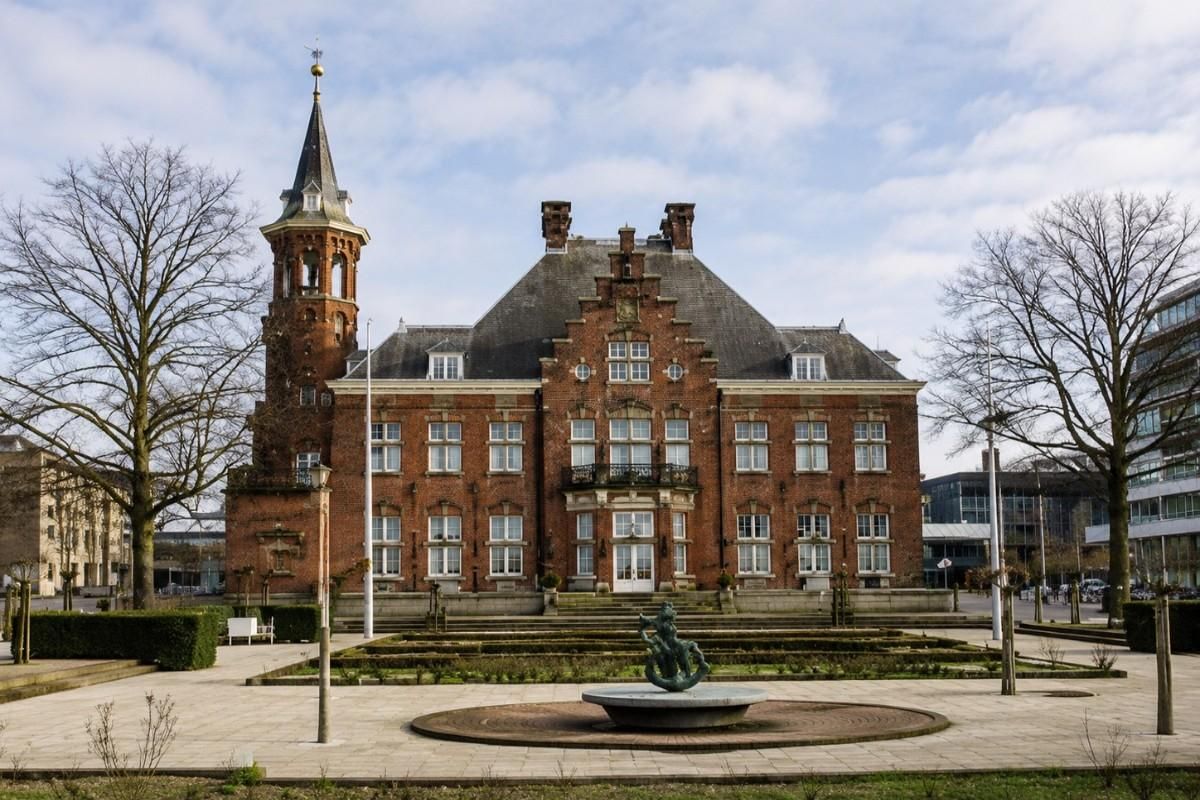
The school of medicine at Leiden University is called the Leiden University Medical Center. One of the oldest schools in the Netherlands is Leiden University. The medical center is in the city of Leiden, close to the main train station and the historic center of the city, which can be reached on foot. People all over Europe know it for combining patient care, study, and teaching on a small campus. From their first day here, students are surrounded by hospitals, study labs, and specialist clinics that are all up and running. They can see that health is more than just science in this setting. Trust, communication, and learning new things all the time are also important in this field.
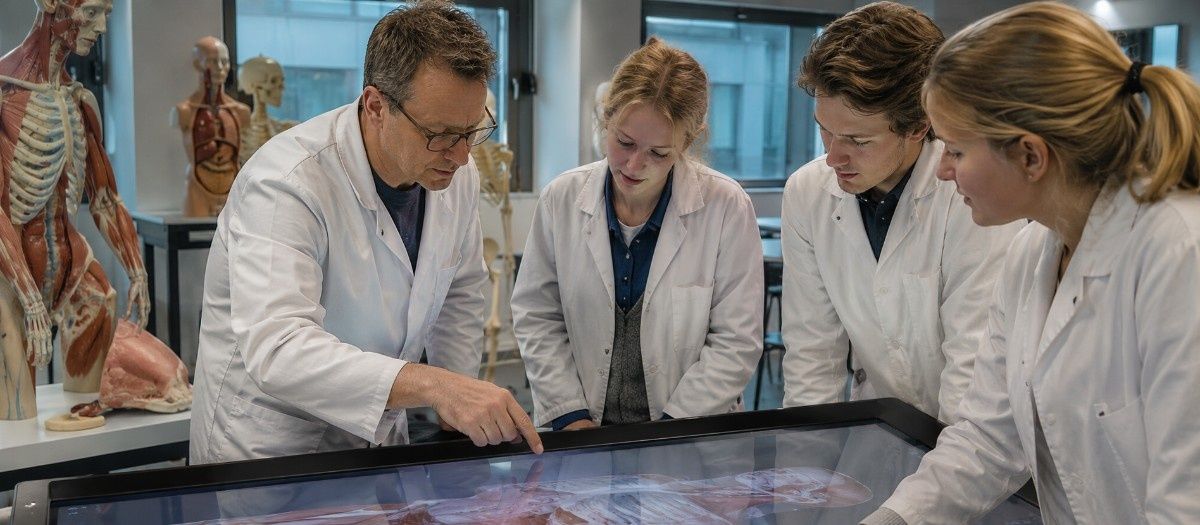
Geneeskunde is the name of the medicine school in Leiden. The Dutch numerus fixus system is used and the class is given in Dutch. This means that the government sets the number of spots and makes it hard to get in. It takes three years to get a bachelor's degree. The next step is a master's degree, which takes three years to finish. In these six years, students learn everything they need to know to take the Dutch medical licensing exam and become a doctor. The lessons are based on three words: capable, loving, and interested. These words show what kind of doctor Leiden wants to become. A good doctor knows a lot about medicine and can do stuff in the real world . A caring doctor treats their patients with respect and understanding. A doctor who is interested in new information keeps asking questions. In the first year of the bachelor’s degree, the body, health and illness are taught. Biology, anatomy, and chemistry are taught to students. Also, they start seeing patients early. Part of the first-year program is showing how to be a patient. And that's why students don't learn from books for years and years. They meet real people and their signs. This makes them think like doctors. This kind of early exposure is a big part of Leiden training. It teaches students that inside every diagnosis there is a person with a story, a family and worries. Pathology, pharmacology and the mechanisms of disease are added in the second year to deepen the science. The third year is between the bachelor’s and master’s degrees and brings students closer to becoming fully trained nurses.
Scientific thinking is highly valued in Leiden. The faculty believes that a good doctor should be able to read research, understand figures and think about what people say. That’s why research methods form a large part of the training. Students are encouraged to work on study projects, and they often do so with the help of medical center specialists. Some of the students work in public health, oncology, neuroscience, or infectious diseases. These projects teach kids how to make knowledge, not just learn it. When they graduate from Leiden, students have clinical skills and a mindset that supports medicine that is based on evidence. This mix works well for them whether they stay in the Netherlands, go back home, or work somewhere else in the world.
The master degree is where students become clinicians. The three master years are filled with clinical rotations, called coschappen in Dutch. These rotations cover the major medical specialities. Students work in internal medicine, surgery, paediatrics, obstetrics and gynaecology, psychiatry, and general practice. They are supervised by experienced doctors and receive a fixed mentor throughout the master. This mentor guides them through hard choices and helps them reflect on their progress. The LUMC also offers chances to do rotations abroad or in Suriname, where Dutch is also spoken. These placements are limited, but they add international experience to a Dutch degree. The mentor system is one of the most valued parts of the Leiden master. It gives students a steady point of contact during a time of rapid learning and change.
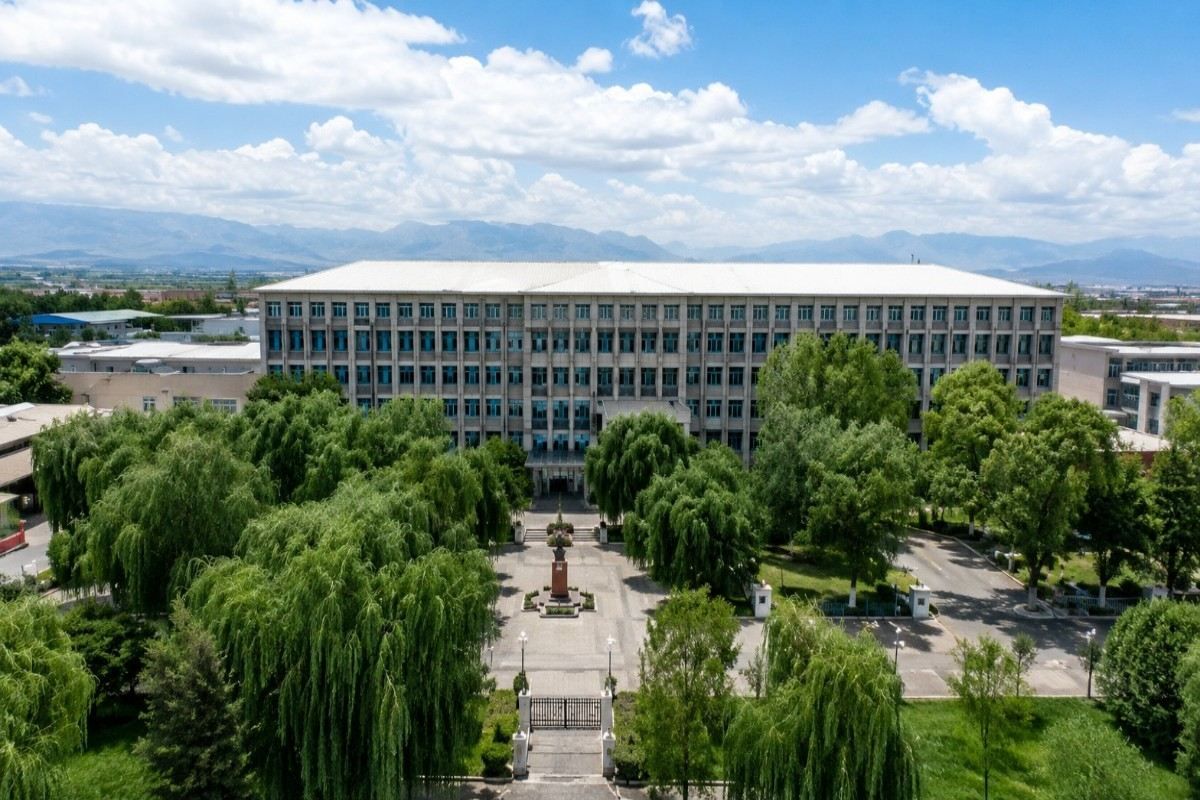
The campus itself is a strength of studying in Leiden. The university hospital, research buildings, and teaching spaces are connected. Students can move from lecture halls to laboratories to patient wards in minutes. The LUMC has specialist centres for cancer, heart disease, infectious disease, and brain and nerve conditions. It is also home to the Leiden Institute for Advanced Computer Science and has strong links with the Leiden Bio Science Park. This park is one of the largest life-science clusters in the Netherlands. This ecosystem means students can see how discoveries move from lab to patient. They can go to seminars, meet researchers and get a sense of how medical innovation actually works. With many start-ups, pharmaceutical companies and research groups based at the Bio Science Park, students can build valuable professional networks even before they graduate.
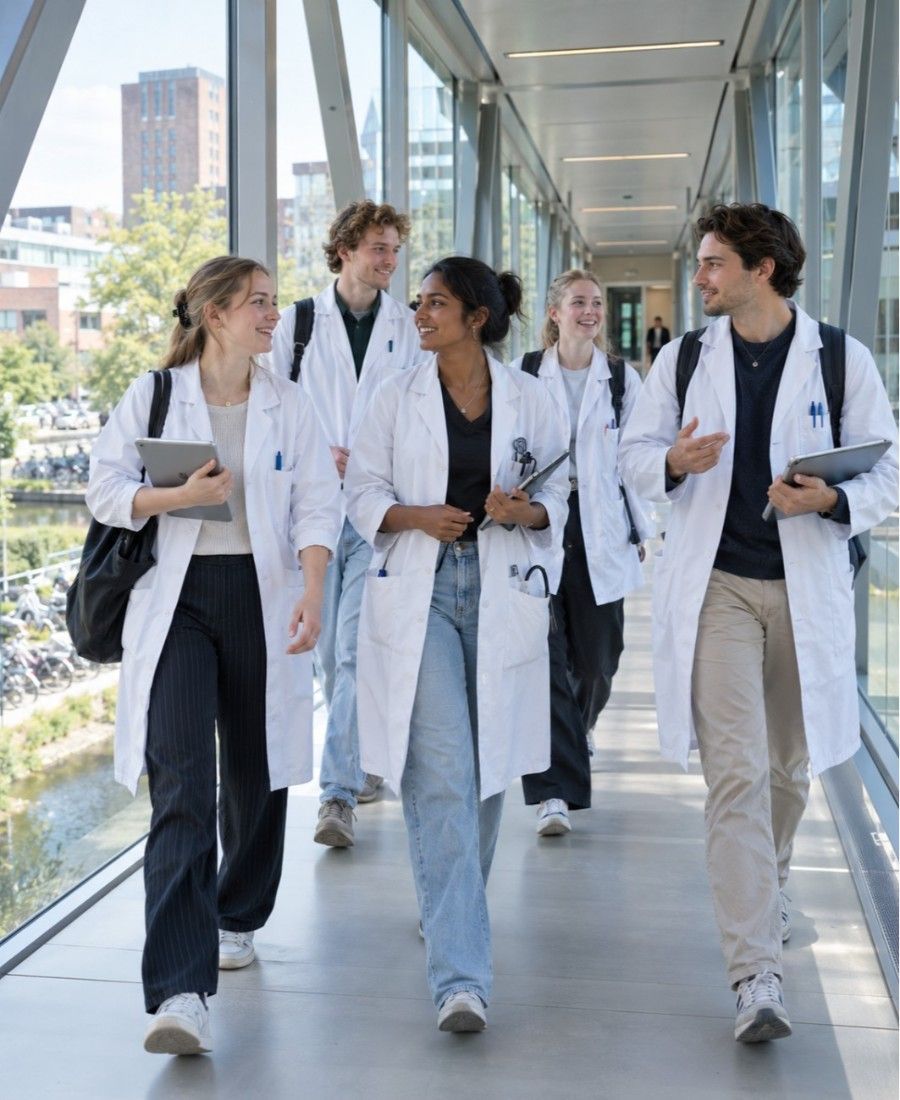
Leiden has a vibrant student life and a friendly city. There are many students, including a large international community. There are student associations, sports clubs, cultural groups, and study organisations. The medical faculty has its own student associations that organise academic events, social gatherings, and support for new students. Leiden is small enough to feel safe and friendly, but large enough to offer concerts, museums, cafes, and parks. The city is well connected to Amsterdam, Rotterdam and The Hague by train, so students can easily explore the Netherlands. Housing can be competitive, so students should start looking for accommodation as soon as they are accepted.
One of the most important things international students must know is that the entire programme is taught in Dutch. There is no English-medium version of the full Leiden medicine degree. This means every applicant must prove Dutch language proficiency before applying. The Dutch government and the university require a high level of Dutch because doctors must speak the language of their patients. Exams, patient interviews, clinical notes, and team discussions all take place in Dutch. Students who are not fluent in Dutch must spend time on language learning, usually through a structured NT2 programme, before they can enter the selection process. This language requirement is strict and non-negotiable.
The selection process in Leiden has two rounds. In the first round, candidates take a cognitive test and a study-skills test. These tests measure the abilities needed for medical study. The best-performing candidates move to the second round. The second round is an education day at the LUMC. Candidates are lectured, work on assignments in groups and complete a test that is similar to a real medical examination. This process helps the university to find not only bright students but also students who can learn in the Leiden way. The selection is based on potential, not on past achievements such as prizes, extracurricular certificates or recommendation letters. Every candidate starts on equal terms.
After their studies, doctors from Leiden are respected in the Netherlands and worldwide. The degree is listed in the World Directory of Medical Schools, which is used by medical councils worldwide as a reference. It was also approved by Dutch recognition agency NVAO. Graduates can get their names on the Dutch BIG record, which lets them work as doctors in the Netherlands. The degree is recognized by the National Medical Commission so that Indian students can take the FMGE or NExT screening test, as long as they follow the normal rules. Graduates who want to work in other countries should find out what the registration requirements are there, since each country has its own way of getting licenses.
If you are serious about becoming a doctor and willing to learn Dutch, you should consider Leiden. Leiden University has a long history and a new medical campus with strong research ties and a patient-centered approach. When students choose Leiden, they become part of a long history of academic medicine that goes back to 1575 and is still growing today.