
Is the programme really taught in English?
+Yes, fully. All lectures, exams, and clinical teaching at Sarajevo Medical School are conducted in English. There is no requirement to learn Bosnian for academic purposes.

 Bosnia | Est. 2010
Bosnia | NMC (India), verify current status at nmc.org.in; WDOMS listed (World Directory of Medical Schools); WHO recognised; GMC (UK); PLAB pathway available; Ministry of Education, Science and Youth of Sarajevo Canton | English (full English-medium programme; no local language requirement for academics) medium
Expert will call you within 2 hours
The Sarajevo School of Science and Technology, widely known as SSST, holds a unique place in the medical education landscape of southeastern Europe. Founded in October 2004, it became the first private university in Bosnia and Herzegovina; a country that had, until then, relied solely on public institutions for higher education. What started as a bold institutional experiment has grown, over two decades, into one of the most internationally connected and academically structured private universities in the Balkans. Its medical department, known as Sarajevo Medical School, was formally launched in the 2014/2015 academic year and has since become the fastest-growing division within the university, expanding to now include not just the Department of Medicine but also Departments of Dentistry, Pharmacy, and Health Studies.
What sets SSST apart from most medical schools in the region is its deliberate design around international standards from day one. The university's collaboration with the University of Buckingham in the United Kingdom means that SSST is one of the only private universities in Bosnia and Herzegovina where graduates of select programmes receive a dual degree. More importantly, this collaboration subjects SSST to continuous oversight by the UK's Quality Assurance Agency (QAA) through external examiners, who assess everything from course content and teaching quality to student progression and examination standards. For a student choosing a medical school in a non-EU country, this kind of independent academic oversight is not a small thing; it is, in fact, one of the more meaningful quality guarantees available outside of EU-regulated institutions.
The six-year Doctor of Medicine programme at Sarajevo Medical School is taught entirely in English, which makes it one of the very few medical schools in the Balkan region where international students can complete a full medical degree without needing to learn a local language. Instruction follows the European Credit Transfer and Accumulation System (ECTS), and the curriculum is designed to reflect current global medical education trends. Classes are conducted in small groups; a structural choice that the university has maintained with some care; with a professor-to-student ratio of one to four, which is among the highest in the region. This ratio is not incidental; it shapes the quality of individual attention students receive and affects how well they develop clinical reasoning skills in the early years.
Clinical training at Sarajevo Medical School takes place primarily at the Clinical Centre of the University of Sarajevo (KCUS), which is the city's main tertiary hospital and one of the largest medical institutions in Bosnia and Herzegovina. SSST also holds agreements with 14 additional medical institutions across Sarajevo and the wider country, covering primary, secondary, and tertiary care settings including emergency services and specialist clinics. Students begin patient contact from the earliest years of the programme; a feature the school has placed at the centre of its educational philosophy. Patient communication, medical ethics, and clinical reasoning are not treated as subjects for later years; they are woven into the curriculum from the start. In addition to the required clinical component, students must complete 75 hours of supervised summer practice, ensuring that hands-on exposure accumulates consistently across the programme.
SSST's campus is located at Hrasnička cesta 3a, Ilidža, on the outskirts of Sarajevo, a city that offers a genuinely compelling environment for student life. Sarajevo is a mid-sized, historically layered capital with a relatively low cost of living by European standards. Accommodation, food, transport, and daily expenses are considerably more affordable here than in Western or Northern Europe. The city is safe, walkable, culturally rich, and increasingly connected through budget airlines and good road links to other European destinations. For students coming from India or other non-European countries, the absence of a language barrier in the academic programme; combined with the relatively modest living costs; makes Sarajevo a practically sound choice.
For Indian students specifically, SSST is listed in the World Directory of Medical Schools (WDOMS), which is a prerequisite for NMC eligibility verification. The degree is also recognised by the World Health Organisation and meets GMC requirements in the United Kingdom, meaning the PLAB route to UK registration is available to graduates. ECFMG eligibility is confirmed for USMLE purposes, and SSST even runs dedicated USMLE Step 1 preparatory courses for students who want to pursue postgraduate training in the United States. Students become eligible to attempt USMLE Step 1 after completing their second year.
The university maintains the campus Innovation Lab, which connects medicine with digital healthcare, giving students exposure to medical technology startups and modern healthcare systems thinking; a forward-looking addition that goes beyond what most regional medical schools offer. The overall picture of SSST is of a school that has built itself carefully around international academic standards, English-medium instruction, strong clinical partnerships, and a student experience that prepares graduates to work across borders.
No hidden charges, no donation. The full picture of costs at Sarajevo Medical School, Sarajevo School of Science and Technology.
Tuition Fee
Approx. €13,200/year for Medicine (approx. ₹11.9 lakh/year); total 6-year tuition approx. €79,200 / ₹71.5 lakh
Approx. €13,200/year (approx. ₹11.9 lakh/year)
Hostel Fee
Approx. €250–400/month
Approx. €250–400/month (shared apartment); private studio approx. €350–500/month
Food & Meals
Approx. €150–250/month; university canteen meals available at subsidised rates; local food is inexpensive
per month
Insurance
Health insurance mandatory for student visa; approx. €200–350/year; private insurance recommended alongside
per year
Donation
No donation or capitation fee. All tuition includes course materials and books as confirmed by university policy.
No hidden charges
Total Estimated Cost
Approx. €100,000–110,000 all-inclusive (₹90–99 lakh)
6 year
25–35%
Average FMGE first-attempt pass rates for students from many overseas medical universities. Students from structured programs consistently score higher.
Students returning to India need to clear the FMGE/NExT exam. Sarajevo Medical School, Sarajevo School of Science and Technology integrates exam-oriented coaching into the regular curriculum so students are prepared from day one.
A structured program that takes you from foundational sciences to clinical mastery.
The foundation year establishes the core biological and structural framework of medicine. Anatomy is taught with access to modern laboratory equipment and simulation tools. Medical ethics and patient communication are introduced from the first semester, consistent with SSST's emphasis on humanistic and patient-centred medicine from the very beginning of training.
Anatomy I, Biochemistry I, Cell Biology, Medical Physiology I, Introduction to Medicine & Medical Ethics, Biophysics, English for Medicine
Systems-based deepening of foundational sciences. Neuroanatomy and genetics are introduced with clinical relevance. Students become eligible to attempt USMLE Step 1 upon completion of Year 2; an important milestone for those targeting US residency. USMLE-style questions are integrated into examinations throughout the year.
Anatomy II (Neuroanatomy), Physiology II, Biochemistry II, Genetics, Microbiology & Immunology I, Introduction to Pathology, USMLE Step 1 preparation begins
A bridge year between basic sciences and the clinical world. Semiology; the study of signs and symptoms; is taught through structured patient encounters. Students begin supervised patient-facing activities. Pharmacology is taught with a clinical prescribing focus. Summer clinical practice hours continue to accumulate.
General Pathology, Pharmacology I & II, Microbiology & Immunology II, Epidemiology & Biostatistics, Clinical Semiology, Evidence-Based Medicine, Research Methods
First full clinical year at the Clinical Centre of the University of Sarajevo (KCUS) and affiliated hospitals. Students participate in supervised ward rounds, patient clerking, and structured clinical assessments. All major specialities are introduced. Small group teaching continues in clinical settings.
Internal Medicine I, General Surgery I, Obstetrics & Gynaecology I, Paediatrics I, Psychiatry, Radiology & Imaging
Expanded speciality exposure across SSST's network of 14 affiliated medical institutions. Emergency medicine, oncology, and primary care placements provide a broad clinical picture. Students continue research and dissertation work alongside rotations.
nternal Medicine II, Surgery II, Neurology, ENT, Ophthalmology, Dermatology, Orthopaedics & Trauma, Emergency Medicine, Oncology, Family & Community Medicine
Full-year supervised clinical internship completing all core medical and surgical disciplines. Must be completed at SSST-affiliated institutions in Bosnia and Herzegovina. NMC-mandated internship must be completed before sitting for NExT in India.
Comprehensive supervised internship across Internal Medicine, Surgery, O&G, Paediatrics, Psychiatry, Emergency, Community Medicine, Elective rotation
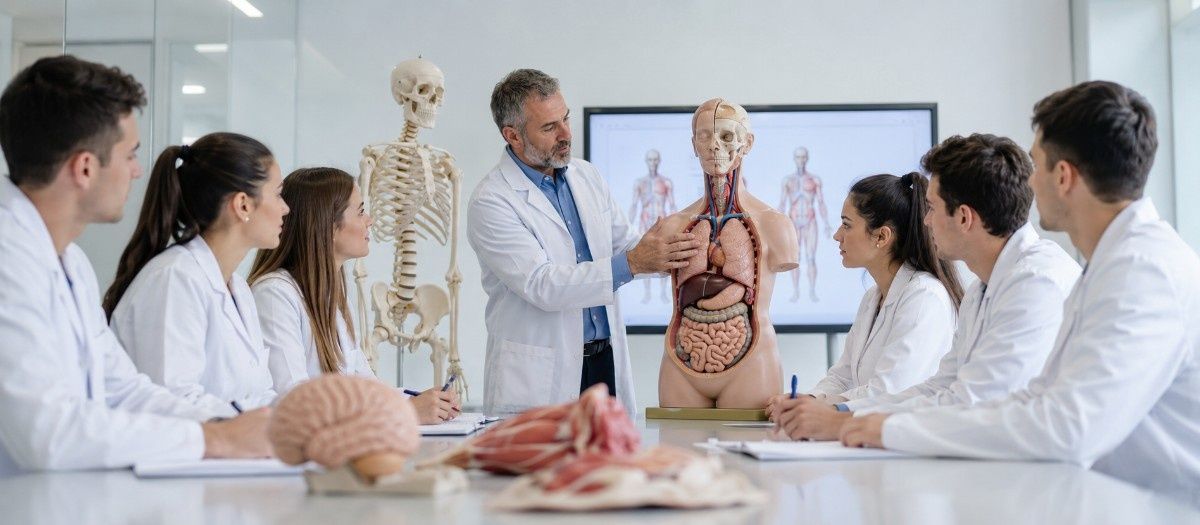
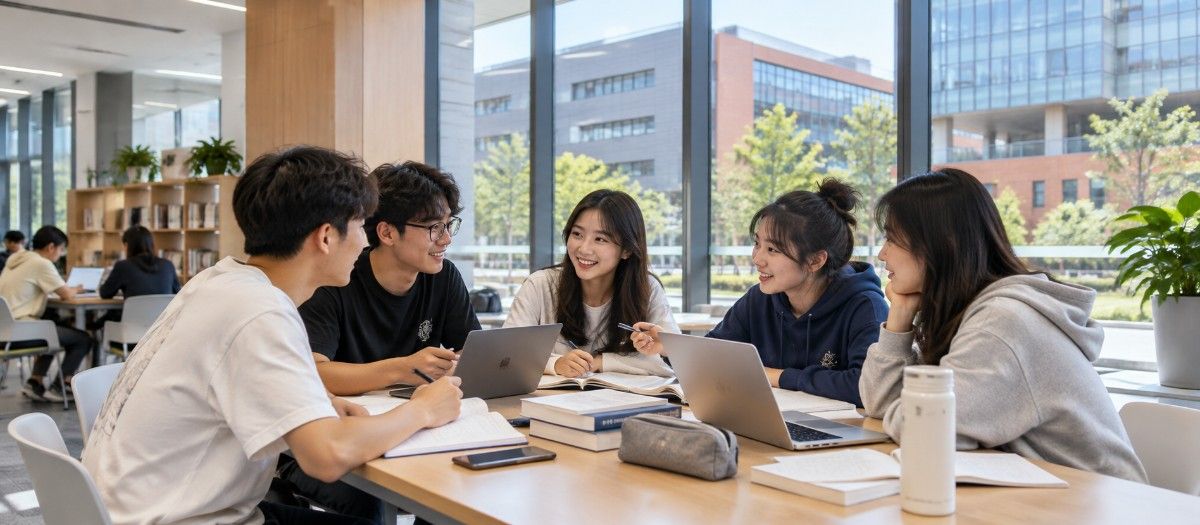
Furnished hostel rooms with Wi-Fi, laundry, 24/7 security, and Indian mess on or near campus.
Indian restaurants and mess facilities serving vegetarian and non-vegetarian home-style food daily.
Strong Indian community with cultural events, festival celebrations, and peer support groups.
Students get hands-on clinical training in government and private hospitals affiliated with the university.
Practical information for students planning to study at Sarajevo Medical School, Sarajevo School of Science and Technology.
Prepare for all seasons. Thermal wear for winters, light clothing for summers. University provides heating in hostels.
Student visa processed with university invitation letter. Direct and connecting flights from major Indian cities.
Health insurance included in fees. Medical facility on campus plus city hospitals easily accessible.
Local SIM cards available. WhatsApp and video calls keep you connected with family back home.
Average monthly expenses of $150–$250 covering food, transport, and personal needs.
University library, online databases, and study groups. Seniors mentor juniors through academic challenges.
Our team guides you through every step — from application to arriving on campus.
Our specialist confirms the current NMC listing status, explains the distinction between EU and non-EU countries, and compares Bosnia with Georgia and Romania.
Full Bosnia admission and visa document package prepared.
Direct submission to the University of Sarajevo or the University of Mostar Faculty of Medicine.
Receives offer, explains terms, and manages initial fee payment.
Full visa documentation submitted to the Bosnian Embassy in New Delhi.
Sarajevo city orientation, accommodation, transport, currency, cultural briefing, safety zones.
Our team advises on routing to Sarajevo International Airport (SJJ). Confirms arrival with the local team.
Our local Sarajevo team meets you at the airport
Our local team manages hostel check-in and Faculty of Medicine registration.
We filed the permit at the Service for Foreigners Affairs. Renewed annually.
Admission Helpline — Contact our counsellors for step-by-step assistance.
“The faculty here is incredibly supportive. The clinical training during hospital rotations has given me real confidence in patient care.”
“Affordable fees without compromising on quality. The campus facilities and hostel life made my transition abroad very smooth.”
“English medium instruction and WHO-recognized curriculum were the deciding factors for me. No regrets so far — excellent experience overall.”
“The university helped with everything from visa to accommodation. Hospital exposure from year three has been invaluable for my FMGE prep.”
“Just cleared my licensing exam on the first attempt. The structured coaching and mock exams during final year were a game-changer.”
“Safe campus, good food options, and a strong Indian student community. The teaching methodology is very practical and hands-on.”
Yes, fully. All lectures, exams, and clinical teaching at Sarajevo Medical School are conducted in English. There is no requirement to learn Bosnian for academic purposes.
SSST is listed in the World Directory of Medical Schools (WDOMS), which is the primary reference used by NMC for eligibility verification. Always confirm the current NMC listing at nmc.org.in before applying.
The entrance exam has two parts; an English language assessment and a science knowledge test; followed by a 30–45 minute candidate interview. Students who complete the optional foundation year are admitted directly without an entrance exam.
No. SSST officially states there is no donation or hidden fee. Tuition fees include course materials and books.
Yes. Students become eligible for USMLE Step 1 after completing Year 2. SSST runs its own USMLE preparatory courses and incorporates USMLE-style questions into regular examinations.
Clinical training takes place at KCUS (the main university hospital of Sarajevo) and 14 other affiliated institutions covering primary, secondary, and tertiary care. Students also complete 75 hours of mandatory summer practice each year.
One professor per four students; the highest ratio in the region, as stated by the university. Teaching in small groups is a core structural feature of the programme.
Yes. SSST meets GMC requirements, meaning graduates can register in the UK via the PLAB route. The university's affiliation with the University of Buckingham and QAA monitoring supports this recognition.
Yes. Bosnia ranks well on global peace indices and is generally considered safe for international students. Sarajevo is a welcoming, multicultural city with a growing international student community.
Yes. Students enrolled in a medical programme elsewhere can transfer to SSST up to the end of Year 3. Pharmacy and Dentistry transfers are accepted in Years 1 anYes. Bosnia ranks well on global peace indices and is generally considered safe for international students. Sarajevo is a welcoming, multicultural city with a growing international student community.


Our expert counsellors will guide you through the complete admission process — from documents to airport pickup.