
Q1. When was medicine first taught in Odense?
+Since 1966, when Odense University opened with Health Science as one of its four founding faculties.
 Denmark | Est. 1966
Denmark | A public faculty under Danish higher education law. Graduates who complete the cand.med. degree and the required clinical basic training (KBU) receive Autorisation, Denmark's licence to practise medicine. | Danish runs through nearly all of the medical programme. A certified, strong level of Danish is required before enrolmen medium
Expert will call you within 2 hours
People just call it SDU Odense, or the Odense medical faculty. Its founding story sits at the very start of the university itself. Odense University opened its doors in September 1966, and medicine was there from day one, as one of the original four faculties alongside Humanities, Social Sciences, and Natural Sciences. So this faculty is not a later addition bolted onto an existing university. It is one of the reasons the university exists at all.
Here is a fact most guides skip entirely. Odense University was built specifically to spread higher education beyond Copenhagen and Aarhus, at a time when Denmark's welfare state was expanding fast and far more people wanted a university place than before. Medicine was part of that decentralising mission from the start, giving the country a second serious training ground for doctors outside the capital.
Another detail worth knowing. In 1998, Odense University merged with the Southern Denmark School of Business and Engineering and the South Jutland University Centre to form what is now Syddansk Universitet. The Odense site kept its size and its role as the flagship campus, hosting the university's central administration and remaining by far its biggest location for staff, students, and programmes on offer.
This is a public university, funded by the Danish state. Clinical training runs through Odense University Hospital, known as OUH, one of only four university hospitals in Denmark and the largest single hospital workplace in the country by bed numbers, treating patients not only in Odense but also through units in Svendborg, Nyborg, and Ærøskøbing.
Odense is Denmark's third-largest city, sitting on the island of Funen, and it has grown into a genuine university town around SDU's presence since 1966. The Faculty of Health Sciences sits at J.B. Winsløws Vej, close by OUH itself, keeping teaching and hospital work within easy reach of each other.
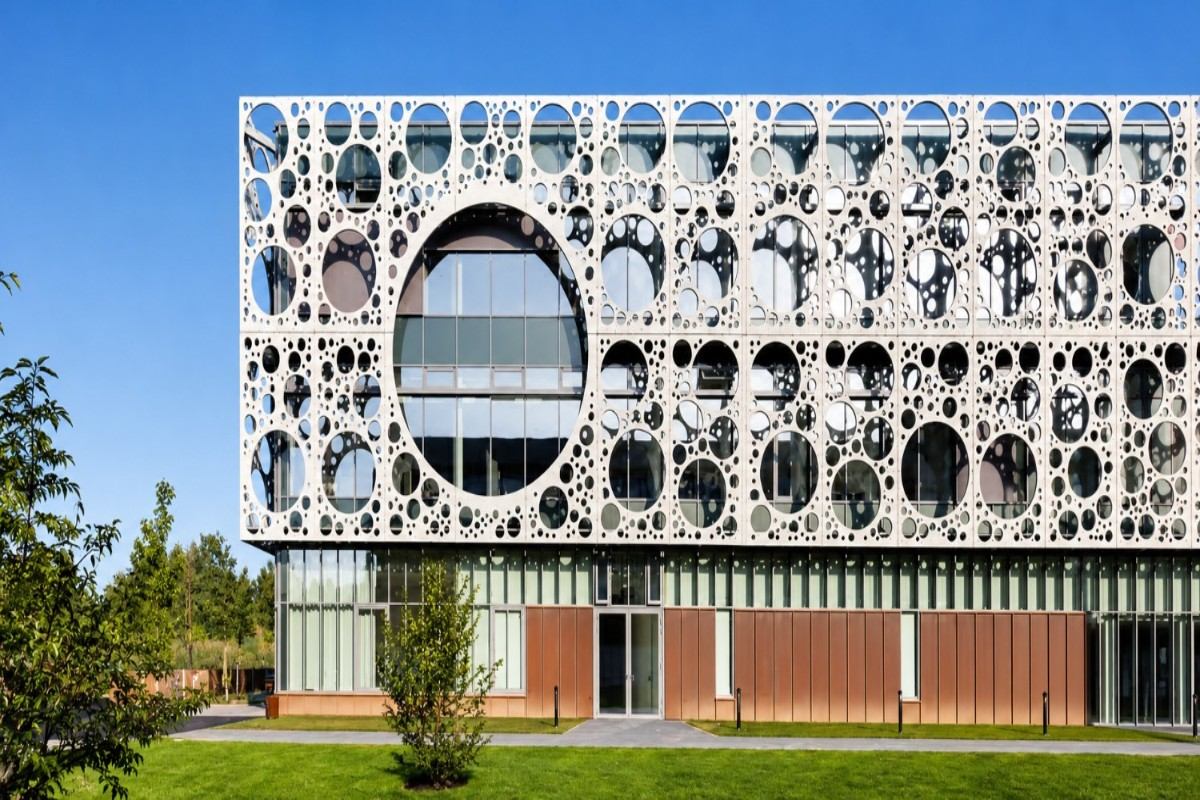
What makes the current moment particularly interesting is the building work underway right now. A new Faculty of Health Sciences building opened in Odense in 2023, and a brand-new Odense University Hospital is due to open nearby, planned for around 2026. The two are being built deliberately close together, forming what SDU calls a "knowledge axis," so that lecture halls and hospital wards sit side by side rather than across town from each other.
Here is where this page needs to be direct with you. Medicine at SDU Odense is not an MBBS degree. It runs as a Bachelor's degree in Medicine, three years, followed by a three-year Master's leading to the cand.med. qualification, six years altogether, and it is the largest and longest-running of SDU's medical routes, predating the newer Esbjerg track by decades.
Teaching runs almost entirely in Danish. A certified, strong level of Danish is expected before you can start, since there is no English-language version of this degree.
Admission does not run through the faculty directly. Places are limited nationwide, and applications go through Denmark's central portal, optagelse.dk, using the same Kvote 1 and Kvote 2 system applied across the country. So a seat in Odense depends on a national process, not a decision made locally by the faculty.
On cost, there is real good news for EU, EEA, and Swiss students. Denmark charges no tuition fees at its public universities, and there is no separate semester contribution either, unlike the system used in some neighbouring countries.
Parameter | Details |
Founded | Odense University founded 1966, with Health Science among its original four faculties; current name and structure since the 1998 merger into Syddansk Universitet |
Institution Type | Public university, funded by the Danish state |
Location | Odense, Region of Southern Denmark, on the island of Funen |
Programme | Bachelor's in Medicine + cand.med. (Candidatus Medicinae) |
Duration | 3-year Bachelor's + 3-year Master's, 6 years total |
Medium of Instruction | Danish; a certified strong level of Danish is required |
Admission Route | Centrally managed nationwide through optagelse.dk, via Kvote 1 or Kvote 2 |
Teaching Hospital | Odense University Hospital (OUH), one of four university hospitals in Denmark |
Fee Component | Amount | Notes |
Tuition Fee (EU/EEA/Swiss) | None | Denmark charges no tuition for these students at public universities |
Tuition Fee (Non-EU/EEA) | Applies where eligible | The Danish-taught medical programme is rarely open to this group without prior residence rights |
Semester Contribution | None | Danish public universities do not charge a separate semester fee |
Living Costs (rent) | Approx. EUR 350 to 550 per month | Odense runs cheaper than Copenhagen |
Food and Other Costs | Approx. EUR 300 to 400 per month | Groceries, transport, and leisure |
Health Coverage | No separate monthly premium | Free public healthcare once registered with a Danish CPR number |
Most rival pages never explain this properly. Health Science was one of Odense University's four founding faculties back in 1966, not something added on later as the university grew. That makes it a genuinely original part of the institution rather than a bolt-on programme.
Many guides assume a university's teaching hospital is a fixed, unchanging thing. In Odense, both are being rebuilt at once. The new Faculty of Health Sciences opened in 2023, and a new Odense University Hospital is being constructed right next to it, deliberately joined into a single knowledge axis due for completion around 2026.
Be clear about a few real points here. This is not a fee-paying, English-medium entry point into a medical degree. Danish fluency is required, certified, before you even begin. Seats depend on a competitive, nationwide Danish process, not a direct application to this faculty alone. So, who fits here best? Students who already have strong Danish, or a recognised right to study in Denmark on equal terms with Danish citizens, and who want the country's biggest SDU campus with a major university hospital attached. Students seeking a fast, English-only route into medicine should look elsewhere. Still, for those who meet the language and admission bar, Odense offers free tuition, a genuinely established medical training tradition, and one of only four university hospitals in Denmark.
No hidden charges, no donation. The full picture of costs at MBBS in University of Southern Denmark Faculty of Health Sciences.
Tuition Fee
EUR 15,000 per year
Around EUR €15,000 per year
Hostel Fee
Approx.EUR 4,800 - EUR 9,600 (₹4.3 lakh to ₹8.6 lakh) per yearly
Approx.EUR 4,800 - EUR 9,600 (₹4.3 lakh to ₹8.6 lakh) per year.
Food & Meals
EUR 300 to 400
Per month
Insurance
around $700 USD (~60,000 INR)
per year
Donation
No Donation
No hidden fee
Total Estimated Cost
Confirm directly with the university — Living costs, not tuition, form the bulk of spending for eligible students
6 year
25–35%
Average FMGE first-attempt pass rates for students from many overseas medical universities. Students from structured programs consistently score higher.
Students returning to India need to clear the FMGE/NExT exam. MBBS in University of Southern Denmark Faculty of Health Sciences integrates exam-oriented coaching into the regular curriculum so students are prepared from day one.
A structured program that takes you from foundational sciences to clinical mastery.
Taught at the Faculty of Health Sciences' Odense campus, in its newly opened 2023 building.
Covers core foundation subjects including anatomy, physiology, biochemistry, and molecular medicine.
Training runs largely through OUH and partner sites across the Region of Southern Denmark.
Covers Internal Medicine, Surgery, Paediatrics, and related clinical specialities.
Leads to Autorisation, Denmark's medical licence.
A 12-month period of supervised clinical rotations required for full practising rights.

Furnished hostel rooms with Wi-Fi, laundry, 24/7 security, and Indian mess on or near campus.
Indian restaurants and mess facilities serving vegetarian and non-vegetarian home-style food daily.
Strong Indian community with cultural events, festival celebrations, and peer support groups.
Students get hands-on clinical training in government and private hospitals affiliated with the university.
Practical information for students planning to study at MBBS in University of Southern Denmark Faculty of Health Sciences.
Prepare for all seasons. Thermal wear for winters, light clothing for summers. University provides heating in hostels.
Student visa processed with university invitation letter. Direct and connecting flights from major Indian cities.
Health insurance included in fees. Medical facility on campus plus city hospitals easily accessible.
Local SIM cards available. WhatsApp and video calls keep you connected with family back home.
Average monthly expenses of $150–$250 covering food, transport, and personal needs.
University library, online databases, and study groups. Seniors mentor juniors through academic challenges.
Our team guides you through every step — from application to arriving on campus.
Our Denmark specialist assesses academic profile, Danish language status, and career goals. Denmark is not formally recommended without this session.
We connect you with certified Danish language instructors. Preparation typically takes 18–24 months to achieve clinical-level proficiency.
Full Danish admission and residence permit document set prepared — transcripts, financial proof, language certification.
Our team manages your application through Denmark's centralised admissions system and university-specific portals.
: University admission letter is required immediately to begin residence permit application.
We submit the residence permit application to Udlændingestyrelsen (Danish Immigration Service) immediately after admission. Allow 1–3 months.
We advise on the fee structure and safe international transfer to the Danish university account.
Copenhagen or Aarhus orientation, student housing applications, cycling culture, banking, SIM cards, campus navigation
Admission Helpline — Contact our counsellors for step-by-step assistance.
“The faculty here is incredibly supportive. The clinical training during hospital rotations has given me real confidence in patient care.”
“Affordable fees without compromising on quality. The campus facilities and hostel life made my transition abroad very smooth.”
“English medium instruction and WHO-recognized curriculum were the deciding factors for me. No regrets so far — excellent experience overall.”
“The university helped with everything from visa to accommodation. Hospital exposure from year three has been invaluable for my FMGE prep.”
“Just cleared my licensing exam on the first attempt. The structured coaching and mock exams during final year were a game-changer.”
“Safe campus, good food options, and a strong Indian student community. The teaching methodology is very practical and hands-on.”
Since 1966, when Odense University opened with Health Science as one of its four founding faculties.
A 3-year Bachelor's plus a 3-year Master's (cand.med.), six years in total.
No. The medical programme is taught almost entirely in Danish, and certified strong Danish is required beforehand.
No. Seats go through Denmark's centralised admission portal, optagelse.dk.
No tuition applies for EU/EEA/Swiss students, and there is no separate semester fee either.
Graduates receive the cand.med. degree and, after completing KBU, full Autorisation to practise.
Odense University Hospital (OUH), one of only four university hospitals in Denmark.
Not automatically. Indian graduates would still need to clear India's usual foreign-degree licensing route, such as NExT.
It is a public faculty, funded by the Danish state
A new Faculty of Health Sciences building opened in 2023, and it is being joined by a brand-new Odense University Hospital nearby, expected around 2026.


Our expert counsellors will guide you through the complete admission process — from documents to airport pickup.