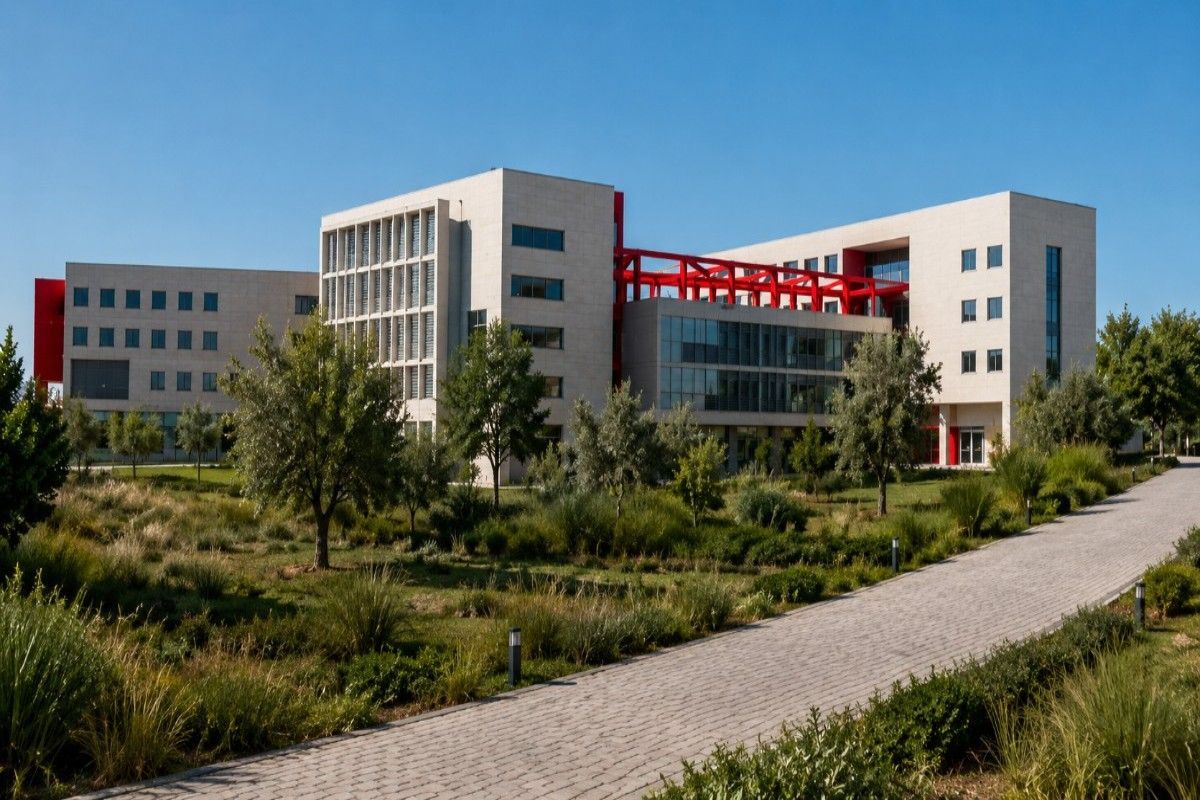
The University of Nicosia is a genuinely large school by regional standards. It was founded in 1980. Today, it stands as the biggest higher education school in Southern Europe. It draws more than 12,500 students. These students come from over 100 countries. That is a truly wide mix for one school. Few universities in this part of Europe draw students from so many countries at once. This mix shapes daily campus life. It also shapes the school's academic name. The Medical School itself launched in 2011. It began life built around a link with a UK school, St George's, University of London. That link offered a British graduate-entry MBBS. Over time, UNIC built its own medical programs. These earned their own, separate accreditation, alongside this older deal. These UNIC-branded degrees form the basis of what Athens teaches today. This is not the older St George's franchise.
UNIC Medical School now runs several paths. There is a six-year undergraduate-entry Doctor of Medicine. There is a five-year Graduate Entry MD too. This path suits students who already hold a matching bachelor's degree. Postgraduate options exist too. These cover Family Medicine, and Public Health. The Athens campus runs the six-year MD path specifically. This gives students a real choice. They can finish their medical training in Greece. Or they can study in Cyprus instead. Either way, they walk away with the same UNIC degree.
Tuition at Athens sits at €15,800 a year. This runs notably lower than the matching program at Nicosia. That Nicosia six-year MD costs closer to €22,000 to €24,000 a year. The exact cost shifts a bit. This depends on the intake round. It also depends on the program setup at the time. This makes Athens the cheaper campus, on tuition alone. Living costs may close that gap a bit. Athens is a large European capital city. It carries its own cost pressures too. Still, the tuition numbers clearly favour Athens. The university has not shared a clear public note on this. It does not explain exactly why this price gap exists between the two campuses. For a family comparing the two options, this is one detail worth asking admissions staff about directly. Published materials simply do not spell it out.
The five-year Graduate Entry MD runs mainly out of Nicosia. It is open to students who hold a bachelor's degree in any field. Its course plan was built to meet European Union basic medical education rules. This program is accredited by CYQAA, Cyprus Agency of Quality Assurance and Accreditation in Higher Education. CYQAA evaluates the programme. It compares it against standards set by the World Federation for Medical Education called WFME. A joint team built the course plan. Medical education experts from the United Kingdom, Ireland, and Cyprus worked on it together. Former medical students from the school helped too. This same backing, and this same teaching approach, applies across the wider UNIC Medical School name. This includes its Athens work too. It is the same school, running the same core degree plan. Athens-specific course details, though, were not laid out separately anywhere I could find. This gap is worth keeping in mind. It means Athens applicants may need to do more direct legwork than a Nicosia applicant would. This helps confirm which parts of the shared UNIC course plan apply exactly as written at the Greek campus.
The standard six-year program splits into two broad stages. These are base study, and clinical study. Early years cover basic medical science. Students study anatomy, body function, and cell chemistry. They also study medical genetics and medical computing. A first look at clinical medicine starts right from the first term. It does not wait until later years to start. UNIC stands out here in one clear way. It is one of the few medical schools in Europe that use real human bodies to teach anatomy. The school itself points to this as something that sets it apart from most other schools. Many European medical programs now lean on simulation models and digital anatomy tools instead. So UNIC's choice to keep using real human bodies for this training stands out. Some students seek this out on purpose. Others may want to ask more about it before they enrol. Clinical time builds up bit by bit after this. Community clinical work starts around the second year. Full clinical rotations follow later, in the final years. These rotations happen at teaching hospitals tied to the university.
On recognition, UNIC Medical School holds a genuinely solid global record. This is strong for a school this young. Between 2022 and 2024 alone, more than 80 of its graduates signed up with the UK's General Medical Council, or GMC. That is a strong count, for a fairly new school. The university sits in the QS World University Rankings' 701-850 band worldwide. It separately ranks second in Cyprus, and seventh in Greece. This is based on one regional ranking source. This double ranking shows UNIC's reach across both countries. This comes through its Nicosia and Athens campuses, taken together. UNIC also sits in the Times Higher Education World University Rankings' top 501-600 band. It has held that spot for three years running, based on recent reports. Taken together, these figures point to a school with a real, growing name. It has built this over a fairly short span of years. It is not a school still waiting to make its mark on the world stage.
For Indian students specifically, the university describes weaving FMGE/NExT exam prep right into the regular course plan. Study consultants working alongside the school describe this too. This includes regular mock tests too. It also includes teacher-led prep sessions, held each term. Most Indian graduates need to clear this exam. Only then can they work back home. So this kind of built-in prep genuinely helps students, down the line. A valid NEET score stays a must too. India's National Medical Commission requires this for any foreign medical degree. This holds true, no matter which UNIC campus a student picks. One more useful point. Insurance costs already sit inside the tuition fee here. That removes one cost line most students studying abroad usually plan for on their own, which can make early budgeting noticeably simpler for families comparing several schools side by side.
Beyond the core facts, think about how this program fits a student's wider life plan too. Athens gives students a real European capital city as a base, not a smaller university town. That means easy access to a big international airport. It also means a deep well of part-time work and internship options nearby. And it means a much larger day-to-day social scene than a small Cypriot city could offer. Some students want their six years of study to double as time spent in a major world city. For them, this is a real, practical plus. It goes well beyond the tuition numbers alone. Still, students should budget with some care. Major capital cities almost always run costlier day-to-day than smaller towns. This holds true even when tuition itself stays low.
In plain terms, the Athens campus gives future UNIC students a real, separate choice. This choice sits within the same medical school name. It offers lower tuition than Nicosia. It places students in one of Europe's major capital cities instead. It carries the same UNIC backing and teaching approach that Nicosia offers. Still, Nicosia's own details run better documented overall. Anyone weighing this choice should check Athens-specific facts with the university directly. This matters most for clinical hospital placements, campus facilities, and class size. Public sources cover these points for Athens far more thinly than they do for Nicosia. A short call or email to the admissions office can close most of these gaps. This is well worth the time, given how big a six-year commitment this degree represents.