
1. Is this program taught in English?
+Yes, since 2024, through the Medical Degree English Program, making Thessaly the fourth Greek university to offer English-medium medical study, after Athens, Thessaloniki, and Crete.

 Greece | Est. 1985
Greece | Accredited by the Hellenic Authority for Higher Education (HAHE). Carries an ECFMG listing, supporting eligibility for the USMLE pathway in the United States. | English (Medical Degree English Program, launched 2024; a separate Greek-language track exists for domestic students). medium
Expert will call you within 2 hours
Larissa is an important figure in the history of medicine. Hippocrates, who is known as the "Father of Western Medicine," helped people and then died in this city. That link between place and job still shapes the Faculty of Medicine at the University of Thessaly today. It is in the same city as the school that medicine as we know it today got its start.
The University of Thessaly as a whole is still pretty new. It was set up in 1984. The first kids went there during the 1988–1989 school year. The city of Volos is where its main office is located. Still, the school has spread to cover the whole area of Thessaly. At this point, it has sites in Volos, Larissa, Lamia, Karditsa, and Trikala. It now has eight schools and 35 degree programs, plus a lot more at the graduate level. It is one of the busiest and fastest-growing public universities in Greece.
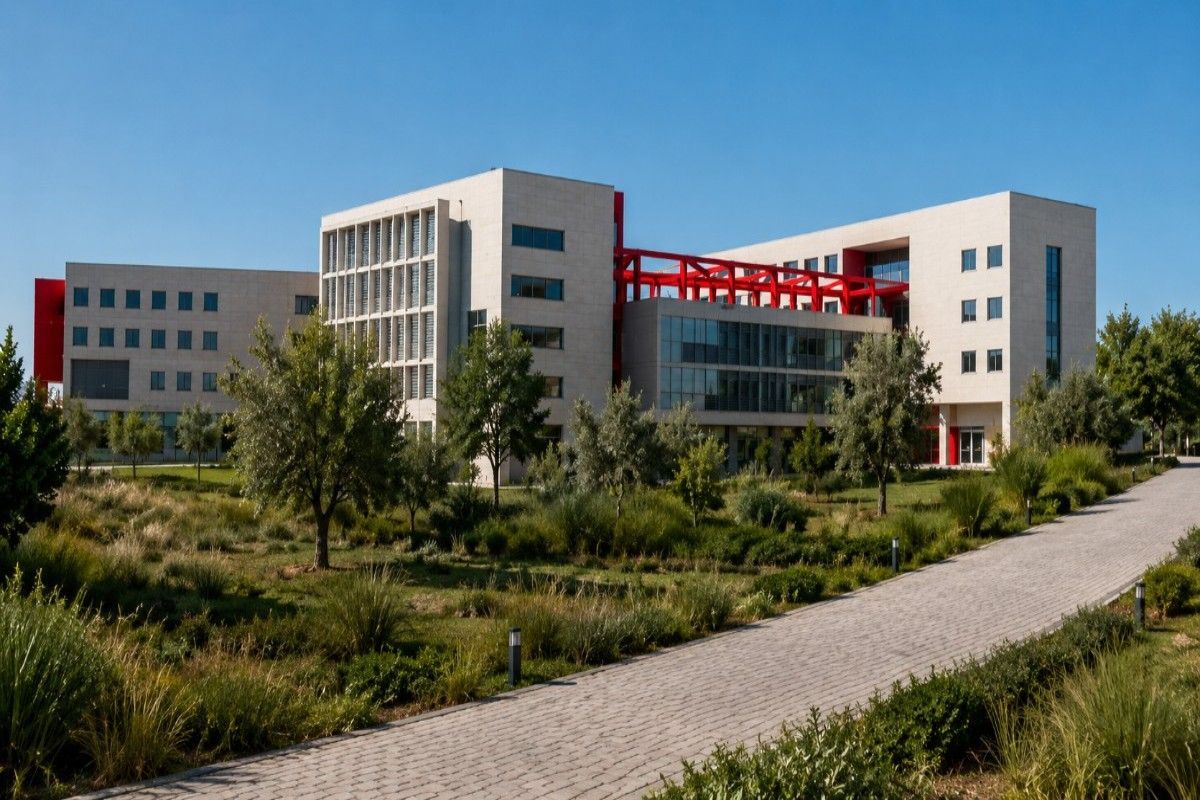
A little later came the Faculty of Medicine. In 1985, staff set it up. In the 1990–1991 school year, thirty students were the first to start going to school. It was the first school to be built in Thessaly's School of Health Sciences. In 1995, it split off into its own department. Docs graduated in groups for the first time in June 1996. In December 1999, the school gave out its first PhD. A new building was built for the school in February 2008. These can be found on the Biopolis building in Larissa. The building has 6,500 square meters of lab space and 4,500 square meters of classroom area. There is a big hall with 250 seats, two smaller halls with 100 seats each, and four classes with 60 seats each.
The training for clinical work is right next door. In September 1999, the University General Hospital of Larissa opened on a large plot of land next to the medical school. The hospital is on land that is about 100,000 square meters, and the buildings their selves are about 90,000 square meters. Because the classroom and hospital are so close to each other, it's easy for students to do clinical work every day. They don't have to go across the city to get training in person. Aside from that, it's the main hospital for people in Central Greece and the wider Thessaly area.
The Faculty of Medicine only taught in Greek for a long time. In 2024, things changed. This was the school's first English-language course. It was called the Medical Degree English Program. This made Thessaly the fourth university in Greece to offer a medical degree taught in English. The other three were in Athens, Thessaloniki, and Crete. Forty kids from other countries came to the school for the first time in October 2024. Few of them were from the same country. Many of them were from Cyprus, but some were from France, the UK, Ireland, Belgium, Slovakia, Bulgaria, India, Saudi Arabia, and the US. One hundred eighty people applied for those forty spots in the school's first year, which is a strong sign of early demand.
It takes six years to finish, with twelve classes. points work like they do in Europe, and you get sixty points every year. There are three main parts to the lesson. Before clinical study, there is study in semesters one through five. This includes basic science, the structure of the human body, social medicine, and medical work done in a lab. From semester six to ten, you will be doing clinical work. A lot of what the students learn here takes place in real clinics and labs, where they learn how diseases start, grow, are diagnosed, and are treated. Almost all of the last two semesters are spent on hands-on clinical practice, which puts students right into hospital situations before they graduate.
There are two ways to get in. Some applicants don't have to take the full entrance test. This is for students who got good scores on the BMAT, the MediTest-EU, or had grades of AAB or higher in Chemistry, Biology, and one other topic besides English. A test is given to everyone else instead. There are sixty multiple-choice questions on this IB-level test that cover biology, chemistry, and general knowledge. Everything on the test is done online, and it is closely watched. You need to be good at English for both options; usually, you need an IELTS score of at least B2 or a TOEFL score of at least 79 out of 120. After that, qualified applicants will have a short online interview where they will talk about their motivation, character, and academic experience.
Cost sits at a clear, fixed level. Tuition for the English-taught program runs at twelve thousand euros a year. Students split this into two payments each year, with the first payment due right after acceptance and the second due partway through the school year. A small, non-refundable fee of around two hundred euros applies early on, covering interview and exam processing. As of now, the university does not offer scholarships for this program, so students should plan for the full cost across all six years.
For a program this new, praise is very important. The Hellenic Authority for Higher Education, which is in charge of inspecting French universities across the country, has given the Faculty of Medicine its seal of approval. A listing with ECFMG, the US group that licenses medical graduates from other countries, is also linked to the school. This status helps people who want to practice medicine in the US take later steps toward the USMLE. As it comes from a public university in Greece, the degree is recognized all over the European Union. It can also be used to get licenses in other parts of the world.
The city of Larissa is an excellent option for students who are looking for a home base that is less expensive and more tranquil than either Athens or Thessaloniki. With a population of approximately 200,000 inhabitants, the city is the fourth largest location in Greece. In the region around Thessaly, there are more than one million people that call it home. Two of the most prominent university campuses are located in Biopolis and Gaiopolis. In order to go to class, the majority of students either walk, ride their bikes, or take a brief bus ride. For the purpose of representing medical students, a group of students known as ASCLEPIOS has been present here since the year 1991. Prior to the existence of the English track, they have been organizing events and providing support services for a very long time. In addition to educational institutions, the city is home to parks, historic theaters, and a well-known monument known as Hippocrates. Every day, this serves as a gentle reminder of the context in which medicine was first developed.
For students who are interested in actual Greek history, a new but rapidly expanding English program, and practical training directly next to a large regional hospital, the Faculty of Medicine at the University of Thessaly offers a one-of-a-kind opportunity to begin their medical education in Europe. For students who wish to arrive at the hospital earlier than usual, there is a hospital ward located just next door. In Greece, the city is quite small and is welcoming to students.
No hidden charges, no donation. The full picture of costs at MBBS in University of Thessaly Faculty of Medicine.
Tuition Fee
Approx. USD 12,960 per year (approx. INR 11.28 lakh), split into two payments each year.
USD 14,100, INR 12.05 lakh
Hostel Fee
Not specifically published by the university. Confirm current accommodation costs and options directly with the Faculty of Medicine.
USD 4,250, INR 3.63 lakh
Food & Meals
USD 3,550, INR 3.03 lakh
per year
Insurance
USD 590, INR 0.50 lakh
per year
Donation
No donation
No capitation fees
Total Estimated Cost
USD 22,490 (INR 19.21 lakh
USD 84,600 (INR 72.30 lakh)
25–35%
Average FMGE first-attempt pass rates for students from many overseas medical universities. Students from structured programs consistently score higher.
Students returning to India need to clear the FMGE/NExT exam. MBBS in University of Thessaly Faculty of Medicine integrates exam-oriented coaching into the regular curriculum so students are prepared from day one.
A structured program that takes you from foundational sciences to clinical mastery.
Foundational pre-clinical sciences like general morphology and computer statistics are also introduced.
Students focus on foundational medical and morphology courses including biology, medical chemistry, and medical physics.
Students study underlying disease mechanisms in subjects like pathology, microbiology, and pharmacology.
The focus transitions to understanding the normal structure and function of the human body through human anatomy, histology, and physiology.
Students learn the etiology, natural history, and medical management of human diseases.
Coursework expands into clinical pathology, laboratory diagnostics, and physical examination skills.
Key topics typically covered include internal medicine, general surgery, pediatrics, and obstetrics/gynecology.
Curriculum centers around the theoretical and practical study of specialized medical and surgical disciplines.
Significant emphasis is placed on case-based learning, differential diagnosis, and advanced patient treatment.
Students rotate through specialized fields such as neurology, psychiatry, ophthalmology, orthopedics, and dermatology.
Students consolidate their medical skills, participate in daily ward duties, and gain direct secondary and tertiary patient care experience.
The final year consists of intensive hands-on clinical rotations at university clinics and affiliated hospitals.

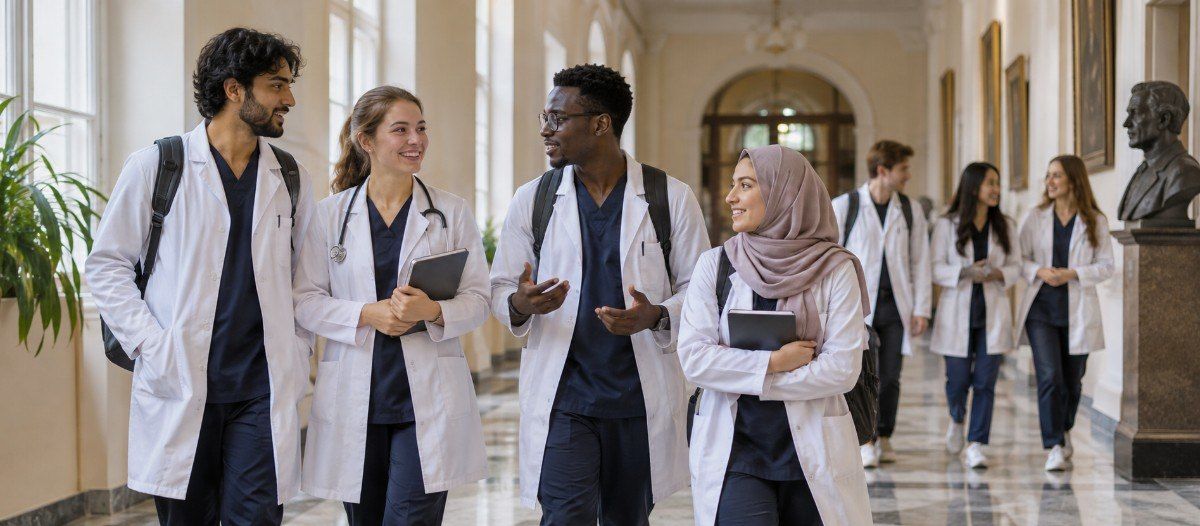
Furnished hostel rooms with Wi-Fi, laundry, 24/7 security, and Indian mess on or near campus.
Indian restaurants and mess facilities serving vegetarian and non-vegetarian home-style food daily.
Strong Indian community with cultural events, festival celebrations, and peer support groups.
Students get hands-on clinical training in government and private hospitals affiliated with the university.
Practical information for students planning to study at MBBS in University of Thessaly Faculty of Medicine.
Prepare for all seasons. Thermal wear for winters, light clothing for summers. University provides heating in hostels.
Student visa processed with university invitation letter. Direct and connecting flights from major Indian cities.
Health insurance included in fees. Medical facility on campus plus city hospitals easily accessible.
Local SIM cards available. WhatsApp and video calls keep you connected with family back home.
Average monthly expenses of $150–$250 covering food, transport, and personal needs.
University library, online databases, and study groups. Seniors mentor juniors through academic challenges.
Our team guides you through every step — from application to arriving on campus.
Our Greece specialist assesses Greek language readiness and academic profile, and the public Greek-medium pathway vs the English-medium private option.
For the public pathway, we connect you with certified Greek language instructors. B2 proficiency target before admission.
Full Greek admission and visa document set, which includes translated academic certificates.
We submit documents to Aristotle University of Thessaloniki or an approved Greek partner.
Receives offer letter from the university, explains terms, and manages initial fee payment.
Full visa documentation prepared and submitted to the Greek Embassy in New Delhi.
Thessaloniki or Athens city orientation, accommodation, transport, banking, SIM card, and first-week logistics
We advise on routing to Thessaloniki (SKG) or Athens (ATH). Local team confirms arrival.
Our local Greece team coordinates pickup and first-week setup.
We manage Greek residence permits for studies filed and renewed annually.
Admission Helpline — Contact our counsellors for step-by-step assistance.
“The faculty here is incredibly supportive. The clinical training during hospital rotations has given me real confidence in patient care.”
“Affordable fees without compromising on quality. The campus facilities and hostel life made my transition abroad very smooth.”
“English medium instruction and WHO-recognized curriculum were the deciding factors for me. No regrets so far — excellent experience overall.”
“The university helped with everything from visa to accommodation. Hospital exposure from year three has been invaluable for my FMGE prep.”
“Just cleared my licensing exam on the first attempt. The structured coaching and mock exams during final year were a game-changer.”
“Safe campus, good food options, and a strong Indian student community. The teaching methodology is very practical and hands-on.”
Yes, since 2024, through the Medical Degree English Program, making Thessaly the fourth Greek university to offer English-medium medical study, after Athens, Thessaloniki, and Crete.
Possibly, depending on your qualifications. Strong BMAT scores, MediTest-EU scores, or A-Levels graded AAB or higher in Chemistry, Biology, and one other subject can exempt you. Everyone else sits a 60-question online multiple-choice exam covering biology, chemistry, and general knowledge.
€12,000 per year (approx. USD 12,960), paid in two instalments, plus a small one-time processing fee of around €200.
Not currently. The university does not yet offer scholarships for this program, so students should budget for the full six-year cost.
Very new. The first cohort of 40 international students only arrived in October 2024, though it drew a strong 180 applications for those seats in its debut year.
Yes, to meet National Medical Commission requirements for studying medicine abroad, the standard rule applying across foreign medical degrees generally. India was also among the countries represented in the first English-track cohort.
At the University General Hospital of Larissa, which sits directly beside the medical school, spanning roughly 100,000 square metres of land, serving as the main referral hospital for the Thessaly region and parts of Central Greece.
Yes. It's accredited by Greece's Hellenic Authority for Higher Education and carries an ECFMG listing supporting the USMLE pathway, alongside standard EU-wide recognition as a public Greek medical degree.
Calmer and more affordable than Athens or Thessaloniki, with around 200,000 residents in the city itself. The Biopolis and Gaiopolis campuses anchor student life, and a medical student group called ASCLEPIOS has run since 1991, well before the English program existed.
Larissa is the city where Hippocrates, the father of Western medicine, practised and later died, a detail the university and city both draw on directly, including a monument to him in the city itself.

Our expert counsellors will guide you through the complete admission process — from documents to airport pickup.