
1. What makes the University of Lancashire School of Medicine and Dentistry unique?
+A: It is one of the few UK schools awarding the MBBS title, built around a spiral curriculum with patient contact from Year 1.
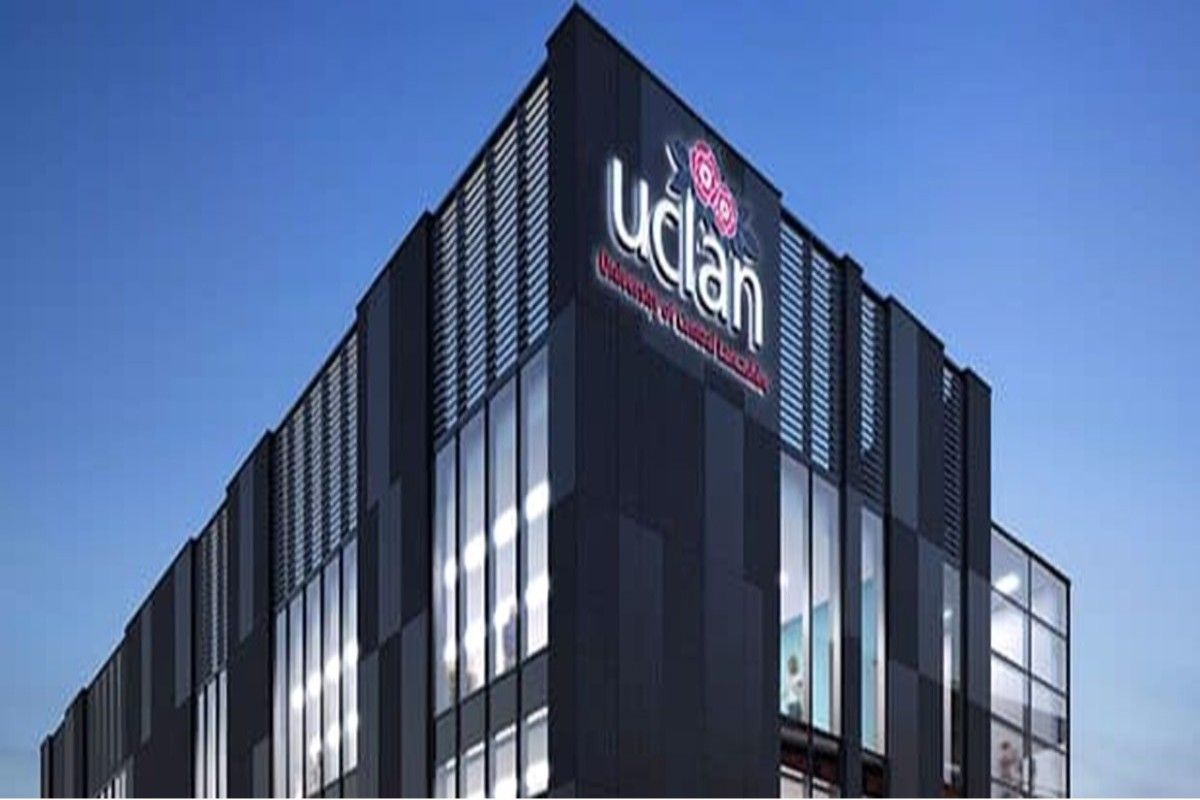
 Uk | Est. 1828
Uk | General Medical Council (GMC); listed in the World Directory of Medical Schools (WDOMS) | English medium
Expert will call you within 2 hours
School of Medicine and Dentistry, University of Lancashire is a young UK medical school that accepted its first batch of MBBS students in 2015. Before September 2025, the institution was known as University of Central Lancashire (UCLan). The university received the new name in September 2025. This is the Preston-based university, not Lancaster University, which is another institution.
The school of medicine and dentistry was established from scratch and not developed on the basis of a teaching hospital. Therefore, the five-year MBBS course offered at the school follows a modern spiral curriculum where medical knowledge is repeatedly revisited at ever-increasing complexity. The degree itself is known as MBBS. The use of this term does not affect the UK licensing and registration requirements associated with the degree.
There is a significant structural characteristic of the programme, namely, relocation during the programme. The first two years are mostly spent in Preston where students receive their scientific education along with early GP and community placements. Years 3-5 are spent either in Burnley (East Lancashire) or in Westlakes (Cumbria). Clinical education takes place through the help of NHS partners (East Lancashire Hospitals NHS Trust and North Cumbria Integrated Care NHS Foundation Trust). The students may specify the preference but the final location is not guaranteed. Therefore, interested students need to be ready to relocate during the studies.
The most significant advantage of the programme is its direct affiliation with the UK healthcare system. The MBBS course is accredited by the General Medical Council (GMC), and students complete the UK Medical Licensing Assessment as a part of the course. Therefore, graduates of the MBBS are ready to proceed to GMC registration and NHS practice because it is unnecessary for them to get recognition of their overseas medical qualification. For those students who plan to work in the UK in the future, this advantage makes the programme much better than cheaper medical degrees in Europe that may require additional steps of licensing and/or recognition of their qualification.
However, cost is a very significant drawback of the programme. International students' tuition is nearly £50,000 per year. The university has a special Excellence Scholarship that allows reducing the cost by £5,000 in the first two years of study for top-performing students. Additionally, the students have to pay £15,000 deposit after getting the acceptance letter. It is then reduced from the overall tuition amount and is not an additional cost. There is also a six-year MBBS programme that incorporates an integrated foundation year for students who do not meet the direct-entry requirements.
Preston is one of the less expensive locations in the UK, especially compared to London and Manchester. Consequently, the accommodation and living expenses become much less. Another advantage of the programme is a good clinical exposure of the students. They get in touch with patients early in the course, while the final year contains four six-week apprentice rotations to train them in assuming bigger clinical responsibility during the studies. Good-performing students will have the opportunity to complete an additional integrated master's year.
For Indian students, the major point of interest in choosing the programme is a significant difference between studying medicine in the UK and elsewhere in Europe. The programme provides a GMC-accredited degree, clinical training in the UK and an easier way of entering NHS practice compared to cheap European medical degrees. Nevertheless, students intending to return to India have to meet the requirements set by the National Medical Commission at the moment of applying for the registration.
Summarizing all aspects mentioned above, it can be said that the University of Lancashire is a good choice for a student who is willing to receive a UK medical degree, appreciates the early patient exposure, can relocate from Preston to Burnley/Cumbria during the programme and can afford the high international tuition. Even though it is a relatively young institution and cannot boast a great history compared to Oxford, Edinburgh and Queen's Belfast, it is a legitimate option to receive UK medical education rather than just a lower-cost option.
No hidden charges, no donation. The full picture of costs at MBBS in University of Lancashire School of Medicine and Dentistry.
Tuition Fee
Approx. GBP 49,950 for 2026-27 entry (Approx. Rs. 63.02 lakh)
GBP 49,950 Approx. Rs. 63.02 lakh
Hostel Fee
Approx. GBP 3,500-6,500 per year (Approx. Rs. 4.42 lakh-8.20 lakh)
GBP 3,500-6,500 Approx. Rs. 4.42 lakh-8.20 lakh
Food & Meals
GBP 1,800-3,000 Approx. Rs. 2.27 lakh-3.78 lakh
per year
Insurance
GBP 776 Approx. Rs. 97,900 (per visa year)
per year
Donation
No Donation
No Hidden Fees.
Total Estimated Cost
Approx. GBP 280,000-301,000 for the complete 5-year programme (Approx. Rs. 3.53-3.80 crore)
5 year
25–35%
Average FMGE first-attempt pass rates for students from many overseas medical universities. Students from structured programs consistently score higher.
Students returning to India need to clear the FMGE/NExT exam. MBBS in University of Lancashire School of Medicine and Dentistry integrates exam-oriented coaching into the regular curriculum so students are prepared from day one.
A structured program that takes you from foundational sciences to clinical mastery.
• Introduction to clinical and communication skills, with early patient contact through short GP and community placements
• Core scientific foundations of medicine including anatomy, physiology, and biochemistry, taught at the Preston campus
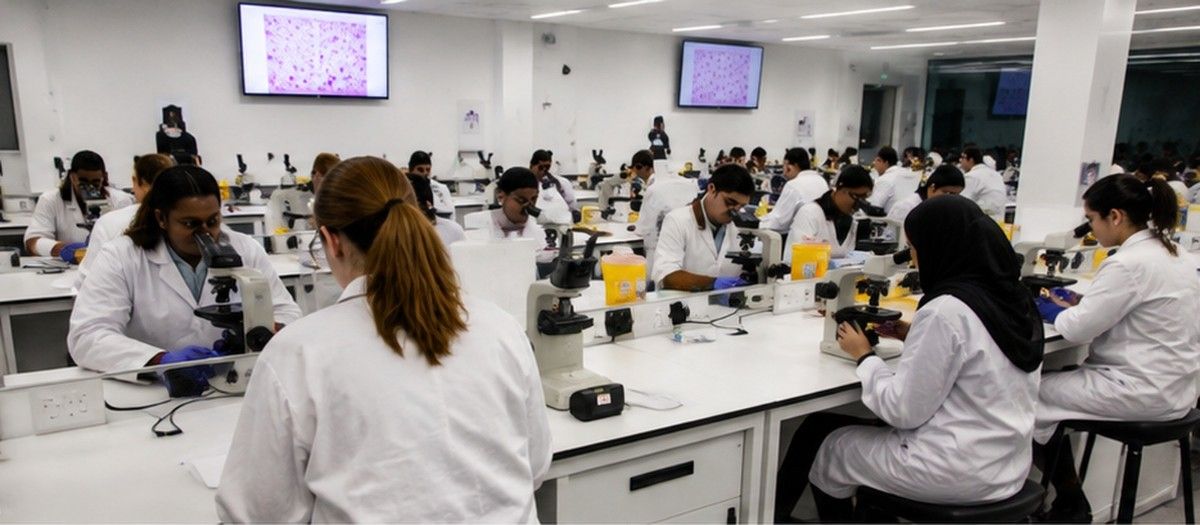
• Continued clinical skills training in on-campus simulation and clinical skills laboratories
• Deeper study of disease mechanisms, pharmacology basics, and population and public health themes
• Rotations across hospital and community settings, with one day per week of additional campus-based teaching
Internal Medicine, Surgery, Obstetrics & Gynaecology
• Opportunity for research projects and conference presentations for high-performing students
• Further supervised placements across major specialties, building on the spiral curriculum's earlier themes
• Completion of both components of the UK Medical Licensing Assessment (MLA) ahead of graduation
• Four six-week apprenticeship-style rotations designed to build independent clinical practice under supervision
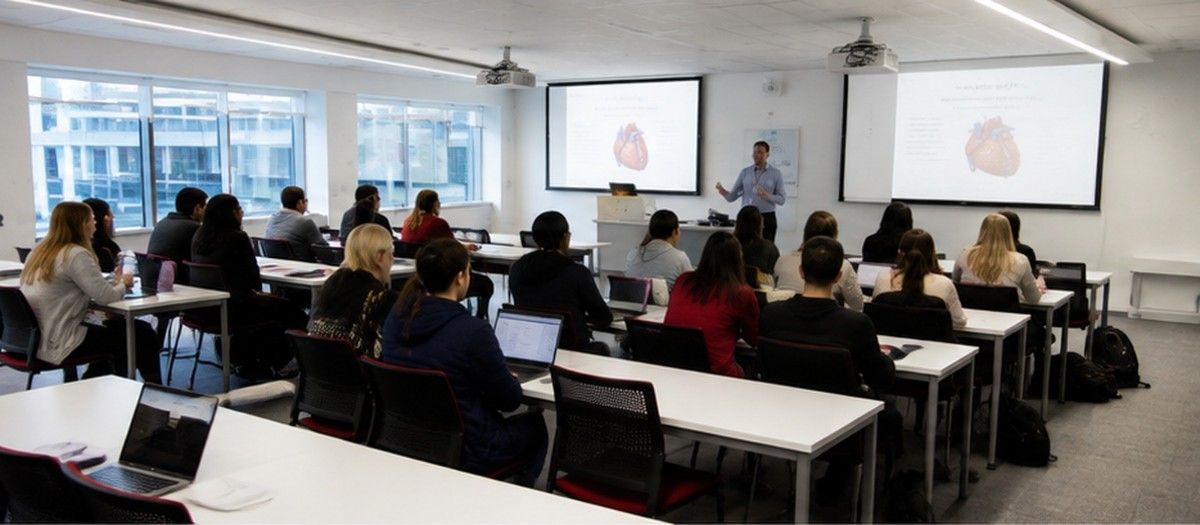
Furnished hostel rooms with Wi-Fi, laundry, 24/7 security, and Indian mess on or near campus.
Indian restaurants and mess facilities serving vegetarian and non-vegetarian home-style food daily.
Strong Indian community with cultural events, festival celebrations, and peer support groups.
Students get hands-on clinical training in government and private hospitals affiliated with the university.
Practical information for students planning to study at MBBS in University of Lancashire School of Medicine and Dentistry.
Prepare for all seasons. Thermal wear for winters, light clothing for summers. University provides heating in hostels.
Student visa processed with university invitation letter. Direct and connecting flights from major Indian cities.
Health insurance included in fees. Medical facility on campus plus city hospitals easily accessible.
Local SIM cards available. WhatsApp and video calls keep you connected with family back home.
Average monthly expenses of $150–$250 covering food, transport, and personal needs.
University library, online databases, and study groups. Seniors mentor juniors through academic challenges.
Our team guides you through every step — from application to arriving on campus.
Compare universities based on fees, city, UCAT requirements, and clinical exposure, starting 12–18 months before your intended entry, not the cycle you’re applying in.
Registration opens in May; the testing window runs July–September. Most successful applicants begin focused preparation 3–4 months ahead, alongside board exam preparation.
Book and complete IELTS, PTE, or TOEFL well ahead of the UCAS deadline, allowing time for a retake if needed.
Submit your application, including personal statement and up to 4 medicine choices, before the 15 October deadline.
Prepare for and attend interviews (MMI or Panel format) typically scheduled November through February.
Offers (conditional or unconditional) typically arrive through winter and spring; conditional offers require meeting stated academic and English-score conditions.
Once Class 12 results and any other conditions are confirmed, your university issues the Confirmation of Acceptance for Studies (CAS), which is required for your visa application.
Apply using your CAS reference number; arrange maintenance funds according to the 28-day rule well in advance rather than at the last minute.
Book flights, confirm accommodation, complete any on-arrival formalities during orientation week, open a local bank account, and begin building connections with your university’s Indian/South Asian student community.
Admission Helpline — Contact our counsellors for step-by-step assistance.
“The faculty here is incredibly supportive. The clinical training during hospital rotations has given me real confidence in patient care.”
“Affordable fees without compromising on quality. The campus facilities and hostel life made my transition abroad very smooth.”
“English medium instruction and WHO-recognized curriculum were the deciding factors for me. No regrets so far — excellent experience overall.”
“The university helped with everything from visa to accommodation. Hospital exposure from year three has been invaluable for my FMGE prep.”
“Just cleared my licensing exam on the first attempt. The structured coaching and mock exams during final year were a game-changer.”
“Safe campus, good food options, and a strong Indian student community. The teaching methodology is very practical and hands-on.”
A: It is one of the few UK schools awarding the MBBS title, built around a spiral curriculum with patient contact from Year 1.
A: Yes. The entire five-year (or six-year with Foundation Entry) MBBS programme is delivered in English.
A: Yes. The MBBS is accredited by the GMC and the school is listed in the World Directory of Medical Schools.
A: No. Years 1-2 are based at Preston, while Years 3-5 relocate to either the Burnley or Westlakes campus.
A: Yes. Indian students should clear NEET, and any future recognition of the foreign degree remains subject to prevailing NMC regulations.
A: It reduces international tuition fees by GBP 5,000 across Year 1 and Year 2 for top-performing MMI candidates.
A: Yes. A GBP 15,000 deposit is required once an offer is confirmed, later adjusted against tuition fees.
A: Yes, via a six-year MBBS with an integrated Foundation Entry year for eligible international applicants.
A: They may be offered an additional integrated year to gain a master's degree alongside their MBBS.
A: Applicants usually need academic transcripts, passport copies, English proficiency scores, and interview documentation.
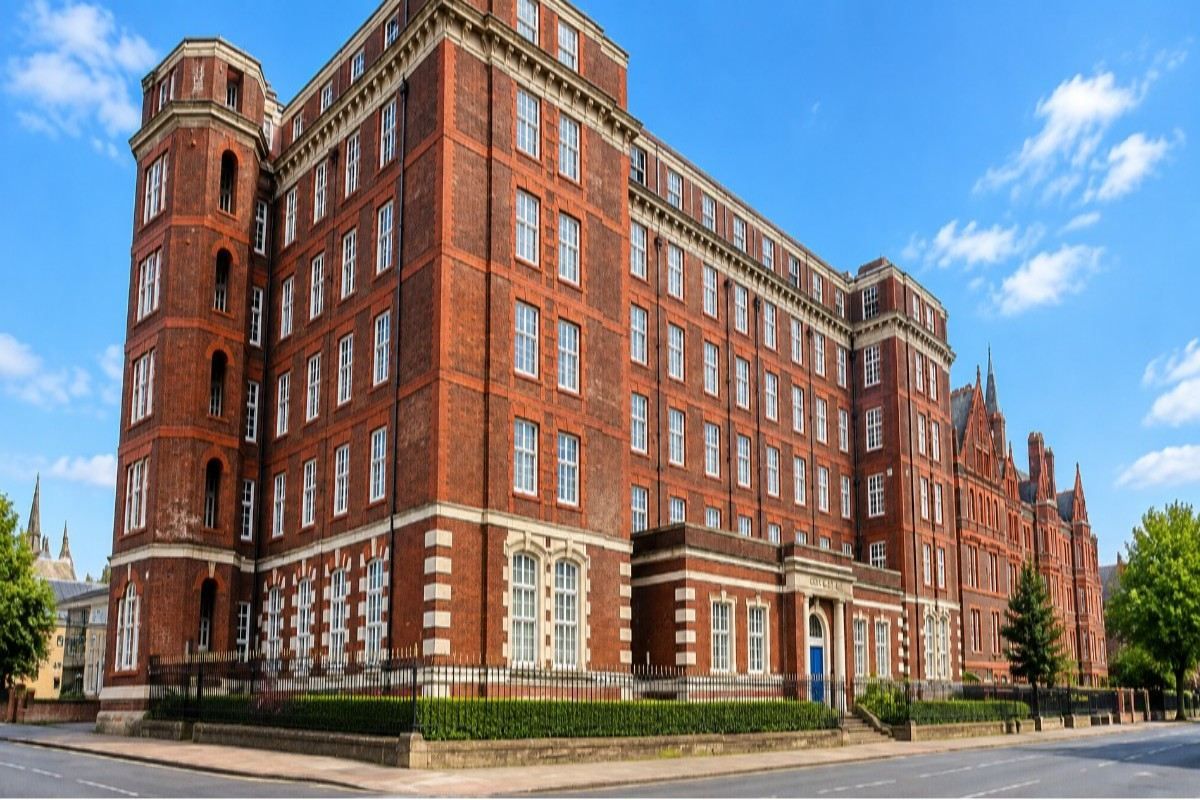
Our expert counsellors will guide you through the complete admission process — from documents to airport pickup.