
Q1. When was the School of Health Sciences established?
+It was established on 28 June 1976, in Tacloban City, Leyte, as the UP Institute of Health Sciences, becoming a regular UP Manila unit renamed School of Health Sciences on 3 May 1989.
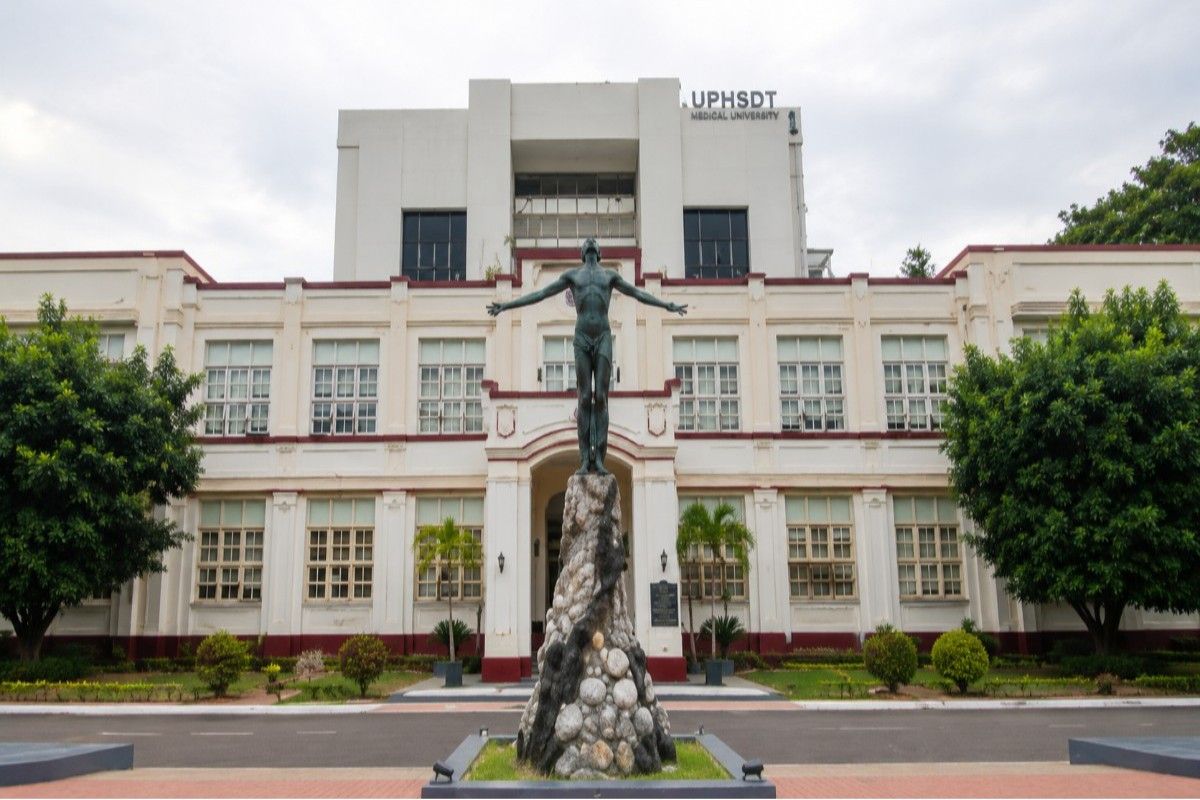
 Philippines | Est. 1976
Philippines | Operates under the University of the Philippines System, established via Republic Act 9500, UP's own 2008 Charter | English and Filipino, per standard Philippine higher education practice medium
Expert will call you within 2 hours
People mostly just call it UP SHS, or simply SHS, for short. It was established on 28 June 1976, in Tacloban City, Leyte, as the UP Institute of Health Sciences, a genuine joint effort between the Philippines' own Ministry of Health, the Ministry of Local Government and Community Development, and the wider University of the Philippines System. So, this institution's own founding traces to a specific, dated, multi-agency government initiative, not a single university's own internal decision alone.
Here is a fact most guides skip entirely, and it is genuinely remarkable. SHS is widely known as "The Tacloban Experiment," a real, historically documented nickname reflecting its own origins as a bold, unproven pilot programme. The initiative was led by Florentino B. Herrera Jr., who served as Dean of the UP College of Medicine from 1967 to 1979, and who convened what was specifically called an Extraordinary Curriculum Committee to design an entirely new kind of medical education pathway. The resulting Step-Ladder Curriculum was formally approved by the UP Board of Regents at its own 871st meeting, on 19 April 1976, a specific, documented institutional milestone.
Here is genuinely the single most distinctive fact about this institution worth understanding in full. SHS does not select its own students through a standard competitive entrance exam. Instead, target areas are identified first, based on the availability of health workers, local health statistics, population size, and economic conditions, and community-endorsed scholars are then selected specifically based on local need and their own willingness to serve, rather than students applying independently on their own initiative. When the school first opened its doors to a group of 96 students, their prior National College Entrance Examination scores genuinely ranged from a high of 90 percent down to a low of just 9 percent, a real, documented illustration of how deliberately this admissions model prioritises community need and service commitment over conventional academic scoring alone.
The school's own physical origins were genuinely humble. It began operating from just two classrooms and a small nipa hut, a traditional Filipino thatched structure, on the grounds of the Danilo Z. Romualdez Hospital, now known as the Eastern Visayas Medical Center. In 1981, the school moved to its present campus in the town of Palo, Leyte, on a 4,083 square metre lot specifically donated by the Palo municipal government, facilitated by Don Pio Pedrosa, with the formal donation resolution, Resolution 82-71, passed the following year, on 20 October 1982.
Thirteen years after its own founding, the institute was formally renamed the School of Health Sciences, becoming a regular unit of UP Manila on 3 May 1989. Here is a genuinely notable superlative claim worth knowing directly. SHS's own Step-Ladder Curriculum is described as the first programme of its kind anywhere in Asia, a competency-based and community-based curriculum that integrates the sequential training of midwives, nurses, nurse practitioners, and eventually Doctors of Medicine, all within one single, continuous educational pathway, rather than treating each profession as an entirely separate track.
A genuinely dramatic, real event worth knowing about is that in November 2013, Typhoon Haiyan, one of the most powerful tropical cyclones ever recorded, struck the Philippines directly, damaging SHS's own facilities and interrupting its academic programmes. Help arrived quickly from various groups to support the school's own rebuilding effort, a real, documented moment of institutional resilience. SHS has since expanded well beyond its original Palo campus, now also operating extension campuses at Baler, Aurora, opened in 2008, and Koronadal City, South Cotabato, opened in 2010, alongside a further campus in Tarlac.
SHS's own Step-Ladder Curriculum runs as a genuinely sequential, multi-stage pathway. The first stage comprises 77 weeks of training leading to Community Health Worker certification and eligibility for the Midwifery Licensure Examination. The next stage adds a further 55 weeks, leading to a Bachelor of Science in Nursing degree and eligibility for the Nurse Licensure Examination, with the pathway continuing upward toward a full Doctor of Medicine qualification for those students who progress through every stage. Graduates are bound by a specific return-service requirement, committing them to serve underserved communities, directly reflecting the programme's own founding purpose.
SHS reports genuinely strong licensure examination outcomes, with numerous alumni recognised as top-ranking scorers, sometimes called "top notchers" in the Philippines, across midwifery, nursing, and physician board examinations. As of 2026, the school marks its own 50th anniversary, a genuine, dated institutional milestone worth knowing directly.
Fee figures here look genuinely different from the private, internationally marketed medical colleges covered elsewhere in comparable guides, since SHS is a public Philippine institution with its own specific admissions and funding model.
Cost Item | Amount | Notes |
Tuition Fee (for community-endorsed scholars) | Not applicable in the standard private-college sense | Students are selected through a community-endorsement process, not a standard paid application; confirm current arrangements directly with UP Manila |
General UP System Tuition Reference (for context only) | Heavily subsidised, per Philippine public university norms | The University of the Philippines System operates under a socialised tuition model for its own regular students generally |
Return-Service Obligation | Required of all graduates | Graduates commit to serving underserved communities, a genuine non-monetary condition tied to their own education |
International/Foreign Applicant Pathway | Not consistently published | SHS's own admissions model is specifically built around Filipino community need; confirm directly whether any pathway exists for non-Filipino applicants |
Living Costs (Palo, Leyte, general reference) | Considerably lower than Manila | A genuinely more affordable regional cost of living compared to the Philippine capital |
Total Cost | Genuinely not comparable to a standard private MBBS fee structure | Contact UP Manila's School of Health Sciences directly for accurate, current guidance |
Note: this institution's own funding and admissions model is fundamentally different from a private, internationally marketed medical college. Contact UP Manila's School of Health Sciences directly for accurate, current guidance specific to your own situation.
Most guides covering medical education abroad don't mention SHS at all, since it doesn't fit the standard private, fee-based MBBS-for-international-students model. However, it deserves genuine attention on its own terms, since it represents one of the most distinctive, celebrated approaches to medical education anywhere in Asia. The reason is simple. It is about a real, documented pedagogical innovation, and a genuinely inspiring, 50-year institutional story.
SHS is not like any other institution covered in comparable guides when it comes to its own admissions philosophy. In fact, it specifically selects community-endorsed scholars based on local health need and service commitment, rather than competitive academic scores alone. Furthermore, its own founding cohort's National College Entrance Examination scores ranged from 90 percent down to just 9 percent, a real, documented illustration of this deliberately different admissions philosophy. As a result, this represents a genuinely radical departure from how virtually every other medical institution covered in comparable guides selects its own students.
The programme's own step-ladder structure also matters more than most guides covering medical education ever address. For example, most medical education pathways treat midwifery, nursing, and medicine as entirely separate professional tracks. SHS specifically integrates all of these into one single, sequential, continuous curriculum, described as the first of its kind anywhere in Asia. Moreover, this genuinely innovative structural approach has been used as a model by community-based health training programmes around the world.
One thing most guides on medical education entirely overlook is SHS's own real resilience through genuine adversity. In addition to its own remarkable founding story, the school's facilities were directly damaged by Typhoon Haiyan in November 2013, one of the most powerful storms ever recorded, with the school itself later rebuilt and expanded to four campuses. Since this represents a real, documented story of institutional resilience rather than an uninterrupted, easy history, applicants and observers alike get a genuinely fuller picture of what this institution has actually overcome.
No hidden charges, no donation. The full picture of costs at MBBS in School of Health Sciences University of the Philippines.
Tuition Fee
$1,706 – $2,691 per year
$1,706 – $2,691 per year
Hostel Fee
$481 – $961 per year
$481 – $961 per year
Food & Meals
$961 – $1,282
per year
Insurance
$24 – $48
per year
Donation
no donation
no hidden fee
Total Estimated Cost
$10,240 – $16,153
6 year
25–35%
Average FMGE first-attempt pass rates for students from many overseas medical universities. Students from structured programs consistently score higher.
Students returning to India need to clear the FMGE/NExT exam. MBBS in School of Health Sciences University of the Philippines integrates exam-oriented coaching into the regular curriculum so students are prepared from day one.
A structured program that takes you from foundational sciences to clinical mastery.
● In addition, this stage builds the grassroots, community-embedded foundation the whole programme is built around
● First, this stage trains scholars as Community Health Workers, leading to certification and eligibility for the Midwifery Licensure Examination
● Furthermore, this stage builds directly on the clinical and community foundation established in Stage 1
● Next, scholars who progress complete further training leading to a BS in Nursing degree and eligibility for the Nurse Licensure Examination
● Moreover, each stage carries its own standalone professional qualification and licensure eligibility
● Then, further stages continue the sequential pathway toward nurse practitioner-level training
● Also, graduates at every level are bound by the same underlying return-service requirement to underserved communities
● Finally, scholars who progress through every stage can reach a full Doctor of Medicine qualification
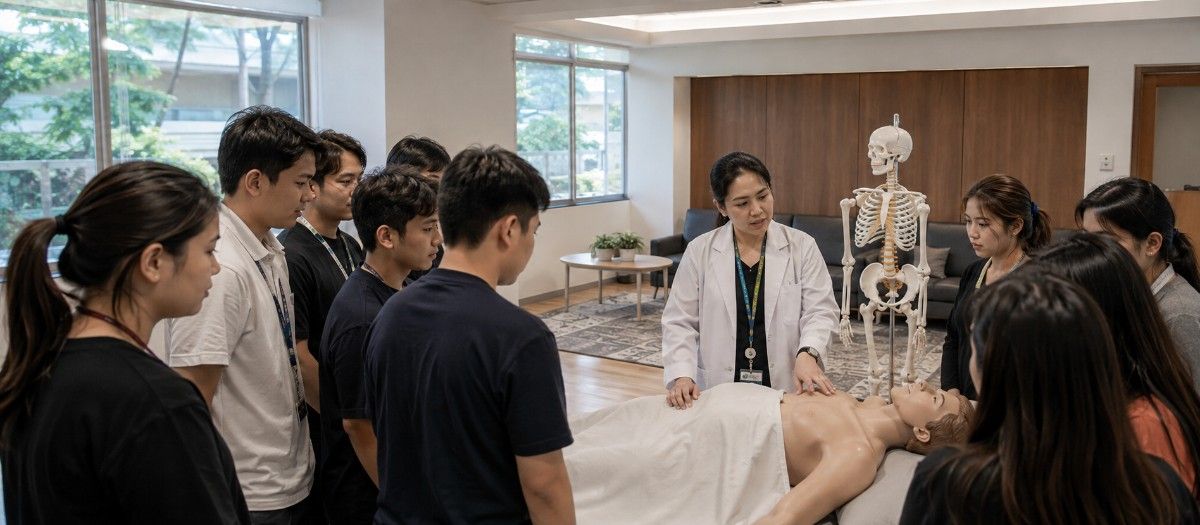
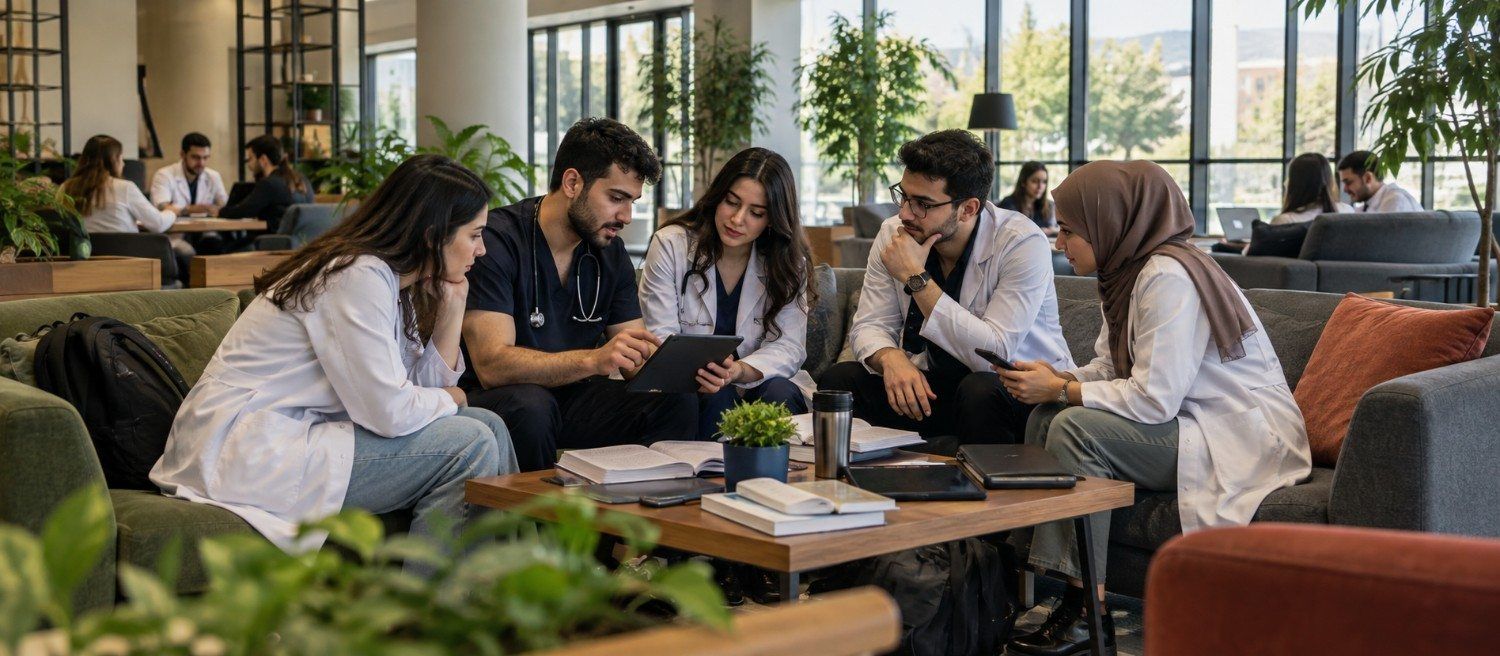
Furnished hostel rooms with Wi-Fi, laundry, 24/7 security, and Indian mess on or near campus.
Indian restaurants and mess facilities serving vegetarian and non-vegetarian home-style food daily.
Strong Indian community with cultural events, festival celebrations, and peer support groups.
Students get hands-on clinical training in government and private hospitals affiliated with the university.
Practical information for students planning to study at MBBS in School of Health Sciences University of the Philippines.
Prepare for all seasons. Thermal wear for winters, light clothing for summers. University provides heating in hostels.
Student visa processed with university invitation letter. Direct and connecting flights from major Indian cities.
Health insurance included in fees. Medical facility on campus plus city hospitals easily accessible.
Local SIM cards available. WhatsApp and video calls keep you connected with family back home.
Average monthly expenses of $150–$250 covering food, transport, and personal needs.
University library, online databases, and study groups. Seniors mentor juniors through academic challenges.
Our team guides you through every step — from application to arriving on campus.
The first step is to have a free phone counselling session. This is not a sales promotion or sales pitch. Here, we analyse all the universities mentioned side by side. We go through FMGE rates, total fees, city life, and whether the USMLE or NExT path better suits your goals. Most students walk out of this call with a clear first choice and a backup.
Once you pick a university, we will hand you a Philippines-specific document checklist. It is not a generic list. Every item on it is there for a reason, either for the university application, the 9(f) visa conversion, or the ACR I-Card registration. We check everything before a single paper goes anywhere.
Your application goes directly to the university through our partner channel. Most students get an acceptance letter within 10 to 21 days. However, December intake applications move faster than June ones, so timing matters. We follow up on all applications and will be in touch if there is any delay.
Once you receive your offer letter, we will have an in-depth discussion with you on the fees charged. The first instalment of fees will be deposited without any ambiguity. What you pay, when you pay, and what it covers, all of it is clear before any money moves.
Indian students do not need a pre-departure visa for the Philippines. You enter visa-free for 30 days. However, the 9(f) Student Visa conversion must start within the first week of arrival; it is time-sensitive. We also advise on the best flight route, whether Cebu or Manila, depending on your university.
About a week before you fly, we do a full pre-departure briefing. We cover accommodation options, campus location, Indian food sources near your university, how to transfer money from India, which SIM card to buy, and what the first week on campus actually looks like—students who attend this briefing land in the Philippines significantly less stressed than those who skip it.
On arrival day, our local team in the Philippines meets you at the airport, whether in Cebu or Manila. You are not landing in a new country alone. Someone who knows the ground is there from the first minute.
Within the first week, the 9(f) visa conversion process starts. Our team submits your documents to the Bureau of Immigration and closely tracks your application. The ACR I-Card, your official alien registration card, is processed at the same time. This step is strictly managed because delays here cause real problems later.
By the end of Week 2, your university enrollment is complete, your hostel room is confirmed, and your BS pre-medical orientation is done. You know your timetable, your faculty, and where everything is. Furthermore, our team has already flagged your NMAT preparation schedule, so there will be no surprises at the bridge stage.
After enrollment, our on-the-ground team in the Philippines stays in contact throughout all six years. If there is a university issue, a hostel problem, a visa renewal, or a health concern, there is a local contact to call. Moreover, from Year 3 onward, our FMGE and USMLE coaching track begins, because academic support does not stop at the airport.
Admission Helpline — Contact our counsellors for step-by-step assistance.
“The faculty here is incredibly supportive. The clinical training during hospital rotations has given me real confidence in patient care.”
“Affordable fees without compromising on quality. The campus facilities and hostel life made my transition abroad very smooth.”
“English medium instruction and WHO-recognized curriculum were the deciding factors for me. No regrets so far — excellent experience overall.”
“The university helped with everything from visa to accommodation. Hospital exposure from year three has been invaluable for my FMGE prep.”
“Just cleared my licensing exam on the first attempt. The structured coaching and mock exams during final year were a game-changer.”
“Safe campus, good food options, and a strong Indian student community. The teaching methodology is very practical and hands-on.”
It was established on 28 June 1976, in Tacloban City, Leyte, as the UP Institute of Health Sciences, becoming a regular UP Manila unit renamed School of Health Sciences on 3 May 1989.
SHS's own admissions model is specifically built around Filipino community need, selecting community-endorsed scholars rather than accepting independent international applications; contact UP Manila directly to confirm whether any pathway exists for non-Filipino applicants.
A genuinely pioneering, sequential curriculum, the first of its kind in Asia, integrating training as a Community Health Worker, midwife, nurse, nurse practitioner, and eventually Doctor of Medicine, all within one continuous pathway.
No, SHS operates as a public institution with a community-endorsement admissions model rather than a standard paid, private-college application process; confirm current specifics directly with UP Manila.
This is the school's own historic nickname, reflecting its origins as a bold, unproven pilot programme when it was first established in Tacloban City in 1976.
Target areas are identified based on health worker availability, statistics, population, and economic conditions, with community-endorsed scholars then selected based on local need and willingness to serve, rather than academic test scores alone.
In November 2013, Typhoon Haiyan directly damaged the school's facilities and interrupted its programmes; the school was subsequently rebuilt with help from various supporting groups.
Four: the original Palo, Leyte campus, alongside Baler, Aurora (opened 2008), Koronadal City, South Cotabato (opened 2010), and a further campus in Tarlac.
A return-service requirement, committing graduates to serve underserved communities, directly reflecting the programme's own founding purpose.
Genuinely strongly; numerous alumni have been recognised as top-ranking scorers across midwifery, nursing, and physician board examinations in the Philippines.
Our expert counsellors will guide you through the complete admission process — from documents to airport pickup.