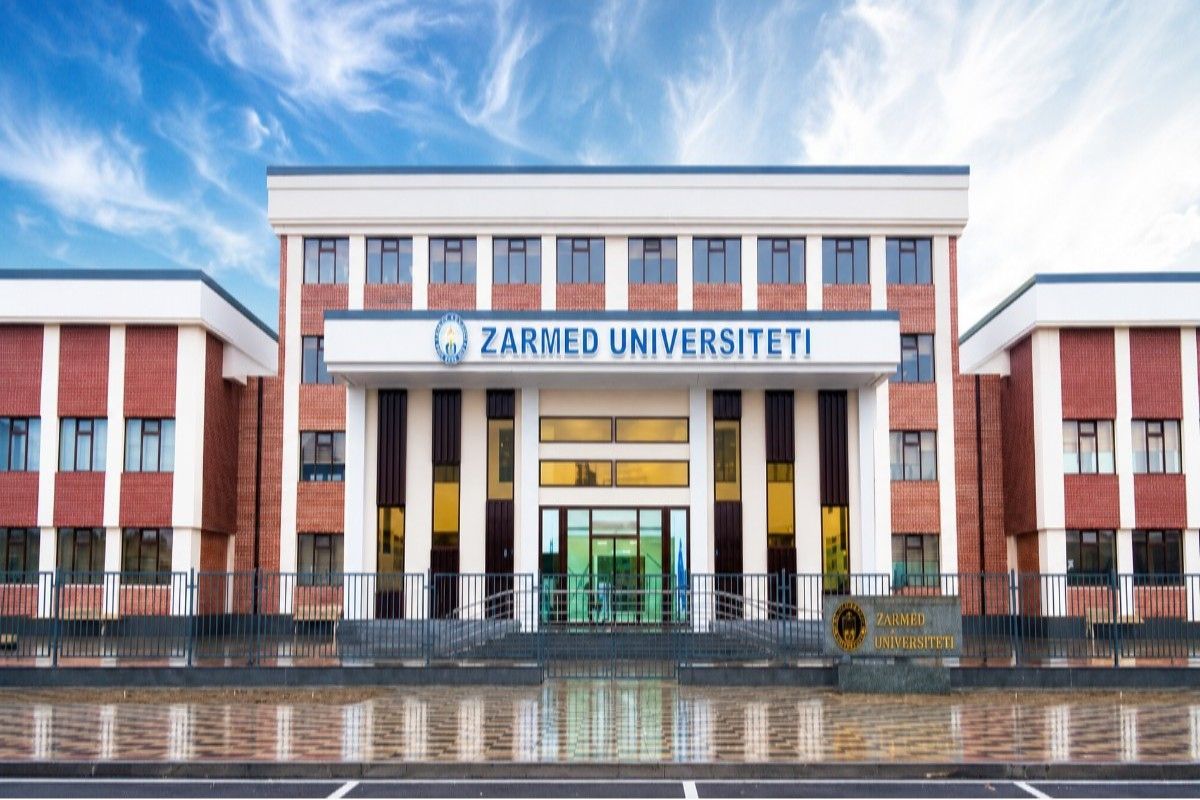
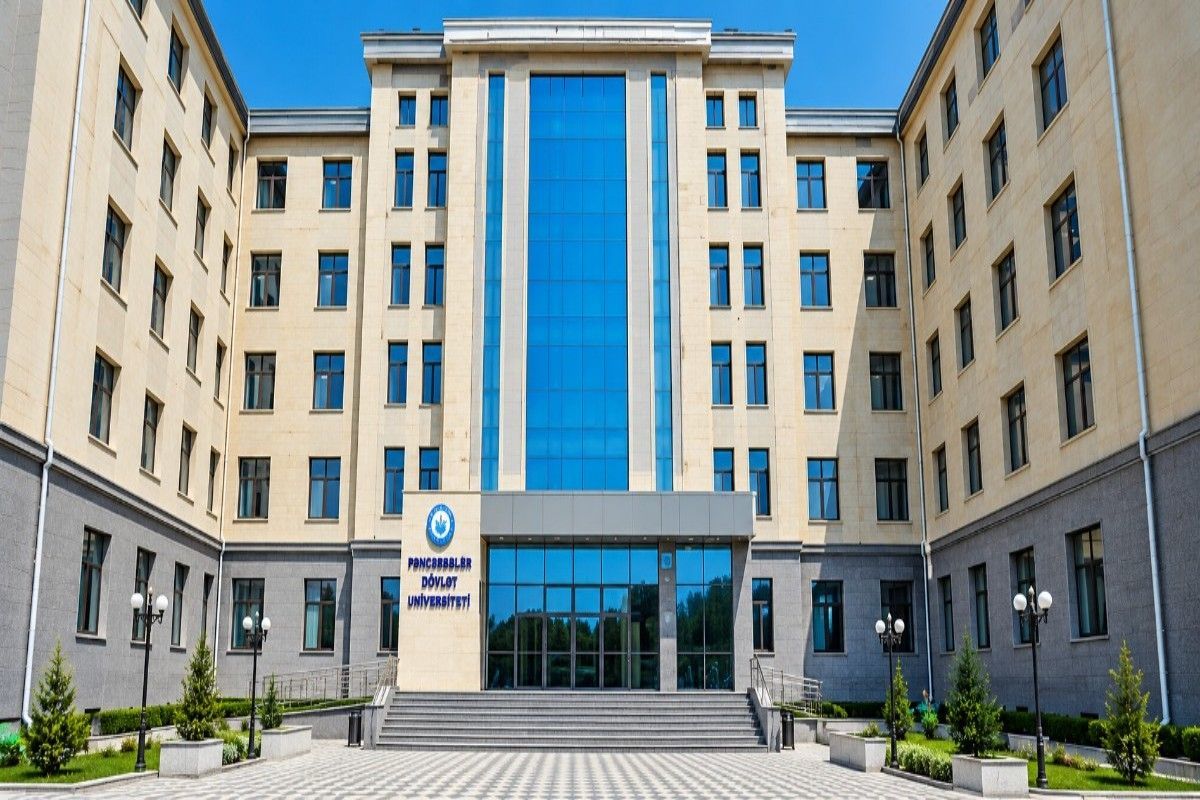
Samarkand ranks among the most famous cities on the entire Silk Road. Its Registan square is covered in centuries-old blue-tiled domes. It draws visitors from across the world. Inside this same historic city sits a newer branch of Zarmed University. It offers the same core medical degree available at the school's original Bukhara campus.
As with the Bukhara campus, real gaps show up across public sources. This time, it's about the university's exact founding date. Wikipedia is usually the more carefully checked source here. It states that Zarmed University began life as Turon Zarmed University, in August 2022. An Uzbek entrepreneur and philanthropist founded it: Dilshod Dalerovich Shukurlaev. Several MBBS admissions consultancy sites disagree, though. They cite either 2018 or 2019 instead. One source, describing the Samarkand campus specifically, places its start at 2019. These dates diverge a lot. Consultancy sites often carry a financial incentive too. They may want to describe a school as more established than it really is. Given both these facts, prospective students should ask directly. Request written confirmation of the exact founding date and campus history, straight from the university itself.
The Samarkand campus operates as a real sister site to the main Bukhara campus. It isn't some separate, lesser school. Multiple sources describe the two campuses the same way. Both run the same curriculum. Both use comparably qualified faculty. Both offer the same core facilities. The choice between them mostly comes down to personal preference. Pick between two different historic Uzbek cities instead. Don't worry about any real gap in school quality or outcome.
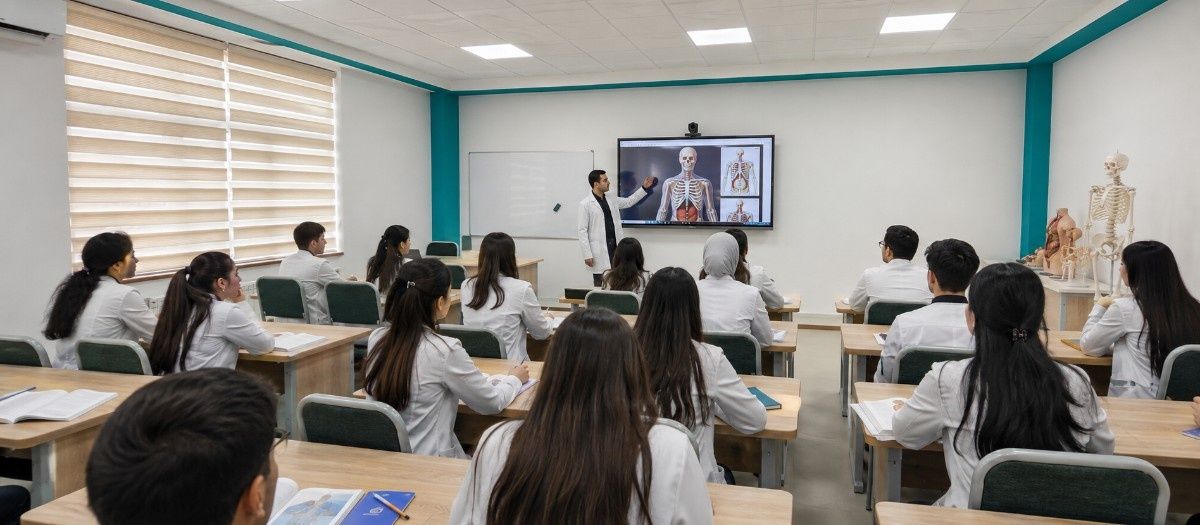
The Faculty of Medicine here runs the same MBBS-equivalent General Medicine degree offered at Bukhara. The course follows a 6-year structure. Five years cover academic and preclinical study. One final year covers hospital internship. Teaching runs fully in English. The university again makes a specific point of employing full-time Indian doctors and professors. This detail is meant to help Indian students settle in more smoothly. It plays on their existing familiarity with NEET and FMGE requirements back home.
The curriculum itself mirrors the Bukhara campus closely. Early years cover anatomy, biochemistry, and physiology. Later years move into pathology, pharmacology, and microbiology. Applied clinical training runs alongside this too: surgery, paediatrics, internal medicine, forensic medicine, and community medicine. Practical and clinical work begins from the third year onward. This gives students a gradual, extended build-up of hands-on skill, well ahead of the required internship year.
For clinical training, the same larger Zarmed hospital network is used as for the Bukhara site. Zarmed Pratiksha Hospital is one of these places. In the fourth year of their study, students start doing real hospital work while being supervised. But you should check directly with the university to make sure of the specific local clinical placement arrangements for the Samarkand site. Compared to the Bukhara campus, which has a lot more public information, this special place doesn't have as much.
From what I've read, the costs at the Samarkand campus seem to be very similar to those at the Bukhara site. Estimates for tuition range from about USD 2,600 to USD 4,500 per year. This varies a lot on the source that was used. One source goes into great depth about how much a course costs over six years. It comes to about INR 33 to 35 lakh for the university as a whole. There are many sources here. There is a pattern of inconsistency in this university's public material that this fits into. So, one step is the most important. Ask for a clear, up-to-date, written list of fees that only applies to the Samarkand campus. That is still the safest way to get an accurate number.
The claims of recognition are the same for both campuses, since they are both run by the same parent university. According to sources outside of Zarmed, the group is recognized by a number of groups. The National Medical Commission of India, the World Health Organization, and the World Federation for Medical Education are a few of these groups. In the US, ECFMG is also named. It is also said that the school is a member of the Association of Medical Schools in Europe. As with all the claims in this profile that come from admissions consultants, one step MUST be taken first. Check directly with the necessary bodies on your own. You shouldn't just rely on business materials.
The process for Indian applicants is the same as the process for people from all over Uzbekistan. This means they have finished high school and know Physics, Chemistry, Biology, and English. Applicants in the general category must have at least 50% in their PCB aggregate marks. Types that are reserved need 40% instead. As per the rules of the National Medical Commission, you also need a valid NEET score. There doesn't seem to be a different exam for getting into college here either.
Living in Samarkand has its own unique style. It is different from Bukhara, even though both have roots in Uzbek culture and the Silk Road. The place has a lot of historical weight. It's one of the oldest towns in Central Asia that has always had people living in it. Some of the most famous buildings in the area are there. Students who choose this campus over Bukhara often say they like how Samarkand has a unique culture feel. Its own ways to get around are also important. It is linked to both Bukhara and Tashkent by the same Afrosiyob high-speed rail line.
Some students want an MBBS degree that is cheap and taught in English. They also want it to take place in one of the oldest towns in Central Asia. For them, the Samarkand site gives them a really similar choice. The teachers and curriculum are the same as at Zarmed's main school in Bukhara. There are the same real holes in public sources about when the company was founded and how much it costs. It is still very important to check with the university directly and carefully on this campus as it was in Bukhara.
If you are directly comparing Samarkand and Bukhara, it is worth giving a useful point of comparison. Both schools say they have the same course list. Both say they have the same faculty standard and level of recognition. Because of this, the real choice is generally based on city preference rather than academics. Students often come to Samarkand to see the sites of the Silk Road. Its daily pace is also a little different from Bukhara's historical character. According to the sources used for this profile, neither place has a clear advantage when it comes to clinical training depth or degree outcomes. If you have to choose between the two, you should feel free to put your own preferences first. There is no clear, proven academic gap between them.
As this whole profile is based on care, I think one more honest point is worth making. It's not always a bad sign when a private university that is still fairly new builds a second campus quickly in a different place. This is true no matter what year it was founded. Growth can show that there is real desire and trust in the system. But it does mean that the newer site has less history that has been independently documented. When compared to the original site, this is still true. The campus in Samarkand doesn't get as much attention from the public as the college in Bukhara. This is true for almost every category we looked at here. Specifics of the clinical placement. About the hostel. Even a set date for its creation. In fact, this doesn't mean that the Samarkand campus is less important. It does, however, mean something useful. A potential student doesn't have as much information to check on their own. Before you sign up, you should look into that gap on your own.
When you compare this campus to other Uzbek medical schools, you can see a pattern. A lot of schools that are talked about in similar profiles also have it. On paper, statements of recognition sound very broad. Structure-wise, the English-taught program fits with what's common in the area. But there are still real gaps in the numbers for how much the foundation cost and how long it took to build. This places it in the middle. Some of the older, government-run medical centers in Uzbekistan have more complete records than this one. But it also doesn't show the obvious contradictions or jumbled marketing materials that can be found at some of the more troubling schools that were looked at separately. The best thing to do at this point is still to carefully and directly check with the university. It's open to any family or person who wants to go to college.