
Q1. When was this university established?
+It was founded in 2000, though it has changed its name twice since, most recently becoming Uniwersytet Andrzeja Frycza Modrzewskiego w Krakowie in September 2024.
 Poland | Est. 2000
Poland | Recognised by Poland's Ministry of Science and Higher Education; the medical programme received a positive evaluation from the Polish Accreditation Committee (PKA). The Faculty of Medicine and Health Sciences also appears in WDOMS following ECFMG approval in F | Medicine is taught in both English and Polish, run as separate tracks with separate fee schedules. medium
Expert will call you within 2 hours
The University and What Makes It Different
People mostly just call it AFM, or sometimes "Frycz," a nickname its own students use. The university's roots go back to the year 2000, when the Krakow Educational Society founded it as a small higher-education school named after the Renaissance-era Polish writer and political thinker Andrzej Frycz Modrzewski. So, this college has actually been growing quietly in Krakow for a quarter of a century, even though its current, grander-sounding university title only became official very recently.
The name itself has changed more than once, and it's worth untangling, since older sources online still use earlier versions. In 2007, the school gained formal "academic university" status. Two years later, in 2009, it took the name Krakowska Akademia im. Andrzeja Frycza Modrzewskiego, the Krakow Academy name many people still associate with it. Then, on 1 September 2024, it became the Uniwersytet Andrzeja Frycza Modrzewskiego w Krakowie, the exact university title used today. So, don't be surprised if older articles, reviews, or even hospital partnership pages still refer to it as "Krakowska Akademia" rather than its current university name; they're describing the same institution.
Here is a fact most guides skip entirely. In July 2015, this university became the very first non-public, private institution in all of Poland to receive official government rights to teach kierunek lekarski, Poland's medical degree programme. Its first cohort of medical students began their studies in the 2016/17 academic year. So, while plenty of newer private Polish colleges have since followed with their own medical programmes, this one was genuinely first through the door, years ahead of several competitors covered elsewhere.
AFM describes itself as the largest non-public university in the whole Małopolska region, teaching close to 9,000 to 10,000 students, including more than 2,000 international students representing every inhabited continent. Across its full academic offer, the university now runs roughly 24 to 27 fields of study, and importantly for international applicants, it teaches medicine fully in English as a separate track alongside its original Polish-language programme. So, unlike several other Polish medical faculties that remain Polish-only, this one was genuinely built with an international, English-speaking student body in mind from very early on.
The Faculty of Medicine and Health Sciences sits within a wider university that also teaches law, psychology, pedagogy, international relations, architecture, journalism, and even acting, among many other subjects. Medicine itself belongs to a cluster of health-focused programmes here, alongside nursing, physiotherapy, paramedic studies, dietetics, cosmetology, and podiatry. So, medicine is a genuinely central part of this university's identity today, but it still sits within a much broader, multi-discipline institution rather than standing alone as a specialist medical school.
The Krakow Campus and Its Setting
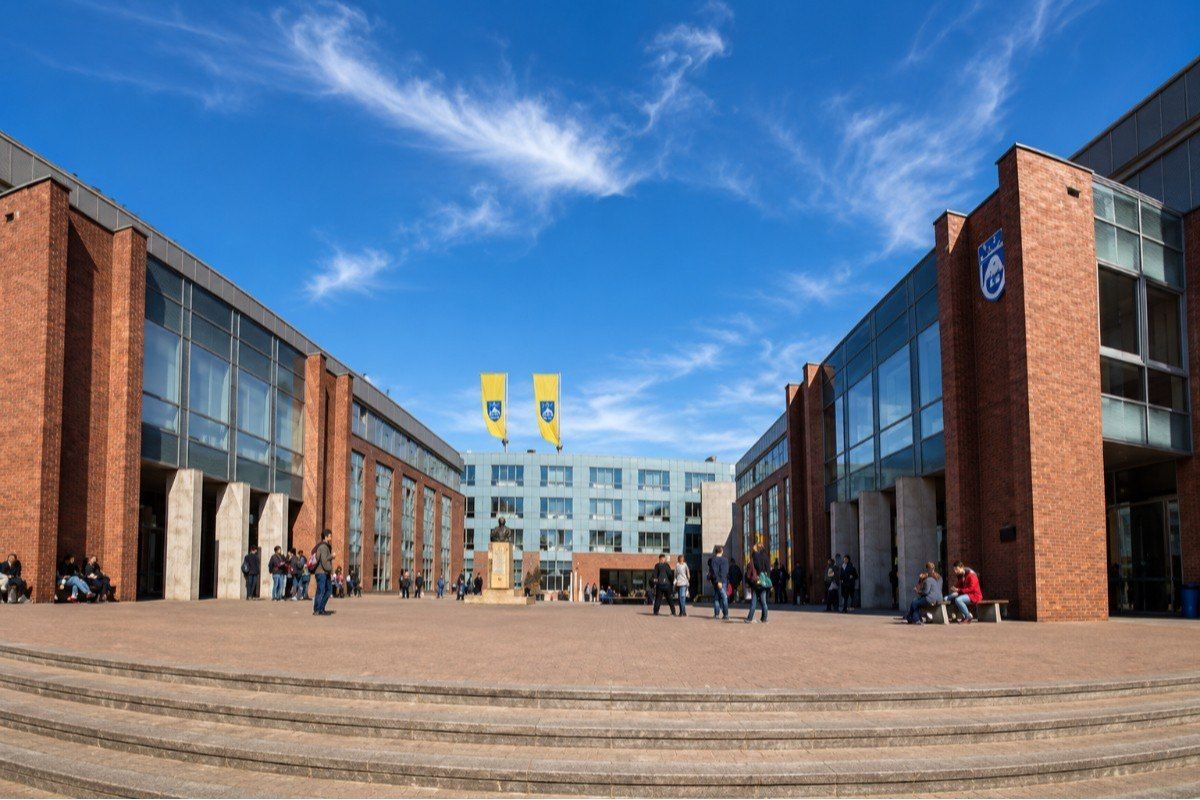
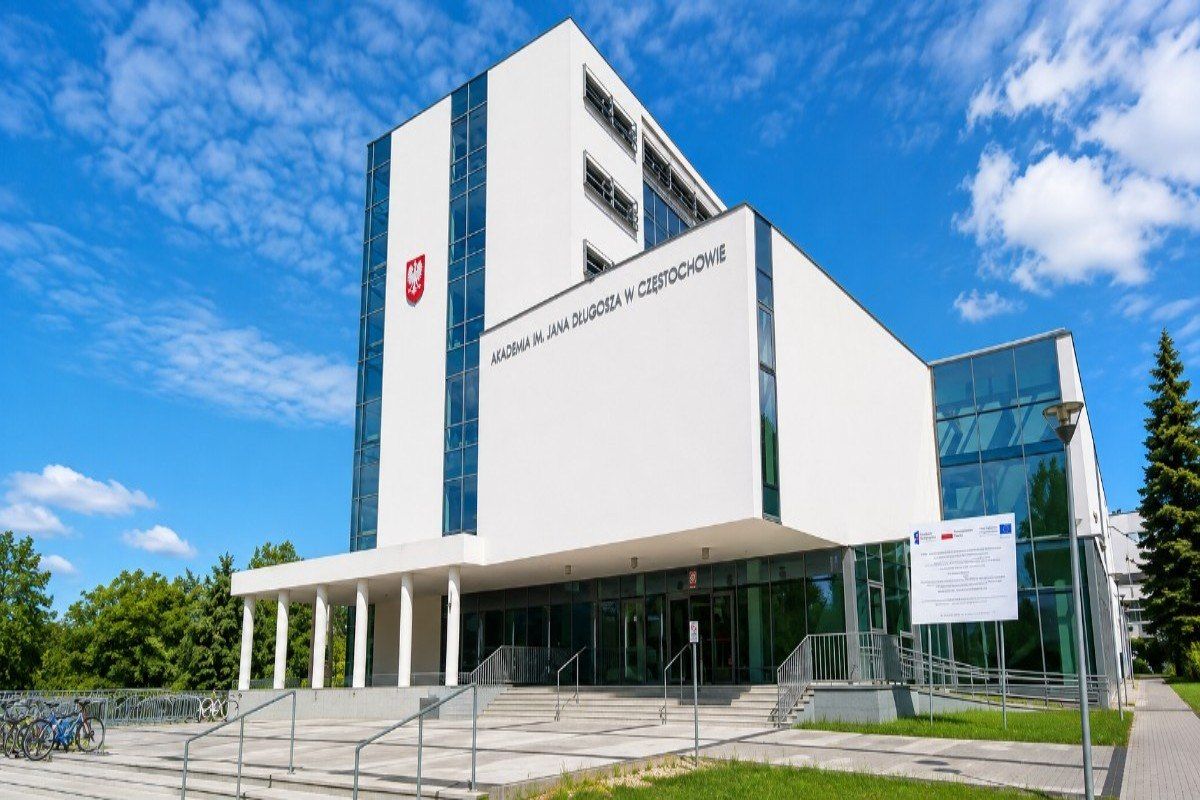
AFM's main campus sits at ulica Gustawa Herlinga-Grudzińskiego 1, right on the bank of the Vistula River, roughly three kilometres from Krakow's historic Old Town. So, students get genuine walking or short-tram-ride access to one of Europe's best-preserved medieval city centres, a real point of difference from campuses built further out in newer suburbs.
The university describes its own campus as purpose-built, combining teaching facilities, computer labs, a cafeteria, shops, a doctor's office, a gym, a library, student organisation spaces, a TV studio, art galleries, and even a university hotel, all on one site. So, day-to-day student life here doesn't require constant travel between scattered buildings across the city.
A dedicated Medical Simulation Centre opened on campus in 2023, reportedly built at a cost of around EUR 13.7 million, and includes high-fidelity operating theatres, a simulated emergency department, and a full simulated ambulance setup. So, students get hands-on practice in a genuinely modern, purpose-built clinical training space before they ever step into a real hospital ward.
Course Structure, Cost, and Practical Details
AFM's medical programme runs as a single, unbroken six-year course, structured as a jednolite studia magisterskie, or single-cycle master's degree, rather than split into separate bachelor's and master's stages. The English-medium track is worth 360 ECTS credits and, unusually among many international-facing medical schools, doesn't require any separate entrance exam or interview. Admission instead runs purely on academic school-leaving results in the sciences, plus proof of English proficiency at B2 level or above, shown through IELTS, TOEFL, or an equivalent certificate.
Reported tuition for the English-medium MD programme is fairly consistent across specialist international consultancy sources, generally cited at around EUR 15,000 a year, fixed for the full six-year programme, though one older listing cites a lower figure closer to GBP 13,000 a year, likely reflecting a different point in time or currency conversion. The separate Polish-language track runs on its own fee schedule entirely, and here the figures genuinely conflict across sources, ranging from roughly 45,000 to 60,000 Polish złoty a year depending on the specific source and academic year cited. So, applicants should confirm the exact current fee for whichever language track they're applying to directly with the university, rather than assuming either figure applies across the board.
NEET remains a requirement for Indian applicants here, not because this specific university demands it, but because India's own National Medical Commission requires a valid, qualifying NEET score before any Indian student can pursue a medical degree abroad and later sit the FMGE or NExT licensing exam back home. Beyond that national requirement, this university's own admission process is comparatively light on additional hurdles, since it skips the entrance exam and interview that some rival colleges still require.
Quick Overview
Parameter | Details |
Established | 2000, in Krakow; first private Polish university with rights to teach medicine (2015); renamed to current title September 2024 |
Institution Type | Private (non-public) university, largest of its kind in the Małopolska region |
Location | Gustawa Herlinga-Grudzińskiego 1, Krakow, Poland, on the Vistula riverbank near the Old Town |
Programme | Kierunek lekarski (Medicine), single-cycle master's degree; taught in both Polish and English tracks |
Duration | 6 years (360 ECTS on the English track); no separate internship year |
Medium of Instruction | English (separate track) or Polish; no entrance exam for the English-medium track |
Foreign Quota Note | No SAARC-style quota; NEET required for Indian applicants under India's own national rules |
Teaching Hospitals | Multiple Krakow partner hospitals, plus an on-campus Medical Simulation Centre opened in 2023 |
Fee Structure
Fee Component | Amount | Notes |
English-Medium Tuition | Approx. EUR 15,000 per year, fixed for 6 years | One older listing cites a lower GBP 13,000 figure; confirm the current rate directly |
Polish-Medium Tuition | Approx. PLN 45,000 to 60,000 per year | Figures genuinely conflict across sources and academic years |
Living Costs | Approx. EUR 500 to 800 per month | Reported range from international student consultancy sources |
Simulation Centre Investment | Approx. EUR 13.7 million (facility cost, not a student fee) | Opened 2023; included for context on training infrastructure |
Scholarships | Merit-based scholarships up to approx. EUR 220/month; NAWA government scholarships also available | Confirm current eligibility directly with the university |
Approx. Total Programme Cost (English track) | Approx. EUR 90,000 over 6 years | Estimate based on the fixed annual rate; confirm directly |
Why This University Deserves a Harder Look Than You've Given It
Poland's First Private Medical Programme, Not a Recent Copycat
Most rival pages describing Polish private medical schools don't mention who actually went first. This university received its rights to teach medicine in July 2015, becoming the first non-public institution in Poland to do so, years before several other private Polish colleges launched their own competing medical programmes. So, when this college describes itself as a pioneer in private Polish medical education, that claim rests on a specific, verifiable date, not just marketing language.
A Genuinely No-Entrance-Exam English MD Track With Real US and UK Recognition
Most guides on studying medicine abroad focus heavily on entrance exams and admission hurdles. This university's English-medium track skips a separate entrance exam entirely, relying on academic results and English proficiency instead, while still holding WDOMS listing following ECFMG approval in 2021, and reportedly counting over 300 graduates already registered with the UK's General Medical Council. So, students get a comparatively simple admissions path paired with real, checkable international outcomes.
Honest Assessment
Be upfront about a few real gaps here. Tuition figures for the Polish-language track genuinely conflict by a wide margin across sources, ranging from around 45,000 to 60,000 złoty a year, so confirming the current rate directly matters here more than at some other colleges. The university's various name changes over the past 25 years, from Szkoła Wyższa to Krakowska Akademia to its current university title, can also create confusion when researching independently, since older material often uses an outdated name. Reported clinical training hour figures also vary slightly depending on the source.
So, who fits here best? Students who want a genuinely no-entrance-exam English-medium MD programme with real international licensing recognition fit well here. Students comfortable navigating a university that's changed its name more than once, and who will confirm current fees directly, fit well too. Students who specifically need the absolute lowest-cost Polish medical option should compare carefully, since this university's tuition sits toward the higher end among Poland's private medical colleges.
No hidden charges, no donation. The full picture of costs at MBBS in Andrzej Frycz Modrzewski Krakow University, Faculty of Medicine and Health Sciences.
Tuition Fee
Approx. EUR 15,000 for the English track (fixed for 6 years); approx. PLN 45,000 to 60,000 for the Polish track, with figures conflicting ac
Approx. EUR 15,000 per year, fixed for 6 years
Hostel Fee
Approx. EUR 500 to 800 per month
Approx. EUR 500 to 800 per month
Food & Meals
€600–€800/₹67,172–₹89,563
Per Month
Insurance
€155.10 / ₹17,320
Per Year
Donation
No Donation fee
No Hidden fee
Total Estimated Cost
Approx. EUR 90,000 over 6 years — Estimate only; confirm directly
6 Year
25–35%
Average FMGE first-attempt pass rates for students from many overseas medical universities. Students from structured programs consistently score higher.
Students returning to India need to clear the FMGE/NExT exam. MBBS in Andrzej Frycz Modrzewski Krakow University, Faculty of Medicine and Health Sciences integrates exam-oriented coaching into the regular curriculum so students are prepared from day one.
A structured program that takes you from foundational sciences to clinical mastery.
Physicochemical Principles of Life, Components of Living Matter and Cytobiology establish the basic biomedical sciences. The Musculoskeletal System, Nervous System and Sensory Organs, and Circulatory and Respiratory System introduce anatomy and physiology through integrated body-system modules. Microscopic Structure of the Human Body and Biology of Prenatal Development cover foundational histology and embryology. Fundamentals of Diagnostic Imaging introduces medical imaging. Becoming a Doctor, psychosocial determinants of behaviour, history of medicine and biological/social/cultural aspects of death provide professional and humanistic foundations. Students undertake Medical English/Medical Polish, physical education and introductory nursing preparation. Patient exposure begins in the first year through the patient-encounter component. Summer clerkship: Patients Care — 120 hours, 4 weeks, 4 ECTS.
Anatomy, Histology, Biochemistry, Medical Biology
Metabolism and Homeostasis, Gastrointestinal System, Endocrine System and Skin, and Genitourinary System develop integrated understanding of major organ systems. Spatial Organisation of the Human Body reinforces anatomical relationships. General Pathology, Genetics, Microbiology and Parasitology introduce mechanisms of disease. Defence Mechanisms of the Human Body covers immunological foundations. Medical Interview and Physical Examination build core clinical skills. Informatics and Tele-medicine introduce digital health concepts. Public Health, First Aid and Ambulance Practice broaden the clinical and population-health perspective. Summer clerkships: Outpatient Care — 90 hours/3 weeks and Emergency Care — 30 hours/1 week.
Physiology, Microbiology, Pathology, Pharmacology
Organ Pathology and Pharmacology I–II develop disease mechanisms and therapeutic principles. Introduction to Clinical Medicine integrates clinical teaching in paediatrics, internal medicine and surgery. Fundamentals of Laboratory Diagnostics and Analysis of Selected Laboratory Diagnostic Data develop diagnostic interpretation skills. Pulmonology, Cardiology I and Dermatology introduce major clinical specialties. Introduction to Psychiatry establishes the foundations of psychiatric medicine. Assessment of Life-Sustaining Systems introduces recognition and assessment of critical physiological states. Hygiene and Epidemiology provide population and preventive-medicine foundations. Summer clerkship: Internal Medicine — 120 hours, 4 weeks, 4 ECTS.
Internal Medicine, Surgery, Obstetrics & Gynaecology
Cardiology II and Gastroenterology I deepen specialist clinical medicine. Psychiatry and Neurology develop the diagnosis and management of neurological and psychiatric disorders. Gynaecology and Obstetrics introduce women's health, pregnancy and childbirth. Emergency Medicine and Anaesthesiology/Intensive Care develop acute-care competencies. Clinical Immunology and Allergology cover immune-mediated and allergic disease. General Surgery and Traumatology introduce operative and trauma care. General Paediatrics develops assessment and management of childhood disease. Summer clerkships: Intensive Care — 90 hours/3 weeks and Paediatrics — 30 hours/1 week.
Paediatrics, Neurology, Ophthalmology, ENT
Oncology, Infectious Diseases, Nephrology and Urology cover major systemic and specialist diseases. Ophthalmology and Otorhinolaryngology provide focused specialty training. Sexology and Fertility Disorders address reproductive and sexual health. Forensic Medicine and an Introduction to Forensic Sciences introduce medico-legal practice. Palliative Medicine develops skills in care of patients with advanced illness. Introduction to Dentistry provides basic interdisciplinary knowledge. Family Medicine and Geriatrics strengthen primary-care and ageing-related competencies. Endocrinology and Metabolic Disorders, Diseases of the Musculoskeletal System and Haematology expand advanced internal medicine. Medical Deontology and Medical Law cover professional ethics and legal responsibilities. Advanced Patient Communication develops higher-level communication skills. Summer clerkships: Surgery — 90 hours/3 weeks and Gynaecology and Obstetrics — 30 hours/1 week.
Psychiatry, Dermatology, Radiology, Emergency Medicine
The sixth year is dominated by practical clinical training in Internal Medicine, Surgery, Emergency Medicine, Gynaecology and Obstetrics, Paediatrics, Family Medicine and Psychiatry. Semester XI includes Internal Medicine PCT, Surgery PCT, Emergency Medicine PCT, Gynaecology and Obstetrics PCT, a Selected Specialty PCT and Clinical Medicine. Semester XII includes a second Internal Medicine PCT, Paediatrics PCT, Family Medicine PCT, Psychiatry PCT, a Selected Specialty PCT and Clinical Medicine. The programme provides 30 weeks of practical clinical rotations in the sixth year. Clinical Medicine teaching includes selected aspects of clinical medicine, common chronic diseases and life-threatening conditions. The final practical assessment includes a two-stage examination with a theoretical multiple-choice component and an OSCE assessing practical clinical skills. Completion of the programme leads to the professional title Medical Doctor.
Full-time clinical rotations, FMGE/NExT coaching
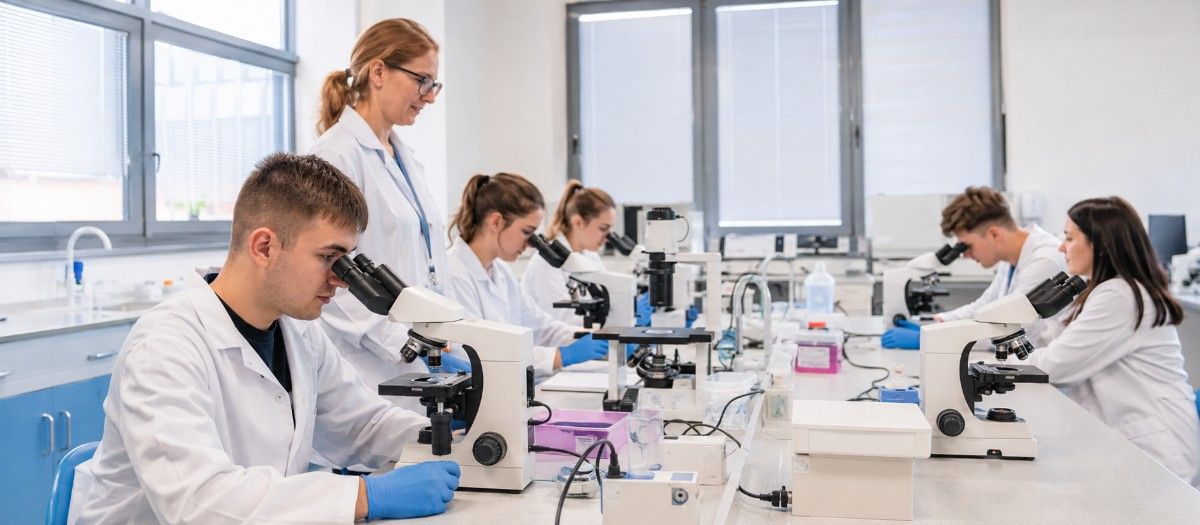

Furnished hostel rooms with Wi-Fi, laundry, 24/7 security, and Indian mess on or near campus.
Indian restaurants and mess facilities serving vegetarian and non-vegetarian home-style food daily.
Strong Indian community with cultural events, festival celebrations, and peer support groups.
Students get hands-on clinical training in government and private hospitals affiliated with the university.
Practical information for students planning to study at MBBS in Andrzej Frycz Modrzewski Krakow University, Faculty of Medicine and Health Sciences.
Prepare for all seasons. Thermal wear for winters, light clothing for summers. University provides heating in hostels.
Student visa processed with university invitation letter. Direct and connecting flights from major Indian cities.
Health insurance included in fees. Medical facility on campus plus city hospitals easily accessible.
Local SIM cards available. WhatsApp and video calls keep you connected with family back home.
Average monthly expenses of $150–$250 covering food, transport, and personal needs.
University library, online databases, and study groups. Seniors mentor juniors through academic challenges.
Our team guides you through every step — from application to arriving on campus.
Compare universities based on fees, city, ranking, and entrance-test format, not just the cheapest option.
Submit the application online, along with academic transcripts and the NEET scorecard, either directly or through an authorised admission partner.
Appear for the university's own Biology/Chemistry MCQ test, sometimes followed by a short personal interview or motivation-based discussion.
Most universities issue a conditional or confirmed offer letter within 1–2 weeks of the interview, though this may take longer during peak intake season.
Pay the initial tuition instalment to confirm the seat, ideally after receiving the fee structure and escalation policy in writing.
Apply for the Type D student visa at the Polish consulate/embassy in India; realistic processing time is several weeks.
Arrange university hostel or private accommodation before departure, and book flights with some buffer before the official reporting date.
In the final 30 days, finalise documents, arrange winter clothing, sort health/travel insurance, arrange currency exchange, and confirm hostel allotment in writing.
Complete on-arrival registration formalities, usually organised by the university for the whole batch; settle into the hostel room and get the university ID card issued.
Open a local bank account, buy a local SIM card, attend orientation sessions, get the class schedule, and begin building a grocery/cooking routine and connections with the Indian student community. With the right preparation at each step, an MBBS in Poland can be a well-planned, confidence-inspiring path to an EU medical degree.
Admission Helpline — Contact our counsellors for step-by-step assistance.
“The faculty here is incredibly supportive. The clinical training during hospital rotations has given me real confidence in patient care.”
“Affordable fees without compromising on quality. The campus facilities and hostel life made my transition abroad very smooth.”
“English medium instruction and WHO-recognized curriculum were the deciding factors for me. No regrets so far — excellent experience overall.”
“The university helped with everything from visa to accommodation. Hospital exposure from year three has been invaluable for my FMGE prep.”
“Just cleared my licensing exam on the first attempt. The structured coaching and mock exams during final year were a game-changer.”
“Safe campus, good food options, and a strong Indian student community. The teaching methodology is very practical and hands-on.”
It was founded in 2000, though it has changed its name twice since, most recently becoming Uniwersytet Andrzeja Frycza Modrzewskiego w Krakowie in September 2024.
Yes. It received official rights to teach kierunek lekarski in July 2015, becoming the first non-public Polish institution to do so, with its first medical cohort starting in 2016/17.
No. Admission runs on academic school-leaving results and English proficiency at B2 level or above, without a separate entrance exam or interview.
Most sources report around EUR 15,000 a year, fixed for the full six-year programme, though one older listing cites a lower figure. Confirm the current rate directly.
Yes, a valid, qualifying NEET score is required for Indian applicants under India's own national rules, regardless of which country's medical school they choose.
Yes. The Faculty of Medicine and Health Sciences is listed in WDOMS following ECFMG approval in 2021, and graduates can pursue the USMLE in the US or GMC registration in the UK.
It runs six years as a single, unbroken course, worth 360 ECTS credits on the English-medium track, with no separate internship year added afterward.
It sits on the Vistula riverbank in Krakow, at Gustawa Herlinga-Grudzińskiego 1, about three kilometres from the historic Old Town.
Yes, medicine is taught as a separate full English-medium track alongside the original Polish-language programme.
It's a dedicated training facility opened on campus in 2023, reportedly costing around EUR 13.7 million, with simulated operating theatres, an emergency department, and an ambulance setup for hands-on practice.
Our expert counsellors will guide you through the complete admission process — from documents to airport pickup.