
Q1. When was the University of Zielona Góra established?
+The university was formed in 2001, while its Faculty of Medicine and Health Sciences came later, established in 2015.
 Poland | Est. 2001
Poland | Recognised by Poland's Ministry of Education and Science; the medical programme is listed in WDOMS, the World Directory of Medical Schools, since the 2017/2018 academic year. | Polish runs through the whole medical programme. No confirmed English-medium track currently exists for international ap medium
Expert will call you within 2 hours
The College and What Makes It Different
People usually just call it UZ for short. The wider university opened in Zielona Góra on 1 September 2001, formed by merging a pedagogical university founded in 1971 and a technical university founded in 1965. So, this makes it a fairly young public university, though built from older, established pieces.
A public, state-run body runs it, and it now teaches around 8,700 students across seven faculties. Medicine came later than the university itself. The Faculty of Medicine and Health Sciences was set up by a Senate resolution on 24 June 2015, launched as a joint effort between the university, the Lubuskie regional government, and the city of Zielona Góra to tackle a real shortage of medical staff in the region.
Here's a fact most overview pages skip entirely. UZ's medical programme got registered in WDOMS, the World Directory of Medical Schools, back in the 2017/2018 academic year. So genuine international listing backs this college, not just marketing copy.
The Zielona Góra Campus and Its Setting
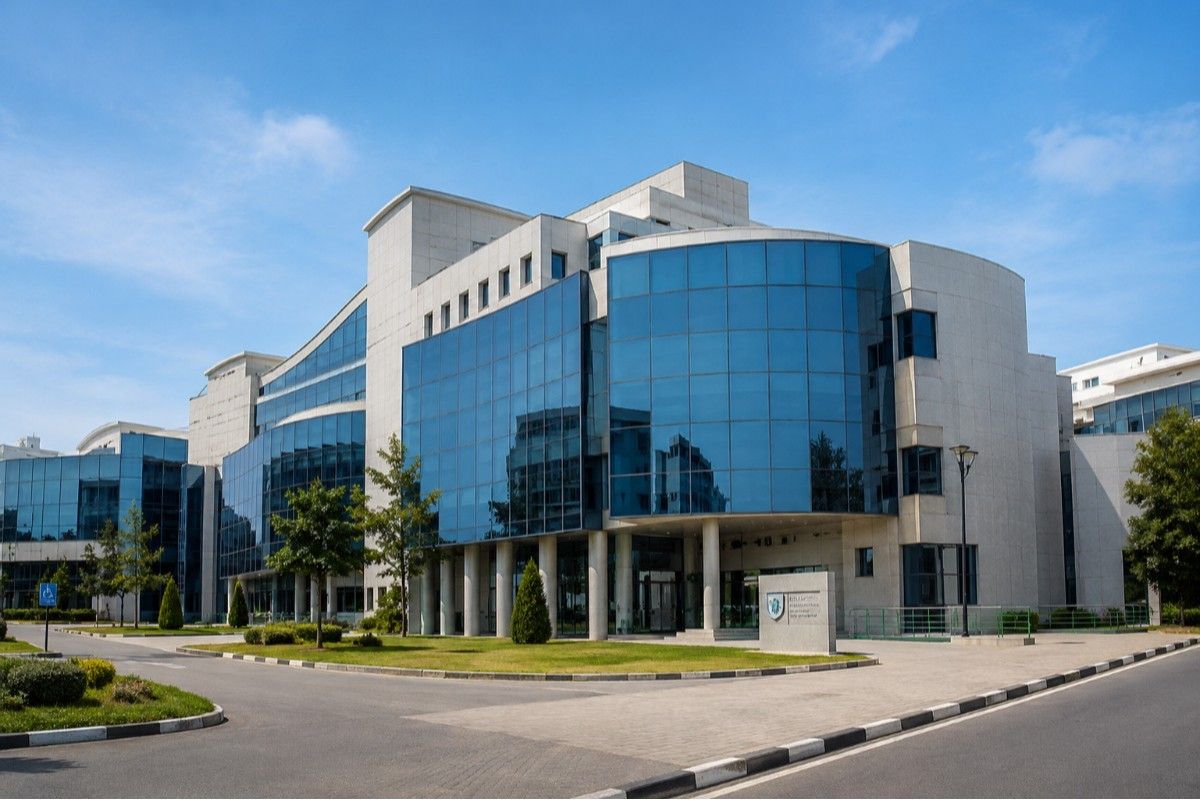
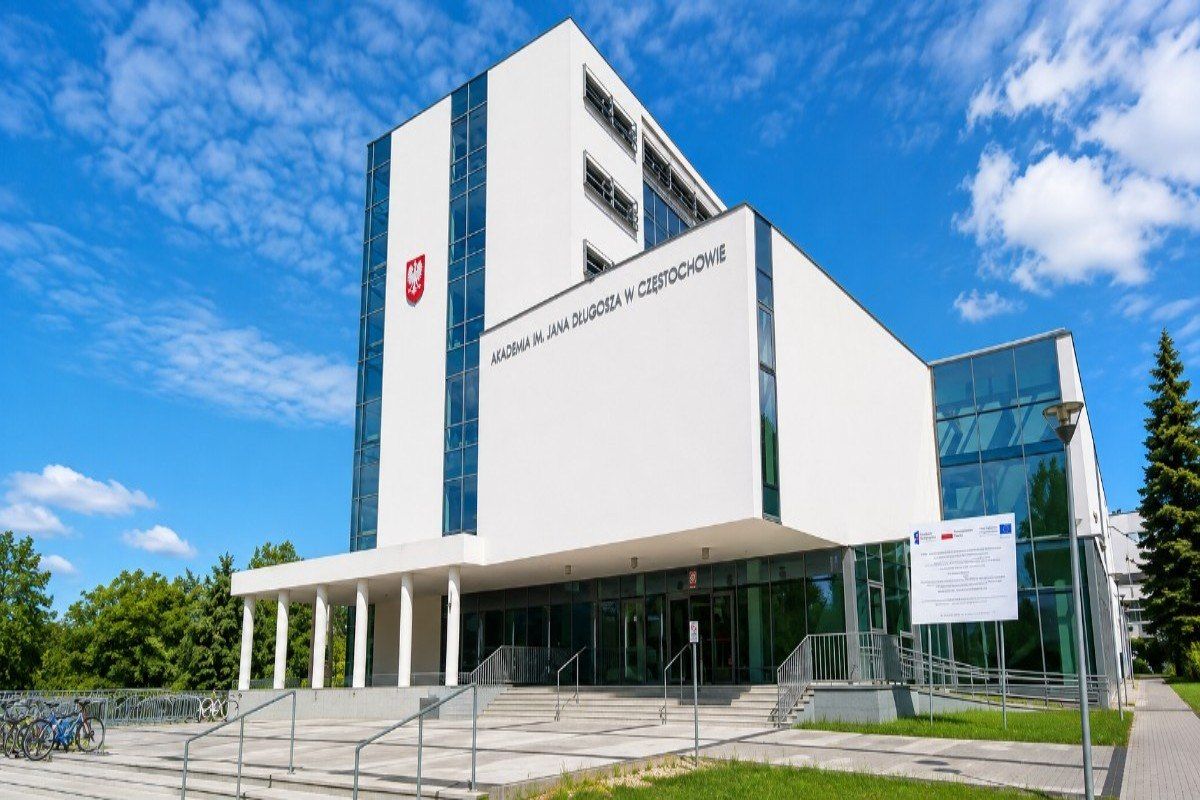
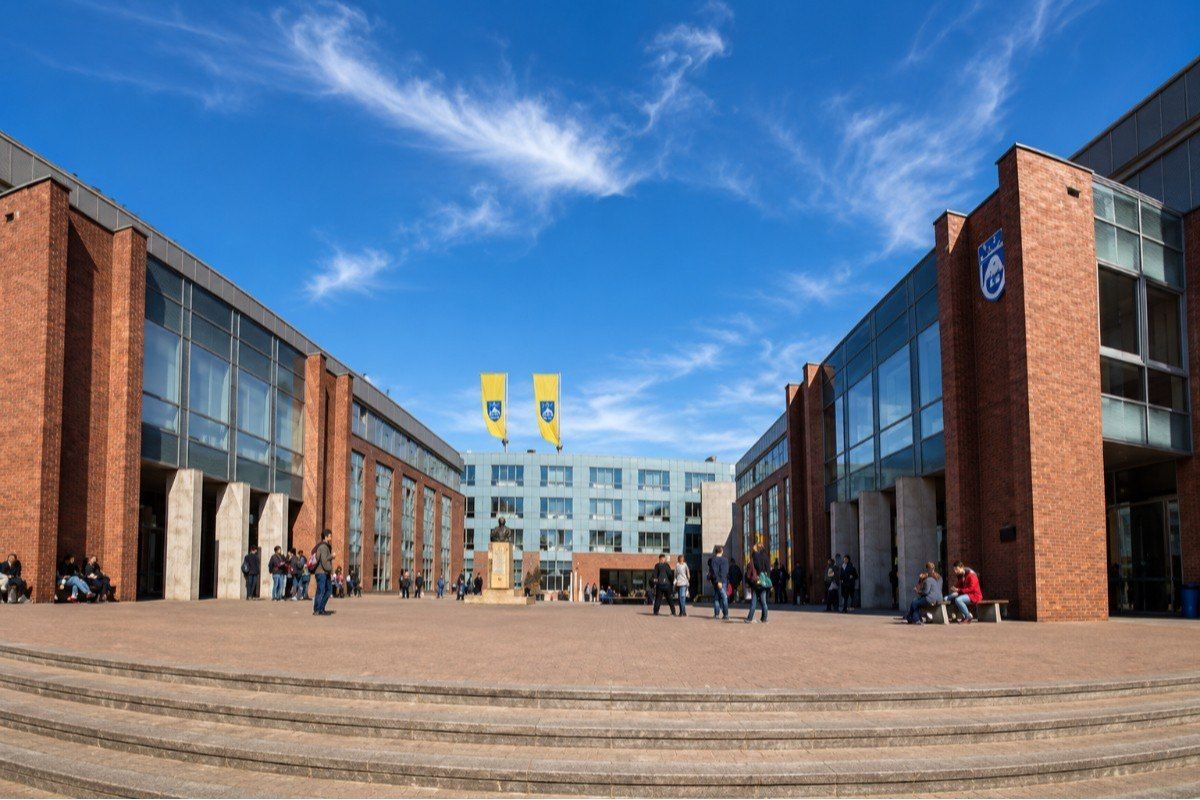
UZ's Faculty of Medicine and Health Sciences sits at Aleja Wojska Polskiego 69, on one of the university's two main campuses. So, students train on a compact, dedicated medical site rather than a scattered set of buildings.
Clinical training runs through the University Hospital named after Karol Marcinkowski in Zielona Góra, the faculty's core clinical and academic base. So, students see real patient care through a hospital tightly linked to the university itself.
Unlike some newer private medical colleges built to draw in international students, this programme runs entirely in Polish and stays focused on training doctors for the Lubuskie region. So the campus carries a strongly regional, rather than international, character.
Course Structure, Cost, and Practical Details
UZ runs a 6-year kierunek lekarski, taught as one unbroken master's degree rather than split into separate stages. Students can study it in either the stationary or non-stationary format, though the two run under different funding rules.
Admission runs on a points-based ranking system built from matura results in two chosen subjects out of biology, chemistry, physics, and mathematics. So, there's no separate written entrance exam beyond the standard school-leaving results.
As a public university, stationary studies carry no tuition fee for admitted Polish and EU candidates, while non-stationary studies are fee-paying. In one recent recruitment round, the minimum points threshold for stationary medicine sat at 145 points. So, cost isn't really the main barrier on the stationary track; the ranking-list competition is.
Quick Overview
Parameter | Details |
Established | 2001, in Zielona Góra; Faculty of Medicine and Health Sciences established 2015 |
Institution Type | Public, state-run university |
Location | Aleja Wojska Polskiego 69, Zielona Góra, Poland (Lubuskie Voivodeship) |
Programme | Kierunek lekarski (Medicine), a single-cycle master's degree leading to the title "lekarz" |
Duration | 6 years (12 semesters); no separate internship year |
Medium of Instruction | Polish |
Foreign Quota Note | No SAARC-style quota and no confirmed English-medium international track; admission runs on a Polish points-based ranking system |
Teaching Hospital | University Hospital named after Karol Marcinkowski, Zielona Góra |
Fee Structure
Fee Component | Amount | Notes |
Tuition (stationary studies) | Free for admitted Polish/EU candidates | State-funded, since this is a public university |
Tuition (non-stationary studies) | Fee-paying | Exact current rate not consistently published; confirm directly |
Application/Recruitment Fee | Not consistently reported | Confirm the current fee directly with admissions |
Living Costs | Not separately confirmed | Zielona Góra generally runs cheaper than Warsaw or Kraków |
Approx. Total Programme Cost | Effectively tuition-free on the stationary track | Living costs remain the main real expense over six years |
Why UZ's Faculty of Medicine and Health Sciences Deserves a Harder Look Than Its Age Suggests
A Medical Faculty Built to Solve a Real Regional Problem
Most rival pages just describe a medical faculty as another academic department. This one exists because the Lubuskie region genuinely lacked enough doctors, and local government, city officials, and the university joined forces specifically to fix that. So the entire faculty traces back to a documented regional need, not a generic expansion plan.
Small Faculty, Real National Recognition
Most guides never mention a small regional school's actual achievements. UZ's medical students have placed first nationally in Poland's Surgical Suturing Championship twice, in 2017 and 2018, and again took second place in 2023. One student was also selected into the Polpharma Science Foundation's "Medical School of Your Future" programme as one of the country's most talented medicine and pharmacy students. So genuine competitive results back this small faculty, not just local pride.
Honest Assessment
Be upfront about a few real limits here. This programme runs entirely in Polish, with no confirmed English-medium track, so it isn't built for international applicants the way some larger Polish medical schools are. Zielona Góra is also a smaller regional city, so students shouldn't expect Warsaw-level infrastructure or student numbers. Points thresholds shift each year depending on competition, so older figures shouldn't be treated as fixed.
So, who fits here best? Strong Polish-speaking candidates who want a smaller, close-knit medical faculty fit well. Students drawn to a programme with a genuine regional mission fit well too. However, anyone hoping for an English-taught path or a big-city campus should look elsewhere. Still, the WDOMS listing and the students' national competition results are genuine, well-documented strengths.
No hidden charges, no donation. The full picture of costs at MBBS in University of Zielona Góra Faculty of Medicine and Health Sciences.
Tuition Fee
€3,600 / ₹3.3 Lakh INR
₹14L/€15,000 Per Year
Hostel Fee
₹1.5L/€1,600 per Year
₹1.5L/€1,600 per Year
Food & Meals
₹3.3L/€3,600
Per Year
Insurance
₹9,000/€100
Per Year
Donation
No Donation fee
No Hidden fee
Total Estimated Cost
₹1.15CR/€124,300
6-Year
25–35%
Average FMGE first-attempt pass rates for students from many overseas medical universities. Students from structured programs consistently score higher.
Students returning to India need to clear the FMGE/NExT exam. MBBS in University of Zielona Góra Faculty of Medicine and Health Sciences integrates exam-oriented coaching into the regular curriculum so students are prepared from day one.
A structured program that takes you from foundational sciences to clinical mastery.
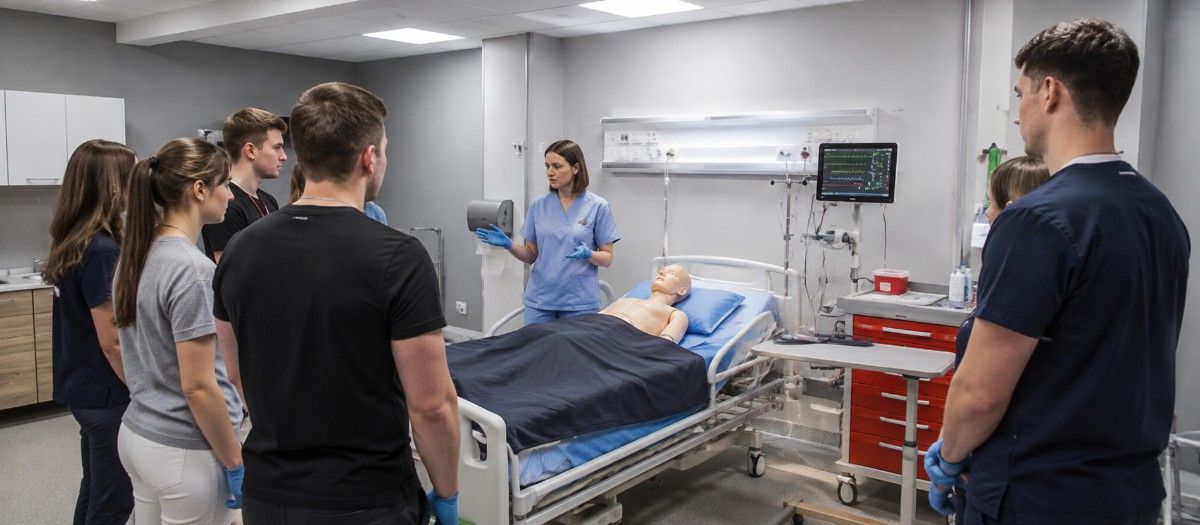
Consists of subjects such as Anatomy, Histology, Biophysics, and Biochemistry, which form the first phase subjects. Builds the scientific foundation for later years, supported by the faculty's Medical Simulation Centre.
Anatomy, Histology, Biochemistry, Medical Biology
Consists of subjects like Pathology, Microbiology, Pharmacology, and Community Medicine in this phase. Introduces disease mechanisms and population health alongside continued lab-based training.
Physiology, Microbiology, Pathology, Pharmacology
Covers introductory clinical rotations alongside continued Pharmacology and Therapeutics. Links basic disease science to hands-on patient interaction at the University Hospital.
Internal Medicine, Surgery, Obstetrics & Gynaecology
Covers Medicine, Surgery, and Obstetrics and Gynaecology, plus allied clinical subjects. Most training during this phase runs through the University Hospital named after Karol Marcinkowski.
Paediatrics, Neurology, Ophthalmology, ENT
No separate internship year follows graduation; clinical placements sit inside the six-year programme itself. Graduates must pass the state Lekarski Egzamin Końcowy before they can register to practise medicine in Poland.
Psychiatry, Dermatology, Radiology, Emergency Medicine

Furnished hostel rooms with Wi-Fi, laundry, 24/7 security, and Indian mess on or near campus.
Indian restaurants and mess facilities serving vegetarian and non-vegetarian home-style food daily.
Strong Indian community with cultural events, festival celebrations, and peer support groups.
Students get hands-on clinical training in government and private hospitals affiliated with the university.
Practical information for students planning to study at MBBS in University of Zielona Góra Faculty of Medicine and Health Sciences.
Prepare for all seasons. Thermal wear for winters, light clothing for summers. University provides heating in hostels.
Student visa processed with university invitation letter. Direct and connecting flights from major Indian cities.
Health insurance included in fees. Medical facility on campus plus city hospitals easily accessible.
Local SIM cards available. WhatsApp and video calls keep you connected with family back home.
Average monthly expenses of $150–$250 covering food, transport, and personal needs.
University library, online databases, and study groups. Seniors mentor juniors through academic challenges.
Our team guides you through every step — from application to arriving on campus.
Compare universities based on fees, city, ranking, and entrance-test format, not just the cheapest option.
Submit the application online, along with academic transcripts and the NEET scorecard, either directly or through an authorised admission partner.
Appear for the university's own Biology/Chemistry MCQ test, sometimes followed by a short personal interview or motivation-based discussion.
Most universities issue a conditional or confirmed offer letter within 1–2 weeks of the interview, though this may take longer during peak intake season.
Pay the initial tuition instalment to confirm the seat, ideally after receiving the fee structure and escalation policy in writing.
Apply for the Type D student visa at the Polish consulate/embassy in India; realistic processing time is several weeks.
Arrange university hostel or private accommodation before departure, and book flights with some buffer before the official reporting date.
In the final 30 days, finalise documents, arrange winter clothing, sort health/travel insurance, arrange currency exchange, and confirm hostel allotment in writing.
Complete on-arrival registration formalities, usually organised by the university for the whole batch; settle into the hostel room and get the university ID card issued.
Open a local bank account, buy a local SIM card, attend orientation sessions, get the class schedule, and begin building a grocery/cooking routine and connections with the Indian student community. With the right preparation at each step, an MBBS in Poland can be a well-planned, confidence-inspiring path to an EU medical degree.
Admission Helpline — Contact our counsellors for step-by-step assistance.
“The faculty here is incredibly supportive. The clinical training during hospital rotations has given me real confidence in patient care.”
“Affordable fees without compromising on quality. The campus facilities and hostel life made my transition abroad very smooth.”
“English medium instruction and WHO-recognized curriculum were the deciding factors for me. No regrets so far — excellent experience overall.”
“The university helped with everything from visa to accommodation. Hospital exposure from year three has been invaluable for my FMGE prep.”
“Just cleared my licensing exam on the first attempt. The structured coaching and mock exams during final year were a game-changer.”
“Safe campus, good food options, and a strong Indian student community. The teaching methodology is very practical and hands-on.”
The university was formed in 2001, while its Faculty of Medicine and Health Sciences came later, established in 2015.
It runs for six years across twelve semesters, with no separate internship year afterward.
No, the entire programme runs in Polish, and there's no confirmed English-medium track for international applicants.
No separate written entrance exam applies. Admission runs on a points-based ranking system built from matura results.
It's free for admitted Polish and EU stationary students, since UZ is a public, state-funded university. Non-stationary studies are fee-paying.
Training runs through the University Hospital named after Karol Marcinkowski in Zielona Góra.
Yes. It's been listed in WDOMS, the World Directory of Medical Schools, since the 2017/2018 academic year.
It launched in 2015 as a joint effort between the university, regional government, and city officials to address a real shortage of doctors in the Lubuskie region.
It also runs nursing, paramedic studies (ratownictwo medyczne), and physiotherapy programmes.
Yes, graduates must pass the state Lekarski Egzamin Końcowy before they can register to practise medicine in Poland.
Our expert counsellors will guide you through the complete admission process — from documents to airport pickup.