
Q1. When was Uniwersytet Kaliski established?
+It operated for two decades as a public vocational school before it became Uniwersytet Kaliski im. Prezydenta Stanisława Wojciechowskiego on 1 October 2023.
 Poland | Est. 2005
Poland | Recognised by Poland's Ministry of Education and Science; kierunek lekarski holds a positive Polish Accreditation Committee evaluation valid for six years. | Polish runs through the entire medical programme medium
Expert will call you within 2 hours
The University and What Makes It Different
People mostly just call it Uniwersytet Kaliski, or UK for short. Its roots stretch back more than two decades as a public vocational school in Kalisz, a mid-sized city in Poland's Wielkopolska region. In 2005, that school took the name of Stanisław Wojciechowski, a Polish president from the 1920s, and it carried that name through nearly two more decades of steady growth before reaching its current university status. So, this college has genuinely deep local roots, even though its full "university" title only became official very recently.
That recent title change is worth explaining, since it happened alongside a much bigger development. On 15 December 2022, while the school was still known as Akademia Kaliska, Poland's Ministry of Education and Science approved its request to open kierunek lekarski, the medical degree programme, starting from the 2023/2024 academic year. Then, on 1 October 2023, a new law transformed Akademia Kaliska into Uniwersytet Kaliski im. Prezydenta Stanisława Wojciechowskiego, its current name. So, remarkably, the very first medical students here and the university's own new title arrived within roughly the same month, tying the medical programme's birth almost exactly to the institution's own transformation into a full university.
Here's a fact most guides skip entirely. Because kierunek lekarski only began teaching students in October 2023, this college has not produced a single graduating class of doctors yet, and won't for several more years given the programme's six-year length. So, just as with any genuinely new medical faculty, there's no Lekarski Egzamin Końcowy pass-rate history to check yet, and applicants should treat this as a young, still-developing programme rather than an established one with decades of outcomes behind it.
Before medicine arrived, this university had already built up real experience in health-related education. Between 2007 and 2015, it consistently ranked at the top of Poland's national league table for public vocational schools, published by the Perspektywy and Rzeczpospolita rankings. By 2020, it stood as the only public vocational school in Poland holding the right to award doctoral degrees in two separate academic fields, a genuinely unusual achievement for an institution of its type at the time. So, when this college finally applied for medical-programme rights, it did so with a real, documented track record already behind it in the wider health sciences.
The Wydział Medyczny i Nauk o Zdrowiu, or Faculty of Medicine and Health Sciences, sits alongside two other faculties at the
wider university: the Faculty of Social Sciences and the Faculty of Polytechnics, plus additional programmes running through a branch campus in Września. Medicine is just one of a dozen or so fields taught within the medical faculty itself, alongside dietetics, electroradiology, physiotherapy, cosmetology, nursing, bridging nursing programmes, paramedic studies, sport, occupational therapy, physical education, and public health. So, medicine here sits within a genuinely broad health sciences faculty, not a narrow, medicine-only school.
One detail worth knowing: in May 2022, before medicine even arrived, the university's health sciences unit opened a dedicated Nursing Museum, Muzeum Pielęgniarstwa, as a permanent part of the college. That same year, the university also partnered with the Główna Biblioteka Lekarska, Poland's main medical library network, to reopen a library branch specifically in Kalisz. So, this college was already investing in medical history and medical literature resources before it ever taught a single medicine student, which says something about how seriously it approached the eventual launch of kierunek lekarski.
The medical faculty also runs an unusual interdisciplinary programme called Inżynieria technologii medycznych, or Medical Technology Engineering, which sits at the crossroads of engineering, medicine, and computing rather than fitting neatly into either the medical faculty or the polytechnic faculty alone. So, while this isn't the medicine degree itself, it signals a wider institutional interest in blending medical training with newer technical fields, something not every young medical faculty bothers to build out early on.
The Kalisz Campus and Its Setting
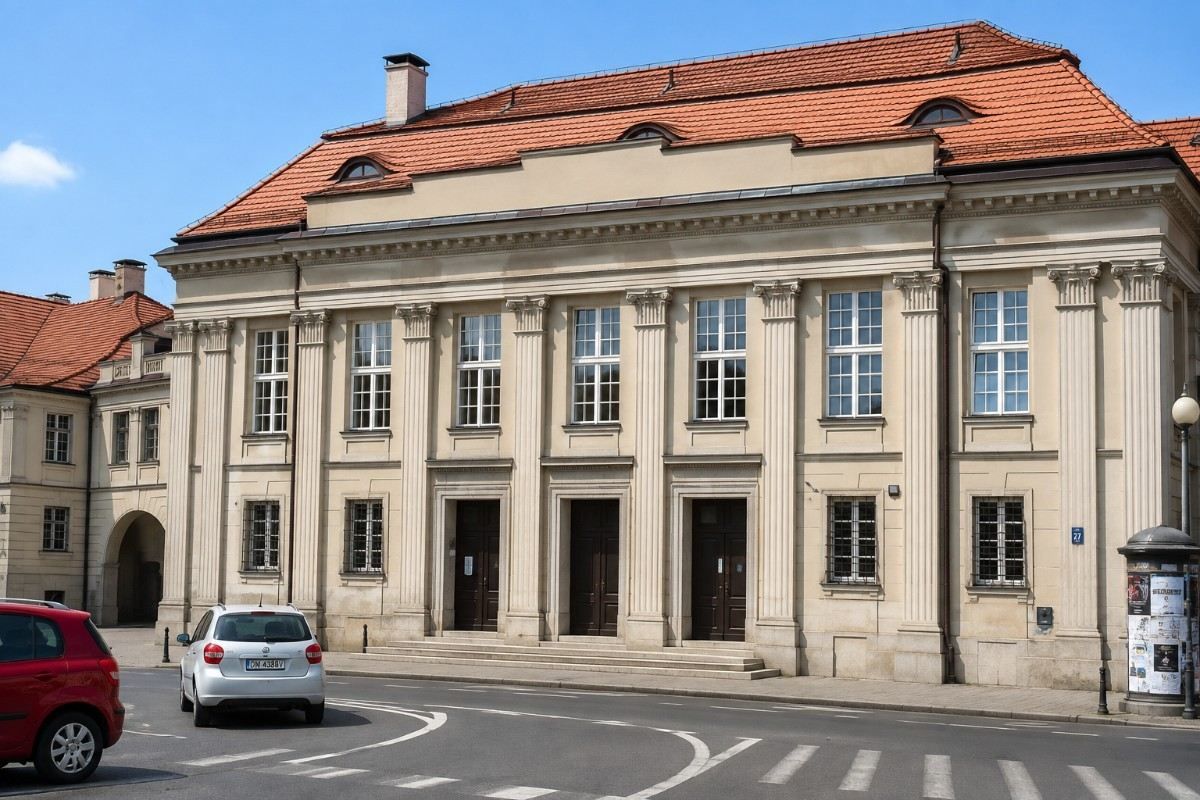
Uniwersytet Kaliski's main buildings sit in Kalisz, one of Poland's oldest cities, located in the Wielkopolska region roughly midway between Poznań and Łódź. The university's Collegium Novum building, at ulica Nowy Świat 4a, houses much of the Faculty of Medicine and Health Sciences, including the Nursing Museum, while the central recruitment office operates from a separate building at Plac Bogusławskiego 2. So, students here study in a genuinely historic Polish city, considerably smaller and quieter than Warsaw, Krakow, or Poznań.
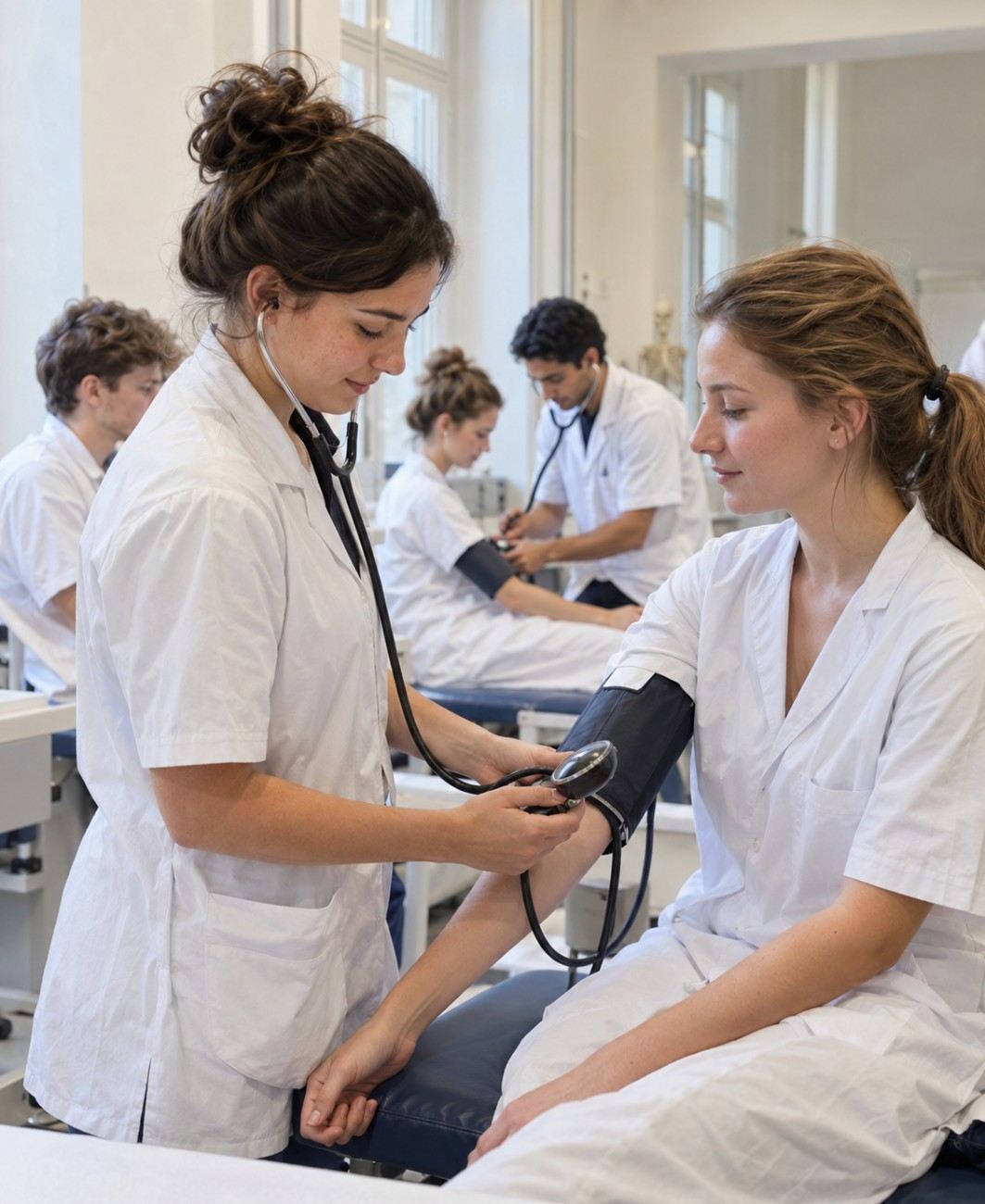
Clinical and practical training draws on the university's own Monoprofilowe Centra Symulacji Medycznej, dedicated medical simulation centres built specifically for hands-on practice before students move into real hospital settings. Specific named teaching-hospital partnerships for the medicine programme itself aren't as clearly documented in independent sources yet, given how recently the programme launched, so applicants should confirm exact clinical placement sites directly with the university rather than assuming particular named hospitals.
This university doesn't appear to run an English-medium or dedicated international admissions track for medicine, unlike some other Polish medical schools that actively market to overseas applicants. So, an international student considering this college today would be applying into a young, Polish-language medical programme built primarily around domestic students from the wider Wielkopolska region.
Course Structure, Cost, and Practical Details
Uniwersytet Kaliski's medical programme runs as a jednolite studia magisterskie, a single, unbroken six-year master's degree spread across twelve semesters, ending in the professional title of lekarz. It's offered in both stationary and non-stationary formats, matching the standard structure used across Polish public medical faculties.
Admission requires biology as a compulsory subject, plus one further subject chosen from chemistry, physics, physics and astronomy, or mathematics, assessed through Poland's standard matura exam results rather than a separate university-administered entrance test. Kierunek lekarski here holds a positive evaluation from the Polish Accreditation Committee, valid for six years, confirming the programme meets the country's staffing, curriculum, and organisational standards for training doctors.
As a public university, the stationary track carries no tuition fee at all for admitted students, funded instead by the state. The non-stationary track is a paid option, and the university's own recruitment site lists this fee clearly: 33,000 złoty per semester, working out to 66,000 złoty a year, for students who don't secure one of the limited free stationary places.
NEET remains relevant for Indian applicants here, not because this specific university requires it, but because India's own National Medical Commission requires a valid, qualifying NEET score before any Indian student can pursue a medical degree abroad and later sit the FMGE or NExT exam back home. Given how new and domestically focused this particular programme is, prospective international applicants should expect considerably less English-language support and far fewer specialist consultancy guides than at Poland's more internationally established medical schools.
Quick Overview
Parameter | Details |
Established | Public vocational school for two decades before 2005; took its current university name in October 2023 |
Institution Type | Public university |
Location | Kalisz, Poland (Wielkopolska region); Collegium Novum at Nowy Świat 4a |
Programme | Kierunek lekarski (Medicine), single-cycle master's degree, offered stationary and non-stationary |
Duration | 6 years / 12 semesters (jednolite studia magisterskie); no separate internship year |
Medium of Instruction | Polish |
Foreign Quota Note | No confirmed English-medium or international admissions track; NEET required for Indian applicants under India's own national rules |
Teaching Facilities | Monoprofilowe Centra Symulacji Medycznej (medical simulation centres); specific hospital partnerships not yet clearly documented |
Fee Structure
Fee Component | Amount | Notes |
Tuition (stationary) | Free | State-funded, since this is a public university |
Tuition (non-stationary) | 33,000 PLN per semester (66,000 PLN per year) | Official figure listed on the university's own recruitment site |
Application/Recruitment Fee | Standard university application fee applies | Confirm the current amount directly |
Living Costs | Not separately confirmed | Kalisz generally runs cheaper than Warsaw or Poznań |
Approx. Total Programme Cost | Free on the stationary track | Non-stationary total would run to roughly 396,000 PLN over 6 years |
Tuition (stationary) | Free | State-funded, since this is a public university |
Why This University Deserves a Harder Look Than Its Age Suggests
A Medical Programme Born Alongside the University's Own New Title
Most rival pages describing a new medical faculty simply state when it opened. Here, the timing carries a genuine story: the Ministry approved kierunek lekarski in December 2022, the first students arrived in October 2023, and that same October, a new law transformed the whole institution from Akademia Kaliska into Uniwersytet Kaliski. So, this college's medical programme and its full university status arrived almost hand in hand, not as two separate, unrelated milestones years apart.
Real Investment in Medical Heritage Before Medicine Even Arrived
Most guides never mention what a college did before launching its medical degree. This university opened a dedicated Nursing Museum and partnered with Poland's national medical library network in 2022, a full year before its first medicine student enrolled. So, there's genuine, documented groundwork here in medical history and resources, not just a rushed new programme with nothing behind it.
Honest Assessment
Be very clear about the real gaps here. This medical programme is only a couple of years old, with no graduating class yet and no Lekarski Egzamin Końcowy pass-rate history to check. Specific hospital partnerships for medical students aren't clearly documented in independent sources yet, and there's no confirmed English-medium track for international applicants. So, who fits here best? Strong Polish-speaking candidates comfortable being part of one of the programme's earliest cohorts, and drawn to a smaller regional university with real recent institutional momentum, may find genuine value here. Students who need a long-established, thoroughly documented, or English-taught medical programme should look elsewhere.
No hidden charges, no donation. The full picture of costs at MBBS in President Stanisław Wojciechow ski Kalisz University, Faculty of Medicine and Health Sciences.
Tuition Fee
€3,500 to €15,000 annually depending on the specific program
33,000 PLN per semester (66,000 PLN per year)
Hostel Fee
PLN 300 to PLN 1,100,
PLN 300 to PLN 1,100,
Food & Meals
not publicly itemized online
/month
Insurance
PLN 250 (€55) per month
per month
Donation
No Donation
No Hiddeen fee
Total Estimated Cost
— Approx. 396,000 PLN over 6 years on the non-stationary track
6 year
25–35%
Average FMGE first-attempt pass rates for students from many overseas medical universities. Students from structured programs consistently score higher.
Students returning to India need to clear the FMGE/NExT exam. MBBS in President Stanisław Wojciechow ski Kalisz University, Faculty of Medicine and Health Sciences integrates exam-oriented coaching into the regular curriculum so students are prepared from day one.
A structured program that takes you from foundational sciences to clinical mastery.
• Builds the base knowledge that all later clinical learning depends on.
• Covers Anatomy, Biochemistry, and Physiology, forming the scientific foundation for everything that follows.
• Links basic disease science with population health and the drugs used to treat illness.
• Covers Pathology, Microbiology, Pharmacology, and Community Medicine.
• Runs through hospital duty shifts, operations, and medical consultations, alongside training in communication, stress management, and teamwork.
• Covers Medicine, Surgery, and Obstetrics and Gynaecology, plus allied clinical subjects.
• Graduates must pass the state Lekarski Egzamin Końcowy before they can register to practise medicine in Poland.
• No separate internship year follows graduation; clinical placements sit inside the six-year, twelve-semester programme itself.
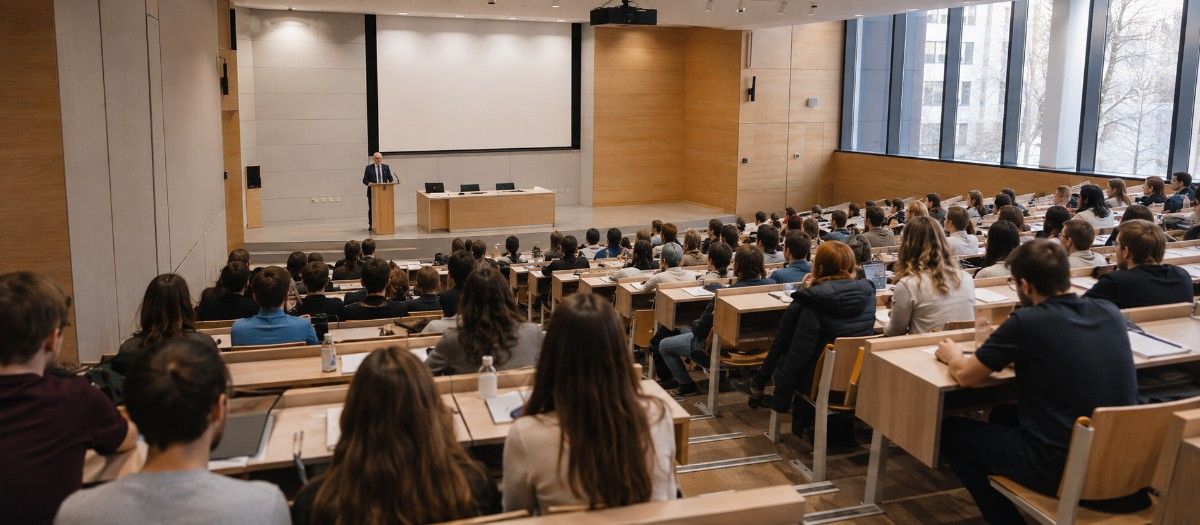
Furnished hostel rooms with Wi-Fi, laundry, 24/7 security, and Indian mess on or near campus.
Indian restaurants and mess facilities serving vegetarian and non-vegetarian home-style food daily.
Strong Indian community with cultural events, festival celebrations, and peer support groups.
Students get hands-on clinical training in government and private hospitals affiliated with the university.
Practical information for students planning to study at MBBS in President Stanisław Wojciechow ski Kalisz University, Faculty of Medicine and Health Sciences.
Prepare for all seasons. Thermal wear for winters, light clothing for summers. University provides heating in hostels.
Student visa processed with university invitation letter. Direct and connecting flights from major Indian cities.
Health insurance included in fees. Medical facility on campus plus city hospitals easily accessible.
Local SIM cards available. WhatsApp and video calls keep you connected with family back home.
Average monthly expenses of $150–$250 covering food, transport, and personal needs.
University library, online databases, and study groups. Seniors mentor juniors through academic challenges.
Our team guides you through every step — from application to arriving on campus.
Compare universities based on fees, city, ranking, and entrance-test format, not just the cheapest option.
Submit the application online, along with academic transcripts and the NEET scorecard, either directly or through an authorised admission partner.
Appear for the university's own Biology/Chemistry MCQ test, sometimes followed by a short personal interview or motivation-based discussion.
Most universities issue a conditional or confirmed offer letter within 1–2 weeks of the interview, though this may take longer during peak intake season.
Pay the initial tuition instalment to confirm the seat, ideally after receiving the fee structure and escalation policy in writing.
Apply for the Type D student visa at the Polish consulate/embassy in India; realistic processing time is several weeks.
Arrange university hostel or private accommodation before departure, and book flights with some buffer before the official reporting date.
In the final 30 days, finalise documents, arrange winter clothing, sort health/travel insurance, arrange currency exchange, and confirm hostel allotment in writing.
Complete on-arrival registration formalities, usually organised by the university for the whole batch; settle into the hostel room and get the university ID card issued.
Open a local bank account, buy a local SIM card, attend orientation sessions, get the class schedule, and begin building a grocery/cooking routine and connections with the Indian student community. With the right preparation at each step, an MBBS in Poland can be a well-planned, confidence-inspiring path to an EU medical degree.
Admission Helpline — Contact our counsellors for step-by-step assistance.
“The faculty here is incredibly supportive. The clinical training during hospital rotations has given me real confidence in patient care.”
“Affordable fees without compromising on quality. The campus facilities and hostel life made my transition abroad very smooth.”
“English medium instruction and WHO-recognized curriculum were the deciding factors for me. No regrets so far — excellent experience overall.”
“The university helped with everything from visa to accommodation. Hospital exposure from year three has been invaluable for my FMGE prep.”
“Just cleared my licensing exam on the first attempt. The structured coaching and mock exams during final year were a game-changer.”
“Safe campus, good food options, and a strong Indian student community. The teaching methodology is very practical and hands-on.”
It operated for two decades as a public vocational school before it became Uniwersytet Kaliski im. Prezydenta Stanisława Wojciechowskiego on 1 October 2023.
The Ministry of Education and Science approved it in December 2022, and the first students began in October 2023, the same month the university took its current name.
No. The programme only launched in 2023, so its first cohort won't finish the full six-year course for several more years.
No, it runs entirely in Polish, and there's no confirmed English-medium track for international applicants.
No separate entrance exam applies. Admission runs on matura results in biology plus one further science subject.
It's free on the stationary track. Non-stationary students pay 33,000 PLN per semester, or 66,000 PLN a year, per the university's own current published rate.
Yes, a valid, qualifying NEET score is required for Indian applicants under India's own national rules, regardless of destination country.
It also runs dietetics, electroradiology, physiotherapy, cosmetology, nursing, paramedic studies, sport, occupational therapy, physical education, and public health.
It's a dedicated museum, Muzeum Pielęgniarstwa, opened in May 2022 within the Faculty of Medicine and Health Sciences, a year before the medicine programme itself began.
It's a public university, formed from a long-running public vocational school that took its current university title in 2023.
Our expert counsellors will guide you through the complete admission process — from documents to airport pickup.