
Q1. Do the WHO and the NMC India recognise ADZU-SOM?
+Yes. WHO, NMC India, FAIMER, ECFMG, and WFME have accredited the university. Do not forget to check out wdoms.org before coming.

 Philippines | Est. 1912
Philippines | Listed by NMC India, WHO, FAIMER, ECFMG, WFME, and WDOMS; all recognitions fully confirmed. | English, No IELTS or TOEFL Required medium
Expert will call you within 2 hours
The University and Its 113 Years of Existence
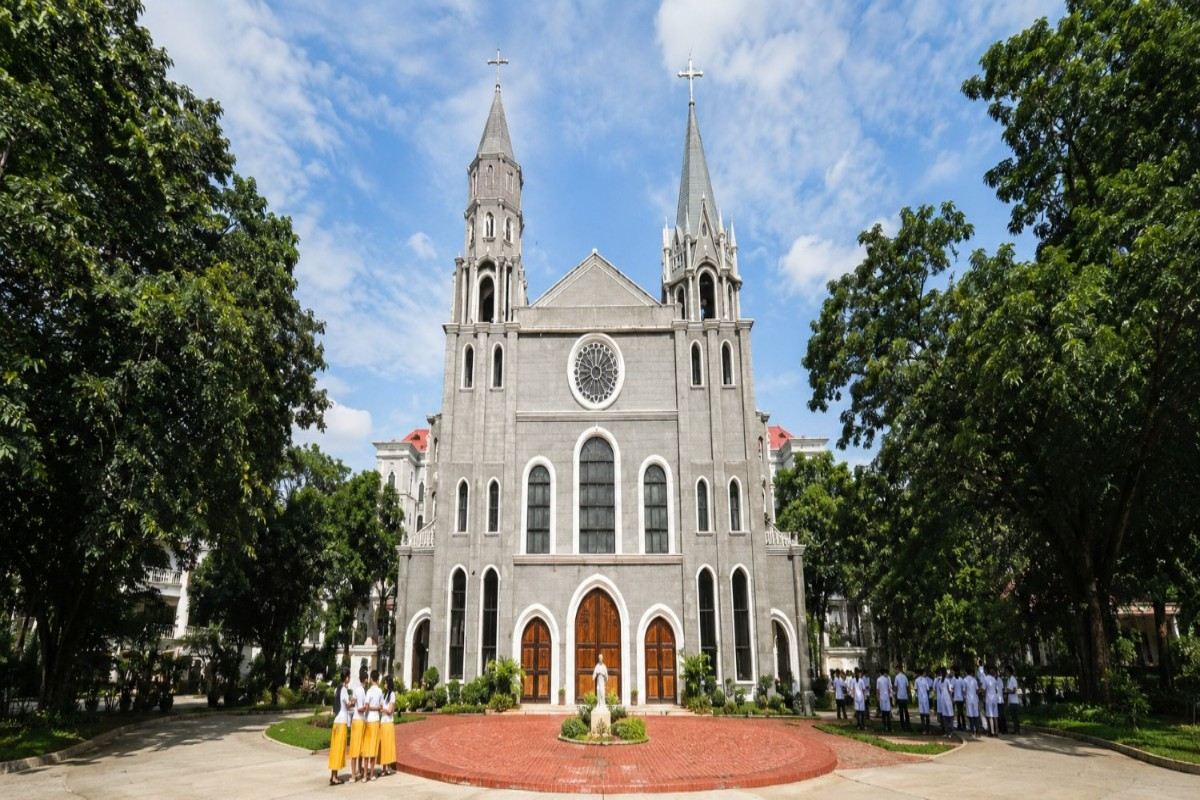
Ateneo de Zamboanga University is among the longest existing Jesuit universities in the Philippines. It was established in 1912 as Escuela Catolica, a parochial school managed by Spanish Jesuits at the location of the Immaculate Conception Church. Fr. Manuel M. Sauras, SJ, was its first principal. In 1916, it became Ateneo de Zamboanga. Moreover, it is the second-oldest Jesuit school in the Philippines and the second school to carry the Ateneo name. So, when you study here, you study at an institution with 113 years of Catholic educational tradition.
The city matters too. Zamboanga comes from the Malay word 'jambangan', which means 'land of flowers'. The city was a key Spanish colonial port in western Mindanao. Furthermore, Zamboanga is the only city in the world where Chavacano is spoken, a unique Spanish-Malay creole language that developed over 400 years of Spanish colonial rule. It is the oldest creole language in Asia. So, the city itself carries a linguistic and cultural heritage that is genuinely one of a kind.
Now, here is what most Indian blogs completely miss. ADZU's School of Medicine takes only 50 students per year. That is one of the smallest MD classes in all of the Philippines. As a result, the faculty-student ratio is around 12:1. Students get direct, personal attention from their professors. They are not lost in a lecture hall of 200. Moreover, this small class size means every student matters. When you fall behind, someone notices. When you excel, someone sees it too.
The Jesuit Difference and Curriculum
The Jesuit identity shapes how medicine is taught here. The Society of Jesus has been running universities and hospitals for 500 years. Jesuit education emphasises critical thinking, community service, and the formation of the whole person. At ADZU-SOM, this translates into a curriculum that includes community immersion alongside the standard medical subjects.
In 2009, CHED granted ADZU autonomous status. That is a significant distinction. It means the Commission on Higher Education trusts the university to set its own academic standards for every programme change, without external review. Furthermore, ADZU was among the first colleges in the region to pioneer disaster medicine training following Typhoon Haiyan. That kind of responsive, real-world curriculum development does not happen in schools that follow a template.
Also, the clinical case mix in Zamboanga is something no Manila or Cebu school can replicate. Western Mindanao has high rates of tropical diseases, such as dengue, tuberculosis, schistosomiasis, leptospirosis, and malaria. Students rotating through Zamboanga City Medical Centre and affiliated hospitals see exactly these conditions every day. These diseases are also high-yield topics in FMGE and NExT. So, the clinical exposure here directly helps with preparation for the Indian licensing exam.
Location, Cost, and Who This Suits
Zamboanga City is a highly urbanised city with a population of around 900,000. It has its own international airport with direct flights to Manila, Cebu, and other Philippine cities. Living costs are among the lowest in the Philippines. A student can manage on INR 10,000-15,000 per month. Moreover, Indian food is available on campus and nearby. So, daily life is neither expensive nor unfamiliar.
The total cost of the full programme is around INR 28-38 lakhs. There is no donation. There is no capitation fee. No hidden charges are asked at any stage. For a 113-year-old Jesuit institution with a 50-seat class, a 12:1 faculty ratio, and clinical exposure to tropical diseases, that is a very competitive deal.
However, one honest point. Zamboanga is in western Mindanao. Some travel advisories have historically flagged parts of Mindanao due to regional security concerns. The university campus and city centre are safe and functioning normally. But prospective students and parents should check the latest advisories and speak with current students before making a decision. That is the honest picture, not a deal-breaker, but something to go in with eyes open.
Quick Overview
Parameter | Details |
Established | 1912 as Escuela Catolica, the second-oldest Jesuit School in the Philippines |
Location | La Purisima Street, Zamboanga City, Western Mindanao, Philippines |
University Type | Private Catholic Jesuit University, Philippine Province of the Society of Jesus |
Teaching Hospital | Zamboanga City Medical Centre + Multiple Affiliated Hospitals |
Course Duration | 6–7 Years (BS Pre-Med 1.5–2 Years + MD 4 Years + Internship 1 Year) |
Class Size | Only 50 Students Per Year, the Smallest MD Intake in the Philippines |
Medium of Instruction | English, No IELTS or TOEFL Required |
Annual Tuition Fee | Approx. PHP 100,000–150,000 | INR 1.5–2.2 Lakhs/Year |
Fee Structure (2026–27)
Fee Component | Per Year (Approx.) | Total Programme (Approx.) |
Tuition Fee (BS + MD) | PHP 100,000–150,000 | INR 1.5–2.2 Lakhs | INR 9–13.2 Lakhs (6 Years) |
Hostel Fee | PHP 20,000–40,000 | INR 30,000–59,000/Year | INR 1.8–3.5 Lakhs |
Food and Meals | INR 60,000–90,000/Year (Indian Mess Available) | INR 3.6–6.3 Lakhs |
Miscellaneous and Visa | INR 50,000–75,000/Year | INR 3–4.5 Lakhs |
Donation | NIL | NIL |
Total Estimated | — | INR 28–38 Lakhs (All Inclusive, Full Programme) |
Why Ateneo de Zamboanga University College of Medicine Deserves a Harder Look Than You've Given It
The Small Class Size and Jesuit Advantage
Most pages about ADZU mention the low fees and move on. But that misses what actually makes this school worth choosing. So here is the real picture.
First, the 50-seat class size is a genuine differentiator. Most Philippine medical schools take 100 to 200 students per year. ADZU takes 50. As a result, each professor knows each student. There is no way to hide at the back of the lecture hall. Furthermore, this small cohort creates a strong student community. Seniors mentor juniors. Professors remember your name. That kind of environment builds better doctors, not just exam passers.
Second, the Jesuit legacy is not just branding. The Society of Jesus has been building hospitals and medical schools for 500 years. Jesuit education focuses on forming the whole person intellectually, morally, and professionally. At ADZU-SOM, that means community immersion is not optional. Students enter the communities of Western Mindanao and work in real-world public health settings. Moreover, CHED's 2009 autonomy grant means the school can innovate its curriculum without bureaucratic delay. So, disaster medicine training after Typhoon Haiyan was not just a response — it was a model that ADZU built faster than most.
Third, the tropical disease case mix is directly relevant to FMGE and NExT. Dengue, tuberculosis, schistosomiasis, and leptospirosis are all high-frequency topics in Indian licensing exams. Moreover, they are all common in Zamboanga's patient population. So, students here do not just read about these diseases in textbooks. They see and manage them in real wards from Year 3 onwards. That clinical depth shows in exam performance.
The City, Honest Assessment, and Final Verdict
Also, Zamboanga City has its own unique cultural energy. The Chavacano language, a Spanish-Malay creole spoken only here, gives the city a character that no other Philippine city has. The waterfront is clean. The food is diverse. Moreover, the city's size of around 900,000 people means it has real urban infrastructure without Manila's chaos.
Furthermore, the ADZU-SOM scholarship programme is something most blogs skip. The university offers tuition scholarships for deserving students. So, if your academic record is strong, the total cost can drop further. Moreover, the CHED autonomous status means the school can offer scholarship structures that more bureaucratically controlled schools cannot.
Finally, the honest point on location. Zamboanga is in Mindanao. Some security advisories generally flag parts of Mindanao. However, Zamboanga City itself and the university campus function normally and safely. Students from India have been studying here for years without incident. So do your own research, talk to current students, and make decisions based on accurate information rather than general advisories that cover a very large region.
No hidden charges, no donation. The full picture of costs at MBBS in Ateneo de Zamboanga University College of Medicine.
Tuition Fee
PHP 100,000 to 150,000, around INR 1.5 to 2.2 lakhs; full programme around INR 9-13 lakhs
PHP 100,000 to 150,000 per year, around INR 1.5 to 2.2 lakhs annually
Hostel Fee
PHP 20,000 to 40,000 per year; on-campus and off-campus options both available
PHP 20,000 to 40,000 per year
Food & Meals
INR 60,000 to 90,000; Indian food available on or near campus
per year
Insurance
INR 50,000 to 75,000 for visa, insurance, and daily needs
per year
Donation
No donation
No capitation fee
Total Estimated Cost
Around INR 28 to 38 lakhs — Full 6 to 7 year BS-MD-Internship programme
6 to 7 year
25–35%
Average FMGE first-attempt pass rates for students from many overseas medical universities. Students from structured programs consistently score higher.
Students returning to India need to clear the FMGE/NExT exam. MBBS in Ateneo de Zamboanga University College of Medicine integrates exam-oriented coaching into the regular curriculum so students are prepared from day one.
A structured program that takes you from foundational sciences to clinical mastery.
• Introduction to community health and Jesuit values in medical practice begins this year
• Biology, Chemistry, Physics, English, and Mathematics build the US-system pre-med foundation
• Community immersion orientation and disaster medicine foundations are introduced this year
• Anatomy, Physiology, and Biochemistry pre-med modules run alongside NMAT test preparation
• Problem-based learning sessions and small group tutorials run alongside all lecture content
• Anatomy, Histology, Biochemistry, and Physiology form the core first-year MD subjects
• Community medicine rotations in western Mindanao begin; tropical disease orientation starts
• Pathology, Microbiology, Pharmacology, and Pathophysiology form the Year 2 MD core
• Clinical rotations at Zamboanga City Medical Centre and affiliated hospitals begin from here
• Forensic Medicine, Parasitology, and early clinical clerkship preparation run this year
• FMGE, NExT, and USMLE preparation coaching begins alongside all clinical rotations
• Rotations in Internal Medicine, Surgery, Paediatrics, OB-GYN, Psychiatry, and ENT run here
• Community health outreach and disaster medicine field rotations complete the internship year
• Full 12-month internship covers all major departments at ADZU and affiliated hospitals

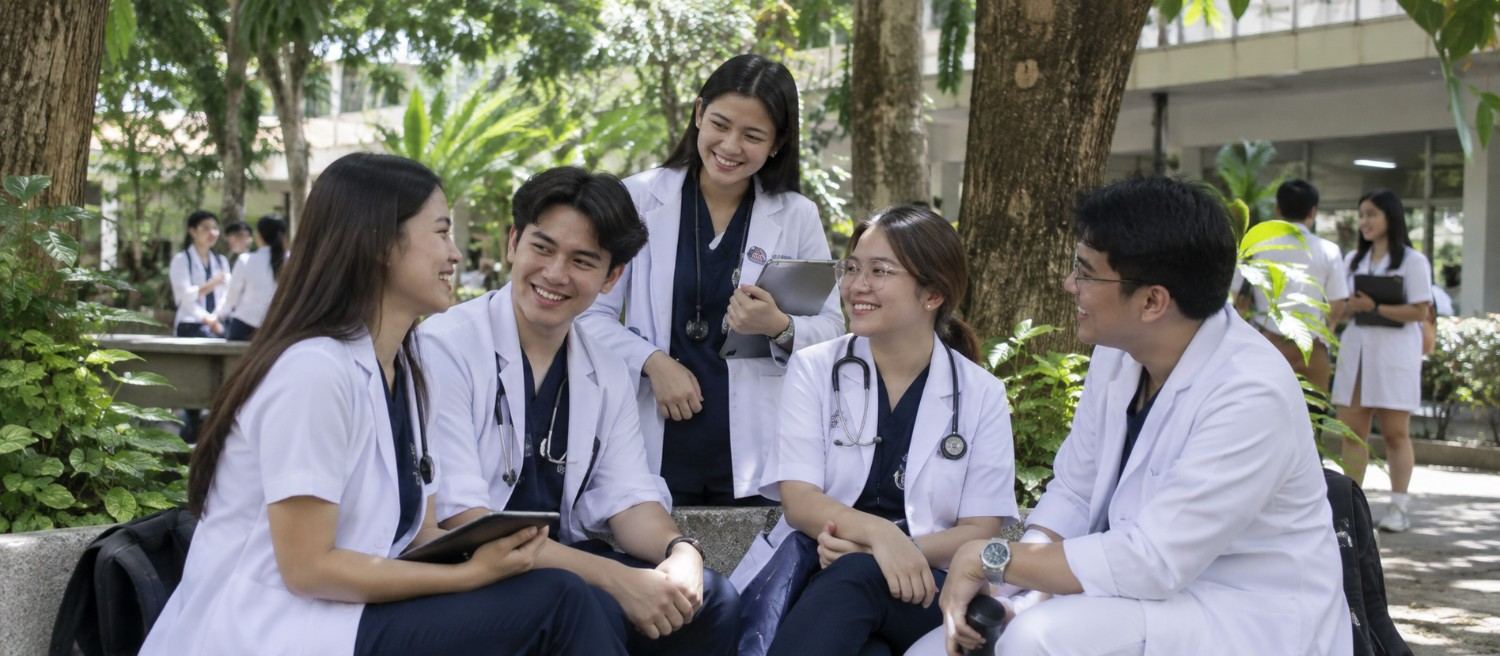
Furnished hostel rooms with Wi-Fi, laundry, 24/7 security, and Indian mess on or near campus.
Indian restaurants and mess facilities serving vegetarian and non-vegetarian home-style food daily.
Strong Indian community with cultural events, festival celebrations, and peer support groups.
Students get hands-on clinical training in government and private hospitals affiliated with the university.
Practical information for students planning to study at MBBS in Ateneo de Zamboanga University College of Medicine.
Prepare for all seasons. Thermal wear for winters, light clothing for summers. University provides heating in hostels.
Student visa processed with university invitation letter. Direct and connecting flights from major Indian cities.
Health insurance included in fees. Medical facility on campus plus city hospitals easily accessible.
Local SIM cards available. WhatsApp and video calls keep you connected with family back home.
Average monthly expenses of $150–$250 covering food, transport, and personal needs.
University library, online databases, and study groups. Seniors mentor juniors through academic challenges.
Our team guides you through every step — from application to arriving on campus.
The first step is to have a free phone counselling session. This is not a sales promotion or sales pitch. Here, we analyse all the universities mentioned side by side. We go through FMGE rates, total fees, city life, and whether the USMLE or NExT path better suits your goals. Most students walk out of this call with a clear first choice and a backup.
Once you pick a university, we will hand you a Philippines-specific document checklist. It is not a generic list. Every item on it is there for a reason, either for the university application, the 9(f) visa conversion, or the ACR I-Card registration. We check everything before a single paper goes anywhere.
Your application goes directly to the university through our partner channel. Most students get an acceptance letter within 10 to 21 days. However, December intake applications move faster than June ones, so timing matters. We follow up on all applications and will be in touch if there is any delay.
Once you receive your offer letter, we will have an in-depth discussion with you on the fees charged. The first instalment of fees will be deposited without any ambiguity. What you pay, when you pay, and what it covers, all of it is clear before any money moves.
Indian students do not need a pre-departure visa for the Philippines. You enter visa-free for 30 days. However, the 9(f) Student Visa conversion must start within the first week of arrival; it is time-sensitive. We also advise on the best flight route, whether Cebu or Manila, depending on your university.
About a week before you fly, we do a full pre-departure briefing. We cover accommodation options, campus location, Indian food sources near your university, how to transfer money from India, which SIM card to buy, and what the first week on campus actually looks like—students who attend this briefing land in the Philippines significantly less stressed than those who skip it.
On arrival day, our local team in the Philippines meets you at the airport, whether in Cebu or Manila. You are not landing in a new country alone. Someone who knows the ground is there from the first minute.
Within the first week, the 9(f) visa conversion process starts. Our team submits your documents to the Bureau of Immigration and closely tracks your application. The ACR I-Card, your official alien registration card, is processed at the same time. This step is strictly managed because delays here cause real problems later.
By the end of Week 2, your university enrollment is complete, your hostel room is confirmed, and your BS pre-medical orientation is done. You know your timetable, your faculty, and where everything is. Furthermore, our team has already flagged your NMAT preparation schedule, so there will be no surprises at the bridge stage.
After enrollment, our on-the-ground team in the Philippines stays in contact throughout all six years. If there is a university issue, a hostel problem, a visa renewal, or a health concern, there is a local contact to call. Moreover, from Year 3 onward, our FMGE and USMLE coaching track begins, because academic support does not stop at the airport.
Admission Helpline — Contact our counsellors for step-by-step assistance.
“The faculty here is incredibly supportive. The clinical training during hospital rotations has given me real confidence in patient care.”
“Affordable fees without compromising on quality. The campus facilities and hostel life made my transition abroad very smooth.”
“English medium instruction and WHO-recognized curriculum were the deciding factors for me. No regrets so far — excellent experience overall.”
“The university helped with everything from visa to accommodation. Hospital exposure from year three has been invaluable for my FMGE prep.”
“Just cleared my licensing exam on the first attempt. The structured coaching and mock exams during final year were a game-changer.”
“Safe campus, good food options, and a strong Indian student community. The teaching methodology is very practical and hands-on.”
Yes. WHO, NMC India, FAIMER, ECFMG, and WFME have accredited the university. Do not forget to check out wdoms.org before coming.
Only 50 students per year. It is one of the smallest MD classes in the Philippines.
Around INR 28 to 38 lakhs for the full programme. No donation, no capitation fee at any stage.
Yes. NEET is a must per NMC India rules. NMAT is also required separately for entry to the Philippines.
The cut-off NMAT is 40%. Plus, an entrance exam and interview are also held.
The university campus and city centre are safe and functioning. Please check all the latest advisories on your own.
Yes. Scholarships are offered for deserving students. Apply during the admission process.
Yes. Full English medium. No IELTS or TOEFL needed. English is the medium of instruction.
Dengue, tuberculosis, schistosomiasis, leptospirosis, and malaria. All are FMGE high-yield topics.
The university offers various graduate courses. For MD Specialisation, most graduates opt to apply overseas.
Our expert counsellors will guide you through the complete admission process — from documents to airport pickup.