
1. What makes Birmingham's Medical School distinctive?
+Its main teaching hospital, Queen Elizabeth Hospital Birmingham, is Europe's largest single-site teaching hospital and the principal receiving site for UK military trauma casualties.
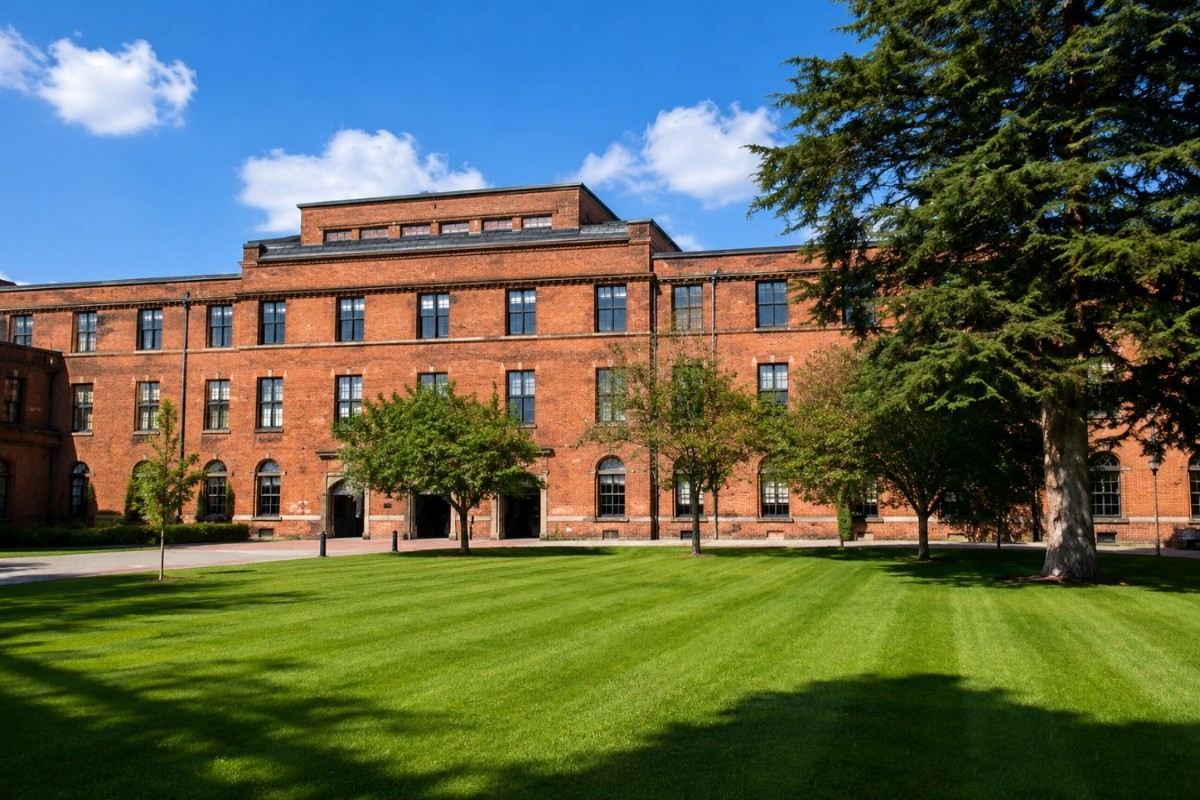
 Uk | Est. 1900
Uk | General Medical Council (GMC), UK - Primary Medical Qualification | English medium
Expert will call you within 2 hours
The fact worth knowing about Birmingham Medical School that is unlikely to make it to the prospectus: its teaching hospital Queen Elizabeth Hospital Birmingham is the largest teaching hospital at a single site in Europe.
Queen Elizabeth Hospital is also the main hospital for evacuating the British military personnel coming from overseas and is equipped with the Royal Centre for Defence Medicine and the largest European programme for solid organ transplants.
Being on clinical placements here, one gets not only a chance to train at a very large NHS trust but inside one of the few hospitals worldwide designed to handle catastrophic mass casualty situations, together with routine general medicine and surgery.
This combination of trauma capacity and clinical teaching defines the nature of a medical education in Birmingham more than anything else.
The Medical School predates the university housing it. Birmingham School of Medicine and Surgery was established back in 1825, more than seventy years before the founding of the University of Birmingham in 1900.
The university belongs to the Russell Group and is the first English civic university aside from Oxford, Cambridge and London awarding its own degrees.
It is not important because of the prestige factor but because of the unique accumulation of hospitals and specialised centres around it, in the region of over five million people.
The location provides the Birmingham students with a rather extensive catchment of clinical placements staying close to the university at the same time.
MBChB programme takes five years and the curriculum of the Birmingham Medical School was recently rebuilt; the new programme will start from the incoming 2026/27 cohort.
It is the modernization of a well-established, GMC accredited medical programme rather than introduction of some unknown, novel provider. Still, it needs mentioning, because such large change in curriculum can appear morerisky from the outside.
The structure of the programme stays the same: the GP and hospital experience starting from Year 1, systems-based sciences and clinically-oriented final three years of the studies.
The changes were introduced with the aim of improving the student support and practice experience, but not the content of the programme that will be assessed.
Years 1 and 2 consist of daily campus teaching, lectures, small groups work and practical classes in anatomy. One day a week is dedicated to clinical skills development, alternating between simulation and real practice in general practice.
Year 3 onwards all teaching takes place on clinical placements. Students have two fourteen weeks hospital blocks with internal medicine, surgery and GP exposure.
Year 4 includes pediatrics, obstetrics and gynaecology, psychiatry, oncology and specialities medicine.
Year 5 finishes with two eight weeks blocks of acute and chronic care experience to prepare for the Medical Licensing Assessment. It is followed by a chosen elective placement and two assistantships that act as a trial period as a junior doctor.
It is worth noticing, that the Birmingham Medical School discontinues its graduate-entry medicine programme.
The applicants with a degree now apply to the same five-year MBChB as students coming straight from school.
This is an important difference from the schools offering separate programmes like Ulster or Swansea. The majority of students who chose to do intercalation and earn a BMedSc degree in the area of their choice in one year, usually do it in Year 2/Year 3.
This is earlier in the course than for many peers, thus making the structure of the degree different for them.
The school is rather inexpensive among the Russell Group medical schools for international students although the fees are not flat.
They are £30,330 per year in Years 1 and 2 (pre-clinical) and £48,660 in Years 3-5, when the students get onto the placements. Thus, the total amount of tuition comes to £207,000.
This is much cheaper than what London medical schools ask. The question that naturally arises here is why the Birmingham medical school is cheaper than UCL or Imperial that belong to the same Russell Group level?
The answer is very simple: the costs of placements and living in London are higher, and the tuition fee reflects it.
Birmingham is 56th in the world in Medicine according to the QS World University Rankings by Subject 2026 and the University of Birmingham was named Daily Mail University of the Year for 2027.
Birmingham, as the second largest city in the UK, is rather cheap to live in while being a major urban centre. It has its international airport, good transport links and rather large, diverse student community.
University halls cost approximately £100 to £200 per week depending on the room type.
In other words, the families, who choose Birmingham, are choosing a 200-year-old medical school with one of the best teaching hospitals in Europe for the price close to the medium-tier English medical schools rather than London ones.
No hidden charges, no donation. The full picture of costs at MBBS in University of Birmingham College of Medical and Dental Sciences.
Tuition Fee
GBP 30,330 (Years 1-2); GBP 48,660 (Years 3-5)
GBP 30,330 (Yrs 1-2) / 48,660 (Yrs 3-5) Approx. Rs. 39.43 lakh / 63.26 lakh
Hostel Fee
£6,172 to £11,238 per year
£6,172 to £11,238 per year
Food & Meals
GBP 1,800-3,600 Approx. Rs. 2.34-4.68 lakh
per year
Insurance
GBP 776 Approx. Rs. 1.01 lakh
per year
Donation
no donation
no hidden fee
Total Estimated Cost
Approx. GBP 240,000-269,000
5 year
25–35%
Average FMGE first-attempt pass rates for students from many overseas medical universities. Students from structured programs consistently score higher.
Students returning to India need to clear the FMGE/NExT exam. MBBS in University of Birmingham College of Medical and Dental Sciences integrates exam-oriented coaching into the regular curriculum so students are prepared from day one.
A structured program that takes you from foundational sciences to clinical mastery.
• One day a week dedicated to clinical skills, alternating between simulated practice and real general practice experience
• Daily campus-based teaching combining lectures, small-group work, and anatomy practical sessions
• Ongoing weekly clinical skills sessions alternating between simulation and general practice placements
• Continued daily campus-based teaching building on Year 1's medical science foundations
• Supplementary campus-based teaching and self-directed study alongside placements
• Two 14-week hospital placements, each combining internal medicine and surgical specialties with primary care exposure
• Continued development of diagnostic and clinical management skills built on Year 3 placements
• Placements in child health (paediatrics), obstetrics and gynaecology, psychiatry, cancer care, and specialty medicine
• A self-chosen medical elective in the UK or abroad, followed by two assistantships preparing students for life as a qualified doctor
• Two eight-week acute care and chronic care placement blocks, covering primary and secondary care, ahead of the Medical Licensing Assessment
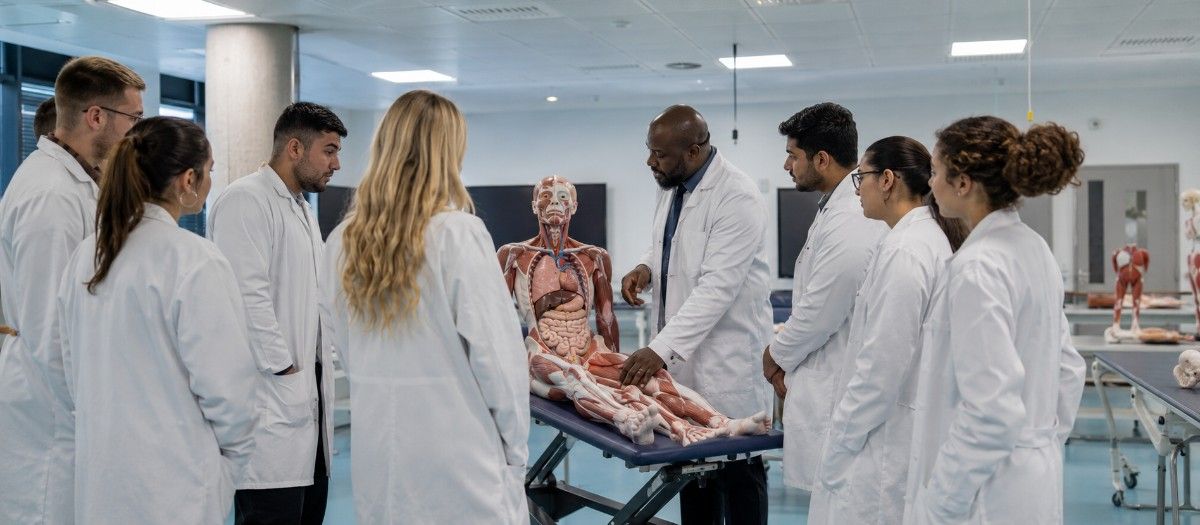
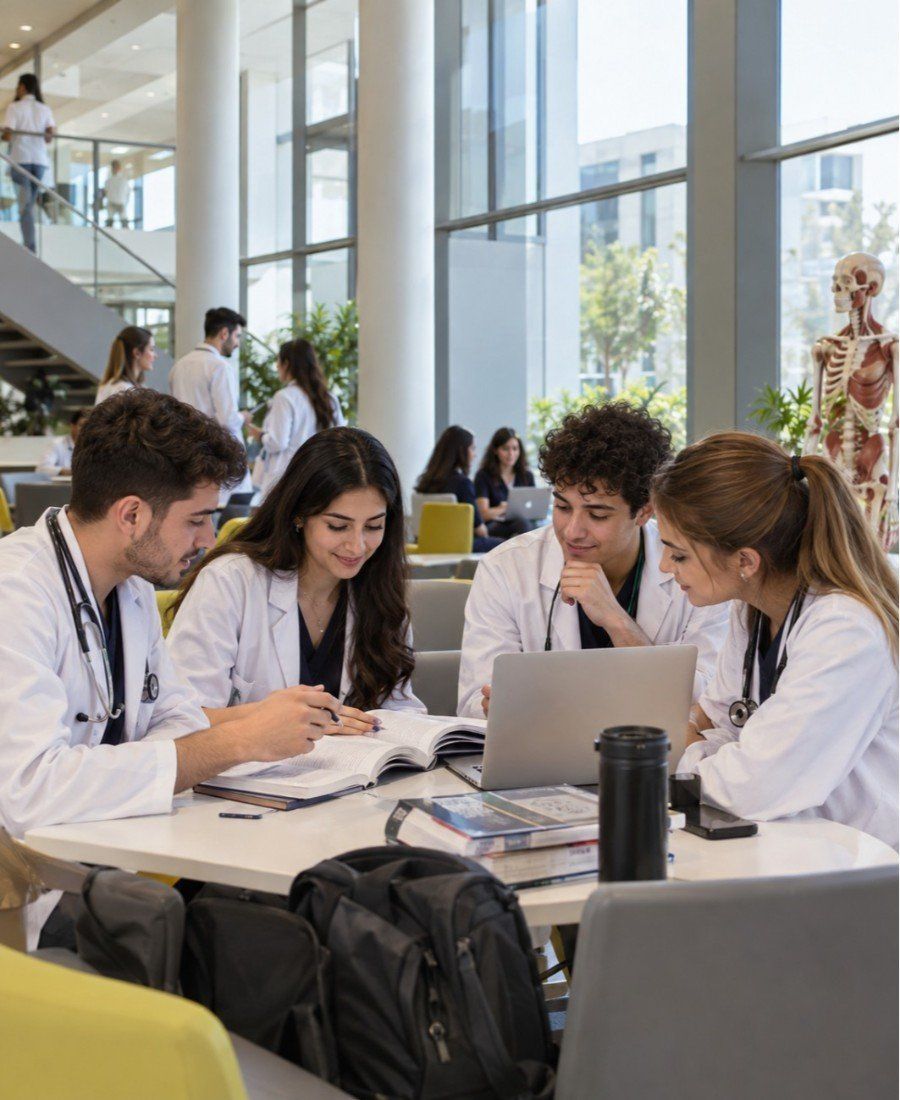
Furnished hostel rooms with Wi-Fi, laundry, 24/7 security, and Indian mess on or near campus.
Indian restaurants and mess facilities serving vegetarian and non-vegetarian home-style food daily.
Strong Indian community with cultural events, festival celebrations, and peer support groups.
Students get hands-on clinical training in government and private hospitals affiliated with the university.
Practical information for students planning to study at MBBS in University of Birmingham College of Medical and Dental Sciences.
Prepare for all seasons. Thermal wear for winters, light clothing for summers. University provides heating in hostels.
Student visa processed with university invitation letter. Direct and connecting flights from major Indian cities.
Health insurance included in fees. Medical facility on campus plus city hospitals easily accessible.
Local SIM cards available. WhatsApp and video calls keep you connected with family back home.
Average monthly expenses of $150–$250 covering food, transport, and personal needs.
University library, online databases, and study groups. Seniors mentor juniors through academic challenges.
Our team guides you through every step — from application to arriving on campus.
Compare universities based on fees, city, UCAT requirements, and clinical exposure, starting 12–18 months before your intended entry, not the cycle you’re applying in.
Registration opens in May; the testing window runs July–September. Most successful applicants begin focused preparation 3–4 months ahead, alongside board exam preparation.
Book and complete IELTS, PTE, or TOEFL well ahead of the UCAS deadline, allowing time for a retake if needed.
Submit your application, including personal statement and up to 4 medicine choices, before the 15 October deadline.
Prepare for and attend interviews (MMI or Panel format) typically scheduled November through February.
Offers (conditional or unconditional) typically arrive through winter and spring; conditional offers require meeting stated academic and English-score conditions.
Once Class 12 results and any other conditions are confirmed, your university issues the Confirmation of Acceptance for Studies (CAS), which is required for your visa application.
Apply using your CAS reference number; arrange maintenance funds according to the 28-day rule well in advance rather than at the last minute.
Book flights, confirm accommodation, complete any on-arrival formalities during orientation week, open a local bank account, and begin building connections with your university’s Indian/South Asian student community.
Admission Helpline — Contact our counsellors for step-by-step assistance.
“The faculty here is incredibly supportive. The clinical training during hospital rotations has given me real confidence in patient care.”
“Affordable fees without compromising on quality. The campus facilities and hostel life made my transition abroad very smooth.”
“English medium instruction and WHO-recognized curriculum were the deciding factors for me. No regrets so far — excellent experience overall.”
“The university helped with everything from visa to accommodation. Hospital exposure from year three has been invaluable for my FMGE prep.”
“Just cleared my licensing exam on the first attempt. The structured coaching and mock exams during final year were a game-changer.”
“Safe campus, good food options, and a strong Indian student community. The teaching methodology is very practical and hands-on.”
Its main teaching hospital, Queen Elizabeth Hospital Birmingham, is Europe's largest single-site teaching hospital and the principal receiving site for UK military trauma casualties.
Yes. All teaching, placements, and assessments across the five-year MBChB programme are delivered in English.
Yes. The MBChB is GMC-accredited, listed in the World Directory of Medical Schools, and ranked 56th in the world for Medicine by QS in 2026.
Yes, but Indian nationals must clear the National Medical Commission's applicable screening examination for foreign medical graduates before registering to practise in India.
Yes. All MBChB applicants must sit the UCAT in their year of application, alongside meeting the required A-level or IB grades.
No. Birmingham has discontinued its separate graduate-entry programme, so graduates now apply through the standard five-year MBChB alongside school leavers.
No. International tuition is £30,330 a year for the pre-clinical Years 1 and 2, then rises to £48,660 a year once clinical placements begin in Year 3.
Yes. Most students take an additional BMedSc year, typically between Year 2 and Year 3, earlier than the norm at many other UK medical schools
Placements run mainly through Queen Elizabeth Hospital Birmingham and other University Hospitals Birmingham NHS Foundation Trust sites, alongside placements across the West Midlands.
Graduates receive provisional GMC registration after passing the Medical Licensing Assessment and apply through the UK Foundation Programme for a two-year Foundation post.
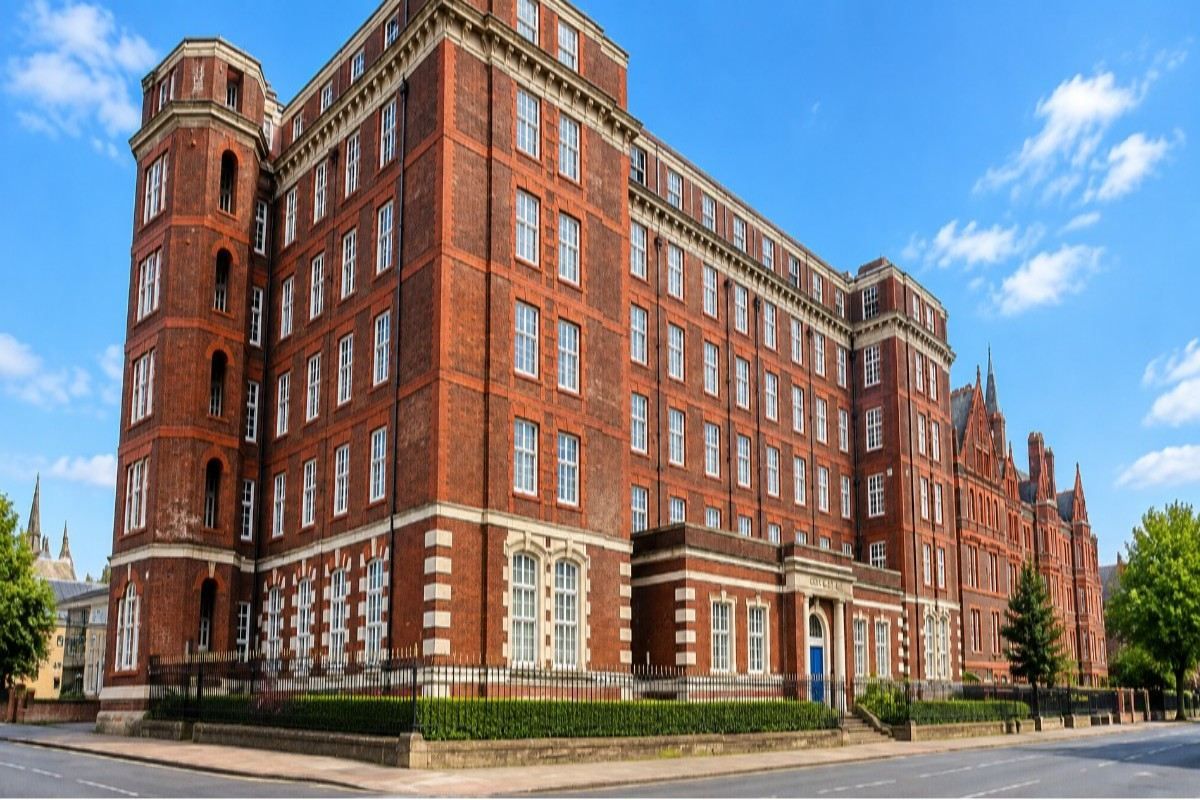
Our expert counsellors will guide you through the complete admission process — from documents to airport pickup.