Q1. Is Cebu Doctors' University College of Medicine a private university?
+A. Yes. It is a private, non-sectarian, non-stock, non-profit medical foundation and not a government institution.

 Philippines | Est. 1977
Philippines | The MD program is fully accredited by CHED. PAASCU also assesses it. The visit occurred in 2025. | English is the medium of instruction throughout. So, no separate IELTS or TOEFL score is required. medium
Expert will call you within 2 hours
The University and What Makes It Different
Cebu Doctors' University College of Medicine, or CDU-CM, started in 1977. It began as Cebu Doctors' College of Medicine, a non-stock, non-profit foundation. The parent college itself opened in 1973, first as a nursing school. So, medicine came a few years later. In 2004, the college earned full university status. It was renamed Cebu Doctors' University.
That status matters more than it sounds. CHED gave CDU Autonomous Status. This is its highest recognition. CDU became the first non-sectarian university in the Visayas to earn it. Also, CDU stands out in one more way. It is the only private Philippine school with university status but no basic education program. So, it focuses purely on health sciences instead. That single-purpose focus shapes everything on campus.
So why bring up old history at all? Because CDU built its reputation slowly, through real outcomes, not marketing. It runs the Kauswagan Community Outreach Program. This program has won two DOH gold HAMIS awards and one silver. Most competitor pages skip this fact completely. Yet it shows real, sustained community health work.
The CDU Campus and Its Setting
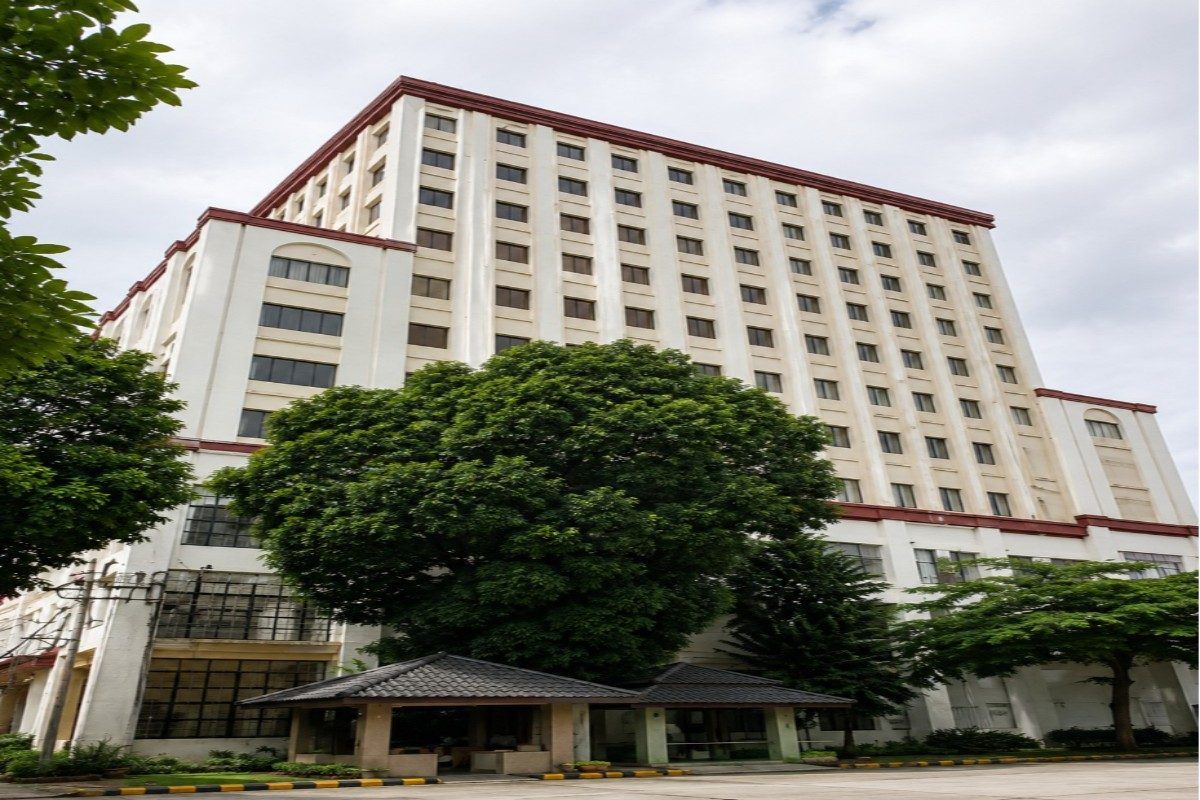
CDU sits in Mandaue City, not Cebu City proper. Many guides get this wrong. The campus sits in the North Reclamation Area. So, it stays close to Cebu City and Lapu-Lapu City. It also sits near major roads. Commute options stay easy from most nearby districts.
Clinical training runs at Cebu Doctors' University Hospital. This hospital sits right next to campus. It counts among Cebu's most advanced private hospitals. So, students train and study without long daily commutes. For electives, foreign final-year students can join several departments. These include Internal Medicine, Surgery, and Pediatrics. Other options include OB-Gyne, Radiology, Emergency Medicine, and Anesthesiology. Plus, a separate Community Medicine rotation runs at Kauswagan.
Student support runs deeper than most guides mention. CDU built a formal mentoring program back in 2009. Every student gets a personal portfolio and an assigned mentor. This model still tracks academic progress today. Meanwhile, the university enrols students across eight colleges and a graduate school. So, the medicine program benefits from a large, resource-rich campus.
Course Structure, Cost, and Practical Details
CDU-CM follows the usual BS-then-MD path for most students. Pre-med typically runs about 1.5 years. The MD program then runs for four years. Finally, a one-year internship completes the pathway. So, the traditional route takes roughly 5.5 to 6 years total.
However, CDU also runs a newer, faster option. CHED approved this in 2024. People call it EXCEL-MED for short. Its full name is Expedited Curriculum and Enhanced Learning in Medicine. Exceptional Senior High School graduates can join this track. It combines a BS in Health Sciences with the MD. Students finish in as little as seven years. They can also sit the licensure exam that same year.
Admission requires an NMAT score of 50% or higher. CDU also requires a Certificate of Eligibility for Medicine from CHED. This step often surprises first-time applicants. So, it pays to start this paperwork early.
Because CDU is private, fees run higher than public alternatives. Estimates place MD-level tuition around PHP 100,000 to 160,000 per semester. That equals roughly USD 1,800 to 2,900 per semester. Full programme costs can run higher, depending on miscellaneous fees. Still, treat these figures as estimates only. Always confirm the current schedule with the college directly.
Quick Overview
Parameter | Details |
Established (College of Medicine) | 1977 (parent college opened 1973; university status granted 2004) |
Institution Type | Private, non-sectarian, non-stock, non-profit medical foundation |
Location | North Reclamation Area, Mandaue City, Cebu, Philippines |
Programme | Doctor of Medicine (MD): traditional BS+MD+Internship, or the newer EXCEL-MED accelerated track |
Duration | Approx. 5.5 to 6 years (traditional); as short as 7 years (EXCEL-MED) |
Medium of Instruction | English |
NMAT Requirement | 50% or higher (official, subject to change) |
Teaching Hospital | Cebu Doctors' University Hospital (on-campus, private) |
Fee Structure
Fee Component | Per Year | Total Programme |
MD Tuition | Approx. PHP 200,000 to 320,000 | Varies by year level |
Pre-Medicine (BS) Tuition | Approx. PHP 120,000 to 180,000 | Approx. 1.5 years |
Miscellaneous and Lab Fees | Approx. USD 500 to 1,000 equivalent | Billed per semester |
Hostel and Accommodation | Approx. USD 600 to 1,000 | Varies by room type |
Donation | Nil (not required) | Nil |
Approx. Total Programme Cost | - | Approx. INR 18 to 22 lakh (traditional path, estimate) |
Why Cebu Doctors' University College of Medicine Deserves a Harder Look Than You've Given It
The Accelerated Pathway Nobody Else Is Talking About
CHED approved EXCEL-MED back in 2024. Most rival blogs still describe only the old 5.5- to 6-year path. This gap matters a lot. Exceptional Senior High grads can now complete a BS in Health Sciences plus an MD in 7 years total. They can also sit the licensure exam the same year they graduate. That is a genuinely new, dated fact. Most competing pages missed it, since their content predates the 2024-2025 rollout.
A Status Most Private Schools Never Earn
CHED grants very few Philippine schools its top tier. This is called Autonomous Status. CDU was the first non-sectarian university in the Visayas to receive it. It also holds one more rare title. CDU is the only private Philippine university with full university status but no basic education program. Health sciences are its entire reason for existing. This narrow focus is not a weakness. It works more like a filter. Every campus resource points toward one single goal.
Real Community Health Work, Not Just a Mission Statement
Many college pages print a vague line about compassion. CDU actually runs the Kauswagan Community Outreach Program. This program has already earned two gold and one silver HAMIS award. The Department of Health granted these awards directly. Final-year students also rotate through Kauswagan for Community Medicine training. So, the mission statement becomes an actual clinical rotation, not just a slogan.
Honest Assessment
This is not a cheap option. Private tuition runs well above public alternatives like state universities. Also, city life in Mandaue and Cebu brings real traffic. Living costs run higher here than in smaller provincial towns.
So, who fits here best? Students who want a private, autonomous, single-purpose medical school are a good fit. Students who value structured mentoring and community rotations fit well, too. However, budget-first applicants should compare this cost against public options first. Still, for a credentialed, community-tested private choice in the Visayas, CDU earns serious consideration.
No hidden charges, no donation. The full picture of costs at MBBS In Cebu Doctors University College of Medicine.
Tuition Fee
MD-level tuition runs roughly PHP 200,000 to 320,000 per year. This equals about USD 3,600 to 5,700 at typical rates.
MD tuition runs about PHP 100,000 to 160,000 per semester.
Hostel Fee
Hostel costs run roughly USD 600 to 1,000 per year. Both dorms and nearby private housing are available.
Roughly USD 600-1,000 per year
Food & Meals
Budget around USD 1,000-1,400 for meals
per year
Insurance
USD 100 health and accident insurance fee applies here
per year
Donation
No donation
No capitation payment
Total Estimated Cost
INR 18-22 lakh
Total 5.5 to 6 years cost
25–35%
Average FMGE first-attempt pass rates for students from many overseas medical universities. Students from structured programs consistently score higher.
Students returning to India need to clear the FMGE/NExT exam. MBBS In Cebu Doctors University College of Medicine integrates exam-oriented coaching into the regular curriculum so students are prepared from day one.
A structured program that takes you from foundational sciences to clinical mastery.
• Prepares students directly for the NMAT and MD-proper admission.
• Covers Biology, Chemistry, Physics, and English over about 1.5 years.
• It also covers biochemistry and histology in depth.
• Introduces gross anatomy and physiology as core subjects.
• And it also entails pharmacology and organ system diseases.
• Covers pathology and microbiology in depth.
• Training happens directly at Cebu Doctors' University Hospital, next to the campus.
• Students rotate through Internal Medicine, Surgery, Pediatrics, and OB-Gyne wards.
• Students also cover Emergency Medicine and Community Medicine at Kauswagan.
• The rotations are also in Radiology and Anesthesiology.
• Interns rotate through every major department before sitting the licensure exam.
• A mandatory, supervised one-year internship follows MD graduation.
• Students can finish in as few as seven years and sit the PLE that same year.
• Exceptional Senior High School graduates enter a combined BS Health Sciences and MD pathway.

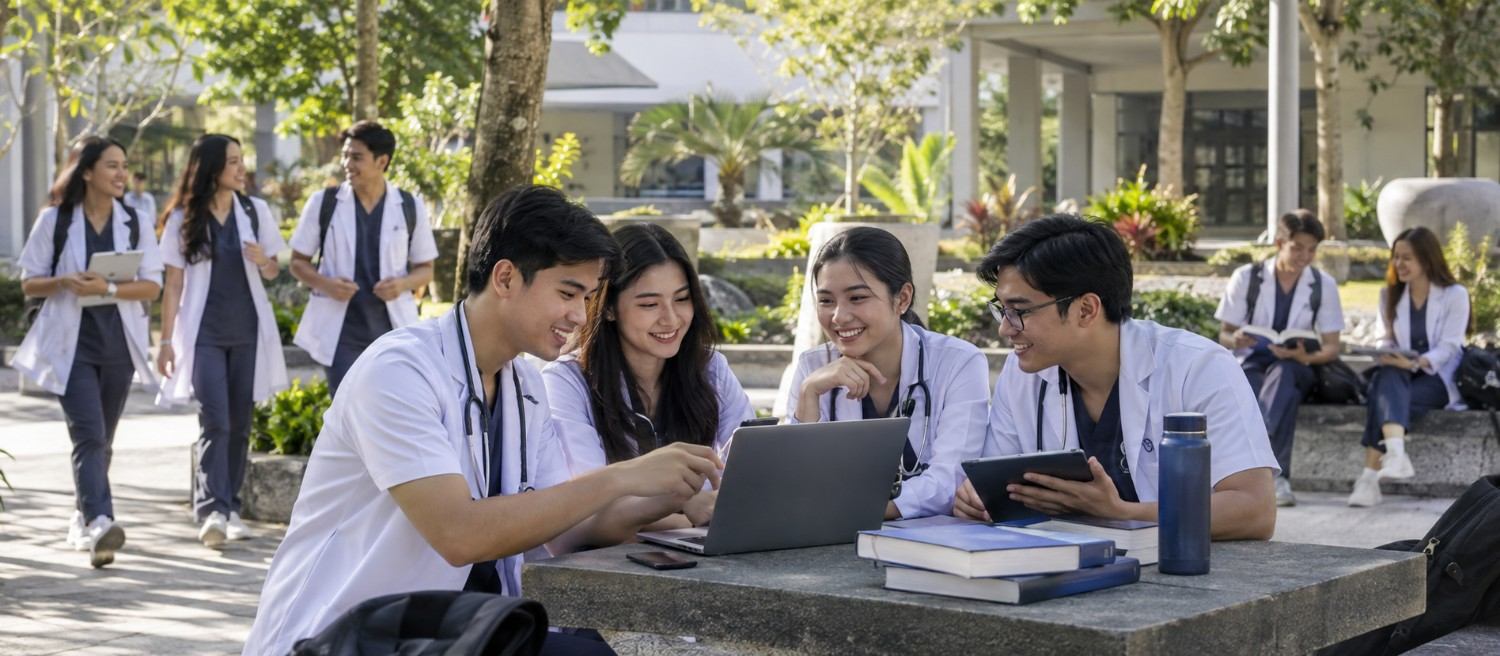
Furnished hostel rooms with Wi-Fi, laundry, 24/7 security, and Indian mess on or near campus.
Indian restaurants and mess facilities serving vegetarian and non-vegetarian home-style food daily.
Strong Indian community with cultural events, festival celebrations, and peer support groups.
Students get hands-on clinical training in government and private hospitals affiliated with the university.
Practical information for students planning to study at MBBS In Cebu Doctors University College of Medicine.
Prepare for all seasons. Thermal wear for winters, light clothing for summers. University provides heating in hostels.
Student visa processed with university invitation letter. Direct and connecting flights from major Indian cities.
Health insurance included in fees. Medical facility on campus plus city hospitals easily accessible.
Local SIM cards available. WhatsApp and video calls keep you connected with family back home.
Average monthly expenses of $150–$250 covering food, transport, and personal needs.
University library, online databases, and study groups. Seniors mentor juniors through academic challenges.
Our team guides you through every step — from application to arriving on campus.
The first step is to have a free phone counselling session. This is not a sales promotion or sales pitch. Here, we analyse all the universities mentioned side by side. We go through FMGE rates, total fees, city life, and whether the USMLE or NExT path better suits your goals. Most students walk out of this call with a clear first choice and a backup.
Once you pick a university, we will hand you a Philippines-specific document checklist. It is not a generic list. Every item on it is there for a reason, either for the university application, the 9(f) visa conversion, or the ACR I-Card registration. We check everything before a single paper goes anywhere.
Your application goes directly to the university through our partner channel. Most students get an acceptance letter within 10 to 21 days. However, December intake applications move faster than June ones, so timing matters. We follow up on all applications and will be in touch if there is any delay.
Once you receive your offer letter, we will have an in-depth discussion with you on the fees charged. The first instalment of fees will be deposited without any ambiguity. What you pay, when you pay, and what it covers, all of it is clear before any money moves.
Indian students do not need a pre-departure visa for the Philippines. You enter visa-free for 30 days. However, the 9(f) Student Visa conversion must start within the first week of arrival; it is time-sensitive. We also advise on the best flight route, whether Cebu or Manila, depending on your university.
About a week before you fly, we do a full pre-departure briefing. We cover accommodation options, campus location, Indian food sources near your university, how to transfer money from India, which SIM card to buy, and what the first week on campus actually looks like—students who attend this briefing land in the Philippines significantly less stressed than those who skip it.
On arrival day, our local team in the Philippines meets you at the airport, whether in Cebu or Manila. You are not landing in a new country alone. Someone who knows the ground is there from the first minute.
Within the first week, the 9(f) visa conversion process starts. Our team submits your documents to the Bureau of Immigration and closely tracks your application. The ACR I-Card, your official alien registration card, is processed at the same time. This step is strictly managed because delays here cause real problems later.
By the end of Week 2, your university enrollment is complete, your hostel room is confirmed, and your BS pre-medical orientation is done. You know your timetable, your faculty, and where everything is. Furthermore, our team has already flagged your NMAT preparation schedule, so there will be no surprises at the bridge stage.
After enrollment, our on-the-ground team in the Philippines stays in contact throughout all six years. If there is a university issue, a hostel problem, a visa renewal, or a health concern, there is a local contact to call. Moreover, from Year 3 onward, our FMGE and USMLE coaching track begins, because academic support does not stop at the airport.
Admission Helpline — Contact our counsellors for step-by-step assistance.
“The faculty here is incredibly supportive. The clinical training during hospital rotations has given me real confidence in patient care.”
“Affordable fees without compromising on quality. The campus facilities and hostel life made my transition abroad very smooth.”
“English medium instruction and WHO-recognized curriculum were the deciding factors for me. No regrets so far — excellent experience overall.”
“The university helped with everything from visa to accommodation. Hospital exposure from year three has been invaluable for my FMGE prep.”
“Just cleared my licensing exam on the first attempt. The structured coaching and mock exams during final year were a game-changer.”
“Safe campus, good food options, and a strong Indian student community. The teaching methodology is very practical and hands-on.”
A. Yes. It is a private, non-sectarian, non-stock, non-profit medical foundation and not a government institution.
A. In 1977, inside a university that itself opened in 1973 as Cebu Doctors' College.
A. A CHED-approved accelerated pathway, launched in 2024, that combines the BS in Health Sciences and the MD in as little as 7 years.
A. Official NMAT result with a grade of 50% or above. This condition may change from time to time.
North Reclamation Area, Mandaue City, near Cebu and Lapu-Lapu.
Cebu Doctors’ University Hospital, located right across from the campus, is among the best private hospitals in Cebu.
No. CDU does not require any capitation or donation payment for admission.
Roughly 5.5 to 6 years. This covers pre-medicine, the four-year MD proper, and internship.
Yes. CDU holds Autonomous Status, CHED's highest honour. It was the first non-sectarian Visayas university to earn it.
Yes, final-year students can rotate through seven hospital departments, plus a Community Medicine placement at Kauswagan.
Yes, after taking the FMGE/NExT exam in India, since CDU complies with the National Medical Commission Gazette 2021.
Our expert counsellors will guide you through the complete admission process — from documents to airport pickup.