The University and What Makes It Different
People mostly just call it CUE Tbilisi for short. The parent institution, Central University of Europe, carries a genuinely specific historical distinction: founded in 1991 by Valerian Kelbakiani and Revaz Laghidze as the Kutaisi Institute of Law and Economics, it holds the title of the first private higher education institution anywhere in Western Georgia. So, this university's private-sector pioneering status is a specific, documented first, not a general marketing claim, even though the Tbilisi campus itself is a considerably more recent addition.
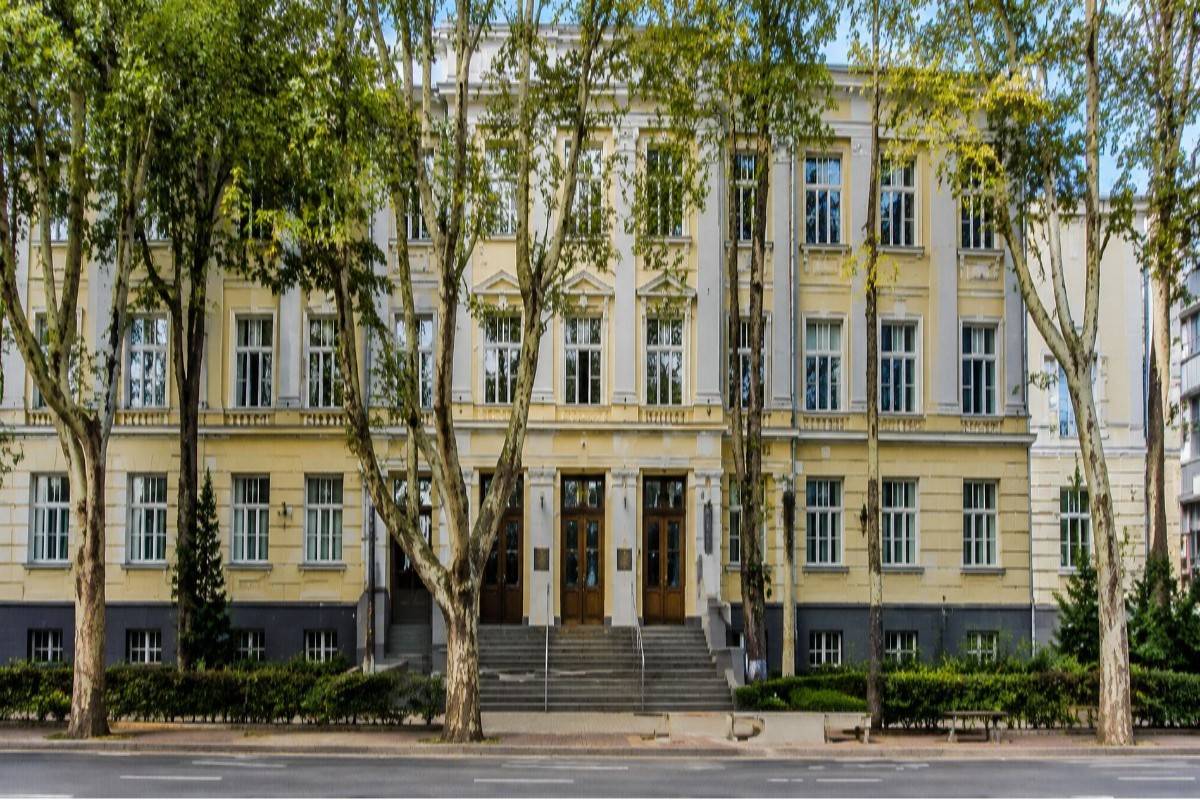
Here's a fact most guides skip entirely. CUE's own materials describe its Kutaisi campus, on Tsereteli Street, as "our original home" and "our historical roots," explicitly distinguishing it from the newer Tbilisi campus. So, applicants researching CUE should understand they're choosing between the university's founding site in Kutaisi and a genuinely newer, purpose-built campus in the capital, rather than assuming both sites carry the same institutional history.
A genuinely distinctive detail about the Tbilisi campus specifically is that it operates in collaboration with a government university, according to CUE's own promotional materials, though the specific partner institution isn't named in the sources reviewed for this profile. So, applicants should confirm the exact nature and current status of this collaboration directly with CUE before relying on it as a deciding factor.
CUE overall runs two faculties, the Faculty of Medicine and the Faculty of Social Sciences, Business and Law, both offering programmes in Georgian and English. The university is an individual associate member of the European University Association, EUA, reportedly the fifth private Georgian university to join this pan-European academic body, and maintains academic partnership agreements with 26 universities across 15 countries. The Faculty of Medicine's Medical Doctor programme is specifically built on World Federation for Medical Education, WFME, standards, and the English-language graduate medical programme is accredited by Georgia's own National Center for the Development of Quality in Education in accordance with WFME requirements.
The Tbilisi Campus and Its Setting
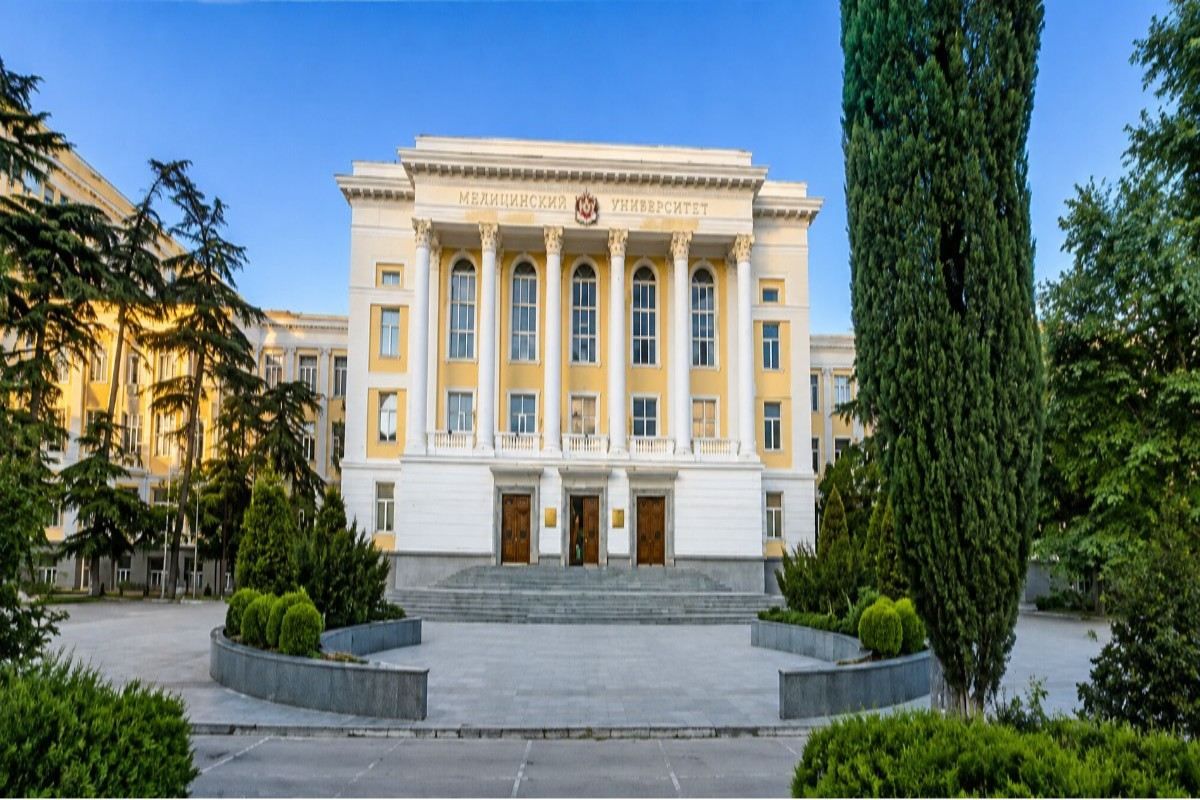
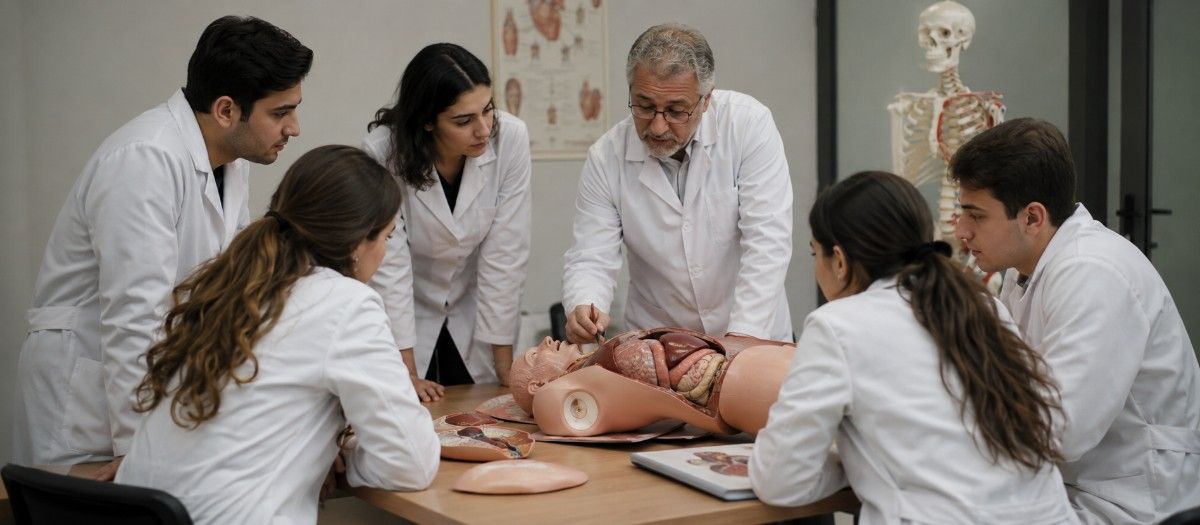
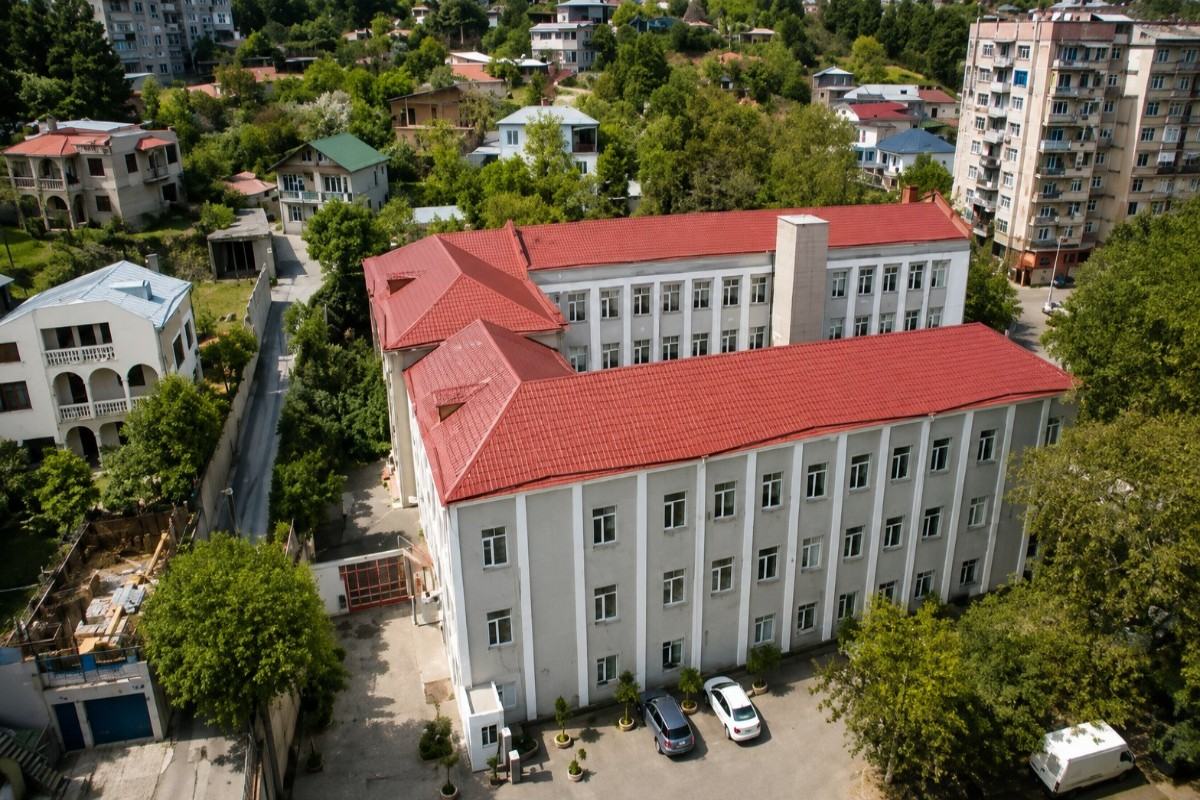
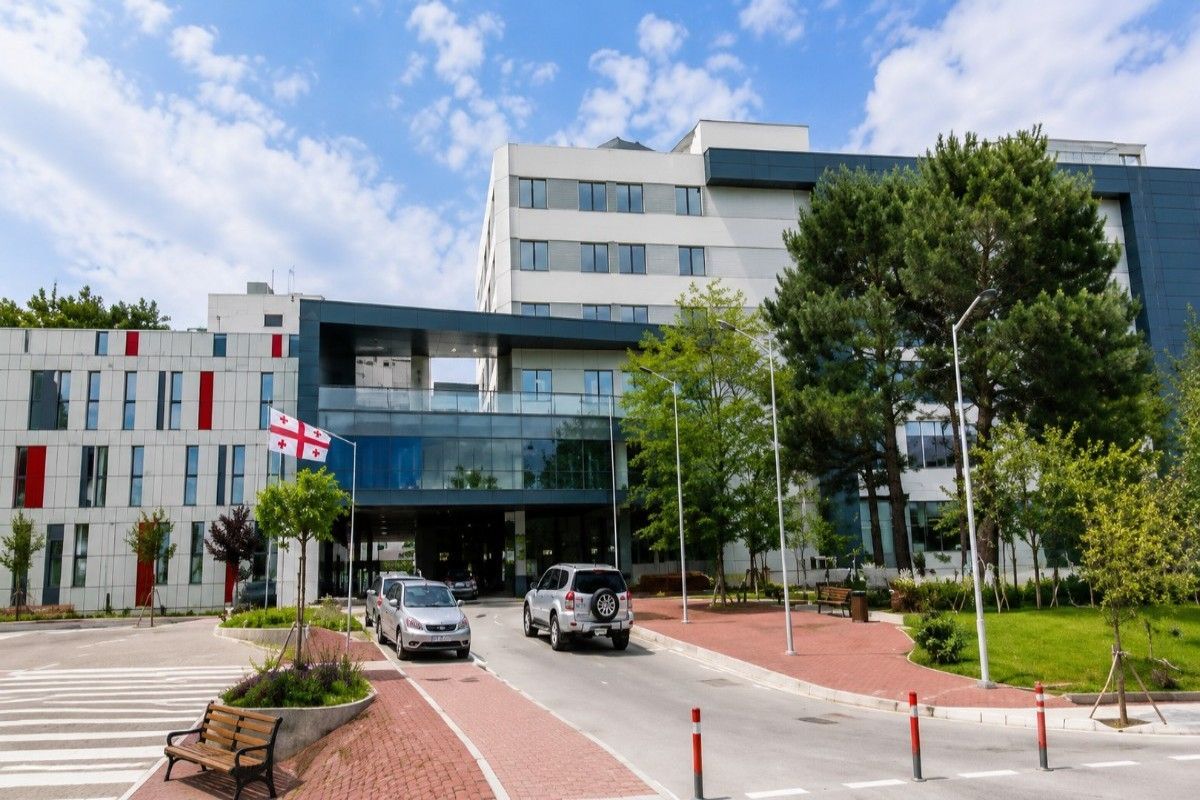
The Tbilisi Campus sits at 77 Merab Kostava Street, in the heart of Georgia's capital, and CUE's own materials describe it as offering a vibrant urban lifestyle combined with state-of-the-art learning facilities, including lecture halls, a library, dedicated anatomy and biochemistry laboratories, immunology and microbiology laboratories, a simulation centre, and histology and pathology training rooms. The campus sits near a metro station, giving students convenient transport access from across the city.
Tbilisi itself is described as a genuine international student hub, with affordable living conditions, modern infrastructure, and a rich cultural heritage that CUE presents as creating an ideal environment for both academic and personal growth. Students at the Tbilisi campus benefit from proximity to Georgia's leading specialised hospitals and research centres, giving them what the university describes as an immersive clinical environment from early in their studies, a genuinely different setting from the more focused, community-oriented atmosphere CUE describes at its original Kutaisi site.
Course Structure, Cost, and Practical Details
The Faculty of Medicine's Tbilisi campus offers a comprehensive six-year MD programme, designed according to European standards and taught entirely in English. The university states plainly that it doesn't require IELTS or TOEFL scores from most applicants, since the programme itself is taught in English and admission is based on academic criteria instead.
Admission requirements mirror those at CUE's Kutaisi campus: completion of 10+2 or an equivalent qualification in the science stream with Biology, a minimum of 50 percent aggregate marks in Physics, Chemistry, and Biology for general-category Indian applicants, or 40 percent for reserved categories, a minimum age of 17 by 31 December of the admission year, and no requirement for any specific prior degree beyond standard secondary education.
Fee figures here follow the same structure reported for CUE more broadly, since Tbilisi and Kutaisi operate as two campuses of the same parent university rather than separately priced institutions. One detailed source explicitly notes that CUE's own official fee structure isn't published on its website, meaning all reported figures ultimately come from education consultancy estimates rather than the university's own confirmed schedule. That said, the reported range is fairly consistent: annual tuition is generally cited at roughly USD 4,000 to 5,500, working out to approximately USD 24,000 across the full six-year programme at the lower end of that range. Hostel or accommodation costs are separately reported at roughly USD 2,500 a year, adding up to about USD 15,000 over six years. Combined, tuition and accommodation together are commonly estimated at around USD 39,000 for the full programme, though this figure excludes food and personal expenses, and should be treated as an informed estimate rather than an officially confirmed total.
NEET remains a genuine requirement for Indian applicants here, exactly as it does for MBBS study in most other countries. CUE is reported to be listed in the World Directory of Medical Schools, WDOMS, and recognised by India's National Medical Commission, meaning Indian graduates would still need to clear the FMGE or NExT exam after completing their degree and internship in order to practise medicine back in India.
Quick Overview
Parameter | Details |
Established | Parent university founded 1991 in Kutaisi; the Tbilisi campus is a later expansion, with its own specific opening year not consistently published |
Institution Type | Private university, second campus of Central University of Europe (CUE) |
Location | 77 Merab Kostava Street, Tbilisi, Georgia |
Programme | Graduate Medical Doctor (MD) programme, equivalent to an MBBS, taught in English |
Duration | 6 years |
Medium of Instruction | English |
Foreign Quota Note | NEET required for Indian applicants; no separate university entrance exam |
Teaching Hospital | Operates in collaboration with a government university; proximity to Georgia's leading specialised hospitals and research centres in Tbilisi |
Fee Structure
Fee Component | Amount | Notes |
Annual Tuition (reported) | Approx. USD 4,000 to 5,500 per year | Reported consistently across several education consultancy sources; the university's own official fee schedule isn't published online |
Total Tuition (6 years, reported) | Approx. USD 24,000 | Based on the lower end of the reported annual range |
Hostel/Accommodation (reported) | Approx. USD 2,500 per year (approx. USD 15,000 over 6 years) | Reported by education consultancy sources; confirm current rates directly |
Total Programme Cost (tuition plus hostel, reported) | Approx. USD 39,000 over 6 years | Excludes food and personal expenses; treat as an estimate only |
Scholarships | Merit-based scholarships and early-bird discounts reportedly available | Confirm current eligibility directly with the university or an authorised representative |
Why CUE's Tbilisi Campus Deserves a Harder Look Than You've Given It
A Genuine Choice Between Two Distinct Campus Identities
Most rival pages describing multi-campus universities treat every site as interchangeable. CUE itself explicitly distinguishes its "original home" in Kutaisi from its newer, capital-city Tbilisi campus, each carrying a genuinely different atmosphere, urban versus community-oriented. So, applicants get a real, meaningful choice here between two structurally different environments within the same university, not a cosmetic difference in address.
Proximity to Georgia's Leading Specialised Hospitals, Not Just a General Claim
Most guides describe clinical exposure generically. CUE's own materials specifically tie the Tbilisi campus's clinical training advantage to proximity with the country's leading specialised hospitals and research centres, concentrated in the capital in a way Kutaisi, a smaller regional city, genuinely cannot match. So, students choosing Tbilisi specifically gain access to a genuinely wider range of clinical exposure than the original campus alone offers.
Honest Assessment
Be upfront about a few real considerations here. CUE's own official fee structure isn't published online, meaning every figure in this guide, however consistent across sources, ultimately traces back to third-party consultancy estimates rather than a confirmed university document. The specific government university CUE collaborates with at its Tbilisi campus isn't named in available sources, so this detail should be confirmed directly rather than assumed.
So, who fits here best? Students drawn to a genuinely affordable, English-taught MD programme with a straightforward, exam-light admissions process, who specifically want the capital-city environment and closer hospital proximity Tbilisi offers over Kutaisi, fit well here. Students interested in a university with a real, specific "first in the region" founding story, even if that founding took place at the sister campus, fit well too. However, applicants who need an officially published, university-confirmed fee schedule before applying should request this directly rather than relying solely on consultancy estimates, however consistent they may be. Still, the genuine 1991 founding story, the Tbilisi campus's modern facilities, and the reported WDOMS listing are real, well-documented strengths.