
Q1 Can Indian students apply to Dhaka Central International Medical College and Hospital?
+Yes. DCIMCH genuinely welcomes international applicants, including Indian students, through Bangladesh's standard foreign-student admissions route.
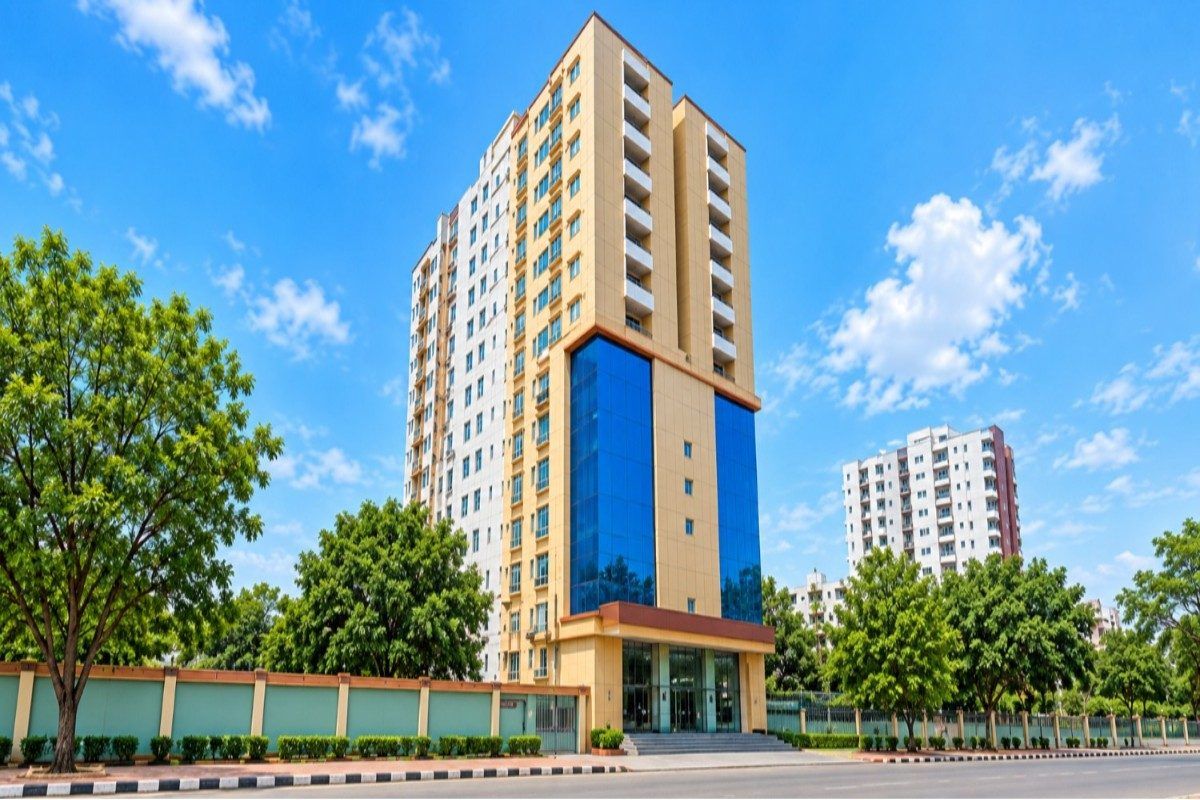
 Bangladesh | Est. 2010
Bangladesh | Approved by the Bangladesh Medical and Dental Council (BMDC); listed in the World Directory of Medical Schools (WDOMS); recognised by India's National Medical Commission and the World Health Organization, per multiple sources. | 100% English. medium
Expert will call you within 2 hours
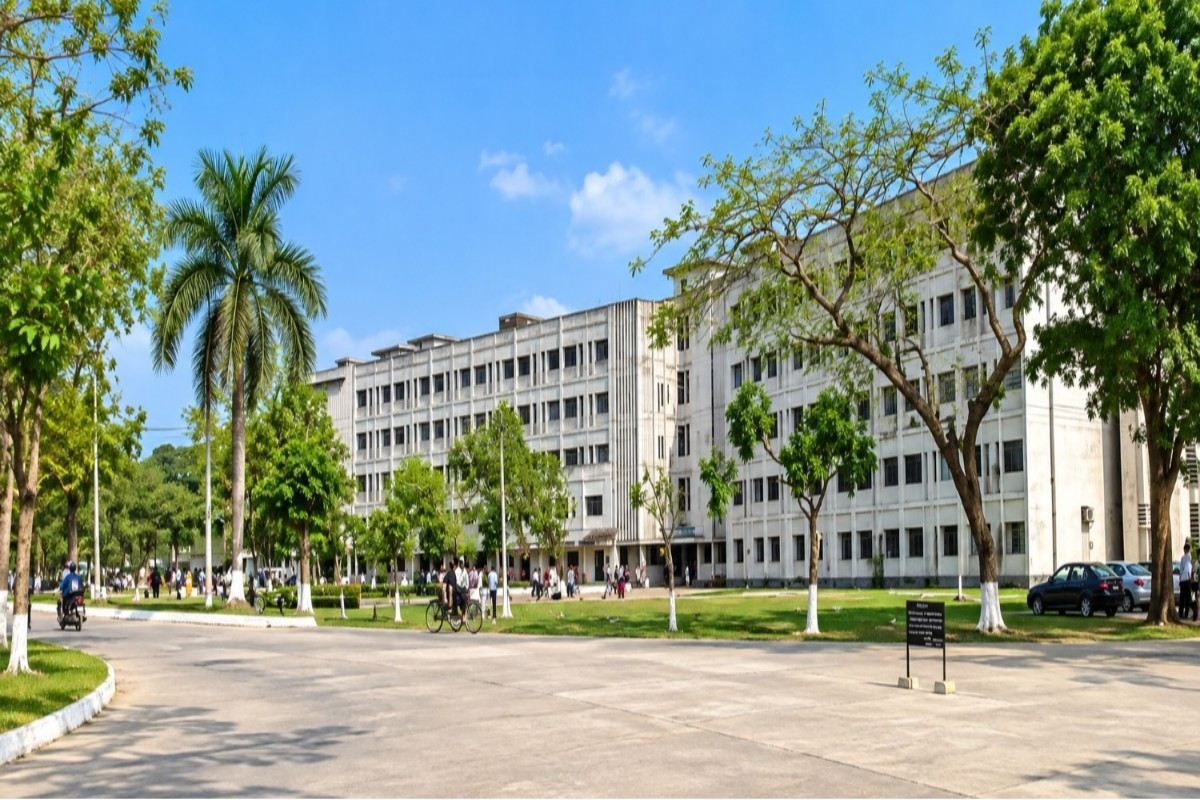
People usually just call it DCIMCH for short. It sits in the Mohammadpur area of Dhaka, Bangladesh's sprawling capital. It is genuinely a private, non-government medical college, run as a for-profit institution rather than a charitable or government-funded one. Most sources place its founding around 2010 or 2011, making it a fairly close contemporary of several other private Bangladeshi medical colleges that opened in that same window. Like most of its peers, DCIMCH is academically affiliated with the University of Dhaka, which acts as the degree-awarding body once a student completes the course.
The college runs the standard Bangladeshi medical structure. This means a five-year MBBS course, approved by the Bangladesh Medical and Dental Council, known as BMDC, followed by a compulsory one-year internship before full registration to practise. Some sources describe this as a "six-year programme." That simply reflects the five academic years plus the mandatory internship year added together. It is not a longer academic course than other Bangladeshi medical colleges. DCIMCH's own listing in the World Directory of Medical Schools, the WDOMS, confirms this standard five-year structure. The college is also recognised by India's National Medical Commission and the World Health Organization, according to multiple independent sources.
Here is the fact that genuinely matters most for an Indian applicant weighing this option, though. Fee figures for DCIMCH vary meaningfully depending on where you look. The college's own official website states plainly that the total five-year MBBS course fee is USD 44,500, with accommodation included. Food and internship fees are charged separately. This figure is described as non-refundable and non-transferable once admission is confirmed. Several third-party education consultants, though, quote a noticeably different figure. They describe an annual tuition fee of roughly USD 7,000 to 8,000, which would work out to something closer to USD 35,000 to 40,000 across five years. These two figures are not identical. An applicant should treat the official college website as the more reliable source. Still, confirm the exact current total directly with DCIMCH's own admissions office before paying anything.
The hospital bed count also varies between sources, in a way worth knowing about upfront. Several sources describe DCIMCH's attached teaching hospital as a 250-bed facility, while at least one other source describes a much larger 500-bed complex instead. Given how much these two figures differ, an applicant should ask DCIMCH directly for the current, confirmed bed count. Do not rely on any single online source, since this genuinely affects how much hands-on clinical exposure a student can expect.
FMGE pass rates deserve the same honest treatment. This is an important number for any Indian student. Clearing the FMGE, or its replacement, the NExT exam, is what actually allows a graduate to practise medicine back in India. Different sources quote very different figures for DCIMCH specifically. One source puts the pass rate at roughly 38 percent, while another describes a lower range of 20 to 30 percent, varying by year. Neither figure comes from an official BMDC or National Board of Examinations release that could be independently verified at the time of writing. Treat both numbers as rough, third-party estimates rather than confirmed statistics. Ask DCIMCH directly for its most recent cohort's actual results.
None of this means DCIMCH is a weak choice, though. Its central selling point, repeated across nearly every source describing it, is genuinely straightforward. It offers a full English-medium MBBS with no IELTS or TOEFL requirement, and no separate college-specific entrance exam. Admission rests mainly on NEET results and academic record. The total cost remains meaningfully lower than a comparable private medical seat in India. The college also runs its programme entirely in English, which several sources highlight as making the transition easier for Indian and other international students specifically.
Admission itself follows the pattern common across Bangladeshi private medical colleges. Applicants generally need a completed higher secondary qualification, with at least 50 percent marks combined across Physics, Chemistry, and Biology. They also need a valid, qualifying NEET score. That requirement comes from India's own regulations, not from Bangladesh or from DCIMCH itself. There is no separate language test and no college-specific written exam. Several sources describe this as a genuine point of relief for students who might otherwise face several different entrance hurdles at once.
Dhaka itself is Bangladesh's capital and by far its largest city, a dense, fast-growing megacity of well over ten million people. Living costs in Dhaka are generally estimated at around USD 300 per month for a typical international student. This covers food and personal expenses, on top of the course fee itself. For an Indian applicant, Dhaka also sits within easy reach of several major Indian cities by short flight. This matters across five or six years of travel back and forth for holidays and family visits.
Cost Item | Amount | Notes |
Total MBBS Course Fee (5 years, per DCIMCH's own website) | USD 44,500 | Includes accommodation. Food and internship fees are charged separately. Non-refundable once admission is confirmed. |
Total MBBS Course Fee (alternative estimate, per some consultants) | Approx. USD 35,000-40,000 | Based on a quoted annual figure of USD 7,000-8,000. Confirm which figure is current directly with DCIMCH. |
Admission / Entrance Test Fee | Not separately required | No college-specific entrance exam or IELTS/TOEFL score is required. |
Internship Fee | Charged separately | Payable before the 3rd Professional Examination if completing internship at DCIMCH itself. |
Living Costs | Approx. USD 300/month | Covers food and personal expenses. Charged separately from the course fee. |
Hospital Bed Count | 250 or 500, depending on source | Confirm the current, exact figure directly with DCIMCH before relying on it in any comparison. |
Note: no capitation fee is officially required for admission to a Bangladeshi medical college. Given how much the quoted fee, bed count, and FMGE pass-rate figures vary between sources, treat every specific number here as a starting point. Use it for a direct, written conversation with DCIMCH.
Most guides to studying medicine abroad either quote a single figure for DCIMCH's fee, bed count, or FMGE pass rate without mentioning that other equally visible sources quote something meaningfully different, or they skip these specifics entirely and focus only on general selling points. Neither approach is fully honest. The reason is simple. Search results for DCIMCH genuinely disagree with each other on several separate, decision-relevant numbers at once, not just one.
This matters because these are not minor details. A difference of several thousand dollars in total course fee is not small. Neither is a doubling in hospital bed count between sources, or an 18-point spread in quoted FMGE pass rates. All of this changes how an applicant should actually evaluate this college against its peers. An Indian applicant should request a written, itemised fee quote directly from DCIMCH. Also ask for the college's actual recent FMGE results, rather than trusting whichever numbers a given consultant happens to list first.
The "six-year" framing used by some sources deserves honest clarification too. DCIMCH runs the same five-year MBBS plus one-year internship structure used across nearly all Bangladeshi medical colleges. Describing it as a six-year programme is not wrong exactly, but it can make DCIMCH look structurally different from its peers when it genuinely is not.
One thing most other guides skip entirely is naming the gap between DCIMCH's own official fee figure and the lower estimates circulating among some consultants. Applicants should not assume the lower figure is simply a discount or a scholarship rate without confirming this directly. The two numbers could just as easily reflect outdated information on one side or the other.
No hidden charges, no donation. The full picture of costs at MBBS in Dhaka Central International Medical College and Hospital.
Tuition Fee
Total 5-year course fee stated as USD 44,500 on DCIMCH's own website; some third-party sources instead quote roughly USD 7,000-8,000 per yea
USD 44,500 per DCIMCH's own website, or an estimated USD 35,000-40,000 per some
Hostel Fee
Contact Us
Approximately USD 300/month, charged separately from the course fee.
Food & Meals
$36 to $60 USD
per month
Insurance
$200 per year
per year
Donation
No Donation
No Hidden fee
Total Estimated Cost
NA
Contact us
25–35%
Average FMGE first-attempt pass rates for students from many overseas medical universities. Students from structured programs consistently score higher.
Students returning to India need to clear the FMGE/NExT exam. MBBS in Dhaka Central International Medical College and Hospital integrates exam-oriented coaching into the regular curriculum so students are prepared from day one.
A structured program that takes you from foundational sciences to clinical mastery.
● In addition, teaching combines lectures, laboratory work, and early exposure to clinical settings.
● First, students cover Anatomy, Physiology, and Biochemistry as the foundational core of the course.
● Furthermore, students also cover Psychiatry, Dermatology and Venereal Diseases, and Physical Medicine during this phase.
● Next, subjects include Community Medicine, Forensic Medicine, and an introduction to Internal Medicine and Paediatrics.
● Moreover, professional examinations are set independently by the affiliating body, the University of Dhaka.
● Then, Pharmacology and Therapeutics, Pathology, Microbiology, and Parasitology form the core of this stage.
● Also, this phase builds directly toward the compulsory one-year internship that follows graduation.
● Finally, Medicine and Allied Subjects, Surgery and Allied Subjects, and Obstetrics and Gynaecology round out the classroom-based years.
● Indian graduates still need to clear the FMGE or NExT exam under India's own separate rules.
● After graduation, a compulsory one-year internship comes before BMDC registration, payable separately if completed at DCIMCH itself.
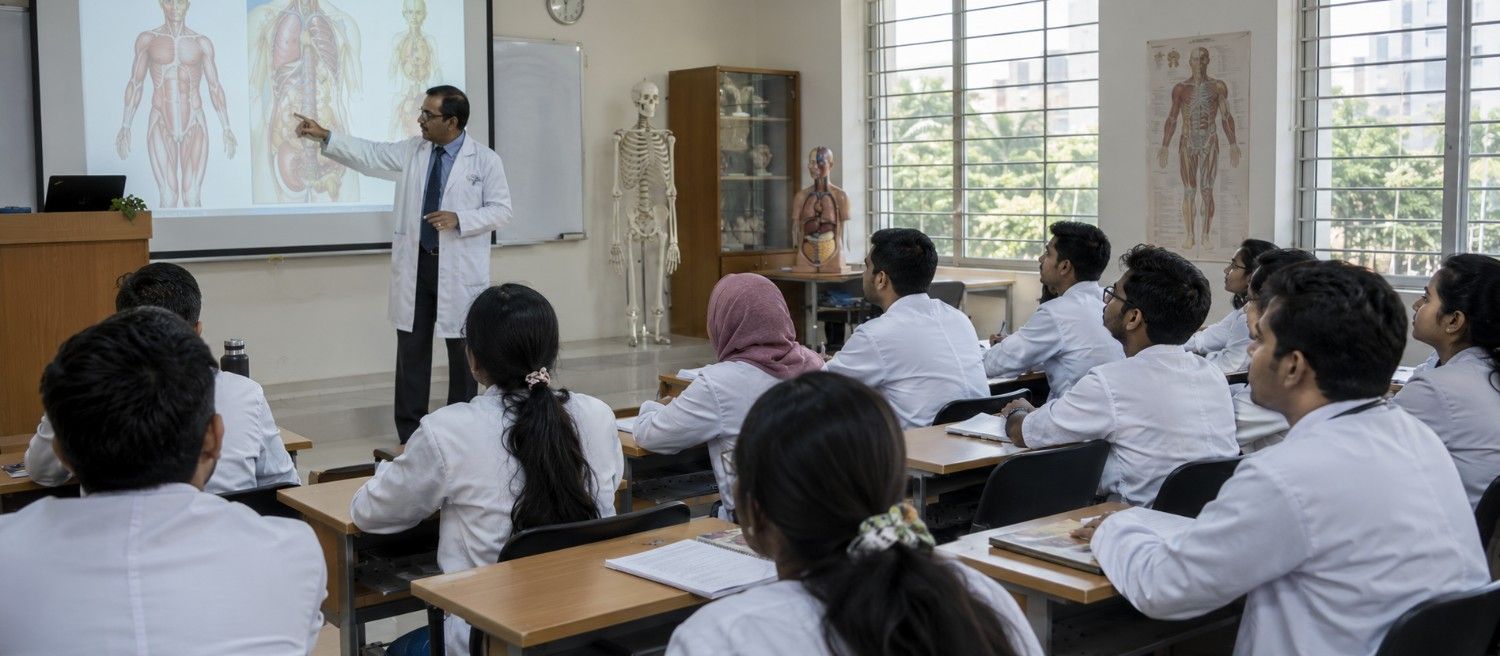
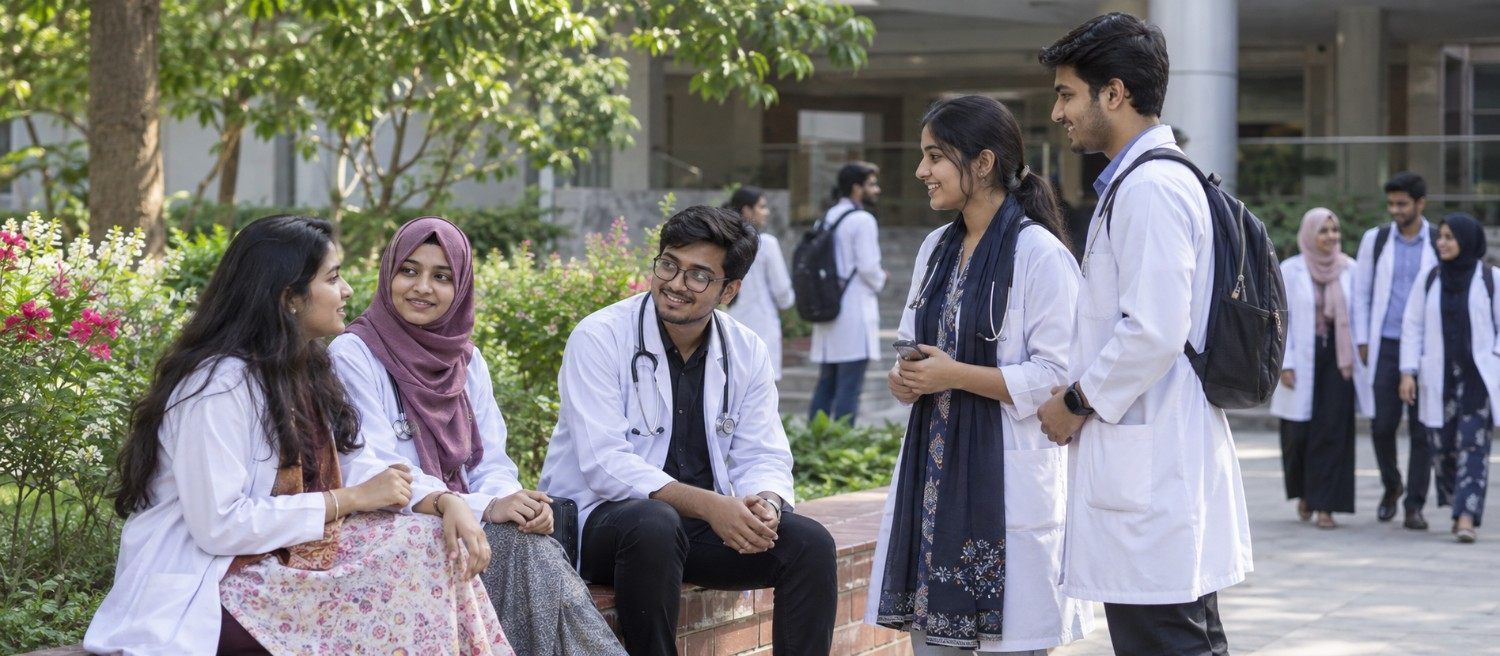
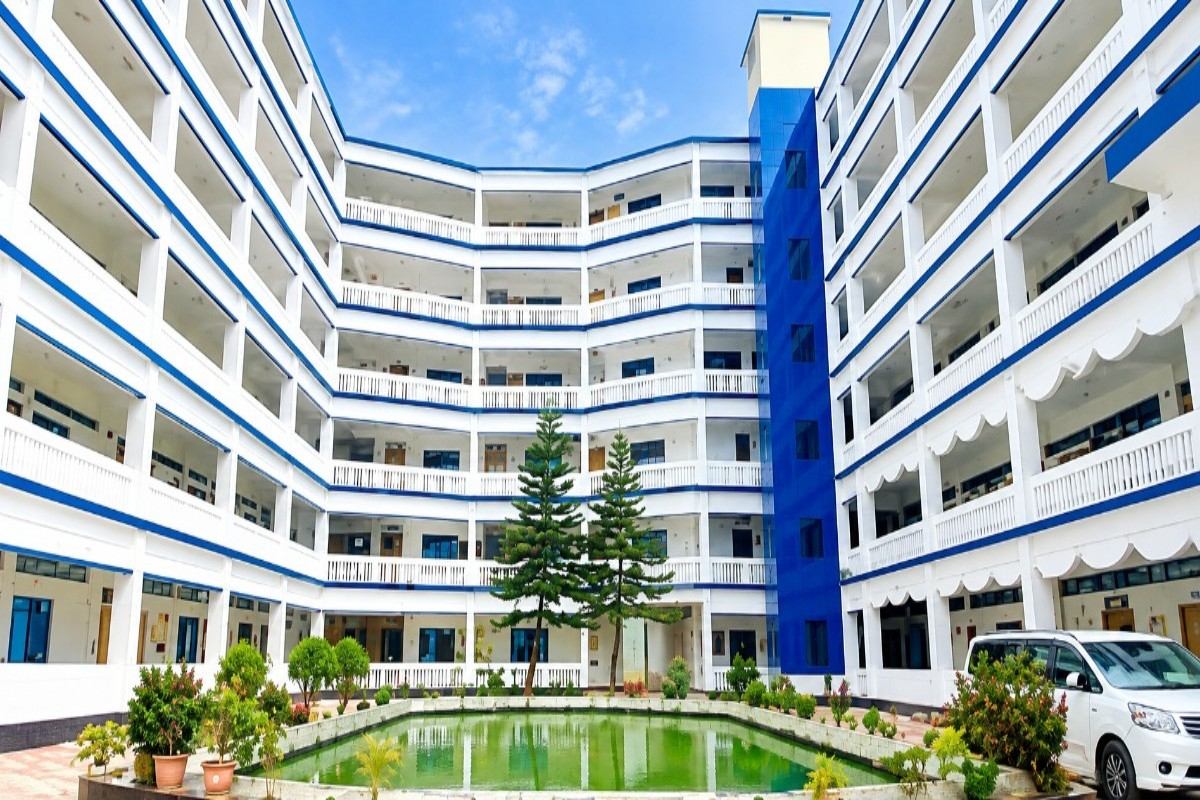
Furnished hostel rooms with Wi-Fi, laundry, 24/7 security, and Indian mess on or near campus.
Indian restaurants and mess facilities serving vegetarian and non-vegetarian home-style food daily.
Strong Indian community with cultural events, festival celebrations, and peer support groups.
Students get hands-on clinical training in government and private hospitals affiliated with the university.
Practical information for students planning to study at MBBS in Dhaka Central International Medical College and Hospital.
Prepare for all seasons. Thermal wear for winters, light clothing for summers. University provides heating in hostels.
Student visa processed with university invitation letter. Direct and connecting flights from major Indian cities.
Health insurance included in fees. Medical facility on campus plus city hospitals easily accessible.
Local SIM cards available. WhatsApp and video calls keep you connected with family back home.
Average monthly expenses of $150–$250 covering food, transport, and personal needs.
University library, online databases, and study groups. Seniors mentor juniors through academic challenges.
Our team guides you through every step — from application to arriving on campus.
DGME publishes the foreign-student MBBS/BDS admission circular for the upcoming session, usually around November, separately for SAARC/non-SAARC applicants and government/private colleges.
• Confirm your PCB percentage/GPA and NEET status against the circular's stated minimums. • Gather passport, academic transcripts, NEET scorecard, birth certificate, medical fitness certificate, and other listed documents, with mandatory two-step attestation.
• Shortlist government and/or private colleges based on budget, GPA/NEET strength, and location preference, comparing on recognition status and FMGE track record, not just the lowest fee. • Register on DGME's foreign-student portal, fill in details, and upload documents.
Pay the standard equivalence-certification fee (commonly around USD 100) via bank transfer (TT/SWIFT), not cash.
DGME evaluates your academic equivalence against Bangladeshi grading standards.
• Based on merit, quota category (SAARC/non-SAARC/reserved), and seat availability. • Receive a formal offer/admission letter from the allocated college.
Pay the first-installment tuition and hostel fee, per the college's own schedule.
• Apply at the Bangladesh High Commission/Mission with the admission letter and financial proof; realistic processing time varies by season. • In the final weeks, finalize documents, arrange travel/health insurance, book flights, and confirm hostel allotment in writing.
Fly to Bangladesh and complete airport formalities; many colleges arrange airport pickup for new students on specified reporting dates.
Complete physical document verification and hostel allotment at the college, and register with the Indian High Commission in Dhaka shortly after arrival, an important, non-optional step for consular support.
Admission Helpline — Contact our counsellors for step-by-step assistance.
“The faculty here is incredibly supportive. The clinical training during hospital rotations has given me real confidence in patient care.”
“Affordable fees without compromising on quality. The campus facilities and hostel life made my transition abroad very smooth.”
“English medium instruction and WHO-recognized curriculum were the deciding factors for me. No regrets so far — excellent experience overall.”
“The university helped with everything from visa to accommodation. Hospital exposure from year three has been invaluable for my FMGE prep.”
“Just cleared my licensing exam on the first attempt. The structured coaching and mock exams during final year were a game-changer.”
“Safe campus, good food options, and a strong Indian student community. The teaching methodology is very practical and hands-on.”
Yes. DCIMCH genuinely welcomes international applicants, including Indian students, through Bangladesh's standard foreign-student admissions route.
Yes. A valid, qualifying NEET score is required for Indian applicants pursuing medicine abroad, DCIMCH included.
DCIMCH's own website states a total five-year course fee of USD 44,500. Some third-party consultants quote a lower estimate instead, so confirm the current figure directly with the college.
No. Teaching runs fully in English, and there is no separate language test or college-specific entrance exam.
Sources disagree, describing either a 250-bed or a 500-bed facility. Confirm the current, exact bed count directly with DCIMCH.
Sources vary meaningfully here too, quoting figures anywhere from roughly 20% to 38%. Ask DCIMCH directly for its most recent cohort's actual results.
Five years across four teaching phases, moving from basic sciences through community medicine, paraclinical sciences, and clinical specialties, followed by a one-year internship.
Yes, per multiple independent sources. It is listed in the World Directory of Medical Schools and is described as recognised by India's National Medical Commission and the World Health Organization.
It is affiliated with the University of Dhaka as a constituent college, which acts as the degree-awarding body.
They still need to clear the FMGE or NExT exam under India's own national rules, regardless of where they trained.

Our expert counsellors will guide you through the complete admission process — from documents to airport pickup.