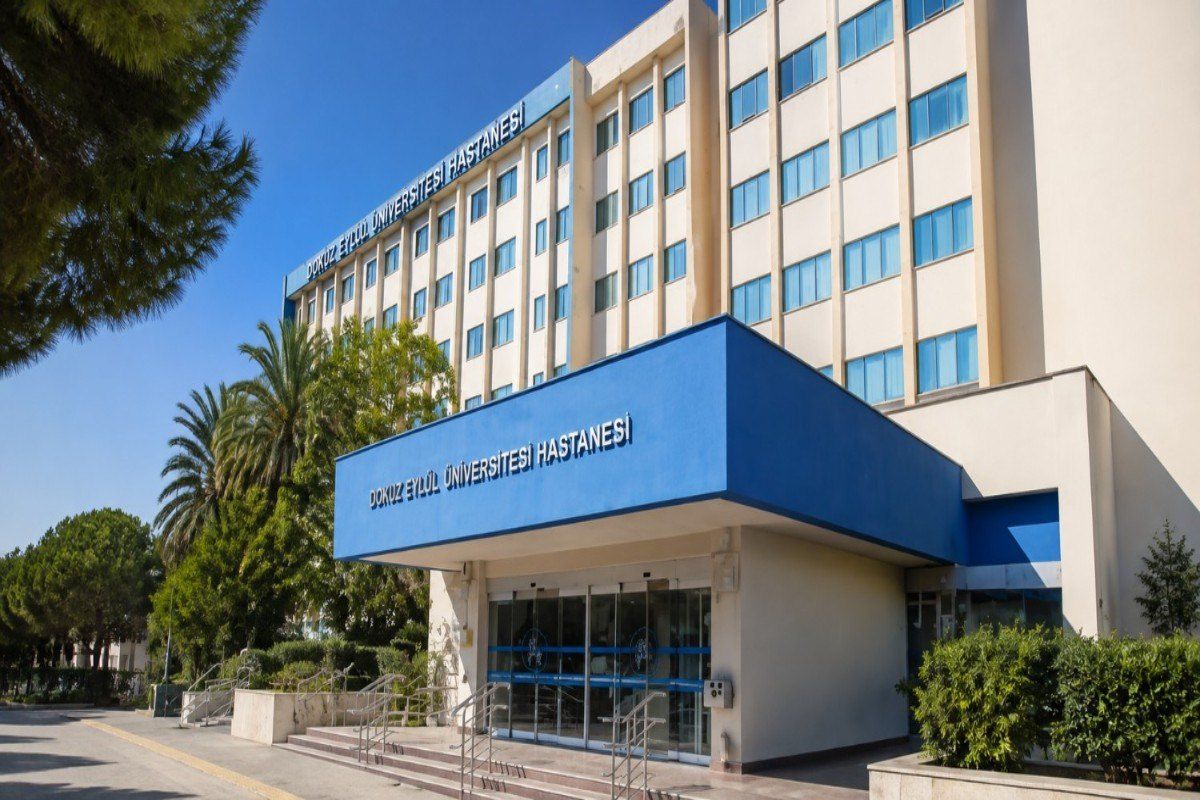
People usually just call it DEU for short. The Faculty of Medicine itself is old and well respected in Turkey. It began life as İzmir Tıp Fakültesi, the Izmir Faculty of Medicine, founded on March 1, 1978. It later joined the newly created Dokuz Eylül University when that university was founded on July 20, 1982. So the medical faculty actually predates the university it now sits inside. It carries decades of teaching history behind it, not just a handful of years.
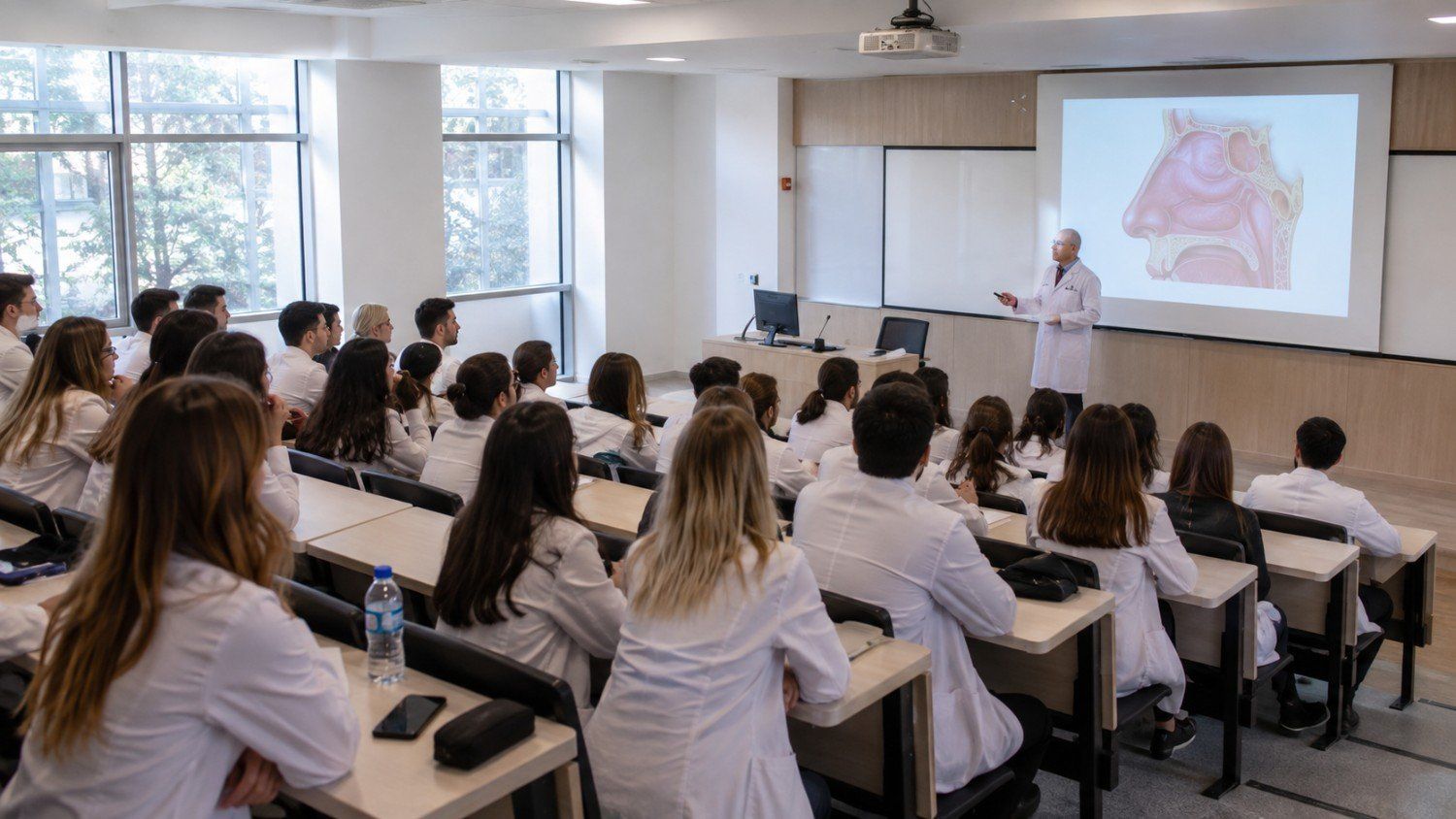
DEU holds a notable place in Turkish medical education too. It was the first university in Turkey to adopt problem-based learning, starting at the School of Medicine in 1997. This teaching method builds lessons around real clinical scenarios, worked through in small groups, rather than relying only on lectures. The Faculty of Medicine and its Health Sciences Institute also earned ISO 9001:2000 quality management certification in 2004. Research output backs this up too. DEU ranks 7th in Turkey, and 608th in the world, for Medicine research output and citations, according to EduRank's 2026 figures.
Here is the one fact that genuinely changes how this page should be read, though. For decades, DEU's Faculty of Medicine taught only in Turkish. There was no English-medium track and no English preparatory year for Medicine at all. That only changed very recently. Starting with the 2026-2027 academic year, DEU is opening its first-ever English Medicine Program inside the Faculty of Medicine. Applicants joining now would be part of the very first cohort of this specific English-taught track. So this is not a mature, proven English programme with years of graduates behind it. It is a brand-new addition to an old and respected Turkish-medium faculty.
This matters in a very practical way. The English Medicine Program has literally just opened. A full published fee schedule for this specific track was not yet available on DEU's official channels at the time of writing. Genuinely reliable per-year tuition figures for this exact programme could not be confirmed at time of writing. Applicants should check DEU's own international admissions office directly for the current, confirmed figure. Some third-party agent websites contain factual errors about this university, including wrong founding dates and even the wrong city.
None of this means DEU is a weak choice. Quite the opposite, for the wider Faculty of Medicine. DEU as a whole is a large, well-established public research university. It holds full institutional accreditation from the Turkish Higher Education Quality Council, known as YÖKAK, until 2027. Turkey's Council of Higher Education, YÖK, also selected DEU as one of 20 pilot universities for internationalisation back in 2018. It earned the "HR Excellence in Research Award" from the European Union in 2024. So the university around this brand-new programme has real institutional weight and a long research track record. This particular English track is only just starting out.
The wider medical faculty itself sits at the 15 Temmuz Health and Art Campus, formerly known as the İnciraltı campus, in Izmir. Clinical training happens through DEU's own university hospital, one of the region's major teaching hospitals. DEU also runs an Institute of Oncology, one of only three specialist oncology centres in Turkey and the only one in the Aegean region. Students admitted to the Turkish-medium track generally take a compulsory English preparatory year, unless they can already prove English proficiency. Some later-stage teaching materials and international coursework do use English. Standard Turkish-medium medical education at DEU runs for six years. This splits into three years of basic medical courses, clerkship years, and a final internship year.
Entry to DEU as an international student generally runs through DEYOS, the university's own entrance exam for foreign applicants. This is held annually in May, June, or July. There is no fixed application deadline. DEU charges no application fee for this route, though a separate fee applies for sitting the DEYOS exam itself. International applicants typically need a completed high school diploma, transcripts, and a passport, translated as required. For programmes taught partly or fully in a foreign language, a Turkish Language Proficiency requirement still applies. The level is B1 or C1, depending on how much of the programme is delivered in Turkish. The new English Medicine Program has only just opened. Its own specific entry criteria, whether that means DEYOS, SAT scores, or another route entirely, had not been fully published in detail at the time of writing.
Izmir itself is Turkey's third-largest city, sitting on the Aegean coast at the crossroads of Europe, Asia, Africa, and the Middle East. It has a mild Mediterranean climate and a genuinely multicultural, relaxed social life compared with Istanbul's larger scale. DEU spreads across 19 different campuses throughout the city. It hosts roughly 70,000 students in total, including more than 1,300 international students from over 110 countries. For an Indian student weighing this option, DEU offers a well-established, research-strong medical faculty. But it wraps around a brand-new English-taught programme. That is a very different proposition from an established English-medium MBBS-abroad course with years of graduates already working as doctors.
Cost Breakdown
Cost Item | Amount | Notes |
Tuition Fee (English Medicine Program, per year) | Not yet published | Programme opens for its first cohort in 2026-2027. Check DEU's own international office for the confirmed current figure. |
Tuition Fee (Turkish-medium Medicine, reference only) | Varies by year, set by YÖK | Public university fees for the Turkish-medium track are set separately. They run far lower than most private options. |
DEYOS Exam Fee | Announced annually | A separate fee applies each year for sitting DEU's own foreign-student entrance exam. |
Living Costs | GBP 5,500-7,500/year equivalent | Izmir living costs run generally lower than Istanbul's. |
English Preparatory Year (if required) | Set annually | Applies to students who cannot prove English proficiency at entry. |
Application Fee | None | DEU charges no fee simply to apply through DEYOS. |
Note: no capitation fee or donation is asked at any stage. Given how new the English Medicine Program is, applicants should treat any fee figure quoted by a third-party website with real caution. Wait for DEU's own office to confirm it directly.
Why DEU Deserves A Careful Look, For One Very Honest Reason
Most guides to studying medicine abroad either skip Dokuz Eylül entirely. Or they list its brand-new English Medicine Program as if it were already a mature, proven pathway with years of graduates behind it. Neither approach is honest. The reason is simple. DEU's Faculty of Medicine is genuinely old and well regarded. But its English-taught track for international students has, at the time of writing, only just opened its doors for the very first time.
This matters because an applicant joining now is choosing to be part of the first-ever cohort of this specific programme. That is not automatically a bad thing. DEU brings real institutional strength, a strong medical research record, and a pioneering teaching history in problem-based learning to this new track. But it does mean there is no graduate outcomes data yet. There is no track record of how the English programme runs in practice. And there is no confirmed, published fee schedule at the time of writing.
The fee situation deserves particular caution. Several third-party agent websites already quote specific tuition figures for Medicine at DEU. Some even get the university's basic facts wrong, including its founding date and its city. Applicants should not trust a specific dollar figure for this brand-new English programme unless it comes directly from DEU's own official international admissions channels.
One thing most other guides miss entirely is the gap between the Turkish-medium faculty's long history and the English programme's total newness. DEU has taught medicine since 1978. It pioneered problem-based learning in Turkey since 1997. But almost none of that specific experience yet applies to the brand-new English track in the same direct way. That track has not yet produced a single graduate.