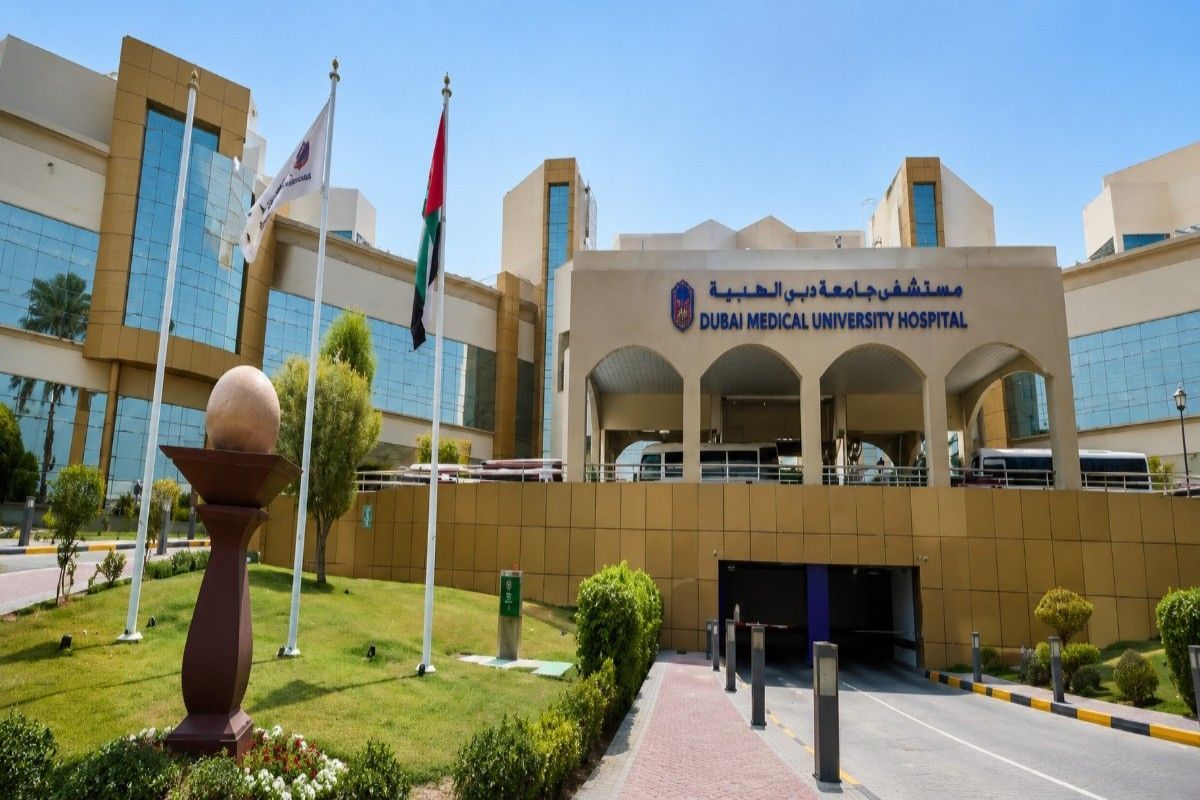
Dubai Medical University carries real history, even though the combined school itself is brand new. Its roots go back to 1986. That year, Dubai Medical College for Girls was founded. Haj Saeed Ahmed Lootah had the vision behind it. The school was established on Islamic basis . It was to give women in the UAE a chance to study medicine without having to go abroad to do so. That school earned its first official program approval in May 1996. It holds a genuinely notable mark of its own. It was the first private college in the UAE to award a degree in medicine and surgery. Dubai Pharmacy College came next, in 1992. A College of Nursing was added in 2023. That same year, all three joined under one roof. Together, they formed the modern Dubai Medical University. It now runs as three colleges: Medicine, Pharmacy, and Nursing. This merger gave the school a single shared identity, while still letting each college keep its own distinct focus and history within the wider university.
The College of Medicine runs two clearly different paths. Both lead to the same Doctor of Medicine, or MD, degree. Knowing the gap between them matters when you plan ahead. The first path is a six-year program. It suits students who join straight after secondary school. It runs 224 to 226 credit hours. The exact number shifts slightly across the school's own pages. It is split into three phases of two years each. Each phase ends with a formal check, called a "Gate." This confirms a student is ready to move up. The second path is a four-year program. The school calls this its Graduate Entry MD. It suits students who already hold a matching undergraduate degree. Both programs earn local approval from the Commission for Academic Accreditation, under the UAE's Ministry of Education. Both also carry the very same yearly tuition fee right now. This is a genuinely useful fact if you are weighing the shorter graduate-entry path against the longer direct-entry one. Since the cost lands the same either way, the real decision often comes down to a student's own background and how much time they want to spend in training before starting clinical work full time.
The course design across both paths follows one shared, hands-on model. Teaching mixes body-system modules with steady threads in ethics, research, and new health tech. Clinical skill work and simulation-based learning start early. This happens well before students reach their formal ward rotations. Once those rotations begin, they span general medicine, surgery, child health, women's health, family medicine, mental health, and various other special fields. Steady threads in patient-focused care, community health, and research skills run right through the whole program. They are not boxed into just one course or year.
On recognition, DMU's name carries real weight for such a young combined school. The MD program is listed in the World Health Organisation's World Directory of Medical Schools. This list is backed by the World Federation for Medical Education. The program is also known apart by both ECFMG and FAIMER. These are the two bodies most tied to graduates who may later want to chase licensing or more training in the United States. This gives DMU graduates a real, credible base worldwide. That holds true even given the school's short life under its current combined name. For applicants comparing several medical schools at once, this kind of layered recognition, spanning a national body, a global directory, and two separate US-facing bodies, is worth weighing alongside tuition and program length.
Getting in runs through a placement test process. Still, students who already scored well in their Grade 12 school subjects may skip this test on their own. The exact cut-off for this skip should be checked directly with DMU's admissions office. Class sizes have shifted a fair bit between recent intakes. For the 2025-2026 school year, the college planned to take in 80 students for the six-year MD, and 80 more for the four-year MD. For 2026-2027, that mix changed a lot. Now, 100 spots go to the six-year program. Only 15 go to the four-year graduate-entry track. This hints that the school now favours its direct-entry path going forward, a shift worth noting for anyone specifically hoping to enter through the shorter graduate-entry route in future intakes. Applications for the 2026-2027 round opened on 12 January 2026. They close on 3 August 2026. All of this runs through DMU's own online application site, alongside a fee that is not paid back.
Tuition for the 2026-2027 school year sits at AED 120,000, plus 5% VAT. That brings the full sum to AED 126,000 a year. This same figure applies to both the four-year and six-year MD programs alike. Beyond tuition, a few costs sit apart and get added on top. Transport, which DMU also runs directly, costs roughly AED 3,000 to 5,000 a year. The exact sum depends on a student's home base. This detail makes more sense once you know DMU runs weekend buses just for students coming from Abu Dhabi and Al Ain. This hints that a real share of its students live outside Dubai itself during term breaks. Visa help is handled by DMU too, again at an added cost. Students from abroad who are accepted and enrolled can then apply for a UAE stay permit right through the school. This is a genuinely handy setup, next to sorting this out on your own, especially for a student navigating a new country's residency system for the first time.
Merit-based grants and fee cuts are on offer too. These follow rules the school posts on its own. It is worth checking directly if strong grades might earn a student a lower fee. Facilities across the college include lecture halls, labs, and simulation centres. These are built to back the program's stated focus on early, hands-on clinical skill work. This means real-world practice does not wait until the later years of study alone.
In plain terms, Dubai Medical University offers something genuinely useful for students weighing their choices. There is a real pick between a shorter, four-year graduate-entry MD, and a more usual six-year direct-entry MD. Both lead to the same approved degree. Both carry the same yearly tuition. And both stand behind solid, checkable global recognition, through WHO/WDOMS, ECFMG, and FAIMER listings. Its deep roots as an early women's medical school in the UAE add a genuinely distinct character to the place. Still, would-be male applicants in particular should check the current entry rule directly with DMU, rather than assume either way.
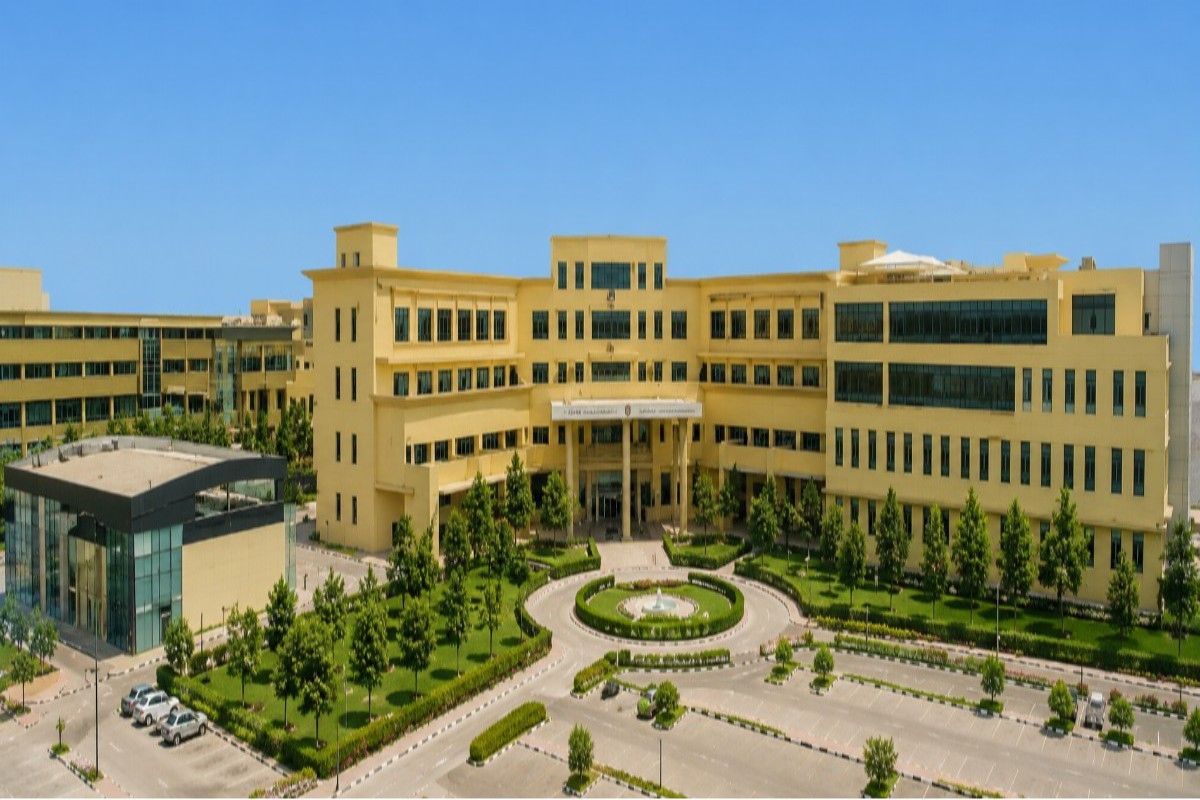
Beyond the degree paths themselves, the wider setting matters too. Dubai as a city gives students a modern, well-connected base for their studies. The College of Medicine sits in Al Mizhar, within easy reach of the rest of the city, and within a short trip of the UAE's other major hubs, Abu Dhabi and Sharjah. This location, paired with DMU's own transport network for students from further afield, means the school works for a genuinely wide catchment of students, not just those who already live close to campus. For a family weighing entry routes, tuition costs, and the strength of a school's global standing all at once, DMU presents a fairly rare mix: a real choice of program length, a shared price tag across both, and a solid international paper trail, backed by a history that stretches back nearly four decades under its founding college.
Academic Details
Established Year: Dubai Medical University formed 2023, through the merger of Dubai Medical College for Girls (founded 1986), Dubai Pharmacy College (founded 1992), and a College of Nursing (added 2023). The College of Medicine's original program received first accreditation in May 1996.
Accreditation: Accredited by the Commission for Academic Accreditation (CAA), UAE Ministry of Education. Listed in the World Health Organisation's World Directory of Medical Schools (empowered by WFME); recognised by ECFMG and FAIMER.
Course Duration: Two tracks available: a 6-year MD program (direct entry, 224–226 credit hours) or a 4-year Graduate Entry MD program (for students with a relevant undergraduate degree, similar credit load).
Medium of Instruction: English.
Annual Fee (USD and INR): AED 126,000 per year, including 5% VAT (approx. USD 34,310; approx. INR 28.60 lakh). Applies equally to both the 4-year and 6-year MD programs.
Hostel Fee (USD and INR): Not clearly itemised in available sources. A female-only hostel, managed by DMU and located across the road from campus, is confirmed available, at a cost additional to tuition. Confirm the exact current figure directly with DMU admissions.