Ajman is the smallest emirate in the UAE. Even so, its university has built one of the region's fastest-growing medical schools. Ajman University College of Medicine sits inside a private university. The university opened in 1988. It does not seek profit. It was the first private university in the Gulf region. It was also the first in the UAE to admit both men and women from other countries. That open, mixed campus feel still shapes the College of Medicine today. Students from dozens of nations train side by side.
The wider university is older and bigger than its medical school. Ajman University now runs nine colleges. It offers more than 45 study programs. Over 40,000 former students have passed through its doors since 1988. The College of Medicine is much newer. A body called the Commission for Academic Accreditation checks the quality of UAE schools. It approved the college back in March 2018. The first group of students began that same year. They studied for a Bachelor of Medicine and Bachelor of Surgery degree. In the 2022 to 2023 school year, the college changed its degree. It moved from that degree to a six-year Doctor of Medicine, or MD. This matched the naming used across much of the Gulf.
The MD follows a simple two plus two plus two plan. The first two years form the Pre-Med phase. Students build a base in chemistry, physics, human biology, anatomy, and physiology. Lectures and labs come paired with weekly team sessions. In these, small groups work through cases together. Years three and four make up Phase One. People often call this the Pre-Clerkship phase. Teaching here uses weekly disease-based blocks. Students work through each body system in turn. Years five and six form Phase Two, the Clerkship phase. Here, students move into hospitals for real clinical work. They rotate across the major specialities. To graduate, a student must finish 224 credit hours. They need an average grade of at least 2.5 out of 4. No grade can fall below a C in any course.
Ajman also offers a second, shorter path to the same degree. Some students already hold a degree in a medical, health, or biology-based field. These students can apply for a four-year MD track instead. This path drops them straight into year three. They then join students who took the full six-year path. It suits people who studied a related science degree first. They can skip ahead, rather than start again from year one.
Clinical training is where the college leans on where it sits. Ajman sits close to both Sharjah and Dubai. Students train across a network of hospitals, not just one site. Sheikh Khalifa Medical City Ajman is a core partner. Saudi-German Hospital in Ajman and Dubai also plays a role. Amina Hospital Ajman does too. Ajman Speciality General Hospital adds outpatient and community care work. For deeper training, the college has built links with larger centres. These include Cleveland Clinic Abu Dhabi and Sheikh Shakhbout Medical City. Students round this out with summer clinical placements. They can also take short research trips to partner sites abroad. These sites span the United States, Europe, and Asia.
Global recognition has grown fast for such a young program. The MBBS track earned a nod from the UK's General Medical Council. It was named a Primary Medical Qualification. That status lets Ajman graduates sit the PLAB exam. This exam is a required step for doctors trained outside the UK who want to work there. This nod arrived around the time the college graduated its first MBBS class. That was a fast pace for a school barely six years old at the time. The MD program sits in the World Directory of Medical Schools. This is the global list used by health regulators everywhere. The program still holds full approval from the Commission for Academic Accreditation.
Ajman University is currently ranked 440th in the QS World University Rankings for the year 2026. This rank is based on a larger range of rankings. As a result, it is ranked sixth in the UK. Additionally, it is ranked among the top 30 schools available in the Arab world. In the Times Higher Education World Rankings for the year 2026, the university is ranked among the top 500 universities in the entire world. Recently, the same organisation ranked the college at the nineteenth spot on its table for the Arab area. Not only does this figure pertain to the medical school, but it also encompasses the entire university. There is not yet enough time for the MD program to be given its own distinct rating. In spite of this, the tendency is upward rather than flat.
Admission into the six-year MD is open to school leavers from many curricula. Ajman accepts the UAE National Curriculum, American, British, and Indian CBSE grades. It also accepts French and other known systems. So, applicants do not need to switch to a single standard first. The four-year graduate-entry track sets its own bar. It asks for a grade average of 3.0 out of 4 or higher from a related degree. Applicants back this with transcripts and certificates, checked by the right bodies. Preferred subjects for this path include pharmacology, pathology, immunology, and microbiology. Psychology and statistics also help. Still, any solid health science background can work.
Cost is one area where Ajman stands apart from many Western medical schools. Total tuition for the full six-year MD runs to roughly AED 625,000. This works out to about AED 105,000 to 110,000 a year. Set against similar programs in Australia, the UK, or the US, Ajman sits on the cheaper end. It still hands you a UK-recognised degree at that price. Living costs in Ajman also tend to run lower than in Dubai or Abu Dhabi. The emirate is smaller and quieter. Even so, it still sits only twenty to thirty minutes from Dubai by road.
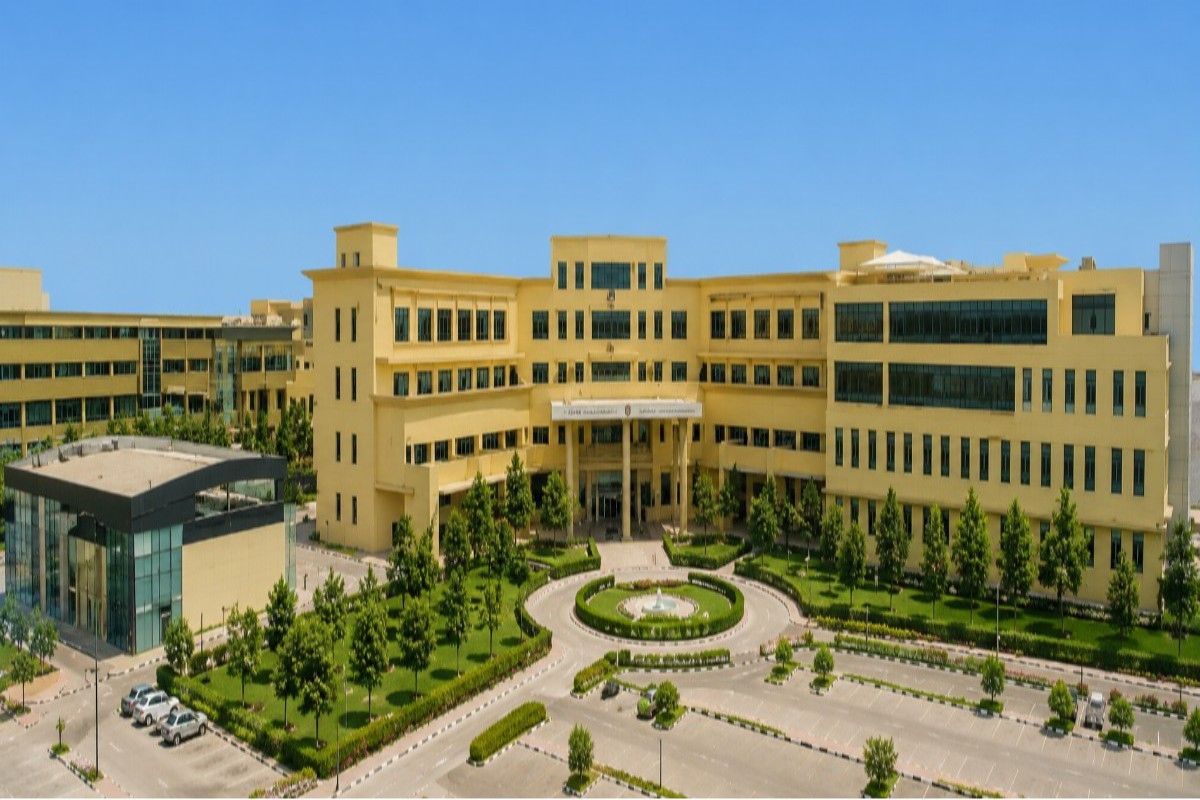
Campus life centres on a large site in the Al Jurf area of Ajman, close to Khalifa Hospital. The wider university offers sports fields, a gym, restaurants, and a health unit. A modern student hub building opened in 2019. It houses the library, food court, and study spaces. Ajman University draws students from more than seventy countries. QS ranks it among the world's top schools for the sheer mix of its student body. For medical students, this means clinical years spent partly on campus. The rest is spent across the emirate's partner hospitals. It is a community used to mixing nations, tongues, and backgrounds from day one.
Graduates leave with a degree built for flexibility. The GMC nod opens a path into UK practice through PLAB. The MD title and its US-style plan support later steps toward the USMLE for those aiming at America. Indian students who plan to return home should check current rules first. The National Medical Commission sets these rules for foreign medical graduates. Recognition for practice in India depends on rules that can shift over time. Some students want an affordable, well-linked medical degree. They want it built around a tight campus and a growing set of hospital ties. For these students, Ajman University College of Medicine offers a newer, leaner path than the region's older medical schools.