Ask people in Abu Dhabi where to study medicine. One name comes up again and again. It is Khalifa University. This school tops the UAE's own rankings. Its medical school is the newest part of that story. People call it CMHS for short. It was Abu Dhabi's first medical school. It was also the first in the UAE to offer a four-year MD degree, built in the US style. For such a young school, it has moved fast.
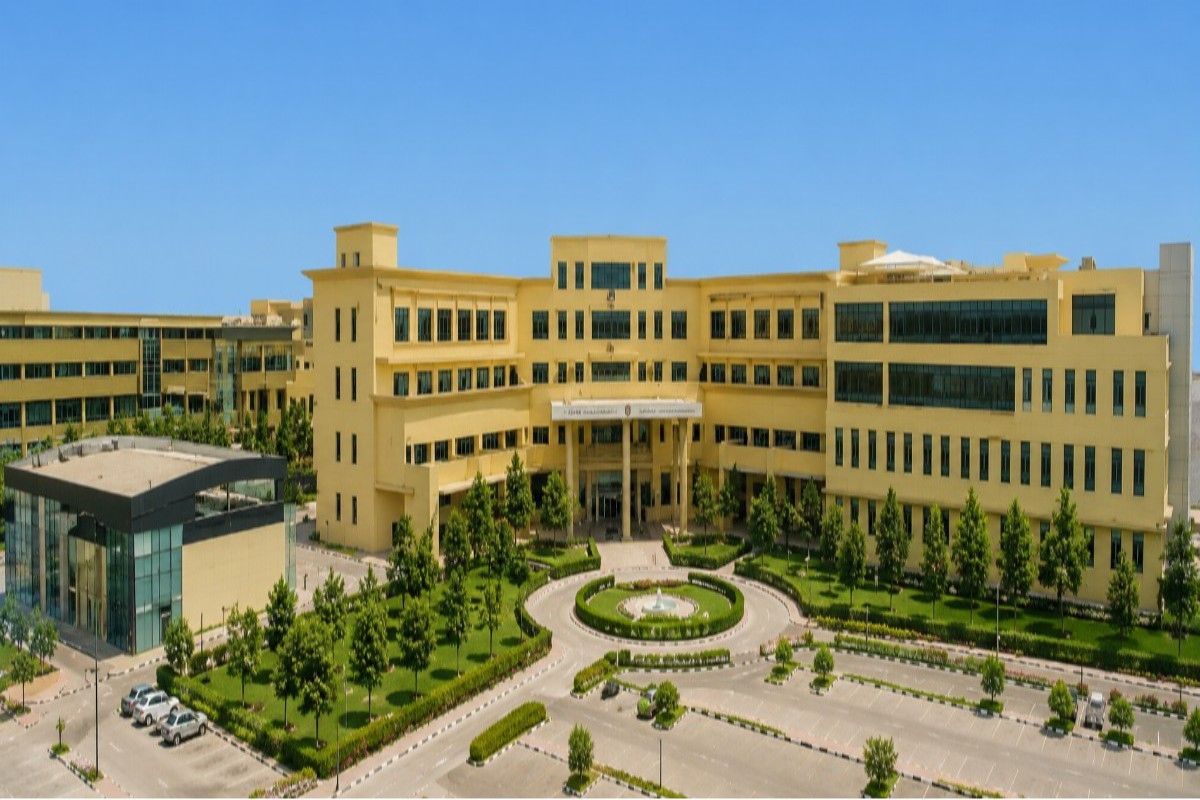
Khalifa University was formed in 2017. The UAE government joined three older schools to build it. These were the Khalifa University of Science, Technology and Research, the Petroleum Institute, and the Masdar Institute. Its roots go back to 1989. That year, a small college opened in Sharjah. It was called Etisalat University College. Today, Khalifa University runs three colleges. It also runs many research centres. It is a public school with a strong research focus. It was built to serve the UAE industry and UAE students alike. Medicine came late to the mix. The school shared its plan for a medical school in 2018. It aimed to start classes the next year. Work to bring in MD students began in the 2018 to 2019 school year. The first class began in August 2019. The program earned full marks from the UAE's Commission for Academic Accreditation in January 2021. That was a fast pace for a brand-new medical degree.
The MD at CMHS runs for four years. It only takes students who already hold a degree. This sets it apart from most other medical schools in the region. Most of those take students right after high school. Khalifa built its program to match the model used across the US and Canada. Applicants must sit the MCAT test. This is the same test used by US medical schools. A strong score matters a lot. A score of 500 or more is seen as strong. Still, the school also looks at grades, past research, and clinical time. Some students have great grades but lack the right science courses. For them, the school runs a separate re-Medicine Bridge Program. TPhis one-year track fills gaps in biology, chemistry, and math. It helps students get ready for the MCAT test.
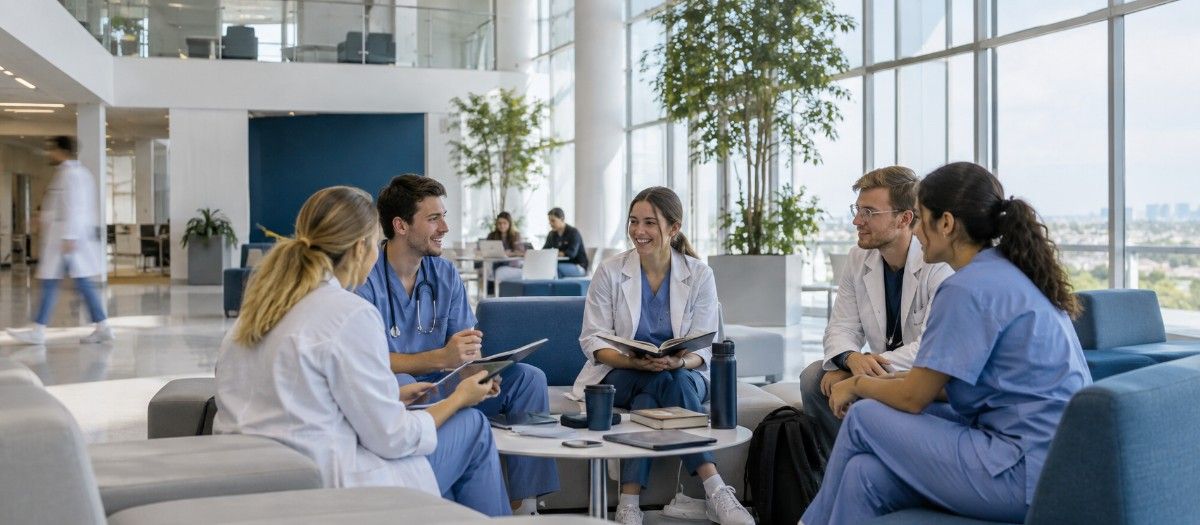
Once inside the MD, students move through four blocks of study. The first block covers the basics. This means cell science, human genes, body parts, and how the body works. It also covers germs and drugs. The second block looks at organ systems. It moves through the body, part by part. This covers the heart, lungs, blood, and hormones. It also covers bones, muscles, skin, the gut, and kidneys. The nervous system and behaviour come too. Later blocks shift the focus to real clinical work. Students move into real hospital settings. Teaching leans on small-group work. Groups work through real patient cases. This beats long, dry lectures. The school also runs the Balsam program. This is a service-based learning track. It links students to the health needs of local people. A system called the Falcon Learning Communities groups students for support. This runs across all four years. It copies a model used at top US medical schools.
Tech sits at the heart of how CMHS teaches medicine. This fits Khalifa University's name as a tech and science school. Students use 3D printing to plan surgery. They also use AI tools to help spot disease. The school opened a Body Museum on its main site. It is the first of its kind in the wider region. It lets students study the body up close, using real parts. The school also runs a Centre for Clinical Simulation. This became the first site in the UAE to earn a key US mark for this work. This shows how much the school values real-feel, mock training. Students train this way before they touch a real patient.
Clinical training does not take place in a single hospital. CMHS does not run a hospital of its own. Instead, students train across a wide set of partner sites in Abu Dhabi. Cleveland Clinic Abu Dhabi handles tough surgery and heart care. SEHA hospitals, such as Sheikh Shakhbout Medical City, bring large-scale public care. Mubadala Health and PureHealth add more outpatient and special-care sites. This spread gives students a wide mix of patients. They see big public hospitals and small clinics too, not just one fixed spot.
CMHS also asks students to take the USMLE test. This stands for the United States Medical Licensing Examination. Students take both Step 1 and Step 2 during their studies. Most medical schools outside North America skip this step. The goal here is clear. Grads should be able to compete for training posts in the US or Canada if they wish. They can then bring that training back to work in the UAE. It is a bold bet. The school holds that top-tier training builds stronger doctors at home.
As far as rankings are concerned, Khalifa University has made significant progress. It reached the 147th spot in the world according to the QS World Rankings in June of 2026. As a result, it became the first school in the United Arab Emirates to ever enter the top 150. This represents a thirty-place increase in just one year. The previous year, it had ranked 177th, and the year before that, it had ranked 202nd. It maintains its position as the highest-ranked school in the United Arab Emirates. For the past nine years in a row, it has maintained that position. In the Times Higher Education World Rankings, it is ranked among the top 500 institutions in the entire world. In the Arab region, it holds the fifth spot. Not only does this figure include the medical wing, but it also includes the entire school. CMHS is still in its infancy; hence, it does not yet have a long track record.
Cost works in a different way here than at most medical schools. Tuition runs at about AED 2,500 per credit hour. This puts the yearly cost for self-paid students between AED 120,000 and AED 150,000. Very few students pay this in full. Khalifa University gives full grants to UAE nationals who join the MD program. This covers a monthly stipend, free housing, and free books. Students from a set list of other Arab states can also seek full coverage. Some grads of North American schools may compete for a full-ride grant. This covers tuition in full. That is a rare offer among medical schools of any kind.
Campus life spans Khalifa University's Abu Dhabi sites, in a city known for safety and fast growth. The wider student body comes from more than fifty nations. Women make up well over half of all students. That is a strong mark for a tech and science school. For CMHS students, this means training inside a truly mixed, research-led place. It is backed by a school with deep ties to government and trade. Some students want a grad-entry, US-style MD. They want it at a young but fast-rising school. They also want strong routes into both UAE and US work. For these students, Khalifa University College of Medicine and Health Sciences stands out. It is one of the region's most closely watched medical schools.