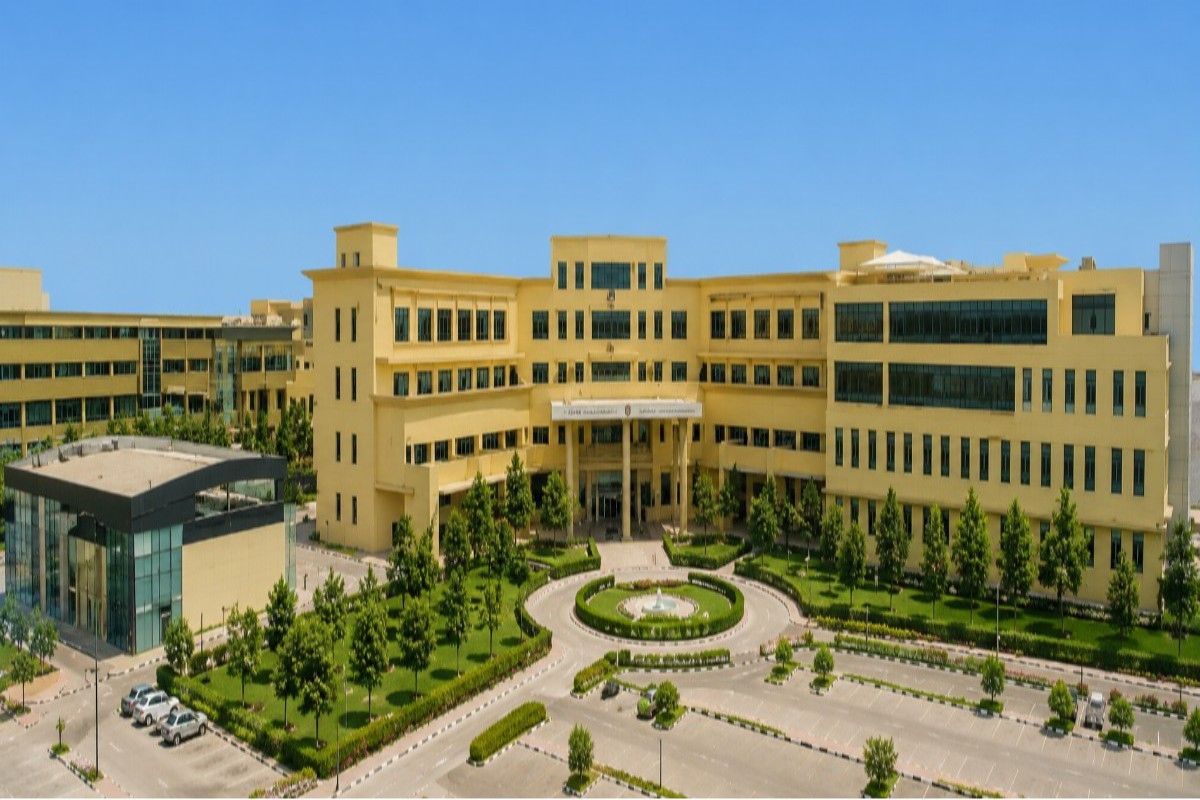
Ras Al Khaimah sits at the quiet end of the UAE, far from the glitz of Dubai. Even so, it is home to one of the country's most established medical schools. RAK College of Medical Sciences goes by the short name RAKCOMS. It is the flagship college of RAK Medical and Health Sciences University. People shorten that name to RAKMHSU. It was the UAE's first full health science university. It has trained doctors since 2006. That is longer than most private medical schools in the region.
The university grew out of a clear plan by the Ras Al Khaimah government. The RAK Human Development Foundation set it up. This foundation joins the RAK government, Al Ghurair Investments, and the ETA Ascon Group in Dubai. Sheikh Saud bin Saqr Al Qasimi leads it as Chancellor. He is the Crown Prince and Deputy Ruler of Ras Al Khaimah. Today, the RAK government fully owns and runs the university. This gives it strong local backing. Many newer private schools in the region do not have this kind of support.
The medical program began as an MBBS degree in 2006. The first class of doctors graduated in 2011. For more than fifteen years, this MBBS track trained students for work across the Gulf and beyond. In the 2022 to 2023 school year, the college moved to a new model. It swapped the MBBS for a six-year Doctor of Medicine degree, or MD. This matched the naming style used in the US and much of the wider Gulf. The UAE's Ministry of Higher Education gave its first approval for the new MD in July 2022. The first MD class started that same September.
The six-year MD splits into two clear stages. The first two years form a pre-med base. Students build core science skills before they touch clinical work. The next four years mix pre-clinical study with real clinical training. This stage uses a joined-up, problem-based style. It links basic science with real patient care from an early point. It does not keep the two apart, as older courses often did. To graduate, a student must finish 224 credit hours in total. After the MD, grads must also do one year of a guided internship. This step is set by the UAE's Ministry of Health and Prevention. It comes before anyone can practise medicine in the country.
RAKCOMS also runs a shorter, separate path for students who already hold a medical degree. This is the MD Program for Graduates. It suits doctors trained abroad who want a UAE-recognised MD. Applicants need a prior degree in medicine or dentistry. They also need a strong grade average from that first degree. Some students fall a bit short of the usual mark. They may still get in on a conditional basis. To do this, they must pass a set of graduate-level courses at a higher standard early on.
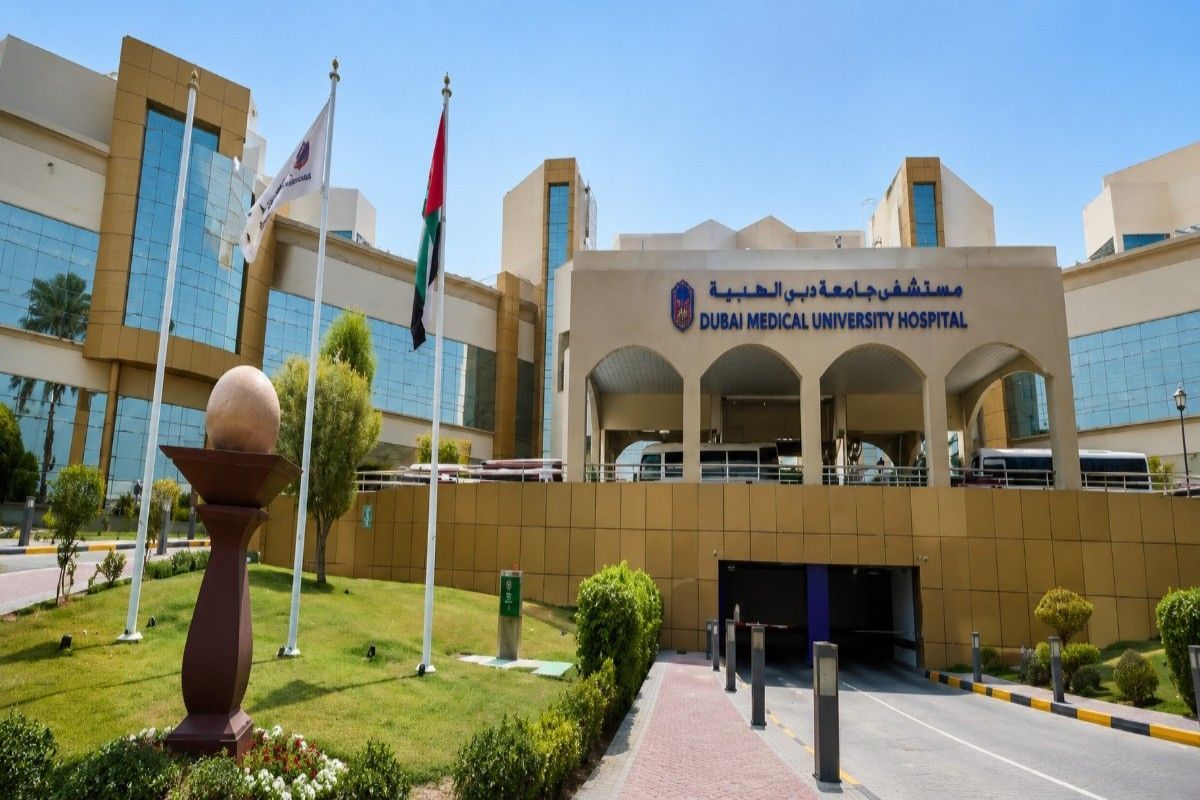
Clinical training runs across a set of government hospitals in Ras Al Khaimah. The Ministry of Health and Prevention runs each one. Saqr Hospital handles surgery and child health. Ibrahim Bin Hamad Obaidullah Hospital focuses on general medicine, heart care, and kidney care. Sha'am Hospital and Sheikh Khalifa Speciality Hospital add more sites for advanced training. Across these hospitals, students work through fourteen required rotations. These cover general medicine, surgery, child health, women's health, community health, mental health, bone and joint care, ear, nose, and throat care, eye care, skin care, imaging, sleep medicine and pain relief, and emergency care, plus a set of electives.
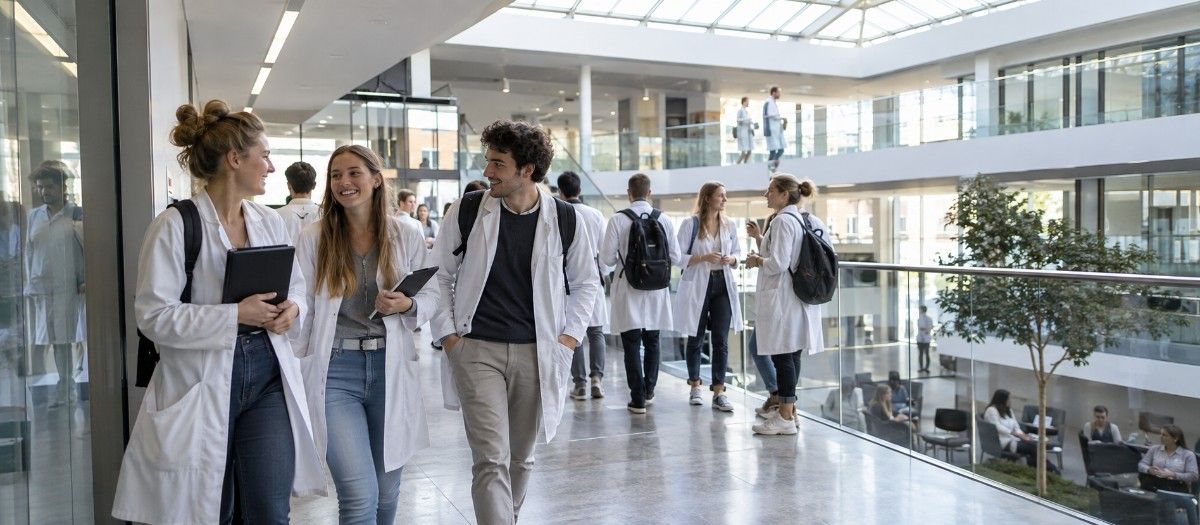
Staff numbers stand out as a real strength here. RAKCOMS teaches through more than 120 staff members. They come from seventeen different countries. This mix brings a wide range of training styles into the classroom. The college also runs joint classes across fields. Medical students learn and work next to nursing, pharmacy, and dental students. This copies how real hospital teams work day to day. It does not train doctors alone, cut off from the rest of the care team. Sites include modern labs, mock training centres for safe, hands-on practice, and smart classrooms built for group work.
Recognition has kept pace with the college's growth. The Commission for Academic Accreditation checks the quality of UAE schools. It fully backs the MD program. RAKCOMS and RAKMHSU both sit in the World Directory of Medical Schools. This is the global list used by health checkers everywhere. The MD program also carries a nod from the World Federation for Medical Education. Not every young medical school earns this so soon. On the wider school front, RAKMHSU has climbed fast in regional tables. In the 2025 Arab Ranking for Universities, it jumped from 75th place in 2024 to 56th place in 2025. That is a sharp one-year rise.
Cost is where RAKCOMS stands out most. Tuition for the MD program runs at about AED 65,000 per term, or close to AED 130,000 a year. On top of this sit smaller charges. These include an application fee of AED 500, an entry fee of AED 2,500, and a seat-hold fee of AED 10,000, which counts toward tuition. Yearly lab, library, and exam fees add up to close to AED 3,000. Health cover runs about AED 2,400 a year. Students who score 95 per cent or more in their final school exams get a 20 per cent cut on first-year fees. From year two on, students who hold a GPA of 3.8 or higher can keep that same 20 per cent cut.
Entry for school leavers asks for strong marks in the core sciences. Most curricula require close to 90 per cent in biology, chemistry, and physics. English matters too. Applicants typically need an IELTS score above 5, a paper TOEFL score above 500, a web-based TOEFL score above 61, or an EMSAT English score of 1100. Students whose English mark is 80 per cent or below in grade 12, under the UAE track, must pass a fix-up English course first. Every shortlisted person has a one-on-one talk with the college dean and senior staff, usually held online.
Life in Ras Al Khaimah looks quite different from life in Dubai or Abu Dhabi. It is calmer, smaller, and much cheaper to live in. The emirate is known for its mountains, its beaches, and its many old forts, plus a strong safety record. Student housing sits close by, at the neighbouring American University of Ras Al Khaimah campus. This is just a few minutes from the medical college. Rooms come as furnished studio flats, with a small kitchen corner and private bath. Prices run from about AED 7,000 to AED 15,000 per term, based on whether a student shares. The wider student body at RAKMHSU adds up to around 1,220 students, drawn from about fifty countries. This gives even this smaller emirate a truly mixed campus feel.
Grads leave RAKCOMS with a degree backed by strong local and global marks. It holds full approval from the CAA. It also sits in the World Directory of Medical Schools. Indian students who plan to return home to work should check current NMC rules for foreign medical grads before they enrol, since those rules can shift over time. Some students want a well-set, government-backed MD at a lower cost than in Dubai or Abu Dhabi. They want it set inside a calmer, more affordable emirate. For these students, RAK College of Medical Sciences offers one of the region's longest-running and most settled paths into medicine.