
🛂
No Visa, No Passport
Indian nationals can enter Nepal with only a voter ID. No embassy, no consular appointment, no pre-departure documentation. Closest MBBS abroad in every sense.
 Study destination: nepal
Nepal has a simple, powerful argument for Indian students and families that no other MBBS abroad destination can match: you don't need a passport. Indian nationals can enter Nepal with just a voter ID card or any government-issued photo ID. No visa, no consular appointment, no pre-departure documentation stress. You are, for practical travel purposes, going next door. Beyond the ease of entry, Nepal is one of the best-performing MBBS abroad destinations for FMGE/NExT results among Indian students. Nepal graduates consistently post national FMGE pass rates of 45–55% among the highest of any MBBS abroad cohort, and the reasons make sense. The academic environment is familiar, the teaching language is English, the culture and food are closely aligned with North India, and the proximity means students can go home during breaks without a significant time or financial cost. Nepal's NMC-approved medical colleges are spread across the country, Kathmandu, Pokhara, Biratnagar, Chitwan, and Lumbini, with programmes affiliated to four universities: Tribhuvan, Kathmandu, Pokhara, and Purbanchal. Clinical training standards vary by college, and AMW's partner selection is based specifically on NMC recognition status and clinical exposure quality. Not all Nepal medical colleges are recommended. AMW recommends only the institutions with a strong NMC track record and demonstrated FMGE outcomes. At a total 5.5-year all-in cost of ₹40–65 Lakhs, Nepal sits in the upper-mid range for MBBS abroad. It costs more than Russia or Central Asia's budget options but delivers better FMGE outcomes and a far more comfortable transition experience for most Indian students. You've survived NEET. Now, let's find out which medical colleges are actually within your reach with the AMW College predictor tool.
We blend country research, university comparison, and admission guidance so students can evaluate the right path without guesswork.
Indian nationals can enter Nepal with only a voter ID. No embassy, no consular appointment, no pre-departure documentation. Closest MBBS abroad in every sense.
45–55% national average — consistently among the best FMGE outcomes of any MBBS abroad cohort. Cultural and language familiarity play a direct role.
AMW recommends W.H.O. & WDOMS listed FMGL Gazette 2021 Complies with NMC & FMGL Regulation colleges. Your degree is fully valid for FMGE/NExT and Indian medical practice.
Kathmandu is 1–2 hours from Delhi. Going home for Diwali or a family emergency is practical, fast, and affordable
Explore active university options with fee, duration, and accreditation details before you shortlist your preferred campus.
 Partner
| University | Annual Tuition | Hostel Fee | Duration | Medium |
|---|---|---|---|---|
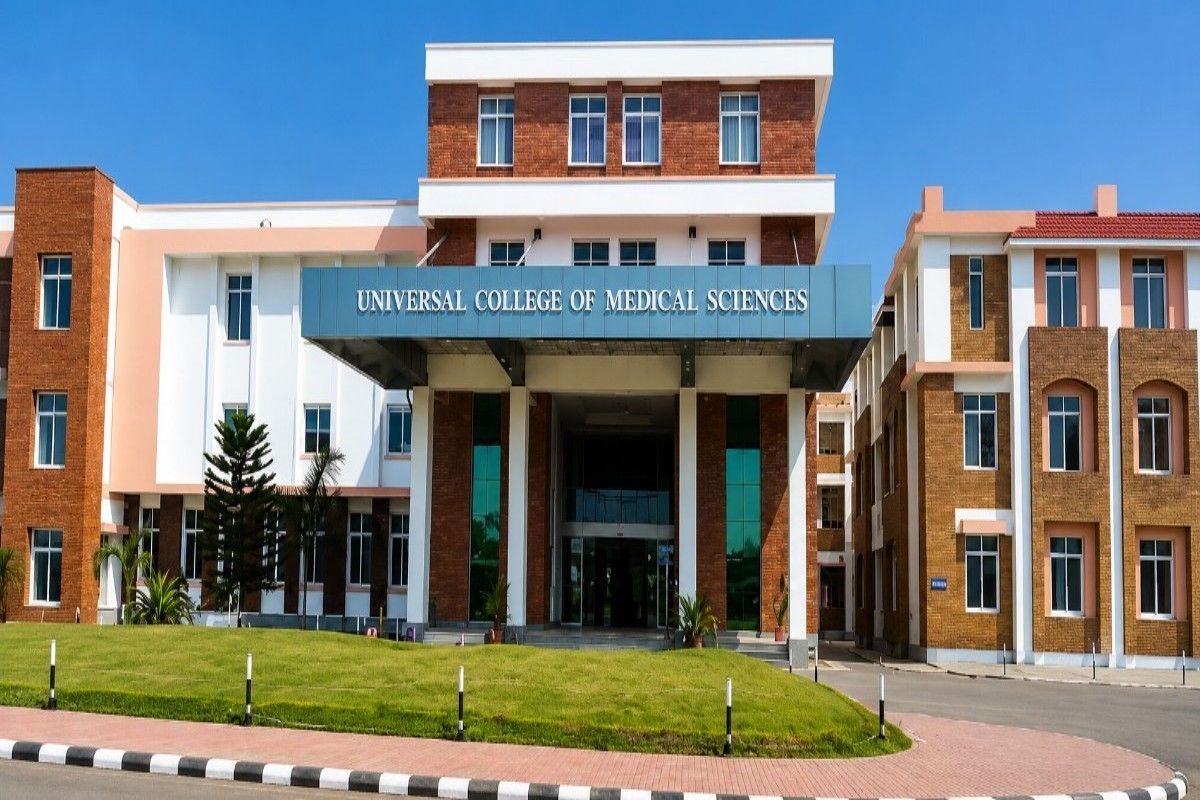
| MBBS in Universal College of Medical Sciences (UCMS), Bhairahawa, Nepal | INR 10–13 lakhs per year, approx.; first year is slightly higher than the rest. | INR 80,000–1,00,000 per year; separate blocks for boys and girls with a warden on site | 5.5 Years MBBS Curriculum | All teaching is in English; no IELTS or TOEFL is needed from any applicant. |
| MBBS in Patan Academy of Health Sciences (PAHS), Lalitpur, Nepal | SAARC tuition fee, Year 1 and 2: USD 23,350; Year 3 to 5: USD 7,767 per year | USD 50 per month; food and meals are included in the hostel charge | 5.5 Years MBBS Curriculum | All teaching is in English; no IELTS or TOEFL is needed from any applicant |
| MBBS in Nobel Medical College (NMCTH), Biratnagar, Nepal | Annual tuition fee is around USD 9,500 to 11,000, which is INR 8 to 9.5 lakhs per year | Hostel fee is around USD 600 to 700 per year; separate wings for boys and girls on campus |
From counselling to visa readiness, here is the usual sequence students follow when planning admission in nepal.
AMW's Nepal specialist compares BPKIHS, Manipal, KMC, Nobel, and National. FMGE rates, fees, city, and clinical quality within 24 hours of your first enquiry.
AMW sends your Nepal-specific checklist. A passport is recommended, though not mandatory. All documents verified before submission
AMW submits directly to your shortlisted partner college. Offer letters are typically received within 5–10 working days
AMW receives your offer letter, walks you through the terms, and advises on fee payment and seat confirmation
AMW has been managing Nepal MBBS admissions since 2012 and has deep relationships with the NMC-approved colleges we recommend. Our local Nepal team is based in Kathmandu and Pokhara and handles everything from arrival to FMGE coaching. Nepal is our highest-volume single destination by Indian student placement
Choose the right country, shortlist the right university, and understand your next steps with one clear plan built around your NEET score and budget.
Arrange a free counselling sessionNo. Indian nationals can enter Nepal on any government-issued photo ID, voter ID, Aadhar card, or driving licence. A passport is not required for entry.
Yes, provided you study at an NMC-approved college. All AMW partner colleges in Nepal carry full NMC and WHO recognition. After completing the 5.5-year programme, you must clear FMGE/NExT to obtain a medical licence to practise in India.
Nepal graduates consistently post among the highest FMGE pass rates of any MBBS abroad cohort, approximately 45–55% nationally. BPKIHS graduates average around 55%, while Manipal Pokhara graduates average around 50%. Cultural familiarity, English-medium teaching, and proximity to India all contribute to these stronger outcomes.
Expert will call you within 2 hours
North Indian and Nepali food culture are closely aligned with dal, roti, rice, and vegetables. Students adjust in days, not weeks.
Completed in 5.5 years, which is 6 months faster than Russia, Georgia, or most European MBBS abroad programmes
Explore fees, eligibility, and admission guidance for MBBS in Universal College of Medical Sciences (UCMS), Bhairahawa, Nepal in nepal.
 Partner
Explore fees, eligibility, and admission guidance for MBBS in Patan Academy of Health Sciences (PAHS), Lalitpur, Nepal in nepal.
 Partner
Explore fees, eligibility, and admission guidance for MBBS in Nobel Medical College (NMCTH), Biratnagar, Nepal in nepal.
 Partner
Explore fees, eligibility, and admission guidance for MBBS in Nepalgunj Medical College (NGMC), Kohalpur, Nepal in nepal.
 Partner
Explore fees, eligibility, and admission guidance for Nepalese Army Institute of Health Sciences (NAIHS), Kathmandu in nepal.
 Partner
Explore fees, eligibility, and admission guidance for Nepal Medical College, Kathmandu in nepal.
Our team provides university-specific guidance and a full nepal context briefing at every intake. Book a free counselling session →
| 5.5 Years MBBS Curriculum |
| All teaching is in English; no IELTS or TOEFL is needed from any applicant |
| MBBS in Nepalgunj Medical College (NGMC), Kohalpur, Nepal | Annual tuition is USD 9,000 to 10,000; that is around INR 7.5 to 8.5 lakhs per year | Hostel fee is around USD 600 per year; separate blocks for boys and girls at both campuses | 5.5 Years MBBS Curriculum | All teaching is in English; no IELTS or TOEFL is needed from any applicant at any stage |
| Nepalese Army Institute of Health Sciences (NAIHS), Kathmandu | USD 11,000 to 12,000 per year, which is INR 9 to 10 lakhs per year | USD 1,000 to 1,500 per year; boys and girls have separate blocks | 5.5 Years MBBS Curriculum | All teaching is in English; no IELTS or TOEFL is needed from any student |
| Nepal Medical College, Kathmandu | USD 23,000/year (about INR 19–20 lakhs); no capitation fee | USD 580, INR 48,000/per year | 5.5 Years (4.5 Academic + 1 Year Internship) | 100% English; no IELTS or TOEFL required |
| National Medical College, Birgunj, Nepal | Approx. INR 15–17.5 lakhs per year (subject to official confirmation) | INR 59,375 per year (single room, attached bathroom, hot/cold water) | 5.5-Year MBBS Curriculum | 100% English medium; no IELTS or TOEFL required for admission |
| Manipal College of Medical Sciences (MCOMS), Pokhara, Nepal | USD 13,500/year approx; total SAARC student cost USD 75,000 (INR 63–65 lakh) | On-campus; Indo-Nepali mess included; separate male/female blocks; Himalayan views | 5.5-Year MBBS Curriculum | 100% English; no Nepali required; no IELTS/TOEFL needed; culturally familiar for Indians |
: Initial deposit secures your September–October 2026 seat. AMW advises on INR transfer to Nepal is straightforward given bilateral banking relations
AMW orients you on Kathmandu or Pokhara city logistics, hostel setup, what to carry, and first-week expectations at your college.
Fly Delhi–Kathmandu (1.5–2 hrs) or use a land route if geographically convenient. No visa, no passport required, just your voter ID.
AMW's local Nepal team coordinates your hostel check-in and college registration. You are not navigating this alone
College orientation, campus familiarisation, and early settling-in support from AMW's Nepal team during your first week.
AMW maps out your 5.5-year FMGE preparation plan from Day 1. Year 4 coaching begins formally, but the preparation strategy starts at enrolment.
Nepal's total cost is moderately higher than Russia's budget end (₹40–65L vs ₹25–45L). However, Nepal's FMGE pass rates are consistently higher, the cultural adjustment is far easier, travel home is practical and affordable, and no passport is needed. For most Indian students who can afford to slightly exceed the Russian budget, Nepal is the better investment for FMGE outcomes.
The total all-in cost over 5.5 years ranges from approximately ₹40–65 Lakhs, covering tuition, hostel, food, insurance, and admin fees. Costs vary significantly by college. BPKIHS is a government institution at the lower cost end; private colleges in Kathmandu can reach the higher end.
Yes. After completing the 4.5-year academic programme in Nepal, you can choose to do your 1-year compulsory internship either in Nepal (at your college's affiliated hospital) or at NMC-designated Indian hospitals that accept foreign MBBS interns.
Nepal's food culture is very similar to that of North India; staples include dal, roti, rice, vegetables, and momos. Indian restaurants and grocery stores are available in all college cities. Most Indian students adjust within days. Monthly food cost is ₹6,000–10,000, among the lowest of any MBBS abroad destination.
Kathmandu has a climate similar to Delhi, with warm summers (25–30°C) and mild winters (2–8°C). No extreme cold. Standard Indian winter clothing is sufficient. Pokhara is generally warmer year-round. The monsoon season (June–September) brings heavy rainfall, factor this into your travel plans.
The flight from Kathmandu to Delhi takes 1.5–2 hours, making it one of the shortest India connections for any MBBS abroad destination. Return flights typically cost ₹3,000–8,000. Land border crossings (Raxaul–Birgunj, Sunauli–Bhairahawa) are also available for students from UP, Bihar, and border regions. Going home for Diwali or a family event is genuinely practical
AMW recommends NMC-approved colleges with proven FMGE success and solid clinical facilities. Key partners include BPKIHS (Dharan), Manipal College of Medical Sciences (Pokhara), Kathmandu Medical College, Nobel Medical College (Biratnagar), and National Medical College (Birgunj). They offer a full comparison during free counselling.
No. No language proficiency tests, such as IELTS or TOEFL, are required for Nepal MBBS admission. Teaching is in the English medium throughout.
Yes. NMC and WHO-recognised degrees from Nepal qualify graduates for USMLE (USA) and PLAB (UK) eligibility pathways, subject to individual country requirements. These are less commonly pursued by Nepal MBBS graduates compared to the India FMGE pathway, but the option remains available