
Q1. When did this Faculty of Medicine start teaching?
+In the 2022/2023 academic year, making it one of Egypt's newest medical faculties.
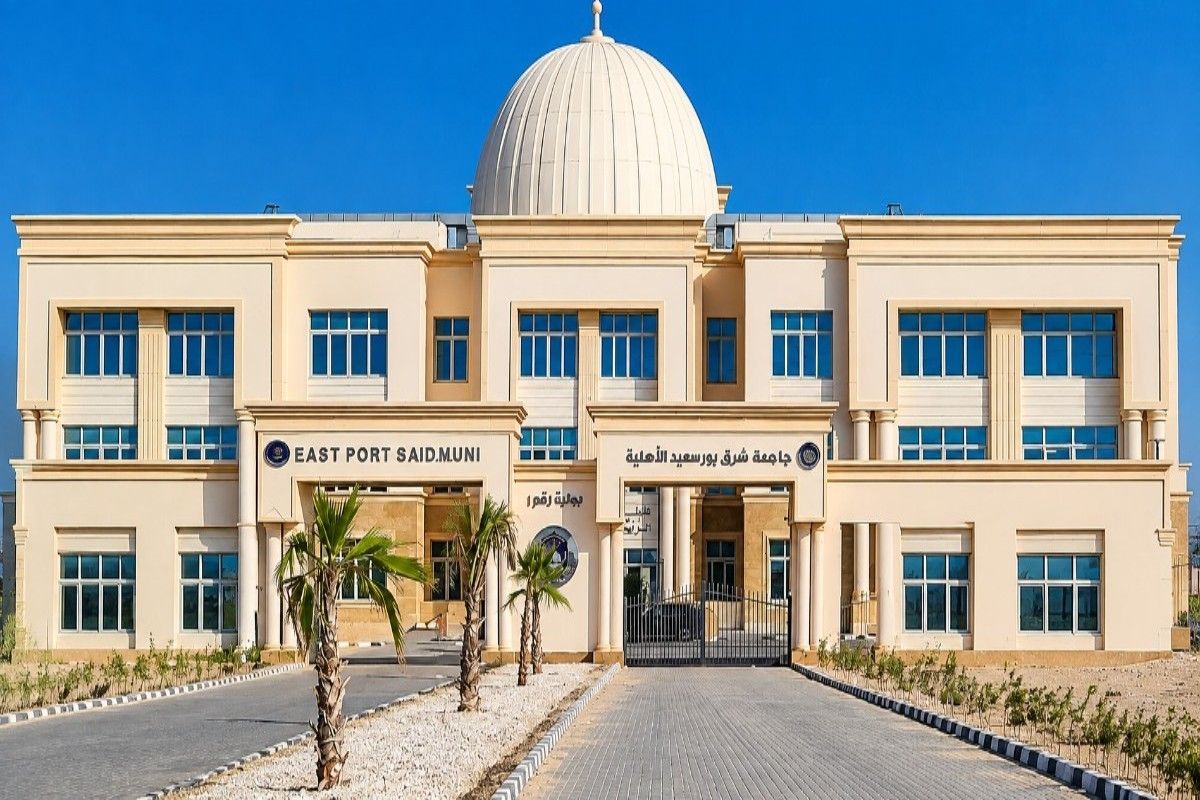
 Egypt | Est. 2022
Egypt | Registered with Egypt's Supreme Council of Universities as a private national institution; the Faculty also points to recognition from GAHAR, Egypt's General Authority for Healthcare Accreditation and Regulation, though how far that recognition extends isn't s | English medium
Expert will call you within 2 hours
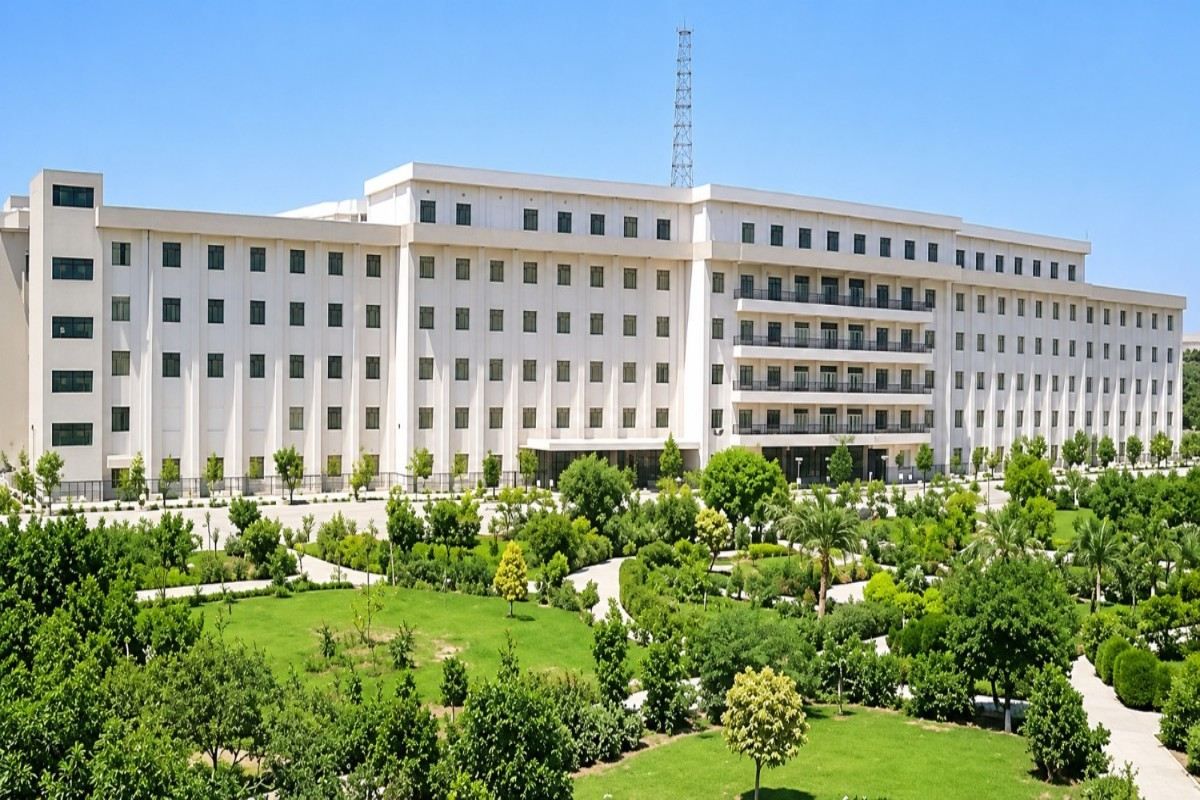
East Port Said National University barely has a track record to speak of yet. Its first two faculties, Medicine and Engineering, only opened their doors for the 2022/2023 academic year, part of a broader national effort under President Abdel Fattah El-Sisi to grow Egypt's private and national university sector. That timing puts this among the youngest medical faculties in the country, with its founding cohort only now working through the later stages of the programme.
It's worth untangling something that confuses a lot of people looking into this university. East Port Said National University is not a branch of the older, larger public Port Said University, despite the overlapping name and location. It has its own separate listing as a private national, or 'Ahleya', institution registered with Egypt's Supreme Council of Universities. That said, the two aren't strangers to each other either: Port Said University's president sits on East Port Said National University's Board of Trustees, alongside the Governor of Port Said, so the leadership circles genuinely overlap even though the institutions remain legally distinct.
The Faculty awards the MBBCh, Bachelor of Medicine and Surgery, over five years of academic study spread across ten semesters, followed by two years of mandatory clinical internship, seven years altogether before independent practice becomes possible. It runs on the European Credit Transfer System (ECTS) rather than a purely local grading model, a choice that signals an early intent to line up with international credit-recognition norms.
Medical subjects are taught mostly in English, though Arabic gets specific, dedicated attention for patient-communication training, a sensible acknowledgment that graduates will spend their careers talking to Arabic-speaking patients regardless of what language their textbooks were in.
East Port Said itself is a newer development zone east of the Suez Canal's northern entrance, separate from the older centres of Port Said city and Port Fuad, though all three sit within Port Said Governorate. It grew up around the East Port Said Industrial Zone and the region's wider canal-side expansion plans, so the university's setting owes more to Egypt's Suez Canal economic strategy than to any established academic tradition.
Because the Faculty is still so new, a lot of the information that would normally be settled and easy to find, a named primary teaching hospital being the obvious example, simply isn't published yet in a clear way. This is genuinely a programme in motion. Infrastructure, hospital partnerships, and admission thresholds should all be expected to shift somewhat from year to year as the first cohorts move deeper into their clinical training.
That said, the involvement of Port Said University's own leadership on the Board of Trustees suggests the newer institution isn't operating in isolation. Whether that translates into shared hospital access or other practical resources down the line isn't something the public record confirms yet, but it's a connection worth watching as the Faculty's first cohorts reach their clinical years.
Tuition is one area where this page can't offer clean numbers, because the university itself hasn't published any in clear, numerical form. What's out there instead comes from secondary sources, putting the figure somewhere between roughly EGP 110,000 and EGP 149,000 a year, though estimates shift noticeably depending on the source and the year they're describing. Anyone seriously weighing this option should request the current official fee schedule straight from admissions rather than trust an aggregator site.
Admission accepts a fairly wide range of secondary qualifications: Egyptian Thanaweya Amma, IGCSE, the Nile International Certificate, STEM school certificates, and recognised foreign equivalents, with foreign certificate holders needing to show at least twelve years of prior schooling. English proficiency comes through either a recognised international exam or the university's own placement test, though there's no separate, medicine-specific minimum score published anywhere.
On the accreditation front, the university's Supreme Council of Universities listing as a private national institution is confirmed, and the Faculty points to recognition from GAHAR, Egypt's General Authority for Healthcare Accreditation and Regulation. What isn't entirely clear is the scope of that GAHAR recognition, whether it covers the full teaching programme or reflects a credential held by an individual programme director. Given the Faculty's youth, broader listings like the World Directory of Medical Schools wouldn't realistically be expected yet either.
None of that should scare off a genuinely interested applicant on its own. Young medical faculties in Egypt tend to go through exactly this pattern, gaps in published detail that close up gradually as the first classes graduate and outside bodies catch up with formal listings. It just means doing a bit more legwork now than a decades-old faculty would require.
Parameter | Details |
Founded | Faculty of Medicine began teaching in the 2022/2023 academic year |
Institution Type | Private national ('Ahleya') university, legally separate from Port Said University but governance-linked at board level |
Location | East Port Said, Port Said Governorate, Egypt |
Programme | MBBCh (Bachelor of Medicine and Surgery) |
Duration | 5-year academic study (10 semesters, ECTS) + 2-year mandatory internship, 7 years total |
Medium of Instruction | English for medical subjects; Arabic used specifically for patient-communication training |
Admission Route | Direct application through the university's own admissions process |
Teaching Hospital | Not clearly published; the programme is still in its early cohort years |
No hidden charges, no donation. The full picture of costs at MBBS in East Port Said National University Faculty of Medicine.
Tuition Fee
135,000 EGP
approx. EGP 110,000 to 149,000 per year
Hostel Fee
Approximately USD 1,200–2,400 per year
Approximately USD 1,200–2,400 per year
Food & Meals
Approx. USD 150 to 250 per month
per month
Insurance
USD 100–200 annually five-year total: USD 500–1,000.
per year
Donation
No Donation
No hideen fees
Total Estimated Cost
Approximately USD 45,500–68,000 USD 51,700–78,200,
7-year
25–35%
Average FMGE first-attempt pass rates for students from many overseas medical universities. Students from structured programs consistently score higher.
Students returning to India need to clear the FMGE/NExT exam. MBBS in East Port Said National University Faculty of Medicine integrates exam-oriented coaching into the regular curriculum so students are prepared from day one.
A structured program that takes you from foundational sciences to clinical mastery.
Begin communication skills, medical terminology, professionalism, first aid, basic clinical skills and problem-based learning through laboratories and simulation sessions
Study anatomy, histology, physiology, biochemistry, genetics and the scientific foundations of normal human structure and function.
Develop knowledge of pathology, microbiology, immunology, parasitology and pharmacology while applying basic sciences to common clinical cases
Study integrated cardiovascular, respiratory, gastrointestinal, renal, endocrine, nervous, musculoskeletal and reproductive-system modules
Develop history-taking, physical examination, diagnostic reasoning, laboratory interpretation, patient safety and evidence-based medicine skills
Begin structured clinical learning in internal medicine, general surgery, paediatrics, obstetrics and gynaecology through clinical-skills sessions and supervised patient contact.
Study public health, community medicine, epidemiology and medical research, including supervised fourth-year public-health research projects.
Complete broader clinical training in medicine, surgery, paediatrics, obstetrics and gynaecology, supported by community-based activities and medical convoys.
Integrate clinical decision-making, prescribing, ethics, patient management, procedural skills and research through bedside assessments, case discussions and OSCE-style examinations.
Undertake advanced rotations in internal medicine, surgery, paediatrics, obstetrics and gynaecology, emergency medicine, family medicine and selected specialties.
Internship rotations consolidate practical competence in medicine, surgery, paediatrics, obstetrics and gynaecology, emergency care and other required specialties before professional registration.
After completing the five academic years, graduates undertake two years of supervised rotating clinical internship in approved hospitals and healthcare facilities.
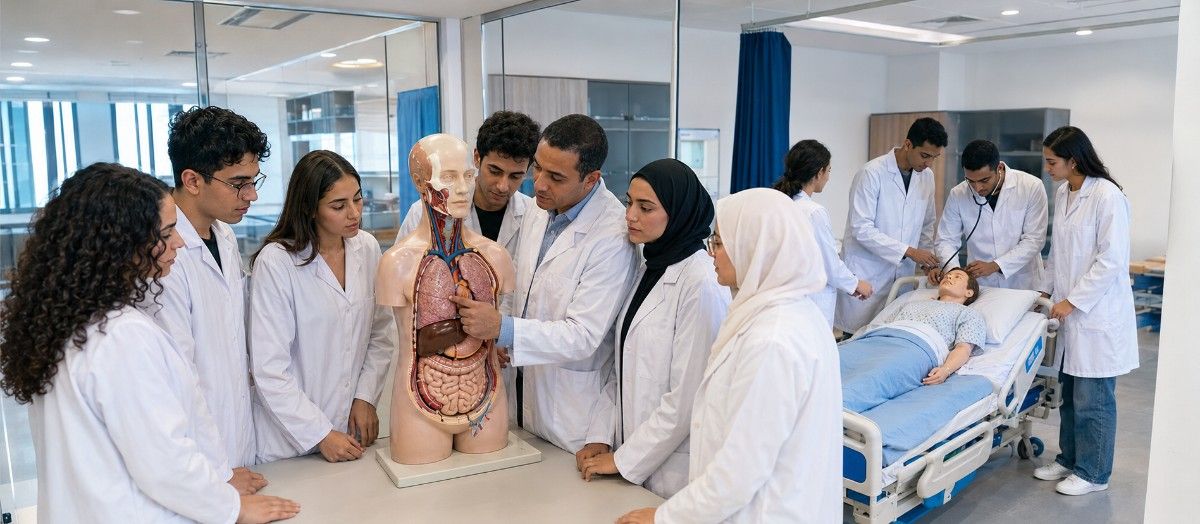
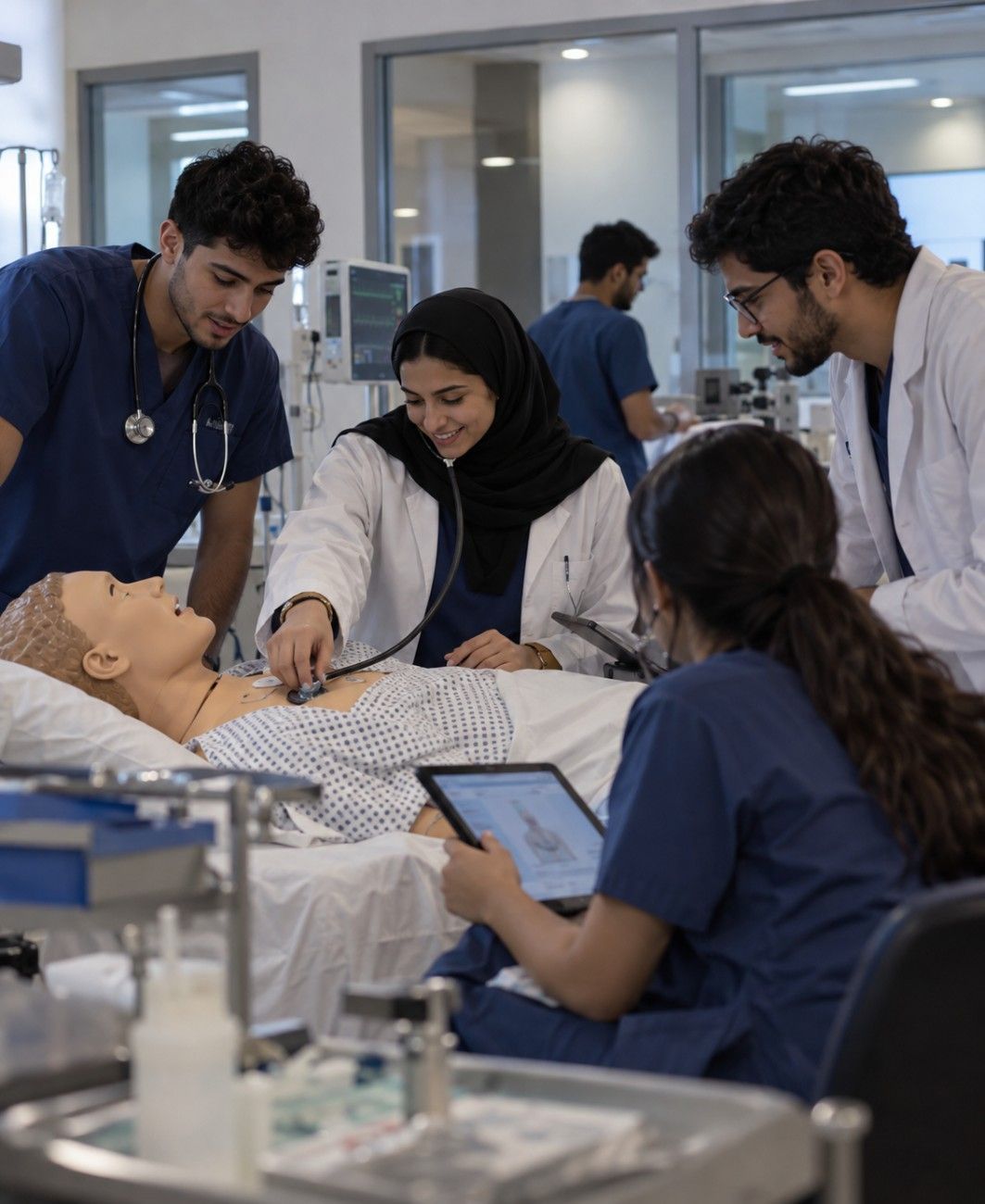
Furnished hostel rooms with Wi-Fi, laundry, 24/7 security, and Indian mess on or near campus.
Indian restaurants and mess facilities serving vegetarian and non-vegetarian home-style food daily.
Strong Indian community with cultural events, festival celebrations, and peer support groups.
Students get hands-on clinical training in government and private hospitals affiliated with the university.
Practical information for students planning to study at MBBS in East Port Said National University Faculty of Medicine.
Prepare for all seasons. Thermal wear for winters, light clothing for summers. University provides heating in hostels.
Student visa processed with university invitation letter. Direct and connecting flights from major Indian cities.
Health insurance included in fees. Medical facility on campus plus city hospitals easily accessible.
Local SIM cards available. WhatsApp and video calls keep you connected with family back home.
Average monthly expenses of $150–$250 covering food, transport, and personal needs.
University library, online databases, and study groups. Seniors mentor juniors through academic challenges.
Our team guides you through every step — from application to arriving on campus.
Our Egypt specialist provides an honest overview of Cairo University vs Ain Shams vs ERU, English-medium status, FMGE outcomes, safety assessment, and total cost comparison.
We provide the Egypt-specific checklist. All documents are verified before university submission.
Direct submission to the suggested university. Offer letter typically within 7–14 days.
Either the students or our team receives the offer, walks you through the terms, and manages the initial fee payment.
We manage visa applications to the Egyptian Embassy in New Delhi, a minimum of 6 weeks before departure
Cairo city orientation, accommodation, Egyptian transport, food, currency, safety zones, and first-week logistics.
We advise on routing to Cairo International Airport (CAI). Confirms arrival with the local team.
Our Cairo representative meets you at the airport. No student arrives unsupported.
Hostel check-in and university registration handled by AMW's local Egypt team.
Our team files the student residence permit at the Egyptian Ministry of Interior within your first weeks. Renewed annually.
Admission Helpline — Contact our counsellors for step-by-step assistance.
“The faculty here is incredibly supportive. The clinical training during hospital rotations has given me real confidence in patient care.”
“Affordable fees without compromising on quality. The campus facilities and hostel life made my transition abroad very smooth.”
“English medium instruction and WHO-recognized curriculum were the deciding factors for me. No regrets so far — excellent experience overall.”
“The university helped with everything from visa to accommodation. Hospital exposure from year three has been invaluable for my FMGE prep.”
“Just cleared my licensing exam on the first attempt. The structured coaching and mock exams during final year were a game-changer.”
“Safe campus, good food options, and a strong Indian student community. The teaching methodology is very practical and hands-on.”
In the 2022/2023 academic year, making it one of Egypt's newest medical faculties.
No, it's a legally separate private national university, though Port Said University's president sits on its Board of Trustees.
Five years across ten semesters, plus a two-year mandatory internship, seven years total.
Mostly English, with dedicated Arabic coursework specifically for patient-communication training.
Secondary sources put it roughly between EGP 110,000 and 149,000 a year, but that varies by source and should be confirmed with the university directly.
That's not clearly published yet, given how recently the Faculty launched; check current hospital partnerships directly before applying.
A Supreme Council of Universities listing, plus referenced GAHAR healthcare accreditation recognition, though the exact scope isn't fully clear in public materials.
No, not automatically. India's usual foreign-degree licensing route, NExT included, would still apply.
Private national ('Ahleya') status under Egyptian higher education law.
Because the Faculty is so new that information on fees, hospital partnerships, and admission thresholds is still settling and can shift year to year.
Our expert counsellors will guide you through the complete admission process — from documents to airport pickup.