
1. Is the medicine programme taught in English?
+No. The programme is taught entirely in Italian. You need B2-level Italian certification to enrol.
 Italy | Est. 1471
Italy | Italian Ministry of University and Research (MUR); WDOMS listed (F0001733) | Italian medium
Expert will call you within 2 hours
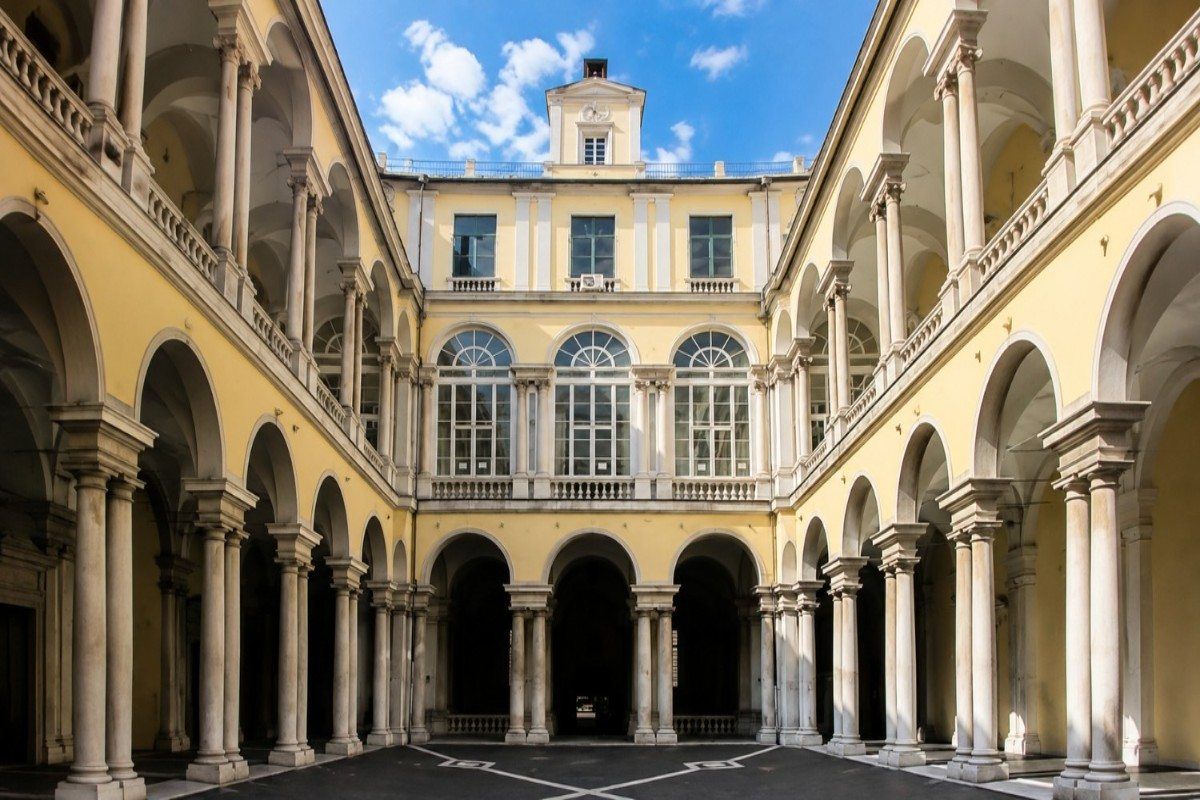
An Italian name for the University of Genoa is Università degli Studi di Genova. It is one of the oldest and largest universities in Italy. The school began in 1471 as a college of religion and has grown over the years into a large research university. The School of Medical and Pharmaceutical Sciences belongs to the Department of Internal Medicine and Medical Specialties, responsible for the Medicine and Surgery department. The university is in Liguria, which is in the northwest of Italy. Its campus is spread out over the old port city of Genoa.
Under the national system set by D.M. Medicine and Surgery (LM-41) is a 6-year single-cycle program awarding 360 CFU credits. It is offered only in Italian (proof of Italian language proficiency B2 level is required for admission). It combines basic sciences with clinical medicine and professional development in a progressive manner that builds on students’ prior knowledge and culminates in full clinical responsibility under supervision.
The university offers many facilities for practical training. The main teaching hospital is the IRCCS Ospedale Policlinico San Martino. It is one of the largest hospital complexes in Italy and a Scientific Institute for Research and Assistance. This hospital takes in more than 90,000 patients a year and is where most medical students do their practical training. You will go from one area to another, learning about internal medicine, surgery, emergency medicine, oncology, and many other specialties. As an IRCCS, the hospital treats patients and performs active research. This allows you to take part in clinical trials and learn about new ways to treat illnesses.
The city of Genoa itself adds a special element for learning medicine. Doctors and anatomists have lived in the city since the Renaissance, it has a long past in medicine. The medical school at the university has trained generations of doctors who work all over Italy and other countries. You will study in a city on the coast of Liguria that has both ancient buildings and modern research centers. The university is well-located and provides easy access to health networks in Liguria, such as hospitals in Savona, Imperia and La Spezia, which can be used for training during some rotations.
Italy's new national rules, which came into force for the school year 2025-2026, regulate admission. The old competitive entrance examination has been replaced by an open system, the so-called “filter semester”. You can sign up for any classes you want during the first semester, which includes three courses that are required by the government: Biology, Physics, and Chemistry and Propedeutic Biochemistry. There are 6 CFU credits for each subject. Every medical school in Italy gives the same national exams, which are graded by the same people. Where you go depends on how you do on a national merit list made from these test results. The method lets you try the filter semester up to three times. If you don't get into Genoa, the national ranking may send you to another medical school in Italy based on your preferences and the seats that are available.
The university has a good reputation for research. The University of Genoa came in at number 547 in the world in the QS World University Rankings 2026. The university was ranked in the 401st through 500th best in the world by Times Higher Education in 2026. There are also rankings for the university from the Academic Ranking of World Universities (ARWU) and the Center for World University Rankings (CWUR). The medical school has some of the strongest areas of study in oncology, cardiovascular medicine, neuroscience and infectious diseases. The IRCCS San Martino hospital has research centers that work with institutions around the world. You will be able to participate in research projects from the start of your program.
The program is based on the national framework LM-41, but is calibrated according to what works best in Genoa. First there are the filter semester classes, then histology, embryology, and systematic anatomy in the first year. Anatomy information is highly valued by the university, and dissecting dead bodies is part of the anatomy training. As you go through school pharmacology, pathology, and microbiology are combined with the curriculum. In the fourth year, you start full clinical rotations. In the later years, there is time set aside for elective rotations, which allow you to learn more about specialties that interest you.
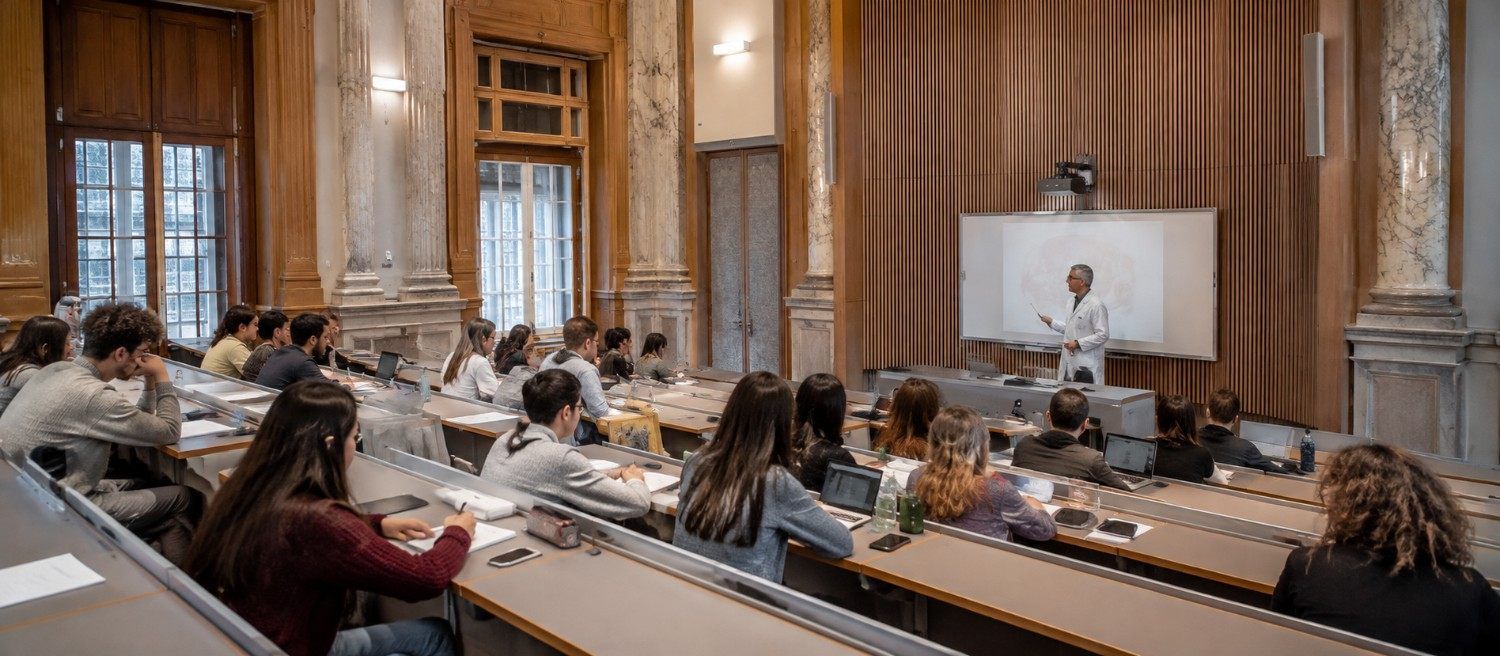
Learning is provided through a mixture of standard lectures, and practical activities. You will learn through problem-based sessions, simulation lab exercises and clinical skills training in small groups. The school has invested in simulation centers where you can practise clinical treatments on manikins prior to carrying them out on real patients. Medical, nursing and pharmacy students work together on interprofessional education activities designed to help them learn to work as a team in a real clinical setting.
The University of Genoa has tuition fees that depend on a student’s income, which is calculated by the ISEE-University indicator. Medical programs are in the second most important group (Area medica, sanitaria e scientifico-tecnica), so they cost more than arts programs. Students with an ISEE less than EUR 13,000 might not have to pay anything to the university. The most students in the highest ISEE bracket or those without ISEE certification will pay each year is 3,300 euros. The maximum you will pay in a year, including the area tax and stamp duty, is around EUR 3,436. The university offers need-based waivers to eligible students and merit-based discounts to students who excel academically.
Genoa has a lively student community. It is a big port city of about 580.000 inhabitants with many cultural sites, restaurants and entertainment. The cost of living is about average in Italian terms. It's higher than cities in the south but lower than Milan or Rome. There are both university residences and private rentals for students. The libraries, sports facilities, and student groups at the university make campus life very interesting. You will find that the city's compact centre and public transport network make it easy to move between university buildings, the teaching hospital, and your lodgings.
The university is very active with exchange programs with other countries. Thanks to Erasmus and other partnerships, you can attend partner universities all over Europe. The university also invites exchange students to come to school, which makes it a more diverse place to be. For international students outside the EU, the university helps with visa applications, residence permits and integration in Italian school life.
Genoa's medical program is a combination of a long tradition and modern facilities. Since the university has been teaching medicine for a long time, its graduates are found in hospitals and other institutions in Italy and abroad. During your clinical training at the IRCCS San Martino hospital, you will have the chance to see many complicated cases, which will help you prepare for real life as a doctor. The University of Genoa is a good choice for students who want to study medicine in Italy, as it has good scores, a history of good research and many clinical facilities.
No hidden charges, no donation. The full picture of costs at MBBS in University of Genoa School of Medical and Pharmaceutical Science.
Tuition Fee
€3,000 per year
USD 3,750
Hostel Fee
University residences approx. EUR 250 to 400 per month; private rentals EUR 400 to 700 per month
€220–€300/month
Food & Meals
€48/month
per month
Insurance
€700/year for compulsory Italian national health insurance
per year
Donation
No donation
no hidden fee
Total Estimated Cost
€6,000–€9,000/year depending on lifestyle
6 year
25–35%
Average FMGE first-attempt pass rates for students from many overseas medical universities. Students from structured programs consistently score higher.
Students returning to India need to clear the FMGE/NExT exam. MBBS in University of Genoa School of Medical and Pharmaceutical Science integrates exam-oriented coaching into the regular curriculum so students are prepared from day one.
A structured program that takes you from foundational sciences to clinical mastery.
Human histology and embryology, laboratory work and anatomy introduce microscopic structure, development and morphology.
• Chemistry and biochemical foundations, physics and biology establish the scientific basis of medicine.
You continue anatomical study and add biochemistry and physiology. The year focuses on understanding how the body functions at molecular, cellular, and organ system levels. Genetics introduces you to inherited disorders and molecular diagnostics.
Anatomy (continued), Biochemistry, Physiology, Medical Genetics, Clinical Biochemistry
The third year covers disease mechanisms, infectious agents, immune responses, and drug actions. You begin clinical methodology training, learning history-taking and physical examination skills. Public health modules introduce epidemiology and preventive medicine.
General Pathology, Microbiology, Immunology, Pharmacology, Clinical Methodology, Hygiene and Public Health
Clinical rotations begin. You work alongside physicians in major hospital departments, applying your knowledge to real patient care. Rotations cover the core medical and surgical specialties required for general medical practice.
Internal Medicine, General Surgery, Pediatrics, Obstetrics and Gynecology, Medical Semeiotics, Laboratory Medicine
You gain exposure to a broad range of specialties through structured rotations. The year emphasises complex case management, diagnostic reasoning, and interdisciplinary teamwork in both inpatient and outpatient settings.
Specialised Clinical Rotations (Cardiology, Neurology, Psychiatry, Dermatology, Oncology, Emergency Medicine, Anaesthesiology, Orthopaedics, Ophthalmology, ENT, Urology)
The final year features extended clinical clerkships with increasing autonomy. You choose elective rotations aligned with your career interests and complete a thesis based on original research or clinical analysis. The year prepares you for postgraduate training and independent medical practice.
: Clinical Clerkships, Elective Rotations, Thesis Preparation, Professional Development

Furnished hostel rooms with Wi-Fi, laundry, 24/7 security, and Indian mess on or near campus.
Indian restaurants and mess facilities serving vegetarian and non-vegetarian home-style food daily.
Strong Indian community with cultural events, festival celebrations, and peer support groups.
Students get hands-on clinical training in government and private hospitals affiliated with the university.
Practical information for students planning to study at MBBS in University of Genoa School of Medical and Pharmaceutical Science.
Prepare for all seasons. Thermal wear for winters, light clothing for summers. University provides heating in hostels.
Student visa processed with university invitation letter. Direct and connecting flights from major Indian cities.
Health insurance included in fees. Medical facility on campus plus city hospitals easily accessible.
Local SIM cards available. WhatsApp and video calls keep you connected with family back home.
Average monthly expenses of $150–$250 covering food, transport, and personal needs.
University library, online databases, and study groups. Seniors mentor juniors through academic challenges.
Our team guides you through every step — from application to arriving on campus.
Our Italy specialist explains the IMAT process, the income-based fee system, Bologna vs Rome vs other universities, and a total cost comparison with Hungary and Poland.
Our team registers you for IMAT (September test) and begins structured coaching. Biology, Chemistry, Physics, Maths, Critical Thinking. Begin preparation at least 6 months before the test.
Full Italian visa and IMAT application document set academic certificates, income documentation if applicable.
IMAT taken at designated test centres. We provide post-test analysis and guidance on university rankings.
Following IMAT ranking, the Italian university issues an admission confirmation. Our team can help with this process.
Full documentation submitted to the Italian Embassy or Consulate. Begin immediately after receiving the admission letter.
Our team advises qualifying families on the income-based fee reduction process.
Bologna /Rome orientation, accommodation, portico culture, Italian transport, Trenitalia app, banking, SIM card.
Our local team in Bologna (BLQ) or Rome (FCO) meets you and manages the first-week settlement.
We manage the Permesso application at the local Post Office within 8 days of arrival with our support, which is renewed annually.
Admission Helpline — Contact our counsellors for step-by-step assistance.
“The faculty here is incredibly supportive. The clinical training during hospital rotations has given me real confidence in patient care.”
“Affordable fees without compromising on quality. The campus facilities and hostel life made my transition abroad very smooth.”
“English medium instruction and WHO-recognized curriculum were the deciding factors for me. No regrets so far — excellent experience overall.”
“The university helped with everything from visa to accommodation. Hospital exposure from year three has been invaluable for my FMGE prep.”
“Just cleared my licensing exam on the first attempt. The structured coaching and mock exams during final year were a game-changer.”
“Safe campus, good food options, and a strong Indian student community. The teaching methodology is very practical and hands-on.”
No. The programme is taught entirely in Italian. You need B2-level Italian certification to enrol.
You enrol freely in the first semester (filter semester) and take three national exams in Chemistry, Physics, and Biology. Your ranking on the national merit list determines your placement at Genoa or another Italian medical school.
The maximum annual contribution is approximately EUR 3,436 including regional tax and stamp duty. Students with ISEE below EUR 13,000 pay only EUR 136 per year.
Yes. The degree is WDOMS listed. Indian graduates must pass the FMGE or NEXT screening test to obtain medical registration in India.
The primary teaching hospital is the IRCCS Ospedale Policlinico San Martino, a large research hospital with over 90,000 annual admissions.
Yes. Indian students need a valid NEET score to be eligible for the FMGE/NEXT screening test after graduation, which is required to practise in India.
Living costs are moderate. Expect approximately EUR 800 to 1,100 per month for accommodation, food, and transport.
Yes. The university participates in Erasmus and other exchange agreements, allowing you to study at partner universities across Europe.
The University of Genoa was founded in 1471, making it one of Italy's oldest universities. Medical instruction began the same year.
Yes. The IRCCS San Martino hospital houses active research centres, and faculty members recruit student assistants for laboratory and clinical research projects from the early years of study.

Our expert counsellors will guide you through the complete admission process — from documents to airport pickup.