Q1. Does Guangdong Medical University offer a plain English-run MBBS course?
+This remains unclear. The school’s own foreign guide reads as Chinese-run, and Pharmacy stands as the main set foreign-student first-degree track in third-party sources.
 China | Est. 1958
China | officially accredited by the Ministry of Education of China | English medium
Expert will call you within 2 hours
Are you looking at MBBS spots in China? Read this one with real care first. This school does hold true weight in medicine. But its path for those from other lands needs a close look. Check this before you spend more time or cash here.
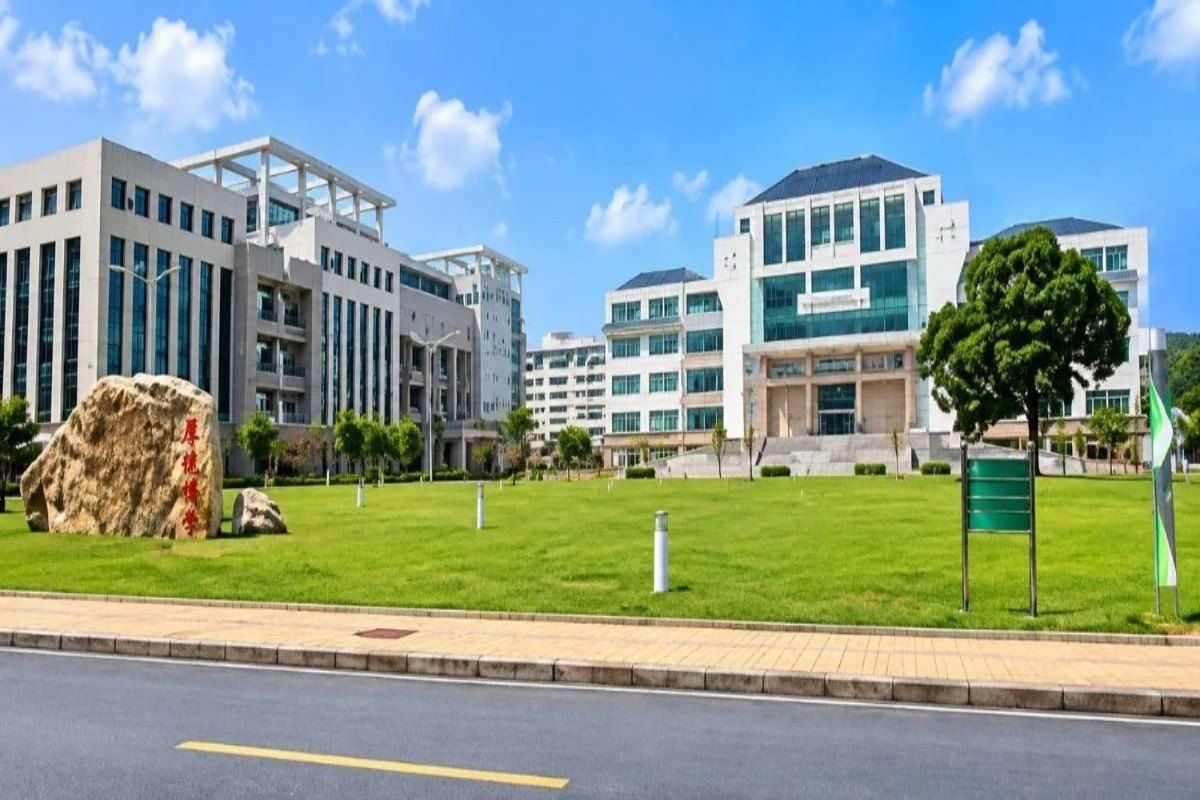
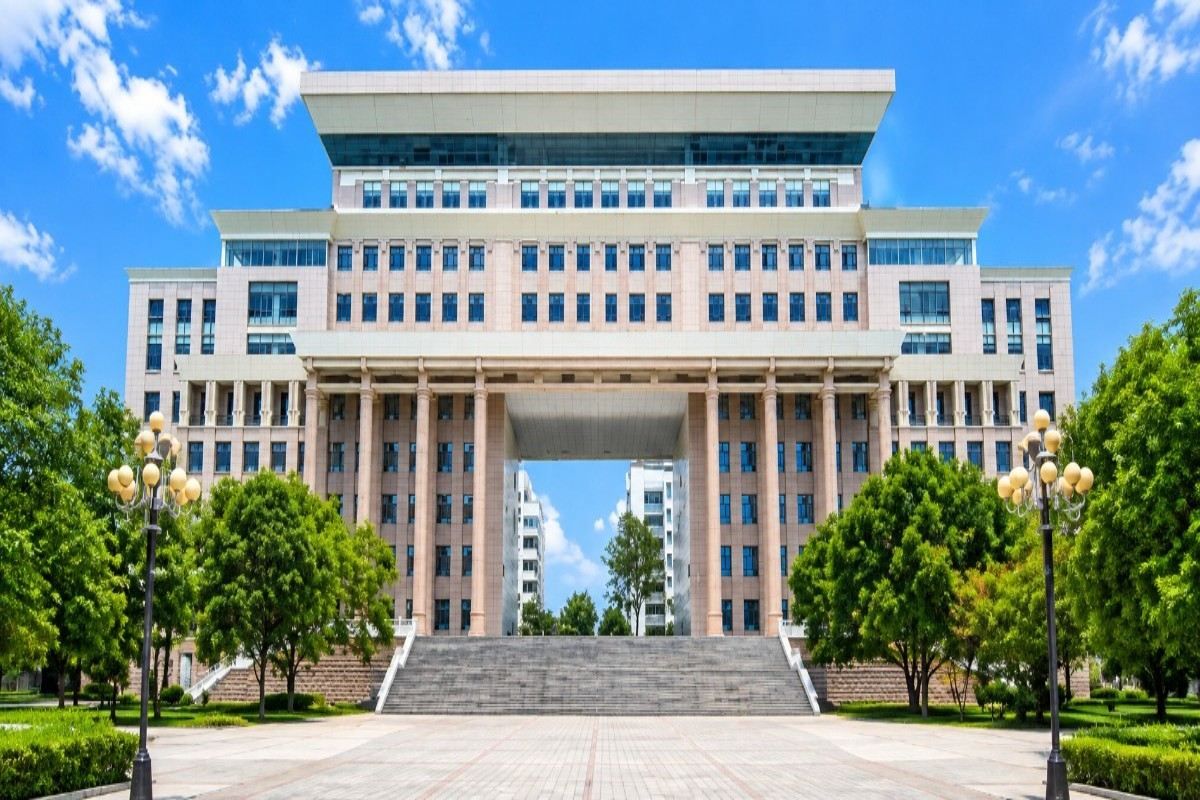
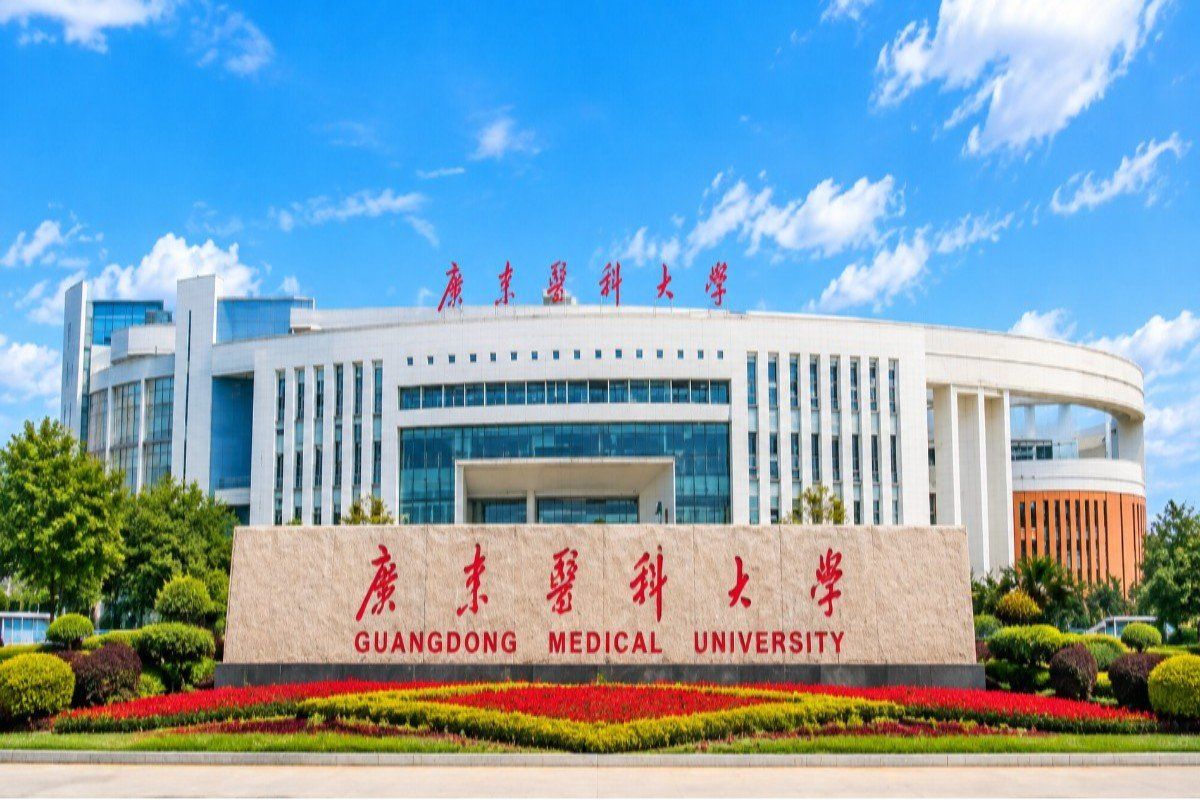
Let us start with what this place is. Guangdong Medical University sits in Zhanjiang. That is a seaport city in Guangdong province, in the south of China. The school began in 1958. Back then, it went by the name Zhanjiang Branch of Sun Yatsen Medical College. In 1964, it took the name Zhanjiang Medical College. In 1992, with the state’s own nod, it became Guangdong Medical College. In March 2016, China’s Ministry of Education gave it a new name. It became Guangdong Medical University. This steady growth over decades shows real, working roots. It is not a school built fast to chase quick fees.
The school runs two campuses. One sits in Zhanjiang, the seaport city that gave the school its start. The other sits in Dongguan, inside the Songshan Lake tech park. This second site took in its first students back in 2003. Two solid campuses give the school real room to grow. This helps it spread its work across a wider stretch of Guangdong province.
Now, on to the class side. This school holds real strength in a few key fields. Clinical medicine, drug study, and toxin study all carry global marks through ESI, a top world science rank system. These fields count as top-rated work in medicine. This kind of research mark does not come with ease. It takes years of steady, checked work to earn a spot on this kind of world list.
Here is where you need real, close care. The school’s own guide for foreign first-degree students carries a clear label. It reads as a Chinese-run course, not an English-run one. This point matters a great deal. Most Indian homes search for a full, English-taught MBBS course when they weigh Chinese medical schools. A Chinese-run track asks for real Chinese skill from day one. It does not let you build this skill slow over time.
Past this point, other course lists for this school show Pharmacy as the main first-degree field open to those from abroad. This holds true, not Clinical Medicine or a plain MBBS-style course. Clear, steady proof of a full, English-taught, six-year MBBS plan built for those from abroad was not found in a firm way. This does not mean such a course can never exist. It means the public record does not confirm it well right now. This gap needs your full care before you plan more steps.
The school does carry real size past this one point too. It ranks among the top four or five medical schools in China. This stands true when set next to peer schools like Jinan University. That kind of rank shows the wider school holds true weight in China’s medical field. This holds true even as the exact foreign-student MBBS picture stays unclear from open sources alone.
So where does this leave an Indian who wants a plain MBBS seat? The true answer stays unclear. This school shows real strength in research and in its home-run teaching system. But its path for those from abroad seems to run mainly through Chinese-run study. It also runs through set fields like Pharmacy. It does not run through a firm, set English-run Clinical Medicine or MBBS track built for those from far-off lands.
For Indian students, a few points need real, close thought before you go further. First, write directly to the school’s own foreign entry team direct. Ask one plain, clear thing. Does a full English-run MBBS or Clinical Medicine course stand open for those from abroad right now? If such a course stands open, ask what tongue it runs in. Ask too how it fits NMC’s own Foreign Grad rules. Next, do not think a Chinese-run Pharmacy-based track holds the same weight as a plain MBBS mark. It may not lead the same way. Last, NEET clearance stays a firm, split step under Indian rules. This holds true no matter which course applies here.
So how should you weigh Guangdong Medical University as a whole? Do you have strong Chinese skills? Are you open to a Pharmacy-based first-degree path instead? Then this school holds real class weight and a long, steady past behind it. Do you want a plain, English-taught, NMC-fit MBBS route instead? Then stay slow and firm here. Wait for a clear, written word from its own foreign team first. One short email now can save you months of lost plans later. Do not lean on agent talk alone here. Ask the school first, straight up. Get your word in writing well before you commit to more steps.
Why Guangdong Medical University Deserves a Closer Look, For the Right Applicant
Most comparison lists either skip this school or mix it up with the similarly named Guangzhou Medical University. Both mistakes miss the real picture. The reason stays simple. These are two separate schools in two different cities. This school’s confirmed foreign first-degree course looks narrower and more Chinese-run than many popular MBBS-in-China guides suggest.
Guangdong Medical University is not a small, unproven school. It carries a real six-decade history. Its clinical medicine, drug study, and toxin study fields hold real world research standing through ESI rankings. As a result, students who do gain a seat in a confirmed course step into a school with real class depth behind it.
The two-campus set-up also gives more room to choose than most pages explain. For example, students can pick between the old Zhanjiang seaport site and the newer Dongguan site inside a set tech park. Moreover, this matters for students who weigh city feel and campus set-up as part of their choice.
Furthermore, the school’s rank among the top four or five medical schools in China shows real school strength within China’s own medical field. This holds true even where the exact foreign-student MBBS path stays unclear from open sources.
One thing most pages miss fully is the Chinese-run label on the school’s own foreign guide. Since this point rarely gets flagged clearly in agent-run guides, students who skip this check risk taking a seat here before they see the language and course gap with their first MBBS goal.
No hidden charges, no donation. The full picture of costs at MBBS in Guangdong Medical University.
Tuition Fee
20,000 RMB
RMB 18,600/year (approx., based on INR 2.31 lakh listing)
Hostel Fee
RMB 6,000 - 10,000/year (est.)
RMB 6,000 - 10,000/year (est.)
Food & Meals
RMB 10,000 - 15,000/year (est.)
per year
Insurance
RMB 3,000 - 5,000/year (est.)
per year
Donation
No Donation
No Hidden fee
Total Estimated Cost
RMB 39,900 - 51,800 (est.)
6 year
25–35%
Average FMGE first-attempt pass rates for students from many overseas medical universities. Students from structured programs consistently score higher.
Students returning to India need to clear the FMGE/NExT exam. MBBS in Guangdong Medical University integrates exam-oriented coaching into the regular curriculum so students are prepared from day one.
A structured program that takes you from foundational sciences to clinical mastery.
General Electives & Culture: Medical Terminology, Chinese Language (Elementary Listening, Speaking, and Reading), and General Introduction to Chinese Culture
Core Medical Subjects: Systematic Anatomy, Medical Chemistry, Histology & Embryology, and Medical Biology.
Advanced Language: Medical Chinese (focused on doctor-patient communication basics)
Core Medical Subjects: Human Physiology, Biochemistry, Molecular Biology, Medical Genetics, Cell Biology, and Immunology.
Introduction to Practice: Diagnostics (Physical and Laboratory examination basics), Behavioral Science, and Medical Psychology
Core Medical Subjects: General and Systemic Pathology, Pathophysiology, Pharmacology, Medical Microbiology, Human Parasitology, and Medical Ethics.
Preventive Medicine: Epidemiology, Medical Statistics, and Public Health.
Core Medical Subjects: Internal Medicine, General Surgery, Pediatrics, Obstetrics & Gynecology, and Medical Imaging/Radiology.
Holistic Modules: Traditional Chinese Medicine (TCM basics) and Forensic Medicine
Core Medical Subjects: Neurology, Psychiatry, Dermatology, Ophthalmology, Otolaryngology (ENT), Infectious Diseases, and Emergency Medicine.
Hands-on training in basic surgeries, patient care, and emergency procedures. To enter internship or graduate smoothly, students are expected to pass the Chinese Proficiency Test (typically HSK Level 3 or 4) to ensure safe communication with local patients
Students rotate through major departments including Internal Medicine, General Surgery, Pediatrics, and OB/GYN.
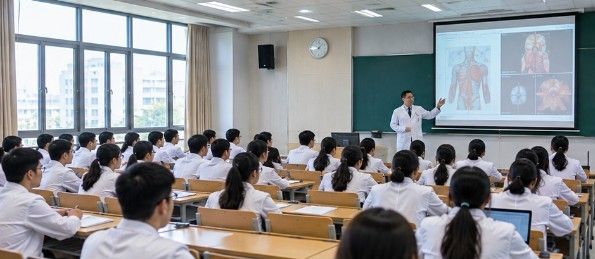
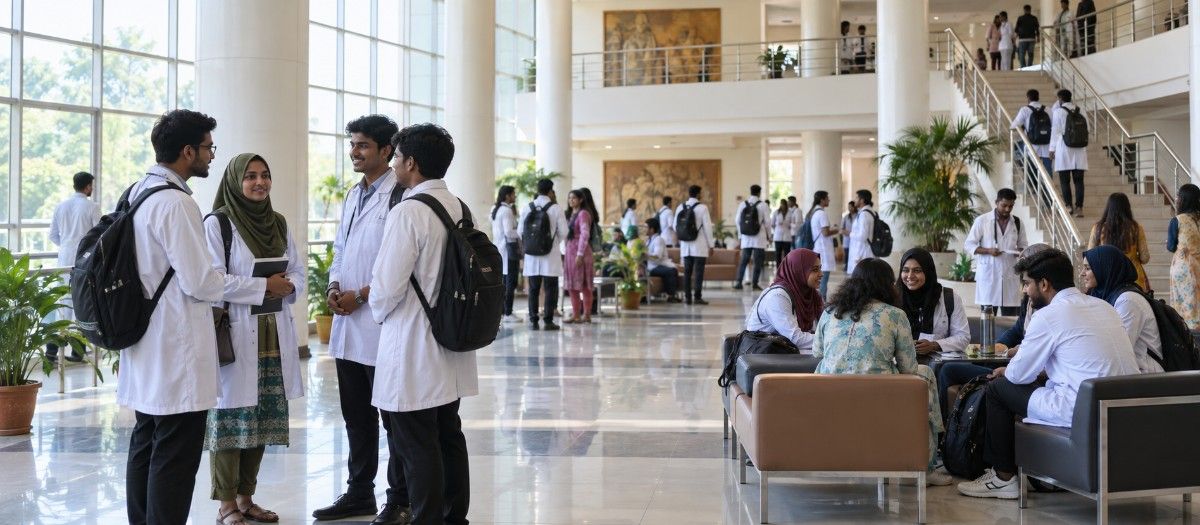
Furnished hostel rooms with Wi-Fi, laundry, 24/7 security, and Indian mess on or near campus.
Indian restaurants and mess facilities serving vegetarian and non-vegetarian home-style food daily.
Strong Indian community with cultural events, festival celebrations, and peer support groups.
Students get hands-on clinical training in government and private hospitals affiliated with the university.
Practical information for students planning to study at MBBS in Guangdong Medical University.
Prepare for all seasons. Thermal wear for winters, light clothing for summers. University provides heating in hostels.
Student visa processed with university invitation letter. Direct and connecting flights from major Indian cities.
Health insurance included in fees. Medical facility on campus plus city hospitals easily accessible.
Local SIM cards available. WhatsApp and video calls keep you connected with family back home.
Average monthly expenses of $150–$250 covering food, transport, and personal needs.
University library, online databases, and study groups. Seniors mentor juniors through academic challenges.
Our team guides you through every step — from application to arriving on campus.
Compare MOE-listed universities on fees, city, ranking, and FMGE track record, not just the cheapest option.
Submit the application along with academic transcripts, NEET scorecard, and (where required) CSCA score, either directly to the university or through an authorized admission partner.
The university’s international admissions office carries out document verification and academic evaluation.
Issued by the university on acceptance, typically within a few working days of document approval, though this can take longer during peak intake season (July–August).
Pay the tuition/hostel fee as per the written fee structure, ideally through a traceable bank wire to the university’s official account (never to a personal account), to confirm the seat.
Apply for the X1 (long-term) student visa at the Chinese Visa Application Service Center (CVASC) in New Delhi, Mumbai, or Kolkata.
Book travel and confirm arrival dates with the university’s international office, which typically coordinates registration timing for the incoming batch.
In the final weeks, finalize documents, arrange winter clothing if headed to a northern city, sort travel/health insurance, book flights, plan currency exchange, and confirm hostel allotment in writing.
Complete the on-arrival medical examination and residence permit registration with local authorities within the required window (typically around 30 days); this is what actually legalizes the stay for the full duration of the course, separate from the entry visa.
Attend orientation, check into your allotted hostel accommodation, pick up your class schedule, and begin building a routine and connections within the Indian student community as classes start.
Admission Helpline — Contact our counsellors for step-by-step assistance.
“The faculty here is incredibly supportive. The clinical training during hospital rotations has given me real confidence in patient care.”
“Affordable fees without compromising on quality. The campus facilities and hostel life made my transition abroad very smooth.”
“English medium instruction and WHO-recognized curriculum were the deciding factors for me. No regrets so far — excellent experience overall.”
“The university helped with everything from visa to accommodation. Hospital exposure from year three has been invaluable for my FMGE prep.”
“Just cleared my licensing exam on the first attempt. The structured coaching and mock exams during final year were a game-changer.”
“Safe campus, good food options, and a strong Indian student community. The teaching methodology is very practical and hands-on.”
This remains unclear. The school’s own foreign guide reads as Chinese-run, and Pharmacy stands as the main set foreign-student first-degree track in third-party sources.
No. These stand as two split schools in two split cities. Guangdong Medical University sits in Zhanjiang and Dongguan. Guangzhou Medical University sits in Guangzhou.
Yes. Indian students must clear NEET UG under current Indian rules to take up a first medical mark from abroad, no matter which course they pick.
A firm English-run MBBS fee for foreign students was not found in open sources. A Pharmacy track fee near INR 2.31 lakh a year shows up in one third-party list.
Set clinic training facts for a firm foreign-student MBBS track were not laid out clear in open sources for this school.
This depends on the set course and its tongue used. Applicants should check fit and tongue rules directly with the school’s own foreign team.
No, based on the school’s own guide. The foreign first-degree track reads as Chinese-run, not English-run.
Set aid facts for foreign students were not steady across open sources; ask the school’s own foreign team direct.
Open sources point mostly to a Chinese-run foreign first-degree track and Pharmacy as the set foreign-student course, not a clear, set English-run MBBS course.
This turns fully on which course a student has done. Students must check with the school if their set course meets NMC Foreign Grad rules before they think it leads to Indian medical sign-up.
Our expert counsellors will guide you through the complete admission process — from documents to airport pickup.