
1. Is Habiganj Medical College a government or private institution?
+It is a public medical college run by Bangladesh's Directorate General of Health Services, not a privately owned institution.
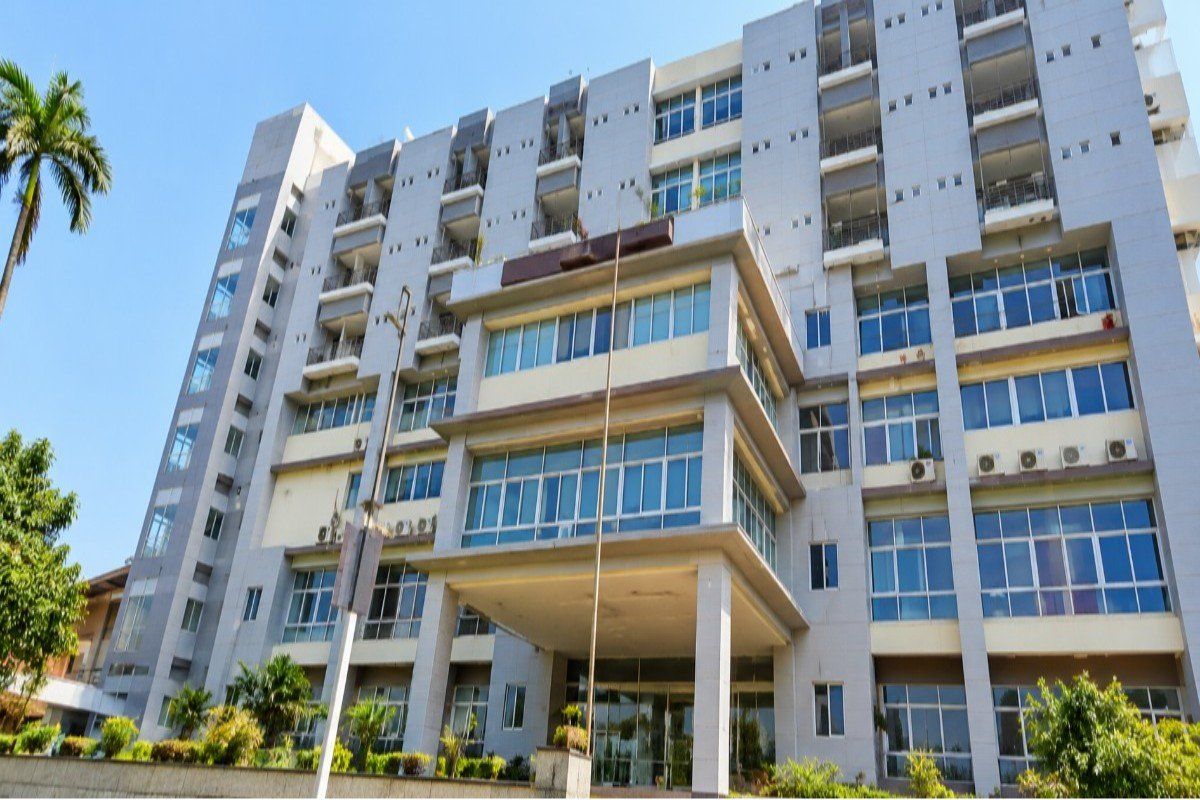
 Bangladesh | Est. 2017
Bangladesh | Habiganj Medical College is recognized by the Bangladesh Medical and Dental Council (BMDC) and academically affiliated with Sylhet Medical University. | English medium
Expert will call you within 2 hours
For the most part, the MBBS in Bangladesh is promoted as a business by consultancies as that of a private college course. Indeed, the tuition fee at any popular brand among the local population, like the Southern Medical College or the Bangladesh Medical College, amounts to $30,000-$45,000 for the full course. Habiganj Medical College is an outlier in this regard since it is a government-run college operated by the Directorate General of Health Services (DGHS) of the country. The whole tuition schedule there is regulated by a government order and not by the private trust, and hence a full five-year tuition amounts to just $8,670 (Rs. 7.38 lakh) — a much smaller sum compared to that charged by other private colleges in the country and more or less similar to that in India.
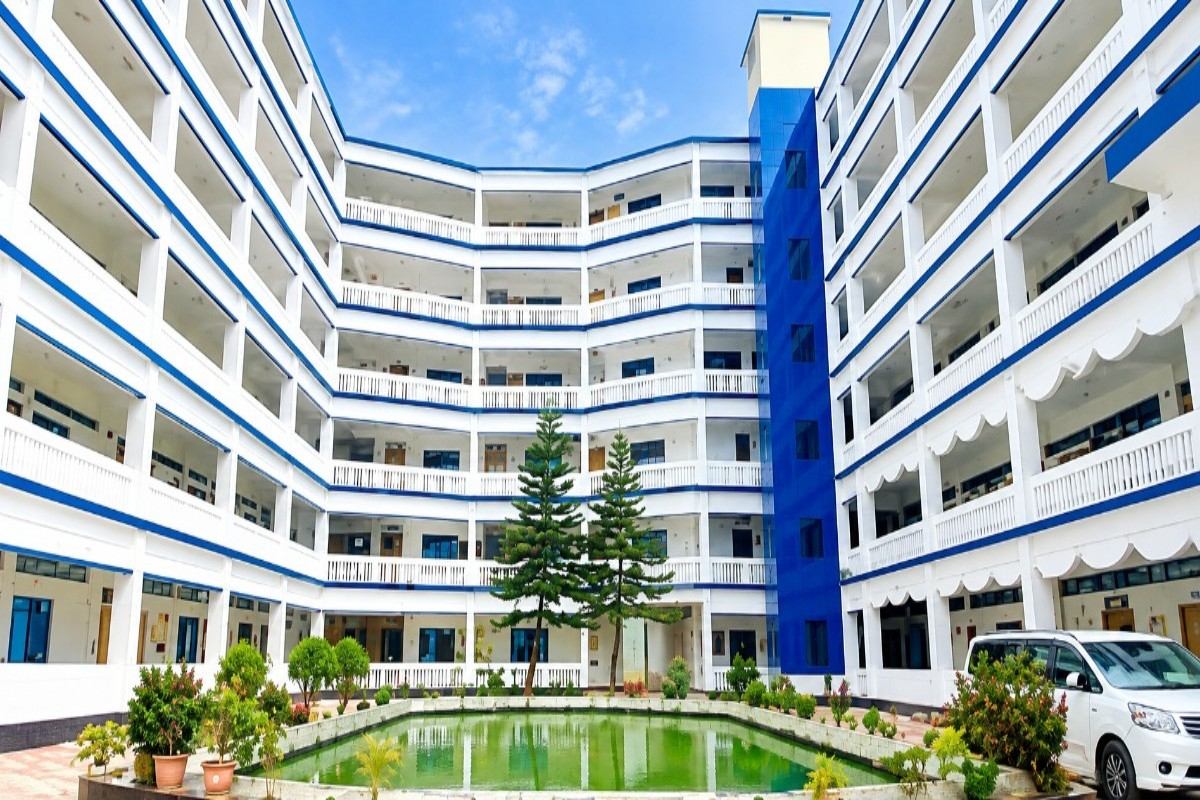
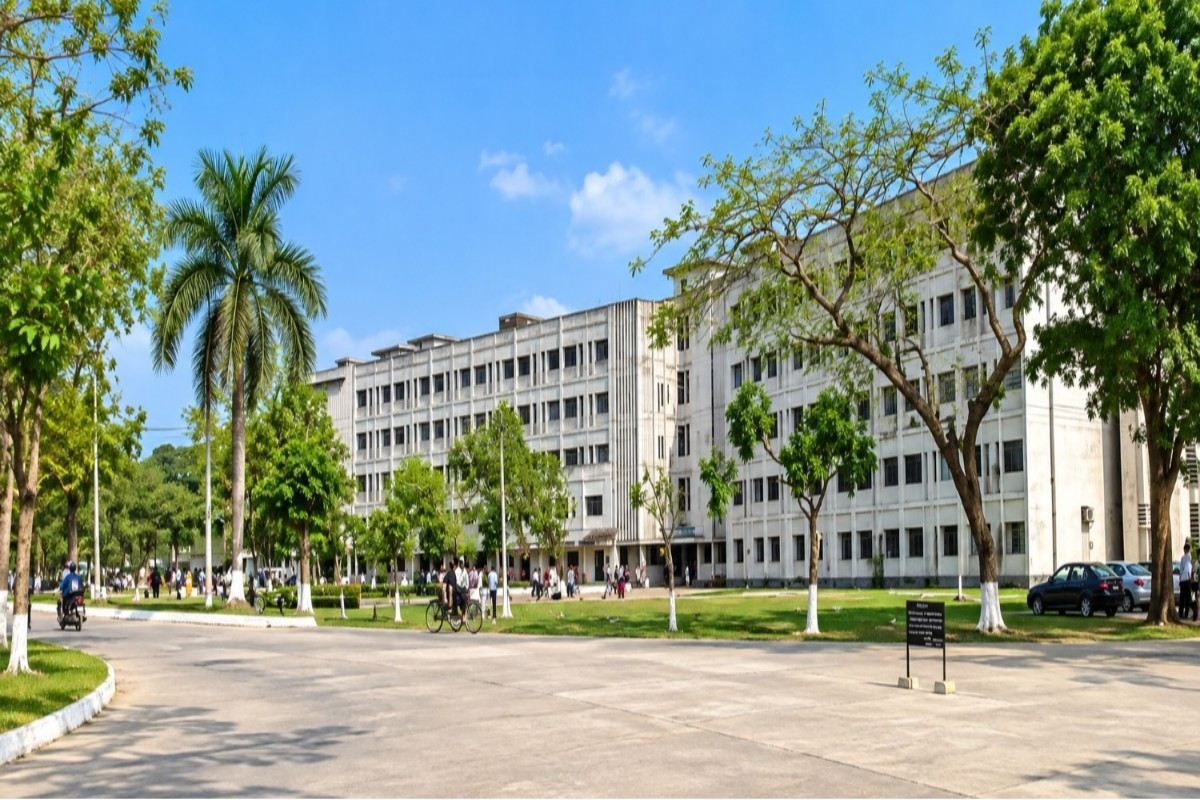
There is a clear reason for this disparity, and it is associated with the origin story of the college. Back in 2014, the government of the country approved the establishment of six more public medical colleges in the district towns, where there were none before: Habiganj, Manikganj, Sirajganj, Jamalpur, Tangail, and Rangamati. Habiganj received approval, yet nothing could be done due to the lack of campus infrastructure; it became possible to admit students only in 2017. Thus, when in January 2018 the first batch of 51 students began attending classes at the college, it happened in the 250-bed Habiganj Sadar District Hospital, and it remains the core of the educational process there to this day, while the construction of the permanent 25-acre campus situated on the Dhaka-Sylhet highway goes on in phases.
As is expected for an ongoing project, the current figures differ from the ideal scenario. According to the latest audit report of the Directorate General of Health Services, only 47 of the 83 approved positions were filled at the college, resulting in the ratio of about 11:1 student-to-teacher, slightly exceeding the 10:1 recommended ratio of Bangladesh Medical and Dental Council. It does not constitute any crisis yet and recruitment is underway, but it must be taken into account against the fee advantage in terms of comparison with colleges that boast of a more complete teaching staff roster.
Initially, Habiganj Medical College was affiliated to the Shahjalal University of Science and Technology, but starting from 2020-21, it has been affiliated with the newly established Sylhet Medical University, which conducts the professional exams and grants the degree. The enrolment there keeps growing; today, approximately 500 students study there in total across all five years of education, with the yearly admission of 51 more through the DGHS centralised admission process.
The district town of Habiganj is located in Sylhet Division in northeastern part of the country, 157 km to the northeast of Dhaka and 75 km to the south of Sylhet city, connected by road and railway to both places, the latter having the Habiganj railway station on its way. For students from India, particularly those from Assam, Tripura, and West Bengal, the geographical situation plays a role different from that of any other college located near Dhaka: the border between India and Bangladesh, specifically, of Tripura, is merely 60 km from the college, and the local dialect of Bengali language is quite close to that spoken in north-eastern India, so that the clinical interaction with the patient becomes easy. Regular direct flights connect Kolkata and Dhaka in about an hour, making the visits back home affordable.
Due to the fact that the teaching hospital operates right within the campus, the clinical placement does not involve any commuting that students at some large and scattered medical universities do. The case load resembles a truly regional government hospital and not some private one that is built specially to accommodate foreign students: the cases of tuberculosis, dengue, and complications in the field of maternal health are numerous there, thus mirroring the disease profile an Indian graduate is likely to see back home and not the cases that some richer private hospital tends to refer to somebody else. During the last year of study, students have approximately 800+ patient contacts.
The degree is recognised in the places that are needed for further career opportunities of an Indian student. The Bangladesh Medical and Dental Council regulates registration and a mandatory one-year rotatory internship, the World Health Organization puts the college on the list of the World Directory of Medical Schools, and India's National Medical Commission considers it under Schedule-I, thus granting graduates eligibility to take FMGE/NExT screening exam to get registered and practise in India.
Thus, the truth about Habiganj is as follows: it is a young and still developing government medical college, not a well-established brand, and the 51-seats admission per year via foreign/SAARC quota implies serious competition to enroll there. But what Habiganj has to offer in return is the tuition fees significantly lower than those of the private alternatives that are most actively advertised by the agencies, the teaching hospital operating right on campus, and the geographical position for a student from north-eastern India considerably less exotic than Dhaka, Chattogram, and Eastern Europe.
No hidden charges, no donation. The full picture of costs at MBBS in Habiganj Medical College.
Tuition Fee
USD 1,430–1,950 per year
USD 1,430–1,950/year
Hostel Fee
USD 500–700/year*
USD 500–700/year*
Food & Meals
USD 900–1,200
/year*
Insurance
USD 50–100
/year*
Donation
no donation
no hidden fee
Total Estimated Cost
Approx. USD 17,000–20,000
5 year
25–35%
Average FMGE first-attempt pass rates for students from many overseas medical universities. Students from structured programs consistently score higher.
Students returning to India need to clear the FMGE/NExT exam. MBBS in Habiganj Medical College integrates exam-oriented coaching into the regular curriculum so students are prepared from day one.
A structured program that takes you from foundational sciences to clinical mastery.
• Introduction to community medicine and forensic medicine begins toward the end of the year
• Human anatomy (gross anatomy, embryology, histology), physiology, and biochemistry
• Continued grounding in physiology and biochemistry alongside early clinical orientation
• Community medicine, public health, and forensic medicine
• Laboratory-based diagnostic training and early bedside exposure
• Pathology, microbiology, and pharmacology and therapeutics
• Surgery and allied specialties including orthopaedics and plastic surgery
• Medicine and allied specialties including cardiology and neurology
• ENT, ophthalmology, anaesthesiology, and radiology
• Obstetrics and gynaecology, paediatrics, and psychiatry
• Further rotations in anaesthesiology, radiology, ophthalmology, and ENT
• Rotatory postings across medicine, surgery, obstetrics and gynaecology, and paediatrics
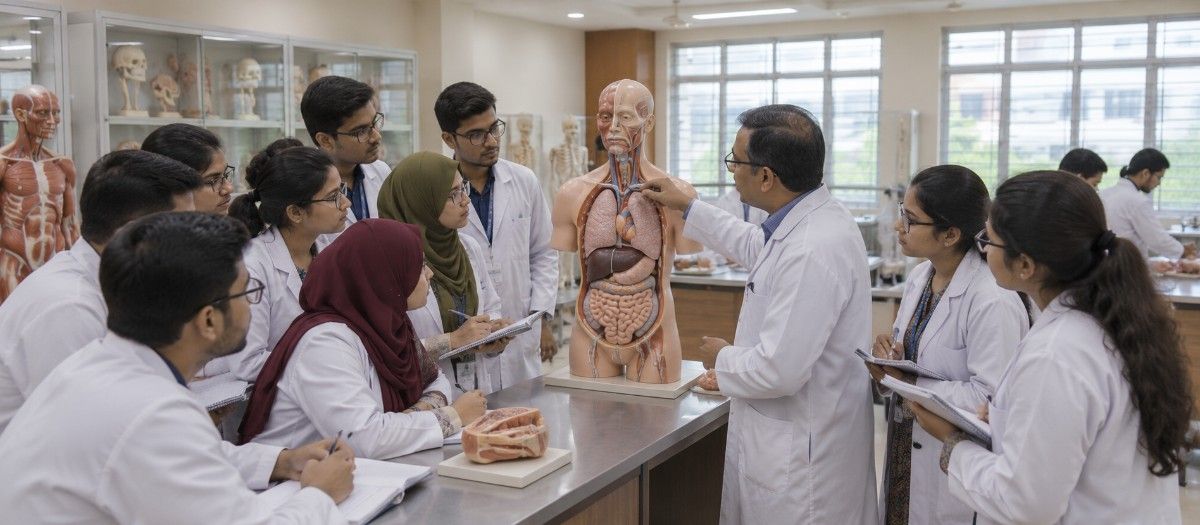
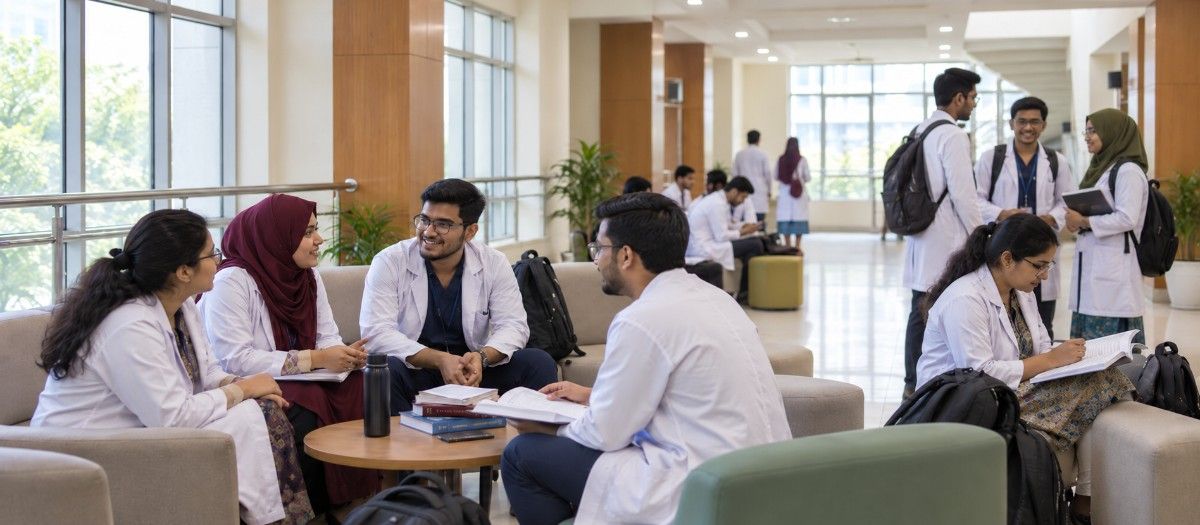
Furnished hostel rooms with Wi-Fi, laundry, 24/7 security, and Indian mess on or near campus.
Indian restaurants and mess facilities serving vegetarian and non-vegetarian home-style food daily.
Strong Indian community with cultural events, festival celebrations, and peer support groups.
Students get hands-on clinical training in government and private hospitals affiliated with the university.
Practical information for students planning to study at MBBS in Habiganj Medical College.
Prepare for all seasons. Thermal wear for winters, light clothing for summers. University provides heating in hostels.
Student visa processed with university invitation letter. Direct and connecting flights from major Indian cities.
Health insurance included in fees. Medical facility on campus plus city hospitals easily accessible.
Local SIM cards available. WhatsApp and video calls keep you connected with family back home.
Average monthly expenses of $150–$250 covering food, transport, and personal needs.
University library, online databases, and study groups. Seniors mentor juniors through academic challenges.
Our team guides you through every step — from application to arriving on campus.
DGME publishes the foreign-student MBBS/BDS admission circular for the upcoming session, usually around November, separately for SAARC/non-SAARC applicants and government/private colleges.
• Confirm your PCB percentage/GPA and NEET status against the circular's stated minimums. • Gather passport, academic transcripts, NEET scorecard, birth certificate, medical fitness certificate, and other listed documents, with mandatory two-step attestation.
• Shortlist government and/or private colleges based on budget, GPA/NEET strength, and location preference, comparing on recognition status and FMGE track record, not just the lowest fee. • Register on DGME's foreign-student portal, fill in details, and upload documents.
Pay the standard equivalence-certification fee (commonly around USD 100) via bank transfer (TT/SWIFT), not cash.
DGME evaluates your academic equivalence against Bangladeshi grading standards.
• Based on merit, quota category (SAARC/non-SAARC/reserved), and seat availability. • Receive a formal offer/admission letter from the allocated college.
Pay the first-installment tuition and hostel fee, per the college's own schedule.
• Apply at the Bangladesh High Commission/Mission with the admission letter and financial proof; realistic processing time varies by season. • In the final weeks, finalize documents, arrange travel/health insurance, book flights, and confirm hostel allotment in writing.
Fly to Bangladesh and complete airport formalities; many colleges arrange airport pickup for new students on specified reporting dates.
Complete physical document verification and hostel allotment at the college, and register with the Indian High Commission in Dhaka shortly after arrival, an important, non-optional step for consular support.
Admission Helpline — Contact our counsellors for step-by-step assistance.
“The faculty here is incredibly supportive. The clinical training during hospital rotations has given me real confidence in patient care.”
“Affordable fees without compromising on quality. The campus facilities and hostel life made my transition abroad very smooth.”
“English medium instruction and WHO-recognized curriculum were the deciding factors for me. No regrets so far — excellent experience overall.”
“The university helped with everything from visa to accommodation. Hospital exposure from year three has been invaluable for my FMGE prep.”
“Just cleared my licensing exam on the first attempt. The structured coaching and mock exams during final year were a game-changer.”
“Safe campus, good food options, and a strong Indian student community. The teaching methodology is very practical and hands-on.”
It is a public medical college run by Bangladesh's Directorate General of Health Services, not a privately owned institution.
Yes. The college is listed under NMC Schedule-I, so graduates can sit the FMGE or NExT exam to register in India.
Tuition alone totals approximately USD 8,670 (Rs. 7.38 lakh); living costs are additional.
Yes, a valid NEET-UG qualifying score is a mandatory requirement for admission.
51 seats annually, allotted through the DGHS's centralised admission process.
5 academic years followed by a compulsory 1-year rotatory internship, totalling 6 years.
At the 250-bed Habiganj Sadar District Hospital, which is attached directly to the college campus.
No. Fees follow the fixed DGHS schedule with no donation or hidden charges.
Yes, provided they meet the eligibility requirements set by India's National Medical Commission.
A: A NEET-UG scorecard, Class 10/12 mark sheets, a valid passport, and medical fitness documentation.
Our expert counsellors will guide you through the complete admission process — from documents to airport pickup.