
Q1. Can international students, including those from India, apply to Hacettepe's Medicine course?
+Yes. Hacettepe is genuinely open to international applicants. NEET is required for Indian applicants.
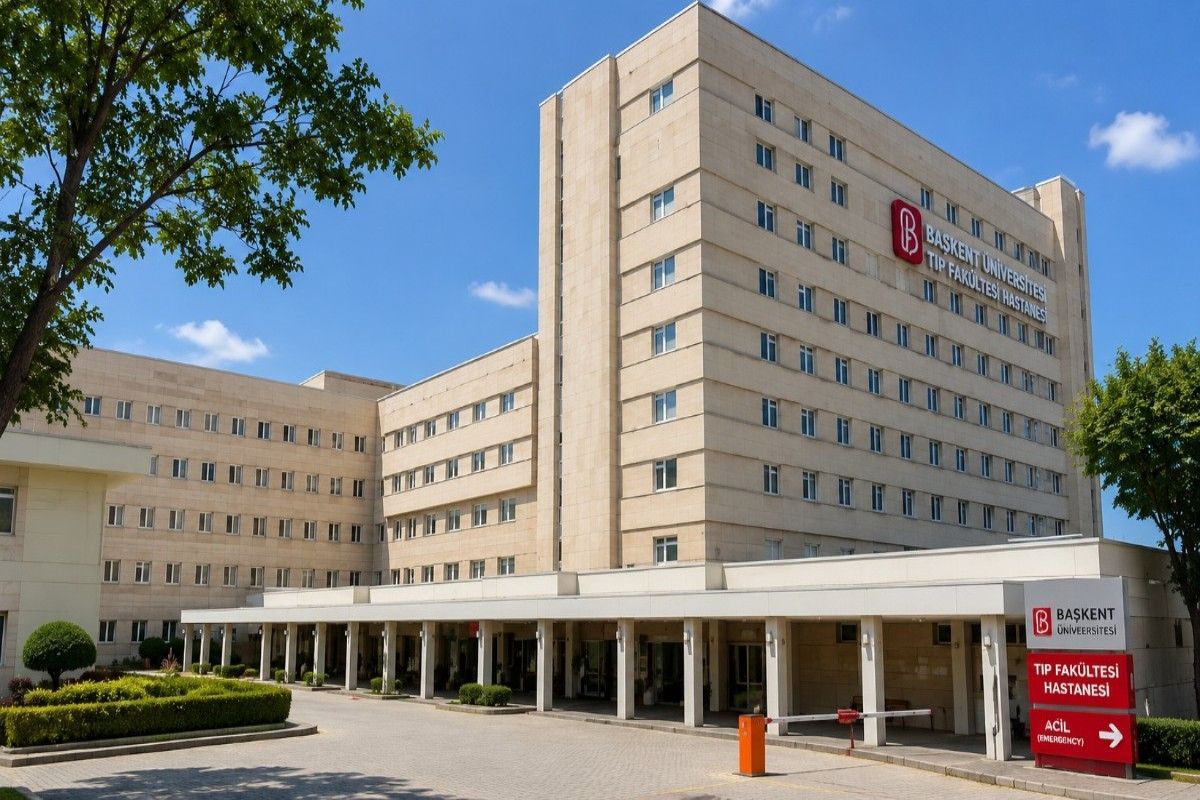
 Turkey | Est. 1954
Turkey | Turkey's Higher Education Council (YÖK) | Primarily Turkish, with some courses in English, French, and German medium
Expert will call you within 2 hours
People mostly just call it Hacettepe for short. Its own origin story is genuinely specific and worth tracing carefully, since it did not start as an independent university at all. The Chair of Child Health, considered the true origin of Hacettepe's Faculty of Medicine, was founded on 2 February 1954, as part of Ankara University's own Faculty of Medicine, by Professor Dr. İhsan Doğramacı, a genuinely significant figure in Turkish medical education history. So, this university's roots trace to one specific paediatrician's own initiative within an existing institution, not an independent founding from day one.
Here is a fact most guides skip entirely. The foundation stone for what became Hacettepe itself was laid in 1957, alongside the Child Health Institute and Hospital, which began its training, education, research, and public service activities the following year, 1958. Over the next several years, a genuinely rapid sequence of new schools followed. These are the Nursing School, School of Medical Technology, and School of Physical Therapy and Rehabilitation in 1961, and the School of Health Sciences, covering Nutrition and Dietetics, in 1962. By 1963, these combined institutions had taken the name Faculty of Medicine and Health Sciences. So, Hacettepe grew organically from a single children's health initiative into a full multi-school medical complex across less than a decade, before formal university independence was ever granted.
Hacettepe University itself only became fully independent on 8 July 1967, through Act No. 892 of the Turkish Parliament, separating it from Ankara University. The university describes itself as guided by Atatürk's own maxim, to reach the level of contemporary civilisation, a genuinely specific, quoted institutional philosophy rather than a generic mission statement. Today, Hacettepe operates 15 to 16 faculties, 15 institutes, several vocational schools, and around 98 to 101 research and application centres, having been led by 13 university presidents across its history.
Hacettepe consistently ranks second in Turkey nationally, with a QS World Ranking in the 801 to 1000 band and a Times Higher Education ranking in the 601 to 800 band, genuinely solid positions for a Turkish public university on the global stage. The Faculty of Medicine specifically holds a strong reputation for national and international research and publication, according to statistics from TÜBİTAK, Turkey's own Scientific and Technological Research Council, and at least one source describes a collaborative relationship with Harvard University, though this specific claim should be independently confirmed given its significance.
Hacettepe is based in Ankara, Turkey's capital city, alongside several other well-known Turkish universities including Ankara University, Gazi University, and Middle East Technical University. So, students here study within a genuinely competitive, concentrated academic environment, in the heart of the country's political and administrative centre. Clinical training runs through Hacettepe's own large teaching hospitals, described by independent sources as among Turkey's best, offering genuinely high patient volumes and a varied case mix.
Hacettepe's Human Medicine programme runs six years, the standard length across Turkish medical education, leading to a Physician qualification equivalent to an MD or MBBS. Teaching runs primarily in Turkish, though the university offers some courses in English, French, and German, and a TOEFL certificate is mandatory for doctoral-level programmes specifically. Requirements for Indian applicants generally follow standard National Medical Commission rules. A passed Class 12 with Physics, Chemistry, Biology, and English from a recognised board, and a qualifying NEET score, with no separate university entrance exam, interview, or donation required, according to at least one detailed consultancy source specifically highlighting Hacettepe's transparent, published fee structure.
Ankara itself is genuinely well suited to serious medical study, since it sits at the centre of Turkey's own political and administrative life, giving students real, practical exposure to national health policy discussions and major government health institutions during their time at university. Unlike Istanbul, which is considerably larger and more spread out, Ankara offers a genuinely more compact, focused university environment, with several of the country's leading universities sitting relatively close to one another. This concentration of academic talent within one city gives Hacettepe's own medical students real opportunities for cross-institutional collaboration and research, something considerably harder to arrange in a more sprawling city.
Beyond its own teaching hospitals, Hacettepe's Faculty of Medicine maintains active clinical and research partnerships across a genuinely wide range of medical specialties, from oncology and cardiology through to paediatrics and public health. This breadth means students are not limited to a narrow set of specialties during their clinical years, and can genuinely explore different fields of medicine before eventually settling on their own preferred specialisation, whether that decision comes during their undergraduate years or later, during postgraduate training. The Faculty's own long-standing reputation, built up steadily since the 1950s, continues to attract genuinely strong academic staff, many of whom combine active clinical practice with ongoing research work, giving students direct exposure to physicians who are still actively shaping their own fields.
NEET remains a genuine requirement for Indian applicants here, and Indian graduates would still need to clear the FMGE or NExT exam to practise medicine back in India.
Fee figures here genuinely diverge depending on whether a source is quoting Hacettepe's own low, official rate, or a considerably higher, bundled consultancy estimate. Both are shown clearly below, rather than blended into one number.
Cost Item | Amount | Notes |
Tuition Fee (official rate, reported) | TRY 50,000/year (approx. USD 2,777) | Reported by a detailed, dated cost-comparison source specifically for Hacettepe Medicine |
Total Tuition (6 years, official rate) | Approx. USD 16,650 | Based on the reported official rate held stable across the programme |
Total Programme Cost (bundled consultancy estimate) | INR 60-84 lakh (approx. USD 69,000-96,500) | Likely includes tuition, living costs, and other charges bundled together |
Living Costs | USD 288-577/month | Reported estimate; Ankara is generally more affordable than Istanbul |
Turkish Scholarship Opportunities | Fee waivers, stipends, travel reimbursement reported | Tied to specific Turkish government scholarship schemes; not automatic for all applicants |
Total 6-Year Estimate (realistic range) | — | Approx. USD 37,000-58,000, tuition plus living costs |
Note: no capitation fee and no donation is asked at any stage, per at least one detailed source. Confirm the current official rate directly with Hacettepe's own International Student Office.
Most lists mention Hacettepe as just another leading Turkish medical school. However, they do not explain how it actually grew, or how affordable its official tuition genuinely is. The reason is simple. It is about a documented, step-by-step founding story, and a genuinely low official cost most guides never mention.
Hacettepe is not like most other major public universities when it comes to its own history. In fact, it grew from a single Chair of Child Health in 1954, through a foundation stone laid in 1957, to a rapid sequence of new schools opening almost yearly through the early 1960s. Furthermore, full independence only arrived considerably later, in 1967. As a result, this university's growth from a paediatric initiative into a major national institution is a real, traceable process. Graduates prove this foundation was strong by consistently ranking 2nd in Turkey nationally today.
The tuition figure also matters more than most guides let on. For example, many assume studying medicine abroad always costs tens of thousands of dollars a year. One detailed, dated source reports Hacettepe's own official Medicine tuition at just TRY 50,000 a year, roughly USD 2,777. Moreover, this is genuinely one of the more modest tuition figures for a nationally leading medical faculty covered anywhere in comparable guides. So, applicants relying on official Turkish public-university rates specifically may find costs considerably lower than bundled consultancy estimates suggest.
One thing most other blogs miss is how differently the same university's costs can be reported. In addition to the low official rate, a separate consultancy source cites a bundled six-year total of USD 69,000 to 96,500. Since these two figures measure genuinely different things, tuition alone versus a bundled estimate including living costs, applicants should clarify exactly what any quoted figure includes before budgeting.
No hidden charges, no donation. The full picture of costs at MBBS in Hacettepe University Faculty of Medicine.
Tuition Fee
Approx. TRY 50,000 (USD 2,777)
. TRY 50,000/year, USD 2,777
Hostel Fee
USD $288-$577/month
Approx. USD $288-$577/month
Food & Meals
Approx. $45 to $62 USD
per month
Insurance
Approx. $70 to $140 USD
per year
Donation
No Donation
No hidden Fee
Total Estimated Cost
Approx. USD 37,000-58,000
6 Year
25–35%
Average FMGE first-attempt pass rates for students from many overseas medical universities. Students from structured programs consistently score higher.
Students returning to India need to clear the FMGE/NExT exam. MBBS in Hacettepe University Faculty of Medicine integrates exam-oriented coaching into the regular curriculum so students are prepared from day one.
A structured program that takes you from foundational sciences to clinical mastery.
In addition, this stage traces back to the school's earliest years, dating to the early 1960s
First, Anatomy, Physiology, and Biochemistry build on Hacettepe's own long tradition of structured medical teaching
Furthermore, this stage is backed by statistics from TÜBİTAK, Turkey's own scientific research authority
Next, Pathology, Microbiology, and Pharmacology draw on the Faculty's strong research reputation
Moreover, students benefit from genuinely high patient volumes and a varied clinical case mix
Then, Medicine, Surgery, and allied clinical subjects run through Hacettepe's own large teaching hospitals
Also, Indian graduates would still need to clear the FMGE or NExT exam to practise medicine in India
Finally, graduates receive a Physician qualification, equivalent to an MD or MBBS
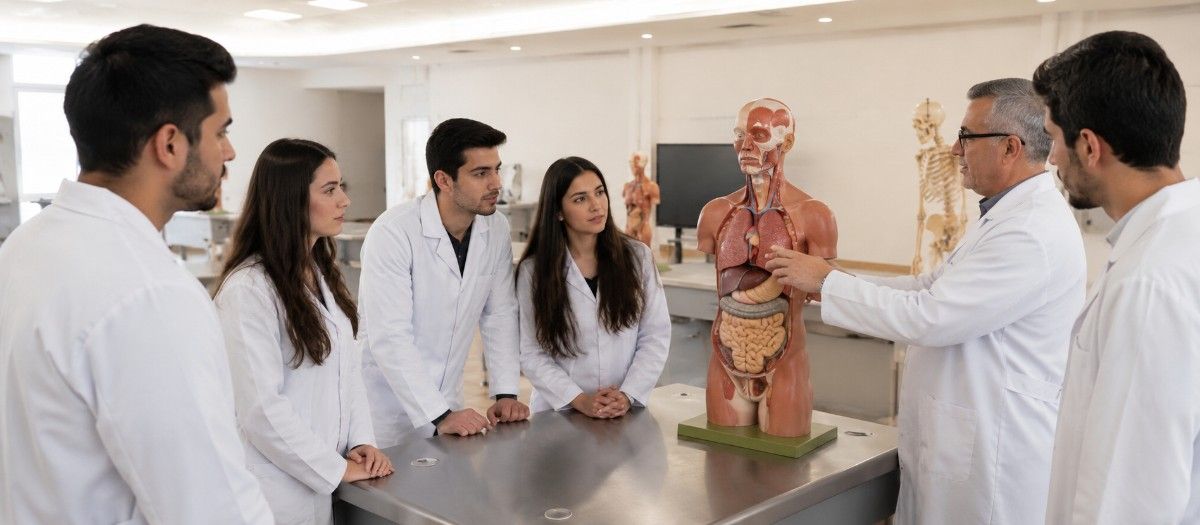
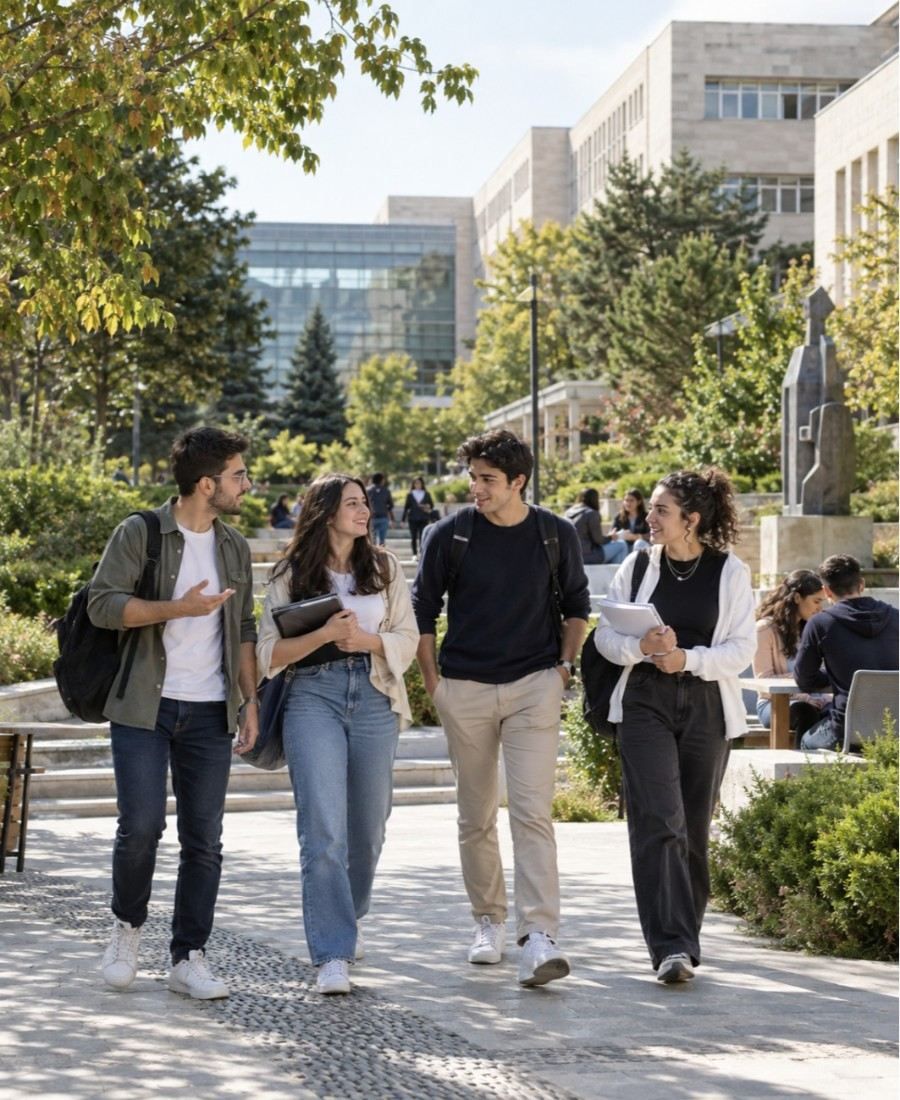
Furnished hostel rooms with Wi-Fi, laundry, 24/7 security, and Indian mess on or near campus.
Indian restaurants and mess facilities serving vegetarian and non-vegetarian home-style food daily.
Strong Indian community with cultural events, festival celebrations, and peer support groups.
Students get hands-on clinical training in government and private hospitals affiliated with the university.
Practical information for students planning to study at MBBS in Hacettepe University Faculty of Medicine.
Prepare for all seasons. Thermal wear for winters, light clothing for summers. University provides heating in hostels.
Student visa processed with university invitation letter. Direct and connecting flights from major Indian cities.
Health insurance included in fees. Medical facility on campus plus city hospitals easily accessible.
Local SIM cards available. WhatsApp and video calls keep you connected with family back home.
Average monthly expenses of $150–$250 covering food, transport, and personal needs.
University library, online databases, and study groups. Seniors mentor juniors through academic challenges.
Our team guides you through every step — from application to arriving on campus.
Share your NEET score, academic record, and budget. Our Turkey specialist provides an honest assessment comparing Turkey with Georgia, Armenia, and Russia and, within Turkey, identifies the right university based on NMC recognition status, clinical quality, preferred city, and total cost. NMC status verification is the first step for every Turkey recommendation.
AMW submits your application to the selected university with all required documents. Most Turkish private medical universities for English-medium programmes do not require a separate university entrance exam beyond NEET, though some require YÖS. AMW advises on this for each specific university. Offer letters are typically issued within 2–4 weeks.
AMW assists with your Turkish student visa application a straightforward process for Indian nationals. Required documents include a university acceptance letter, financial means documentation, health insurance, and a biometric appointment at the Turkish Embassy in India. Processing typically takes 3–6 weeks.
AMW coordinates travel planning and arranges airport pickup in Istanbul or Ankara. Our local Turkey representative handles hostel check-in, university registration, and city orientation. Support continues throughout the first month.
Admission Helpline — Contact our counsellors for step-by-step assistance.
“The faculty here is incredibly supportive. The clinical training during hospital rotations has given me real confidence in patient care.”
“Affordable fees without compromising on quality. The campus facilities and hostel life made my transition abroad very smooth.”
“English medium instruction and WHO-recognized curriculum were the deciding factors for me. No regrets so far — excellent experience overall.”
“The university helped with everything from visa to accommodation. Hospital exposure from year three has been invaluable for my FMGE prep.”
“Just cleared my licensing exam on the first attempt. The structured coaching and mock exams during final year were a game-changer.”
“Safe campus, good food options, and a strong Indian student community. The teaching methodology is very practical and hands-on.”
Yes. Hacettepe is genuinely open to international applicants. NEET is required for Indian applicants.
Yes, a valid, qualifying NEET score is required for Indian applicants under NMC guidelines.
Reports genuinely conflict: one source cites approximately TRY 50,000 a year in official tuition, while a separate consultancy source reports a considerably higher bundled six-year total of USD 69,000 to 96,500.
Yes, the standard 6-year Human Medicine programme is a direct-entry route from Class 12.
Primarily Turkish, with some courses offered in English, French, and German; confirm the exact language provision directly.
Hacettepe's own large teaching hospitals, described as among Turkey's best, offering high patient volumes.
It runs six years, the standard length across Turkish medical education.
2nd in Turkey nationally, with a QS World Ranking of 801-1000 and a Times Higher Education Ranking of 601-800.
Professor Dr. İhsan Doğramacı, who founded the Chair of Child Health in 1954, considered the true origin of the Faculty of Medicine.
According to at least one detailed source, no separate university entrance exam, interview, or donation is required beyond NEET and standard academic requirements.
Our expert counsellors will guide you through the complete admission process — from documents to airport pickup.