
1. What makes Manchester Medical School distinctive?
+A: It is the UK's largest medical school by undergraduate numbers and was among the first to move fully to case-based, problem-based learning, back in 1994.
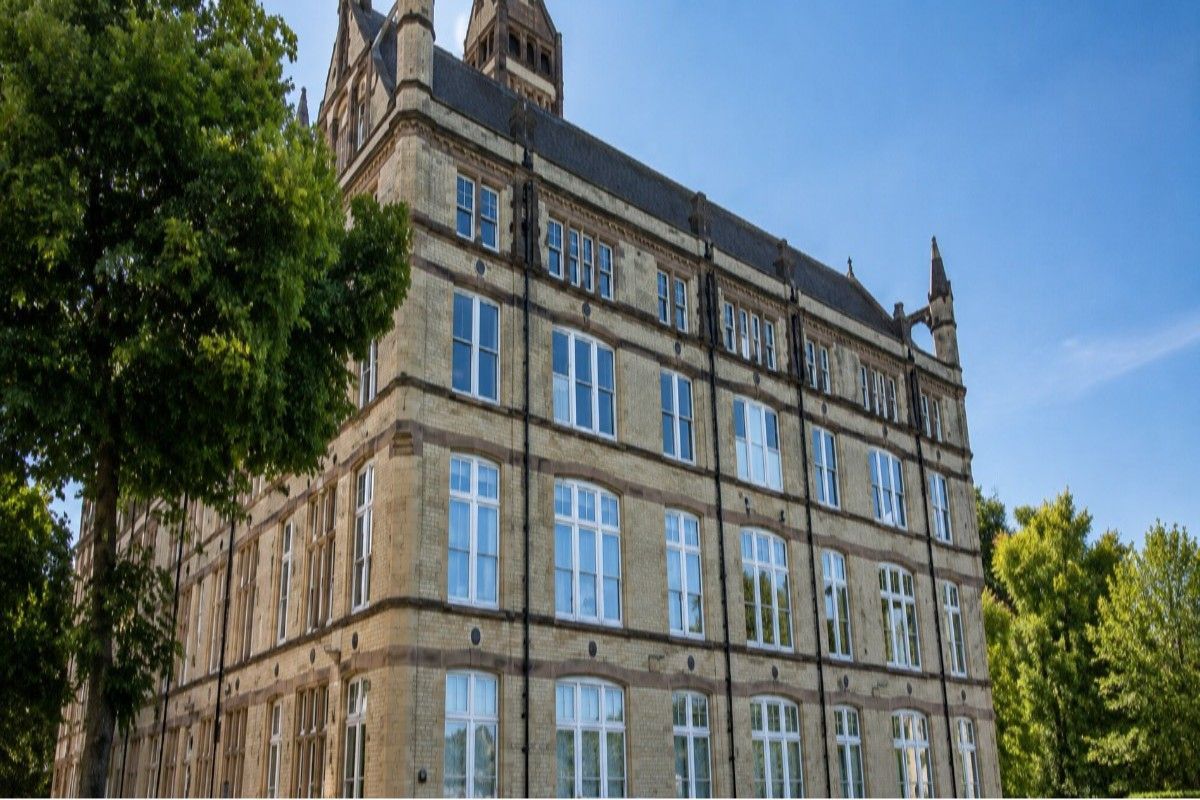
 Uk | Est. 1824
Uk | General Medical Council (GMC), United Kingdom | English medium
Expert will call you within 2 hours
The Medical School of the University of Manchester was founded in 1824, by Thomas Turner. This is when the Pine Street School of Medicine was opened. Later, the school joined Owens College, which grew into the Victoria University of Manchester. Currently, this institution is the third oldest medical school in England (behind only Oxford and the London teaching hospitals). Moreover, the Medical School's long history co-exists with a uniquely modern approach to medical training.
A crucial moment in the development of the programme came in 1994, when Manchester replaced the traditional lecture-oriented curriculum with a problem-based and case-based learning model. It still continues to be key to the programme. Medical students engage in solving clinical cases in small groups, forming their knowledge with the help of tutors. At the same time, the study of anatomy within the curriculum still involves the classical dissection method, which allows to provide students both with practical experience and self-learning opportunities.
MBChB is a five-year course of study and is one of the largest medical programmes of the United Kingdom. Over 2,200 students study in this course of study each year. The first two years of this programme are mostly devoted to studying the foundation of sciences and working with cases, while clinical education starts in the third year. In this way, the programme includes a well-structured medical science together with growing contact with patients.
The training in clinical skills takes place at several NHS hospitals instead of a single centre. The main centres of teaching are Manchester Royal Infirmary, Wythenshawe Hospital, Salford Royal Hospital, and Royal Preston Hospital. This allows for exposure to various patient populations and healthcare settings throughout North-West England. Nevertheless, the distribution of learning facilities implies the need for travel between various centres of study during clinical years.
The major drawback for international students is the high financial commitment. For students starting from 2026-2027, the international tuition fee is approximately £39,900 per year for the first two years and increases up to £60,900 per year during the clinical years. Therefore, the total amount spent on tuition alone over five years will make up approximately £262,500. Moreover, international students cannot make use of the UK tuition-loan scheme.
This disadvantage is partially offset by the fact that the degree opens direct access to the professional life in the UK. Manchester integrates the Medical Licensing Assessment requirements into the final year assessment system. Thus, graduates of the programme can obtain registration with the General Medical Council and start their Foundation Year training in the UK without taking any additional exam in medical licensing. This is a great opportunity for students who want to develop their careers in Britain.
The admission process is very competitive. The standard academic entry requirement is AAA at A-levels, including Chemistry and either Biology, Physics or Mathematics. The average required score for applicants following the International Baccalaureate is about 37 points. Moreover, every candidate has to take UCAT test and pass a five-station Multiple Mini Interview for short-listed candidates.
In the case of Indian applicants, particular attention needs to be paid to the qualification requirements. The percentage obtained in CBSE or ISC Class 12 exams is not regarded as an equivalent of standard UK qualifications, which are usually required for Medicine courses. Typically, successful candidates enroll at Manchester via A-levels or IB Diploma courses, but all the international qualifications are assessed individually. It is necessary to clarify your eligibility directly with Manchester admissions team.
UCAT is another difficult step on the way to getting into this programme due to its limited capacity and popularity. Candidates selected for further evaluation participate in multiple interviews aimed at testing communication, reasoning, ethical judgment, and suitability for studying medicine. In this way, academic achievements alone are not sufficient for gaining admission. The process of selection for international applicants is identical to the one of domestic students.
Manchester offers a cheaper student life environment compared to London. According to the university, the costs of living for students vary approximately between £8,500–£16,000 per year depending on accommodation and lifestyle. Moreover, there is a tram system called Metrolink in the city, which provides easy connections between university campus and teaching hospitals.
In the case of Indian applicants, the way back home requires special attention. The National Medical Commission's requirement of passing the foreign medical graduate screening is linked to obtaining the actual UK medical license through GMC registration instead of just having a UK medical degree. Applicants planning to return to India should understand the appropriate NMC requirements before applying to the programme.
To conclude, the University of Manchester is a good choice for those, who seek internationally recognized UK medical education with the unique problem-based learning approach and direct access to the British medical training system. Its major drawbacks are the very high international tuition fees, competitive admission process and qualification requirements for Indian applicants. The programme is recommended to students who can afford it and are really interested in studying medicine in the UK.
No hidden charges, no donation. The full picture of costs at MBBS in Manchester Medical School.
Tuition Fee
£39,900 (Year 1-2) - £60,900 (Year 3-5) INR ~ 2.3cr - 2.5cr
Tuition Fee (Years 1-2) Tuition Fee (Years 3-5) GBP 39,900 per year GBP 60,900 p
Hostel Fee
Vary according to accommodation type and residence.
£6,500–£10,000 INR ~8,30,000–12,77,000
Food & Meals
£2,500–£4,000 INR ~3,19,000–5,11,000
per Year
Insurance
£1,000–£2,000 INR ~1,28,000 – 2,55,000
per Year
Donation
No Donation fee
No hidden fee
Total Estimated Cost
Approx. GBP 300,000-315,000 for the complete 5-year programme
5 Year
25–35%
Average FMGE first-attempt pass rates for students from many overseas medical universities. Students from structured programs consistently score higher.
Students returning to India need to clear the FMGE/NExT exam. MBBS in Manchester Medical School integrates exam-oriented coaching into the regular curriculum so students are prepared from day one.
A structured program that takes you from foundational sciences to clinical mastery.
• Introduction to anatomy dissection, physiology, biochemistry, and early consultation skills practice with simulated patients
Themed cases covering molecules and membranes, cells and tissues, and the human life cycle including reproduction, development and ageing, taught through Team-Based Learning
• Continued Team-Based Learning alongside lab-based physiology and pharmacology sessions and further clinical skills practice
• Cardio-respiratory, mind and movement, and nutrition and metabolism themed cases covering the nervous, musculoskeletal, cardiovascular and respiratory systems
• Core placements in general medicine, general surgery, and community-based primary care
• Move to hospital-based teaching across Manchester's clinical campuses, with themed-case discussion workshops replacing classroom-based Team-Based Learning
• Online themed-case material paired with face-to-face clinical workshops and simulation-based sessions
• Placements across specialties including obstetrics and gynaecology, paediatrics, psychiatry, and musculoskeletal medicine
• Assessments integrated with the GMC's Medical Licensing Assessment (MLA), completed without any additional external exam
• Assistantship placements shadowing junior doctors to build readiness for the UK Foundation Programme
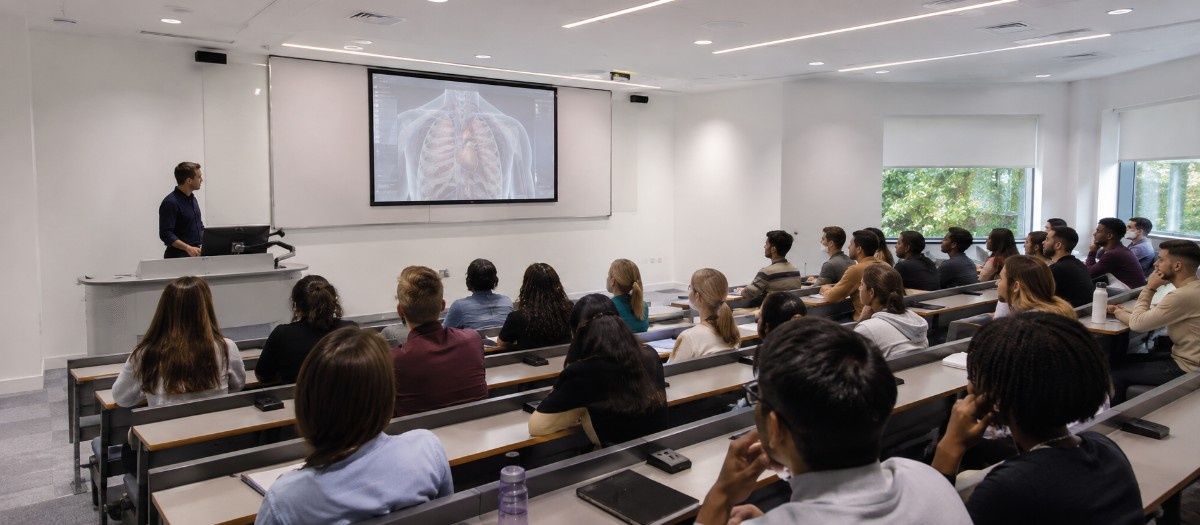
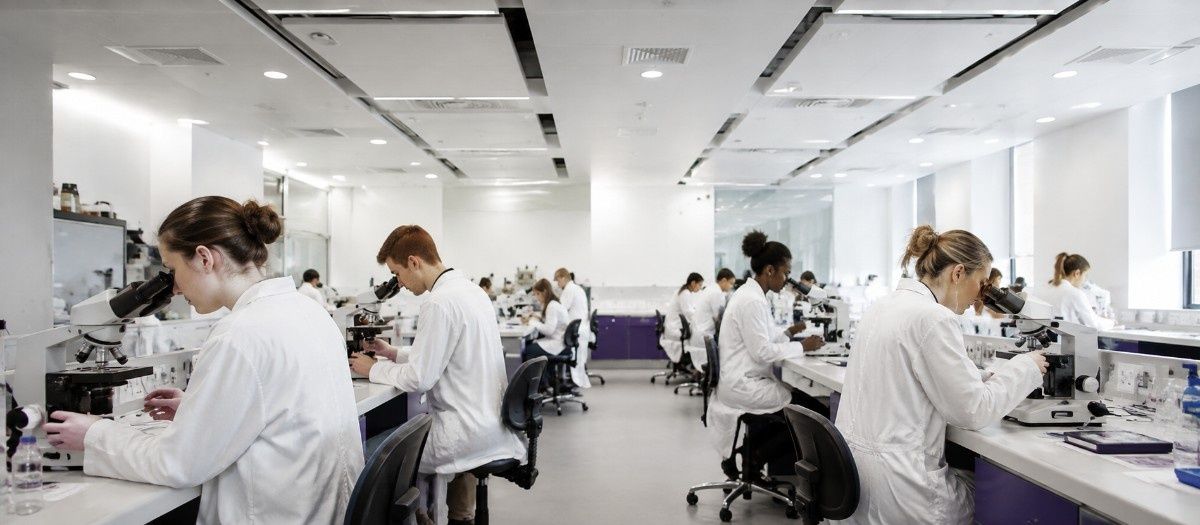
Furnished hostel rooms with Wi-Fi, laundry, 24/7 security, and Indian mess on or near campus.
Indian restaurants and mess facilities serving vegetarian and non-vegetarian home-style food daily.
Strong Indian community with cultural events, festival celebrations, and peer support groups.
Students get hands-on clinical training in government and private hospitals affiliated with the university.
Practical information for students planning to study at MBBS in Manchester Medical School.
Prepare for all seasons. Thermal wear for winters, light clothing for summers. University provides heating in hostels.
Student visa processed with university invitation letter. Direct and connecting flights from major Indian cities.
Health insurance included in fees. Medical facility on campus plus city hospitals easily accessible.
Local SIM cards available. WhatsApp and video calls keep you connected with family back home.
Average monthly expenses of $150–$250 covering food, transport, and personal needs.
University library, online databases, and study groups. Seniors mentor juniors through academic challenges.
Our team guides you through every step — from application to arriving on campus.
Compare universities based on fees, city, UCAT requirements, and clinical exposure, starting 12–18 months before your intended entry, not the cycle you’re applying in.
Registration opens in May; the testing window runs July–September. Most successful applicants begin focused preparation 3–4 months ahead, alongside board exam preparation.
Book and complete IELTS, PTE, or TOEFL well ahead of the UCAS deadline, allowing time for a retake if needed.
Submit your application, including personal statement and up to 4 medicine choices, before the 15 October deadline.
Prepare for and attend interviews (MMI or Panel format) typically scheduled November through February.
Offers (conditional or unconditional) typically arrive through winter and spring; conditional offers require meeting stated academic and English-score conditions.
Once Class 12 results and any other conditions are confirmed, your university issues the Confirmation of Acceptance for Studies (CAS), which is required for your visa application.
Apply using your CAS reference number; arrange maintenance funds according to the 28-day rule well in advance rather than at the last minute.
Book flights, confirm accommodation, complete any on-arrival formalities during orientation week, open a local bank account, and begin building connections with your university’s Indian/South Asian student community.
Admission Helpline — Contact our counsellors for step-by-step assistance.
“The faculty here is incredibly supportive. The clinical training during hospital rotations has given me real confidence in patient care.”
“Affordable fees without compromising on quality. The campus facilities and hostel life made my transition abroad very smooth.”
“English medium instruction and WHO-recognized curriculum were the deciding factors for me. No regrets so far — excellent experience overall.”
“The university helped with everything from visa to accommodation. Hospital exposure from year three has been invaluable for my FMGE prep.”
“Just cleared my licensing exam on the first attempt. The structured coaching and mock exams during final year were a game-changer.”
“Safe campus, good food options, and a strong Indian student community. The teaching methodology is very practical and hands-on.”
A: It is the UK's largest medical school by undergraduate numbers and was among the first to move fully to case-based, problem-based learning, back in 1994.
A: Yes, entirely in English. International applicants must meet an IELTS Academic score of 7.0 or an accepted equivalent.
A: Yes. All applicants sit the UCAT, and shortlisted candidates attend a five-station Multiple Mini Interview.
A: Not on CBSE or ISC marks alone; Manchester assesses international qualifications individually, so most Indian applicants need A-levels, an IB Diploma, or an equivalent recognised route.
A: Yes, for future NMC registration in India, although Manchester's own admissions process does not ask for a NEET score.
A: Only if you don't first obtain a UK medical licence; graduates who complete GMC registration are currently exempt from FMGE.
A: Tuition alone runs to about GBP 262,500 over five years; total costs including accommodation and living expenses come to roughly GBP 300,000-315,000.
A: No. Manchester integrates the GMC's Medical Licensing Assessment directly into the MBChB's own final assessments.
A: Placements run across four NHS teaching hospitals in Greater Manchester and Preston, with early patient contact from Year 1.
A: University-managed halls are available, though places should be applied for early given high demand.
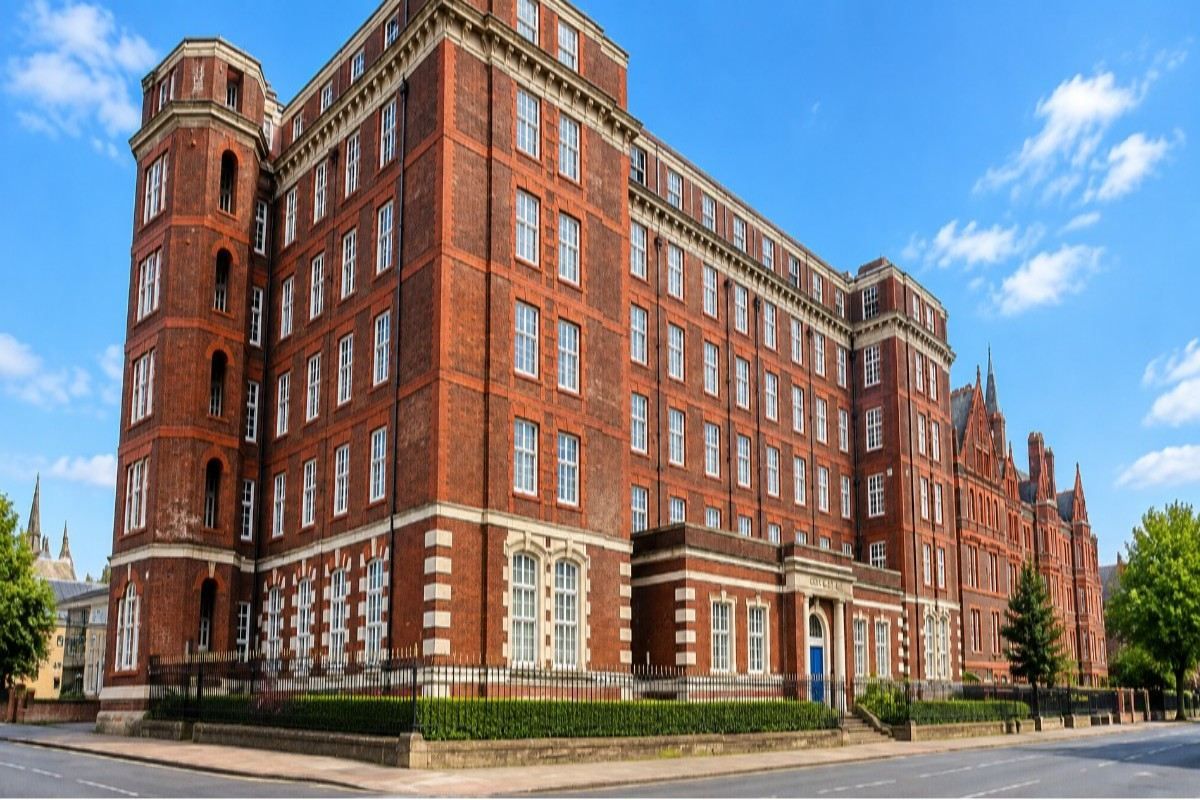
Our expert counsellors will guide you through the complete admission process — from documents to airport pickup.