
Q1. When was MMC-CAST's College of Medicine established?
+Metropolitan Hospital itself was founded in April 1968; its nursing school opened in 1976 and was renamed MMC-CAST in 2009, broadening into Medicine and other programmes.
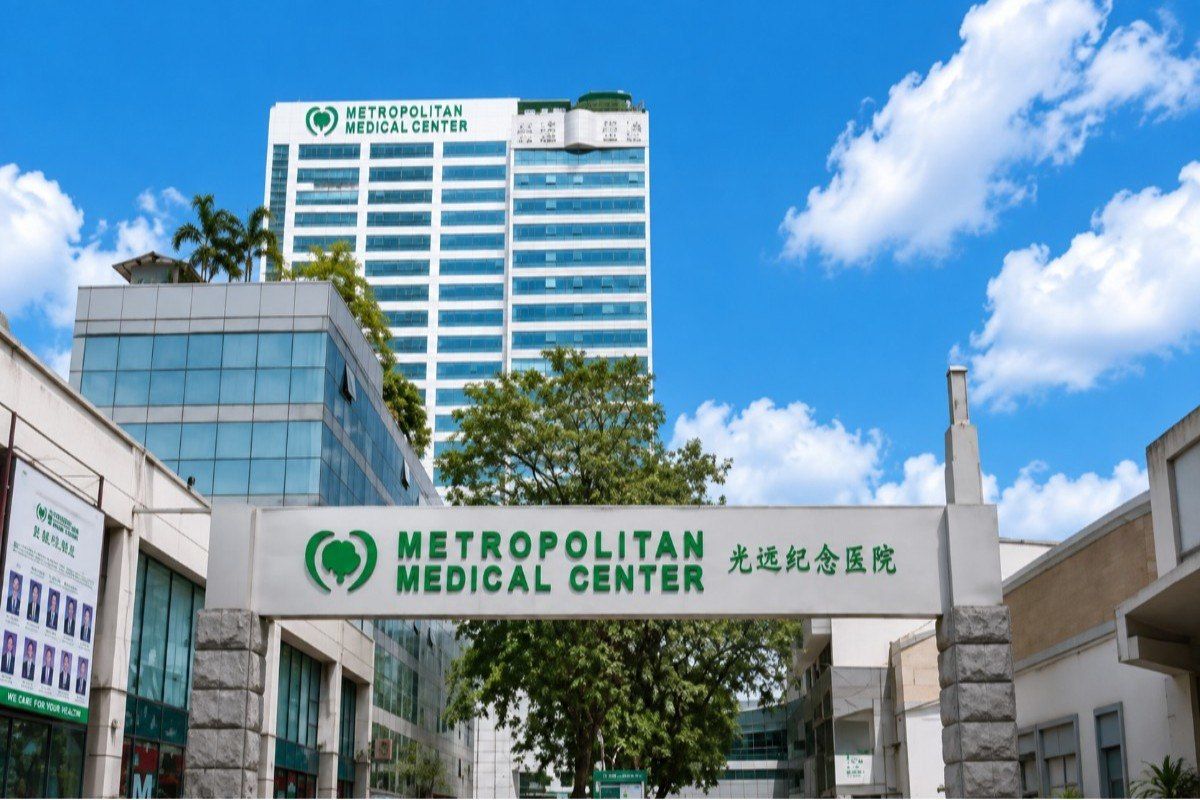
 Philippines | Est. 1968
Philippines | Philippines' Commission on Higher Education (CHED) | 100% English medium
Expert will call you within 2 hours
People mostly just call it MMC-CAST for short. Its origin story genuinely begins with the hospital, not the school. Back in 1962, six visionaries, three prominent doctors, Dr. Pacifico Yap, Dr. Victor So Yee Piu, and Dr. Go Kiat Su, together with three businessmen from the Christian Gospel Church, Mr. James Cu, Mr. Amado Lim, and Mr. Lim Kong Gee, envisioned building a tertiary-level hospital in the heart of downtown Manila. So, the college that exists today traces back to a specific, named group of six founders with a shared civic and religious vision, not an anonymous institutional decision.
Here is a fact most guides skip entirely, and it is genuinely distinctive. In April 1968, these two groups, combined as the United Doctors Service Corporation, brought Metropolitan Hospital to life, with a stated mission to promote Christianity by providing genuinely caring medical services. The hospital was even given a Chinese name that translates as "founded in honour and reverence to Christ." It opened with a modest three-storey, 156-bed building on Masangkay Street, equipped with operating rooms, delivery rooms, and a nursery. So, this hospital, and the medical college that eventually grew from it, carries a genuinely specific religious founding mission written into its very name.
The 1970s brought rapid growth for the hospital, including the acquisition of six operating X-ray machines, a haemodialysis machine, and an intensive cardiac care unit, reflecting a real, documented period of expansion well before the medical college itself existed. To meet the growing demand for hospital nurses, Metropolitan Hospital founded its own school, the Metropolitan Hospital College of Nursing, in 1976. In 2009, as the need for skilled Filipino professionals both at home and abroad kept growing, this school was renamed Metropolitan Medical Center College of Arts, Science & Technology, broadening its scope well beyond nursing alone to include Medicine, Pharmacy, Medical Technology, and several other programmes.
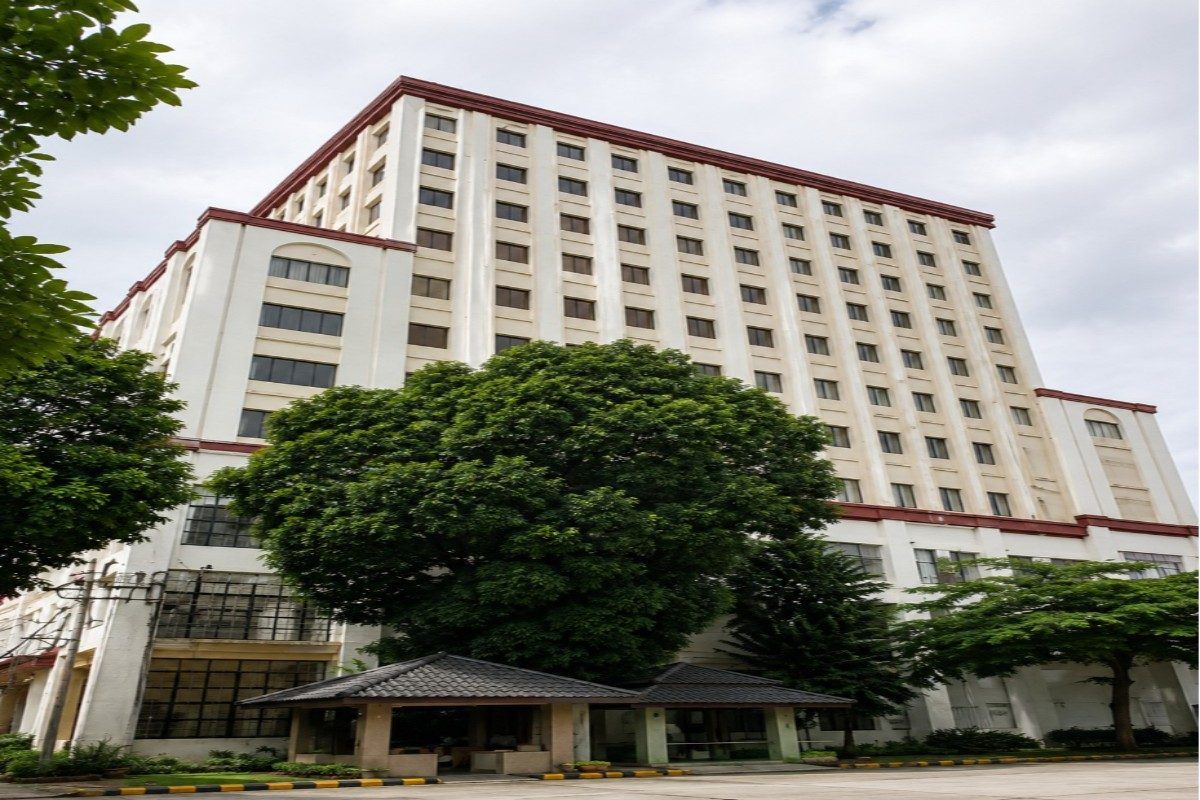
Today, Metropolitan Medical Center itself has grown into a 400-bed capacity, Class A medical facility, and the college operating alongside it describes itself as a learning community committed to producing excellent and competitive professionals, with strong clinical affiliations underpinning its training model. MMC-CAST sits at 1357 G. Masangkay, corner Mayhaligue, in Santa Cruz, Manila, occupying the Metropolitan Medical Arts Building directly connected to its parent hospital. So, unlike some medical colleges where the teaching hospital sits at a separate location, MMC-CAST's students train within genuine walking distance of, or directly inside, the same complex housing their own affiliated hospital.
Clinical training for MD students runs specifically through Metropolitan Medical Center and other teaching hospitals, with a formally required 52-week junior internship as one of the explicit conditions for graduation. So, this college names its own hospital directly and specifically as a core clinical training site, a genuinely clear, confirmed detail not found for every institution in comparable guides.
The Doctor of Medicine programme at MMC-CAST runs four years, with graduation requiring students to have passed the required number of units as prescribed by the college under CHED authority, satisfactorily completed the 52-week junior internship, filed a graduation application with the Registrar's Office, passed the college's own Revalida examinations, a comprehensive internal assessment distinct from the national licensure exam, and secured clearance from the accounting department.
Here is genuinely a detailed, specific scholarship structure worth setting out in full, since it is considerably more precisely documented than at many comparable Philippine medical colleges. Cum Laude graduates automatically receive a 50 percent reduction on tuition, laboratory, and miscellaneous fees. A "Full Go Tong" scholarship, limited to just three slots each year, covers everything except miscellaneous fees for applicants with a GWA of 1.75 or higher and an NMAT score of 90 or higher. A "Partial Go Tong" scholarship covers 65 percent of tuition and laboratory fees, based on family income. Separately, 5 percent of all enrollees receive full tuition and laboratory scholarships tied to a 1:1 ratio of scholarship years against community service years owed back afterward.
NEET remains a genuine requirement for Indian applicants here, and Indian graduates would still need to clear the FMGE or NExT exam to practise medicine back in India, alongside the Philippines' own Physician Licensure Examination if choosing to practise there first.
Manila itself, as the Philippines' densely populated capital, gives MMC-CAST's students genuine access to a huge variety of clinical cases and patient backgrounds during their training, since Metropolitan Medical Center serves a genuinely broad cross-section of the city's own population. This urban setting is quite different from studying medicine at a college located in a smaller provincial city, where patient volumes and case variety tend to run considerably lower. Students at MMC-CAST also benefit from the college's own close, direct integration with its parent hospital, since the Metropolitan Medical Arts Building sits within the same complex, removing the need for a lengthy daily commute between classroom and clinical training site that some other medical colleges require.
Given how genuinely specific and detailed MMC-CAST's own scholarship structure is, prospective applicants with strong academic records, particularly those with a Cum Laude prior degree or a high NMAT score, may find this college offers real, meaningful cost savings compared to paying the full, unconfirmed base rate. Even so, requesting the college's own current, complete, written fee schedule directly remains an essential first step before making any financial commitment, since the base figure that these genuinely generous-sounding percentage discounts apply to has not been consistently published in available sources.
Despite this genuinely detailed scholarship framework, no specific confirmed base tuition figure for the MD programme itself was found. What follows is the confirmed scholarship structure, alongside a clear note on the unconfirmed base rate.
Cost Item | Amount | Notes |
Tuition Fee (full rate, MMC-CAST-specific) | Not consistently published | Confirm current rates directly with the college's Cashier's Office |
Cum Laude Scholarship | 50% off tuition, laboratory, and miscellaneous fees | Awarded automatically to applicants who graduated Cum Laude from their prior degree |
Full Go Tong Scholarship | Miscellaneous fees only (full tuition and laboratory waiver) | Requires a GWA of 1.75+ and an NMAT score of 90+; only 3 slots available |
Partial Go Tong Scholarship | 65% of tuition and laboratory fees | Based on parents'/guardians' income tax return; miscellaneous paid in full |
Community Partner Scholarship | Full tuition and laboratory fees for 5% of enrollees | Requires a 1:1 ratio of scholarship years to community service years owed back |
Total Cost | Genuinely dependent on scholarship eligibility | Confirm the base tuition rate directly with MMC-CAST before budgeting |
Note: request the college's current, full fee schedule directly from the Cashier's Office before relying on any third-party estimate.
Most lists mention MMC-CAST only briefly among smaller Philippine medical colleges. However, they do not explain its genuinely precise, four-tier scholarship structure, or its own named teaching hospital. The reason is simple. It is about real, actionable financial detail most guides simply do not provide.
MMC-CAST is not like most other Philippine medical colleges when it comes to scholarships. In fact, it publishes a genuinely specific, four-tier structure, from automatic Cum Laude discounts through to a strictly limited three-slot full waiver, each with exact percentage figures and precise maintenance requirements. Furthermore, applicants here get a real, actionable financial picture, not a vague promise of "scholarships available." As a result, strong academic performers can plan their own likely costs with genuine precision.
The named teaching hospital also matters more than most guides let on. For example, most guides for smaller Philippine medical colleges leave clinical training sites unspecified. MMC-CAST names its own parent hospital, Metropolitan Medical Center, directly as the site of its required 52-week junior internship. Moreover, this is a genuinely clearer, more specific clinical training commitment than several comparable institutions offer.
One thing most other blogs miss is that even this genuinely detailed scholarship structure sits alongside a real, unresolved gap. In addition to knowing exactly how much of a discount they might receive, applicants still do not know the starting number that discount applies to. Since no confirmed base tuition figure exists in available sources, this remains a genuine, specific gap worth closing directly with the college.
No hidden charges, no donation. The full picture of costs at MBBS in Metropolitan Medical Center College.
Tuition Fee
$4,200 per year
$4,200 per year
Hostel Fee
$1,200 – $1,500 per year
$1,200 – $1,500 per year
Food & Meals
$1,200 – $1,400
per year
Insurance
$250
per year
Donation
no donation
no hidden fee
Total Estimated Cost
$36,700 – $39,400
4 Year
25–35%
Average FMGE first-attempt pass rates for students from many overseas medical universities. Students from structured programs consistently score higher.
Students returning to India need to clear the FMGE/NExT exam. MBBS in Metropolitan Medical Center College integrates exam-oriented coaching into the regular curriculum so students are prepared from day one.
A structured program that takes you from foundational sciences to clinical mastery.
In addition, strong prior academic performance here directly determines Cum Laude and Go Tong scholarship eligibility
First, a four-year bachelor's degree provides the scientific foundation before MD study begins
Furthermore, maintaining specific grade averages throughout is required to retain scholarship eligibility
Next, Anatomy, Physiology, and Biochemistry form the scientific foundation for everything that follows
Moreover, this stage runs through Metropolitan Medical Center's own facilities and other affiliated teaching hospitals
Then, Medicine, Surgery, and allied clinical subjects are covered, building toward the required junior internship
Also, successful completion is an explicit, published condition for graduation
Finally, a formally required 52-week junior internship takes place at Metropolitan Medical Center and other teaching hospitals

Furnished hostel rooms with Wi-Fi, laundry, 24/7 security, and Indian mess on or near campus.
Indian restaurants and mess facilities serving vegetarian and non-vegetarian home-style food daily.
Strong Indian community with cultural events, festival celebrations, and peer support groups.
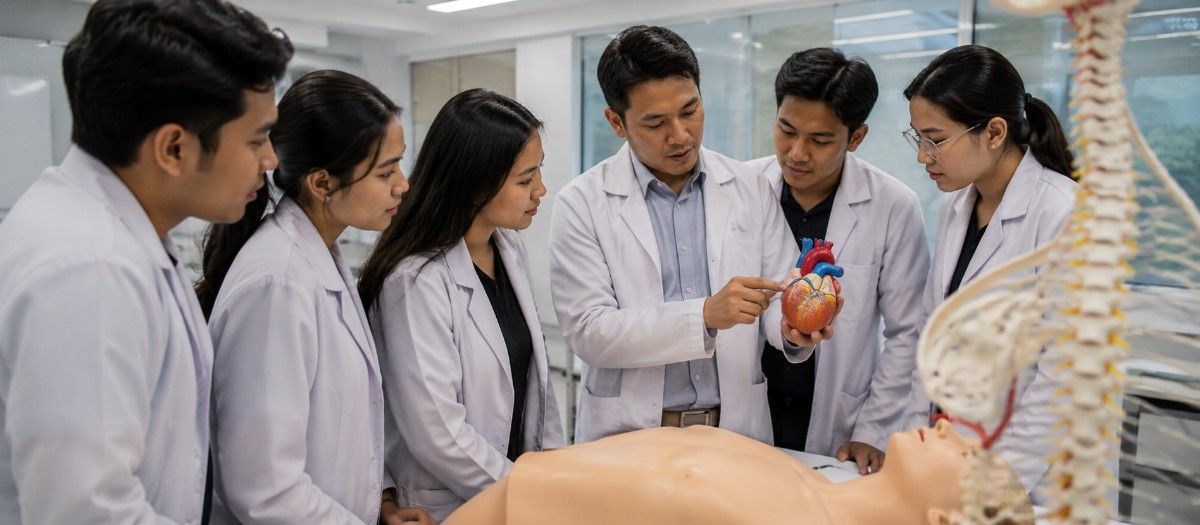
Students get hands-on clinical training in government and private hospitals affiliated with the university.
Practical information for students planning to study at MBBS in Metropolitan Medical Center College.
Prepare for all seasons. Thermal wear for winters, light clothing for summers. University provides heating in hostels.
Student visa processed with university invitation letter. Direct and connecting flights from major Indian cities.
Health insurance included in fees. Medical facility on campus plus city hospitals easily accessible.
Local SIM cards available. WhatsApp and video calls keep you connected with family back home.
Average monthly expenses of $150–$250 covering food, transport, and personal needs.
University library, online databases, and study groups. Seniors mentor juniors through academic challenges.
Our team guides you through every step — from application to arriving on campus.
The first step is to have a free phone counselling session. This is not a sales promotion or sales pitch. Here, we analyse all the universities mentioned side by side. We go through FMGE rates, total fees, city life, and whether the USMLE or NExT path better suits your goals. Most students walk out of this call with a clear first choice and a backup.
Once you pick a university, we will hand you a Philippines-specific document checklist. It is not a generic list. Every item on it is there for a reason, either for the university application, the 9(f) visa conversion, or the ACR I-Card registration. We check everything before a single paper goes anywhere.
Your application goes directly to the university through our partner channel. Most students get an acceptance letter within 10 to 21 days. However, December intake applications move faster than June ones, so timing matters. We follow up on all applications and will be in touch if there is any delay.
Once you receive your offer letter, we will have an in-depth discussion with you on the fees charged. The first instalment of fees will be deposited without any ambiguity. What you pay, when you pay, and what it covers, all of it is clear before any money moves.
Indian students do not need a pre-departure visa for the Philippines. You enter visa-free for 30 days. However, the 9(f) Student Visa conversion must start within the first week of arrival; it is time-sensitive. We also advise on the best flight route, whether Cebu or Manila, depending on your university.
About a week before you fly, we do a full pre-departure briefing. We cover accommodation options, campus location, Indian food sources near your university, how to transfer money from India, which SIM card to buy, and what the first week on campus actually looks like—students who attend this briefing land in the Philippines significantly less stressed than those who skip it.
On arrival day, our local team in the Philippines meets you at the airport, whether in Cebu or Manila. You are not landing in a new country alone. Someone who knows the ground is there from the first minute.
Within the first week, the 9(f) visa conversion process starts. Our team submits your documents to the Bureau of Immigration and closely tracks your application. The ACR I-Card, your official alien registration card, is processed at the same time. This step is strictly managed because delays here cause real problems later.
By the end of Week 2, your university enrollment is complete, your hostel room is confirmed, and your BS pre-medical orientation is done. You know your timetable, your faculty, and where everything is. Furthermore, our team has already flagged your NMAT preparation schedule, so there will be no surprises at the bridge stage.
After enrollment, our on-the-ground team in the Philippines stays in contact throughout all six years. If there is a university issue, a hostel problem, a visa renewal, or a health concern, there is a local contact to call. Moreover, from Year 3 onward, our FMGE and USMLE coaching track begins, because academic support does not stop at the airport.
Admission Helpline — Contact our counsellors for step-by-step assistance.
“The faculty here is incredibly supportive. The clinical training during hospital rotations has given me real confidence in patient care.”
“Affordable fees without compromising on quality. The campus facilities and hostel life made my transition abroad very smooth.”
“English medium instruction and WHO-recognized curriculum were the deciding factors for me. No regrets so far — excellent experience overall.”
“The university helped with everything from visa to accommodation. Hospital exposure from year three has been invaluable for my FMGE prep.”
“Just cleared my licensing exam on the first attempt. The structured coaching and mock exams during final year were a game-changer.”
“Safe campus, good food options, and a strong Indian student community. The teaching methodology is very practical and hands-on.”
Metropolitan Hospital itself was founded in April 1968; its nursing school opened in 1976 and was renamed MMC-CAST in 2009, broadening into Medicine and other programmes.
No specific confirmed base tuition figure was found; the college does publish a genuinely detailed scholarship structure, so request the current full fee schedule directly from the Cashier's Office.
Yes, English is the standard medium of instruction across Philippine medical education, including at MMC-CAST.
Yes, a valid, qualifying NEET score is required for Indian applicants under India's own national rules.
Metropolitan Medical Center, the college's own 400-bed parent hospital, plus other affiliated teaching hospitals, specifically named for the required 52-week junior internship.
A detailed four-tier structure: automatic 50% off for Cum Laude graduates, a 3-slot full waiver for top performers, a 65% partial waiver based on family income, and full scholarships tied to community service.
It runs four years, plus a formally required 52-week junior internship at Metropolitan Medical Center and other teaching hospitals.
A comprehensive internal assessment administered by the college itself, which students must pass before filing their graduation application.
At 1357 G. Masangkay, corner Mayhaligue, Santa Cruz, Manila, within the Metropolitan Medical Arts Building alongside its parent hospital.
It traces to six visionaries, three doctors and three businessmen from the Christian Gospel Church, who founded Metropolitan Hospital in 1968 with an explicit religious mission.
Our expert counsellors will guide you through the complete admission process — from documents to airport pickup.