
Q1. Is Mugda Medical College a government or private institution?
+It is a government medical college under Bangladesh's Ministry of Health, the fourth government medical college inside Dhaka city.
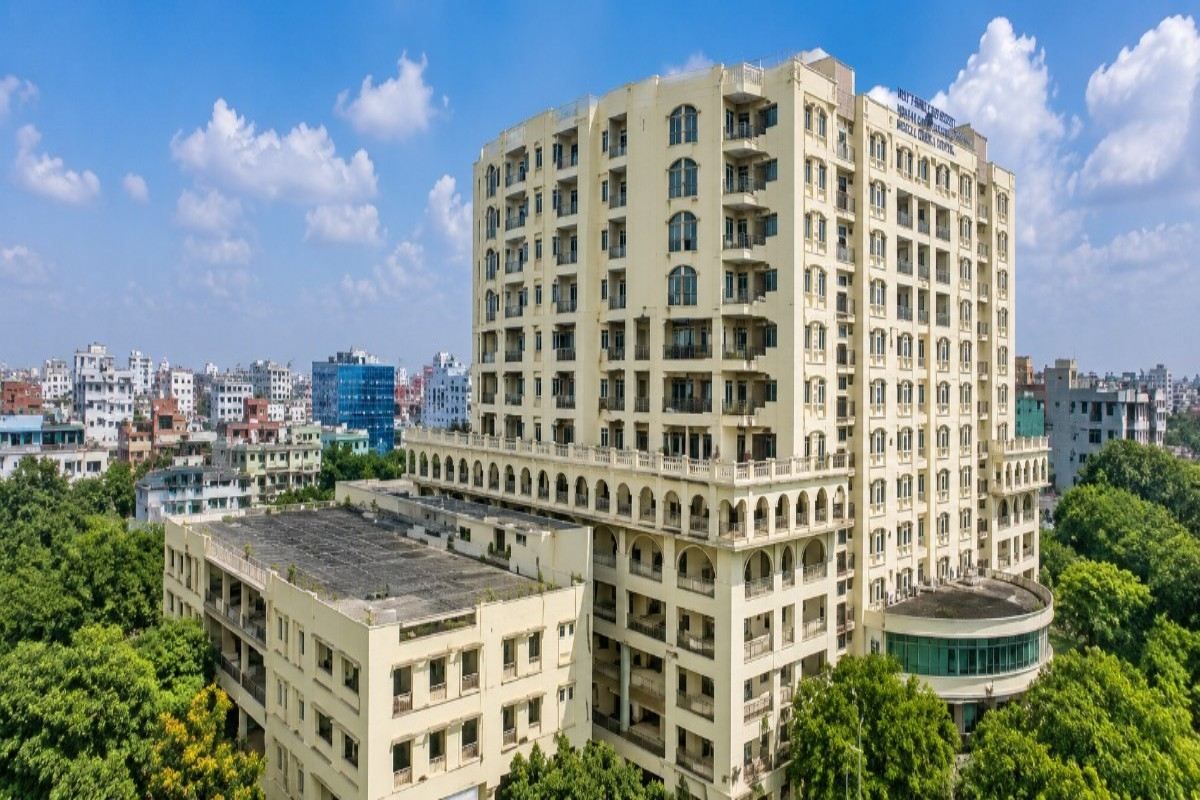
 Bangladesh | Est. 2006
Bangladesh | Medical and Dental Council (BMDC); affiliated with the University of Dhaka; WHO/WDOMS listed; NMC (India) recognized | English medium
Expert will call you within 2 hours
Students are usually aware of the term "Bangladesh MBBS" and assume it to mean Sir Salimullah Medical College and Dhaka Medical College. Mugda hardly ever features in the list, but it is a full government medical college, unlike others that are privately owned.
The foundation stone of Mugda Medical College & Hospital was laid in 2006 in Mugda Thana, eastern Dhaka. It took several years to complete construction and planning of the establishment. Finally, the 500-bed hospital associated with Mugda Medical College & Hospital got inaugurated in July 2013, admitting patients from early 2014. In January 2015, Mugda was declared a full medical college by the Health Minister of Bangladesh. The MBBS classes were started in January 2016, with the 1st batch of 50 students being called "footsteps." Admission is done for 100 students yearly, and currently Mugda ranks as the 4th government medical college within Dhaka city.
Mugda, being a government establishment, puts it into another league when compared to other private medical colleges in which Indian students are advised to take admission. The college is affiliated with the University of Dhaka, and the awarding authority is also the University of Dhaka. The institution is approved by the Bangladesh Medical and Dental Council (BMDC). It has been listed in the World Directory of Medical Schools, WHO and is recognized by the NMC for FMGE/NExT eligibility with the usual conditions.
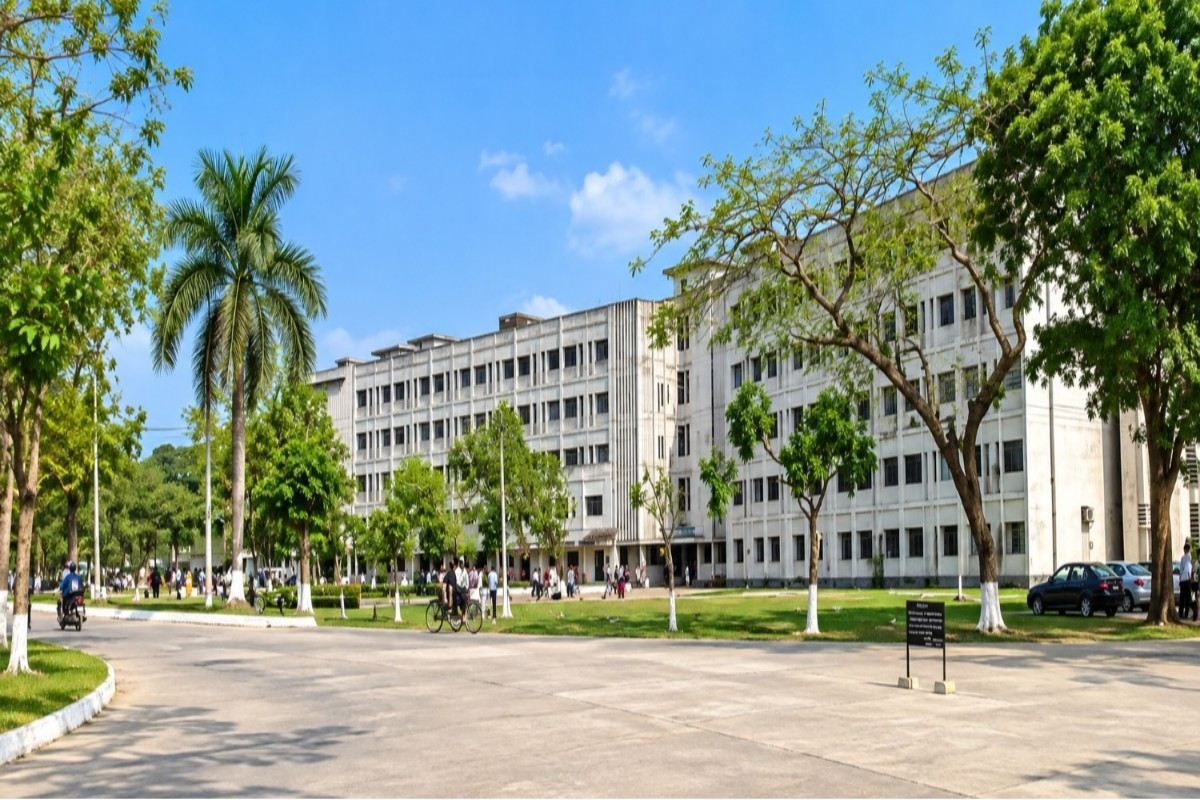
Clinical training takes place in Mugda's own 500-bed teaching hospital, which operates in the dense, highly populated area of eastern Dhaka. This implies a real patient load from the para-clinical years onwards, unlike in the case of a private hospital, where there may be only a handful of cases.
Since Mugda is a government medical college, it doesn't do much marketing and maintains a simple international office website like private medical colleges of Dhaka. The fee structures are not widely advertised, and consultants generally work according to the circulars prepared each year. Thus, the figures need to be verified before making any payment.
Here is the approximate cost breakdown for the 6-year program, based on current consultancy-reported figures:
Cost Item | Per Year (USD / INR approx.) | 6-Year Total (INR approx.) |
Tuition Fee | USD 8,000–9,000, approx. INR 6.7–7.5 lakh | INR 40–45 lakh |
Hostel Fee | Approx. INR 60,000–90,000 | INR 3.6–5.4 lakh |
Food & Meals | INR 70,000–1 lakh | INR 4.2–6 lakh |
Books & Study Items | INR 12,000–18,000 | INR 72,000–1.08 lakh |
Visa & Documentation | One-time + annual renewal, approx. INR 15,000–25,000 | INR 90,000–1.5 lakh |
Donation / Capitation | None | NIL |
Total Estimated | $34,000 to $38,000 USD | INR 28–32 lakh approx. |
Note: Mugda Medical College, being a government institution, has not publicly disclosed a fixed official fee schedule for foreign students. The figures above reflect what current consultants and past-batch students commonly report, so please get the year-specific circular confirmed before paying anything. There is no donation or capitation fee at any stage.
Why Mugda Medical College Deserves a Harder Look Than You've Given It
The reason why Mugda gets excluded from most shortlists has nothing but that it is relatively newer and lesser known compared to Dhaka Medical College. However, this doesn’t imply the inferiority of this college – it has a hospital, built specifically for the purpose of being used by Mugda Medical College, in 2013. This makes the wards, laboratories, and equipment significantly more modern than in some of the other government medical colleges.
Because Mugda is a government medical college and not a private one, the tuition cost of studying in Mugda would be generally lower compared to many private medical colleges in Dhaka, while retaining all three BMDC, WHO, and NMC recognitions. Also, with the presence of the 500 bed hospital, which is situated in the residential area of Dhaka, one would gain clinical experience much faster.
There is only one thing worth mentioning about Mugda: government medical colleges in Bangladesh provide less consistent fee circulars than their private counterparts, and the admission process for international candidates may change every year. Hence, working with an experienced consultant, who would have a real connection with Mugda, would matter more than in case of a popular private college.
At last, due to the fact that Mugda runs without a break since 2016, having several graduating batches, one could check the results of the FMGE/NExT exams of the graduates of this college.
No hidden charges, no donation. The full picture of costs at MBBS in Mugda Medical College and Hospital.
Tuition Fee
Approx. USD 8,000–9,000/year (about INR 6.7–7.5 lakh)
USD 8,000–9,000, approx. INR 6.7–7.5 lakh per year
Hostel Fee
Approx. INR 60,000–90,000/year
Approx. INR 60,000–90,000 per year
Food & Meals
INR 70,000–1 lakh
per year
Insurance
INR 12,000–18,000
per year
Donation
No donation fee
No hidden
Total Estimated Cost
Approx. INR 50–58 lakh
6 years
25–35%
Average FMGE first-attempt pass rates for students from many overseas medical universities. Students from structured programs consistently score higher.
Students returning to India need to clear the FMGE/NExT exam. MBBS in Mugda Medical College and Hospital integrates exam-oriented coaching into the regular curriculum so students are prepared from day one.
A structured program that takes you from foundational sciences to clinical mastery.
In addition, the students get acquainted with the Bangladesh healthcare system.
To begin with, basic knowledge of anatomy, physiology, and biochemistry lays down the foundation.
Furthermore, professional examination takes place at the end of the year as per the Dhaka University curriculum.
Following on, the subjects of advanced physiology and biochemistry, in addition to community medicine and forensic medicine, are taught.
Moreover, the wards of a 500-bed teaching hospital are made familiar.
After that, pathology, microbiology, and pharmacology are imparted with increasing importance of the clinical aspect.
In addition, ophthalmology and ENT are also taught in addition to the core clinical rotations.
In continuation, rotations of medicine, surgery, and gynecology & obstetrics start.
Furthermore, preparation for FMGE and NExT starts from this level.
Following on, Paediatrics, Orthopaedics, Psychiatry, and Community Medicine complete the academic years.
Also, the internships are carried out at the very Mugda Medical College Hospital.
Finally, a full one-year internship in the areas of medicine, surgery, gynecology & obstetrics, and community medicine takes place.
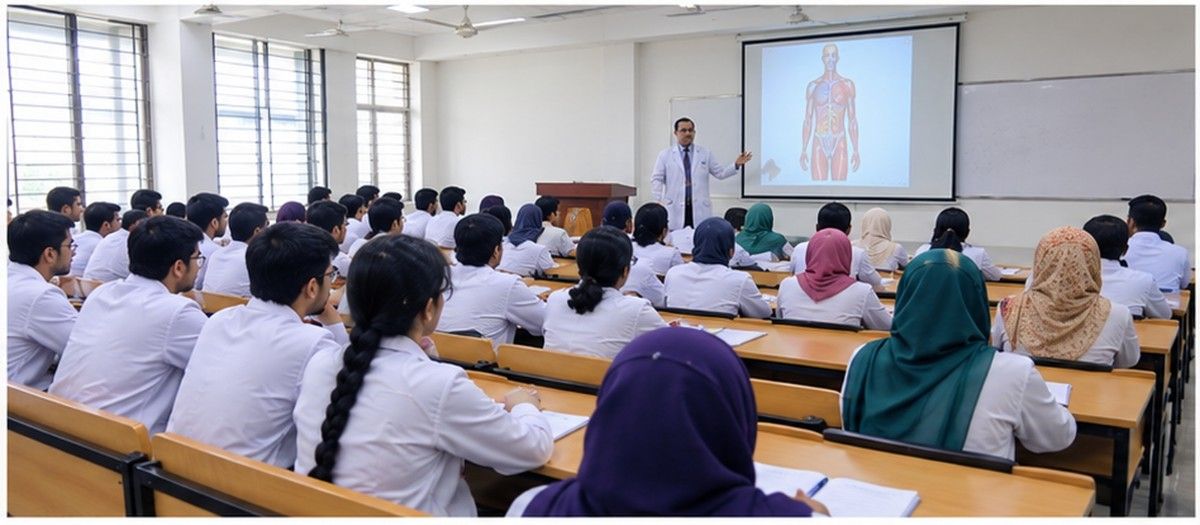
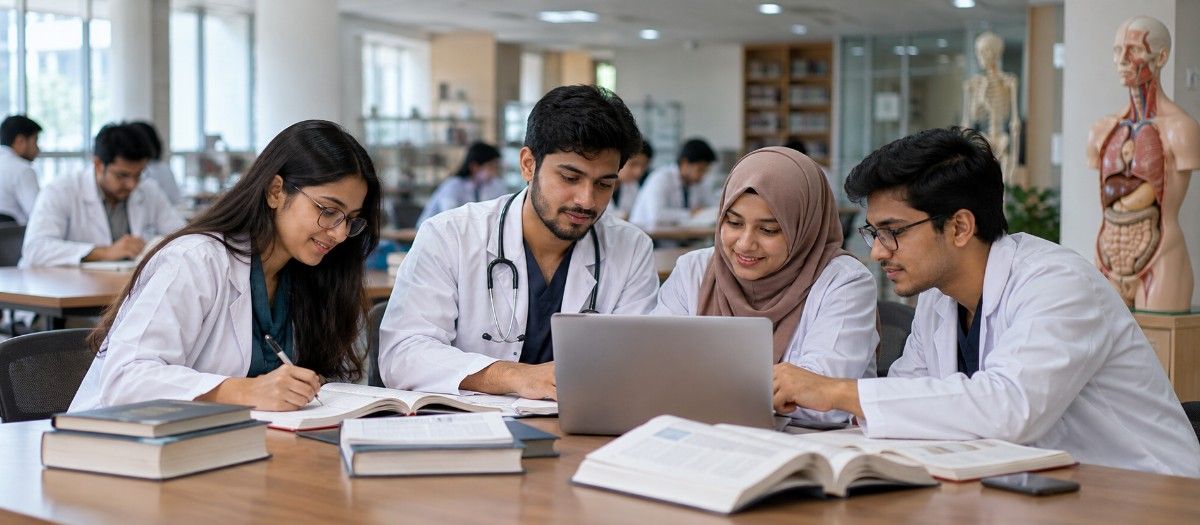
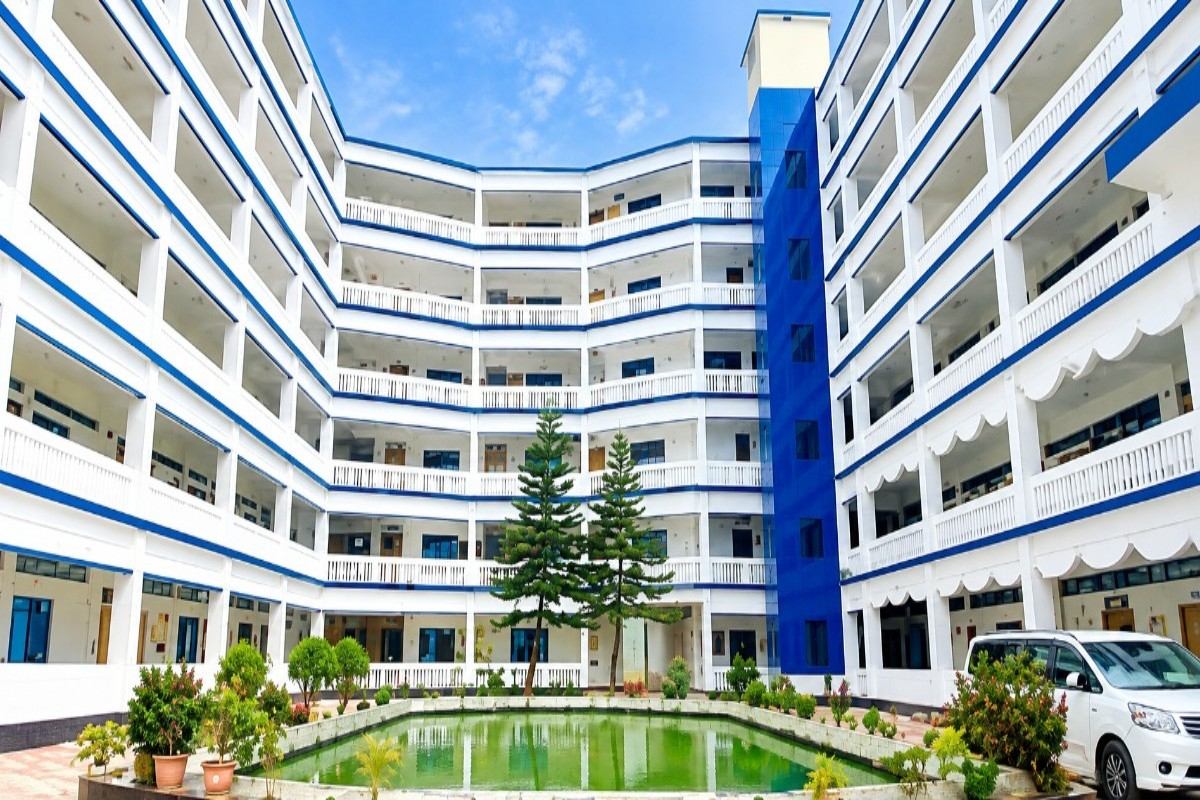
Furnished hostel rooms with Wi-Fi, laundry, 24/7 security, and Indian mess on or near campus.
Indian restaurants and mess facilities serving vegetarian and non-vegetarian home-style food daily.
Strong Indian community with cultural events, festival celebrations, and peer support groups.
Students get hands-on clinical training in government and private hospitals affiliated with the university.
Practical information for students planning to study at MBBS in Mugda Medical College and Hospital.
Prepare for all seasons. Thermal wear for winters, light clothing for summers. University provides heating in hostels.
Student visa processed with university invitation letter. Direct and connecting flights from major Indian cities.
Health insurance included in fees. Medical facility on campus plus city hospitals easily accessible.
Local SIM cards available. WhatsApp and video calls keep you connected with family back home.
Average monthly expenses of $150–$250 covering food, transport, and personal needs.
University library, online databases, and study groups. Seniors mentor juniors through academic challenges.
Our team guides you through every step — from application to arriving on campus.
DGME publishes the foreign-student MBBS/BDS admission circular for the upcoming session, usually around November, separately for SAARC/non-SAARC applicants and government/private colleges.
• Confirm your PCB percentage/GPA and NEET status against the circular's stated minimums. • Gather passport, academic transcripts, NEET scorecard, birth certificate, medical fitness certificate, and other listed documents, with mandatory two-step attestation.
• Shortlist government and/or private colleges based on budget, GPA/NEET strength, and location preference, comparing on recognition status and FMGE track record, not just the lowest fee. • Register on DGME's foreign-student portal, fill in details, and upload documents.
Pay the standard equivalence-certification fee (commonly around USD 100) via bank transfer (TT/SWIFT), not cash.
DGME evaluates your academic equivalence against Bangladeshi grading standards.
• Based on merit, quota category (SAARC/non-SAARC/reserved), and seat availability. • Receive a formal offer/admission letter from the allocated college.
Pay the first-installment tuition and hostel fee, per the college's own schedule.
• Apply at the Bangladesh High Commission/Mission with the admission letter and financial proof; realistic processing time varies by season. • In the final weeks, finalize documents, arrange travel/health insurance, book flights, and confirm hostel allotment in writing.
Fly to Bangladesh and complete airport formalities; many colleges arrange airport pickup for new students on specified reporting dates.
Complete physical document verification and hostel allotment at the college, and register with the Indian High Commission in Dhaka shortly after arrival, an important, non-optional step for consular support.
Admission Helpline — Contact our counsellors for step-by-step assistance.
“The faculty here is incredibly supportive. The clinical training during hospital rotations has given me real confidence in patient care.”
“Affordable fees without compromising on quality. The campus facilities and hostel life made my transition abroad very smooth.”
“English medium instruction and WHO-recognized curriculum were the deciding factors for me. No regrets so far — excellent experience overall.”
“The university helped with everything from visa to accommodation. Hospital exposure from year three has been invaluable for my FMGE prep.”
“Just cleared my licensing exam on the first attempt. The structured coaching and mock exams during final year were a game-changer.”
“Safe campus, good food options, and a strong Indian student community. The teaching methodology is very practical and hands-on.”
It is a government medical college under Bangladesh's Ministry of Health, the fourth government medical college inside Dhaka city.
Yes. Yet, do not forget to check the current status on wdoms.org and nmc.org.in before paying any fee, since listings can be updated.
Around INR 50–58 lakh for the full 6-year program, based on currently reported figures. Since official fees are not widely published, always confirm the year-specific circular with a verified source first.
Yes. It is necessary according to NMC India guidelines. No separate entrance exam is required for Mugda itself.
The foundation stone was laid in 2006, the hospital opened in 2013, and it was declared a full medical college in 2015. MBBS classes began in January 2016.
Not for the MBBS course itself, since it is taught in English. However, picking up basic Bengali helps a lot with day-to-day life and later patient interaction during clinical years.
Yes, provided the NMC Eligibility Certificate is taken before enrollment and the full course plus internship is completed as per NMC's FMGL Regulations.
Yes, the MBBS program follows the Dhaka University curriculum and is taught in English throughout.
Yes, separate hostel accommodation is arranged for international students, though it is generally simpler than what private Dhaka colleges offer.
Admission follows Bangladesh's academic session; students should confirm the exact intake window each year, since government college schedules can shift.
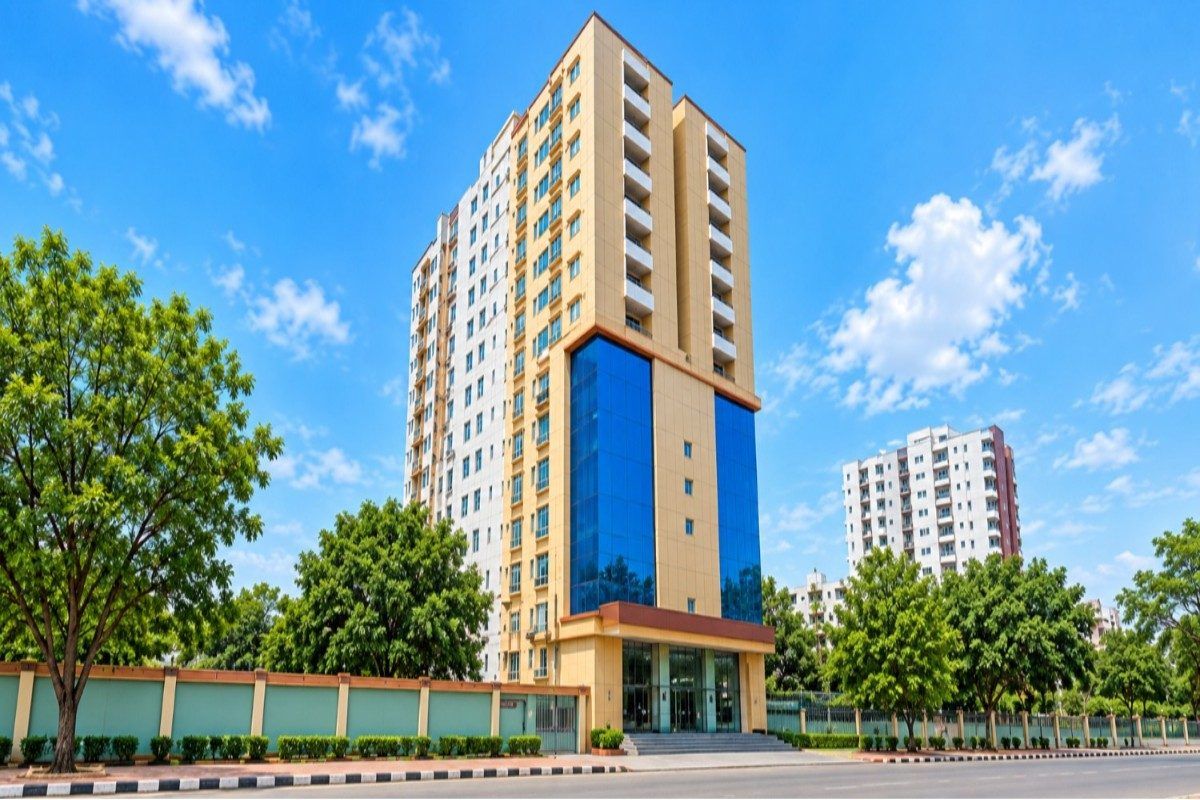
Our expert counsellors will guide you through the complete admission process — from documents to airport pickup.