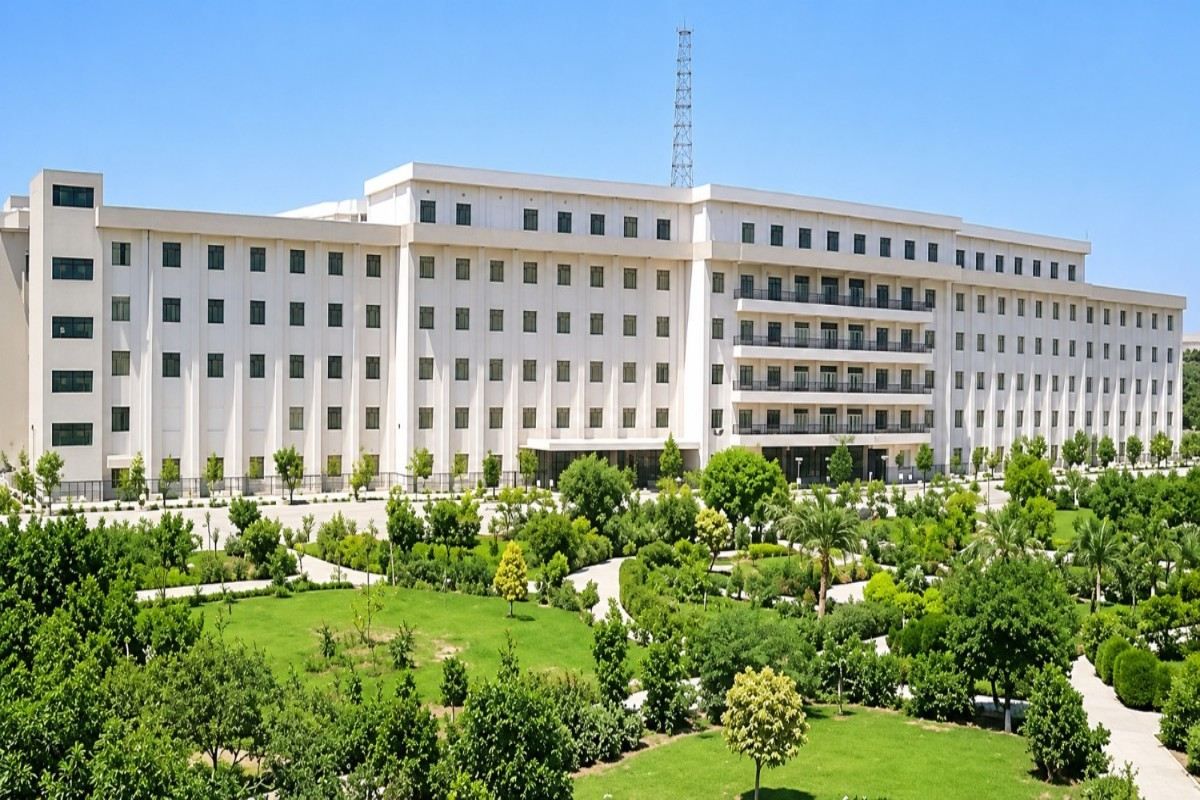
People mostly just call it NINU for short. It was established in 2022, part of the same broader wave of Egyptian national, non-profit universities that also produced Minia National University, Menoufia National University, and several similarly structured institutions across the country that same year. NINU's College of Medicine is confirmed to exist as a specific, private faculty within this wider university, per Wikipedia's own list of Egyptian medical schools.
Here is genuinely the single most distinctive, specific fact about this university worth knowing in full. In 2023, NINU specifically opened a dedicated admissions pathway for Egyptian students who had been studying in Russia, Ukraine, or Sudan, and who needed to return home due to the conflicts affecting those countries. So, unlike a standard, generic international admissions process, this specific pathway reflects a real, dated, humanitarian response to a documented geopolitical situation directly affecting Egyptian students studying abroad.
This specific returning-students pathway required a genuinely detailed, specific set of documents. Applicants needed to provide a passport copy, proof of enrolment at their Russian, Ukrainian, or Sudanese university through the 2022-2023 academic year, a certificate confirming their travel to that country specifically for study, and a certificate of courses already completed, used to determine their appropriate academic level for potential credit transfer. Additional requirements included six personal photos, five copies of the student's national ID alongside copies of both parents' ID cards, standard Egyptian military service documentation for male applicants, and a specific administrative fee of EGP 1,800 for processing the application itself.
A separate, further announcement confirms NINU also specifically opened its own admissions pathway for students holding Arab and foreign equivalency certificates, a genuinely distinct route from the Russia/Ukraine/Sudan returnee pathway described above. So, applicants researching NINU's own admission routes should understand these as at least two genuinely separate, specifically documented pathways, not a single, generic international admissions process.
Here is a genuine information gap worth being upfront about. Beyond these two specific, documented admission pathways, publicly available information about NINU's College of Medicine remains genuinely limited. No specific, confirmed tuition fee figure for Medicine, no named teaching hospital, and no standard NEET-based Indian-student admission pathway comparable to those found at Egypt's more established private medical universities were confirmed across the sources reviewed for this profile.
Ismailia itself, known in Egypt as the "City of Beauty and Enchantment," serves as the capital of the Ismailia Governorate, sitting roughly an hour and a half from Cairo by car. The city hosts two annual festivals, the International Film Festival for Documentaries and the Ismailia International Folklore Arts Festival, alongside a museum built in 1932 featuring archaeological finds from across the wider governorate.
NEET remains a genuine requirement for Indian applicants pursuing medical study in Egypt generally, and Indian graduates would still need to clear the FMGE or NExT exam to practise medicine back in India, though applicants should confirm NINU's own specific admission policies for standard international applicants directly, given how limited this information currently is.
Ismailia's own location, sitting directly along the Suez Canal, gives the wider city a genuinely distinctive geographic and historical significance within Egypt, tied closely to the canal's own role in global shipping and trade. This setting places NINU within a genuinely different regional context from Egypt's Delta cities or Cairo itself, offering students exposure to a specific coastal, canal-side Egyptian city rather than the country's larger, more internationally recognised urban centres.
Given how genuinely new NINU still is, and given how much of its own publicly documented history so far centres specifically on responding to a real, dated humanitarian situation rather than on an established, long-running standard admissions programme, prospective applicants, particularly those outside the specific returnee or equivalency-certificate pathways, should treat direct, written confirmation from the university's own admissions office as a genuinely essential first step here, more so than at Egypt's more established, well-documented private medical universities.
Fee figures here represent a genuine, significant information gap, with the one specific, confirmed fee found applying only to a narrow, specific admissions pathway.
Cost Item | Amount | Notes |
Administrative Fee (Russia/Ukraine/Sudan returnee pathway, specific figure) | EGP 1,800 | Confirmed directly via Suez Canal University's own official announcement; applies specifically to this narrow admissions pathway |
Tuition Fee (Medicine, general international admission) | Not consistently published | No confirmed figure found for standard international or Indian-student admission |
General Egypt MBBS Reference Range (for context only) | USD 3,000-7,000/year | A general reference range for Egyptian medical universities broadly; not confirmed as NINU-specific |
Total MBBS Cost (general Egypt reference, all-inclusive) | Approx. INR 25-45 lakh | A broad reference figure for MBBS study in Egypt generally, not confirmed as NINU-specific |
Living Costs (general Egypt reference) | USD 200-300/month | A general reference figure for international students studying in Egypt |
Total Cost | Genuinely unconfirmed for standard international admission | Request NINU's own current, official, itemised fee schedule directly before budgeting |
Note: this is one of the least publicly documented fee structures covered in guides like this one. Request a full, itemised, written fee schedule directly from NINU before making any financial commitment.
Why NINU Deserves a Harder Look, and a More Careful One
Most lists mention NINU only in passing, if at all, given how new and thinly documented it genuinely is. However, they do not explain its genuinely distinctive, documented response to a real humanitarian situation, or its real administrative connection to Suez Canal University. The reason is simple. It is about a real, dated, specific response to a geopolitical crisis, and a genuine institutional relationship worth understanding.
NINU is not like most other newer Egyptian universities when it comes to its own documented admission story. In fact, in 2023, it specifically opened a dedicated pathway for Egyptian students displaced from their studies in Russia, Ukraine, or Sudan due to conflict. Furthermore, this is a real, specific, dated response to an actual geopolitical situation, not a generic international admissions description. As a result, this university's own admissions history carries a genuinely distinctive, documented humanitarian dimension most comparable Egyptian universities cannot claim.
The university's own administrative connection to Suez Canal University also matters more than most guides let on. For example, most guides describing Egypt's newer national universities present them as fully independent, standalone institutions. NINU's own admissions announcements have specifically been published through Suez Canal University's official website. Moreover, this reflects a real, documented administrative relationship worth understanding directly, even though the two institutions remain formally separate.
One thing most other blogs miss, or worse, paper over with invented figures, is just how limited NINU's own publicly available information genuinely is beyond these two specific admission pathways. In addition to standard due diligence, applicants specifically interested in standard international or NEET-based admission should request direct, written confirmation of tuition fees, teaching hospital arrangements, and the standard admission process, since none of these were confirmed across the sources reviewed.