
1. What makes Newcastle Medical School distinctive?
+A: Its case-based, integrated curriculum and a flat annual tuition fee that does not rise between pre-clinical and clinical years, unlike most comparable UK schools.
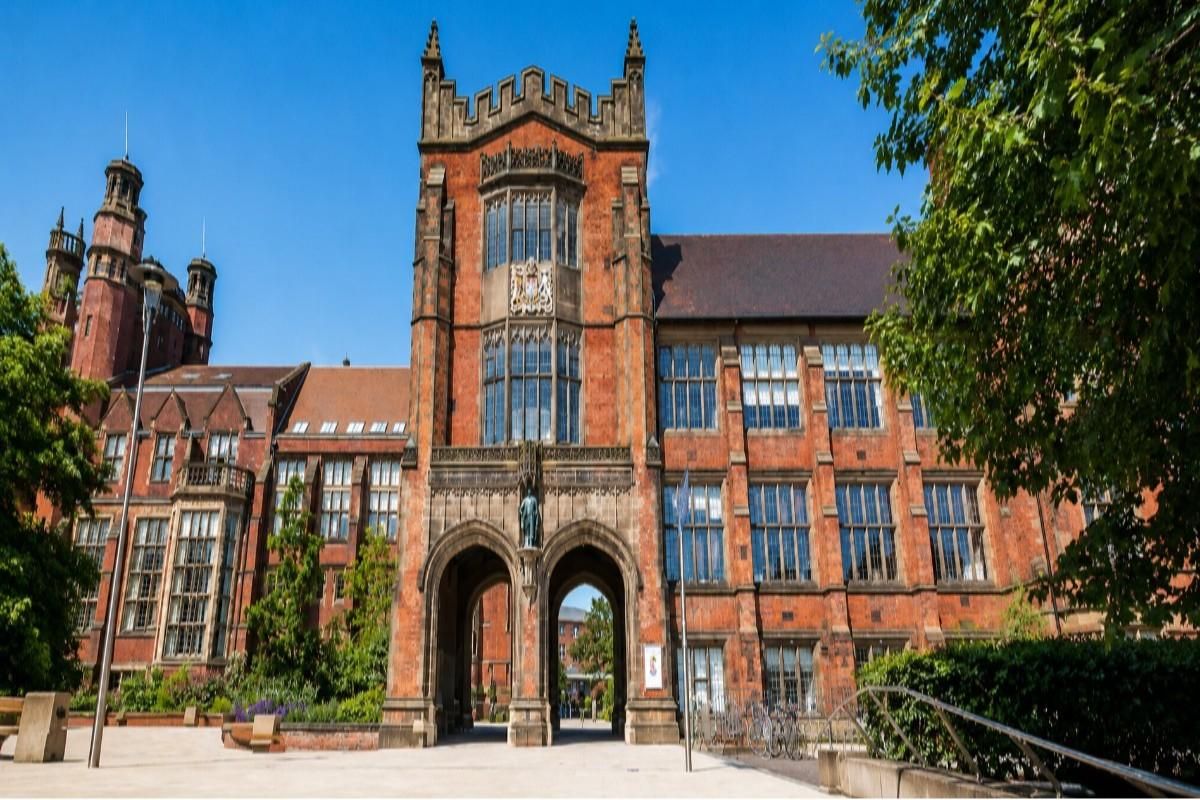
 Uk | Est. 1834
Uk | General Medical Council accredited | English medium
Expert will call you within 2 hours
The history of medical education at Newcastle University starts in 1832 when a small group of local physicians organized lectures on medicine in Bell's Court. Among the participants was John Snow, a man who traced a London cholera outbreak to a contaminated water pump, and who is now recognized as the founder of modern epidemiology. After a few years, these lectures were formalized in the School of Medicine and Surgery in 1834, making medicine one of the oldest subjects studied at the university.
The university had quite an interesting development history with several major reorganizations. In 1851, the medical school separated into two competing colleges, with the larger group being affiliated with Durham University as its College of Medicine. In 1937, the medical college merged with Armstrong College and became King's College, Durham. The institution became independent in 1963, thus creating what later turned into Newcastle University.
The medical programme takes advantage of this history but implements a modern method of teaching. The MBBS of Newcastle University is based on the spiral, integrated curriculum with teaching done using clinical cases and not separated blocks of anatomy, physiology, and pharmacology. A single case (stroke), for example, can be used to teach neuroscience, pharmacology, communication, and public health. That way, the students learn to relate theoretical knowledge to clinical practice right away.
Clinical placement also comes quite early in the study process. The experience is gained not only in hospital but also in general-practice setting even before the late clinical years. The Royal Victoria Infirmary is the main teaching hospital providing great variety of specialist clinical experiences. Clinical placements in the later years will be done in various hospitals in the wider North East area.
As of 2026/27, the tuition cost for international students for all five years of the MBBS at Newcastle University is approximately £47,000 per year. Unlike some other UK medical schools that raise tuition fees after the start of clinical training, Newcastle keeps tuition flat. That means that it is relatively easy to plan the financial side of studies from the very beginning. Therefore, just tuition is about £235,000 during five years.
Even after that, the programme is still rather costly. International students are usually ineligible for the UK medical student funding and NHS bursaries provided by the government, and families need to cover tuition and other costs personally, privately or via scholarships. Such planning should be done well before making a decision to accept an offer.
Admission is extremely competitive. The standard A-level requirement is AAA, including Biology or Chemistry and another science or mathematics subject. The requirement for international Baccalaureate is usually around 36 points, with Higher Level Biology or Chemistry and another science or mathematics subject. That is only the first step of admission process.
Each applicant must take the UCAT. Newcastle University does not specify the UCAT cut-off score but, according to historical statistics, competitive candidates tend to be in the upper range of UCAT test results. For the applicants coming through the standard A100 route from outside the UK, UCAT scores become particularly important since international grades cannot be compared directly due to difference in grading system. That is why UCAT preparation is especially important.
Then, shortlisted candidates proceed to the Multiple Mini Interview consisting of several brief assessment stations. These stations usually test communication, reasoning skills and other characteristics related to future medical practice. Applicants also must meet the English language requirements of the university. As of 2020, Newcastle requires 7.0 overall score and at least 7.0 in each of individual components of IELTS.
Newcastle upon Tyne is a relatively inexpensive city among other major UK cities. University accommodation generally costs £6,000–£8,500 depending on the type of room and residence hall. The small size of the city centre also allows the students to conveniently move from accommodation to university and Royal Victoria Infirmary. That way, some costs of living are reduced when studying medicine in the UK.
Indian students have to consider carefully the procedure of obtaining license to practice medicine after graduation. The exemption from mandatory screening of foreign medical graduates provided by the National Medical Commission applies to graduates of UK medical schools that obtain UK medical license via GMC registration, and not to every holder of a UK medical degree. Therefore, students returning to India should understand the requirements of the NMC and whether UK medical registration is planned in their future.
In general, Newcastle University provides well-established medical education in the UK with the focus on integrated case-based learning and early clinical placement. The advantages of the programme include historical medical school, numerous NHS partners, strong practical experience, and relatively inexpensive student city. The disadvantages are £235,000+ tuition, extremely competitive admission, and challenging UCAT and English language requirements.
No hidden charges, no donation. The full picture of costs at MBBS in Newcastle University School of Medicin.
Tuition Fee
£44,500 - £47,000 INR ~5,776,816-6,101,357
£47,000 INR ~60,00,000
Hostel Fee
Vary according to residence and room type.
£6,500–£10,000 INR ~8,30,000 – 12,77,000
Food & Meals
GBP 3,500-5,000 per year Approx. Rs. 4.53 lakh-6.48 lakh
per Year
Insurance
£1,000–£2,000 INR ~1,28,000 – 2,55,000
per Year
Donation
No Donation fee
No Hidden fee
Total Estimated Cost
Approx. GBP 270,000-290,000
5 year
25–35%
Average FMGE first-attempt pass rates for students from many overseas medical universities. Students from structured programs consistently score higher.
Students returning to India need to clear the FMGE/NExT exam. MBBS in Newcastle University School of Medicin integrates exam-oriented coaching into the regular curriculum so students are prepared from day one.
A structured program that takes you from foundational sciences to clinical mastery.
Early clinical placements in GP practices and hospitals, well ahead of the point most UK schools introduce patient contact
Introduction to medical sciences, clinical skills, and case-based learning built around integrated patient scenarios
• Further placement-based learning and communication and consultation skills development
Continued case-led, spiral curriculum revisiting body systems in greater depth, integrating anatomy, physiology, pharmacology and pathology around each clinical case
Placements based at the Royal Victoria Infirmary and hospitals across the North East region
• Full-time clinical placements begin, rotating through major specialties including general medicine and general surgery
Continued case-based teaching integrated with hospital-based clinical experience
• Placements across specialties including psychiatry, obstetrics and gynaecology, paediatrics, and community and primary care
Assessments aligned with the GMC's Medical Licensing Assessment, preparing graduates directly for UK Foundation Year training
Extended clinical placements, an elective period, and the student assistantship programme, in which students work as part of a clinical team
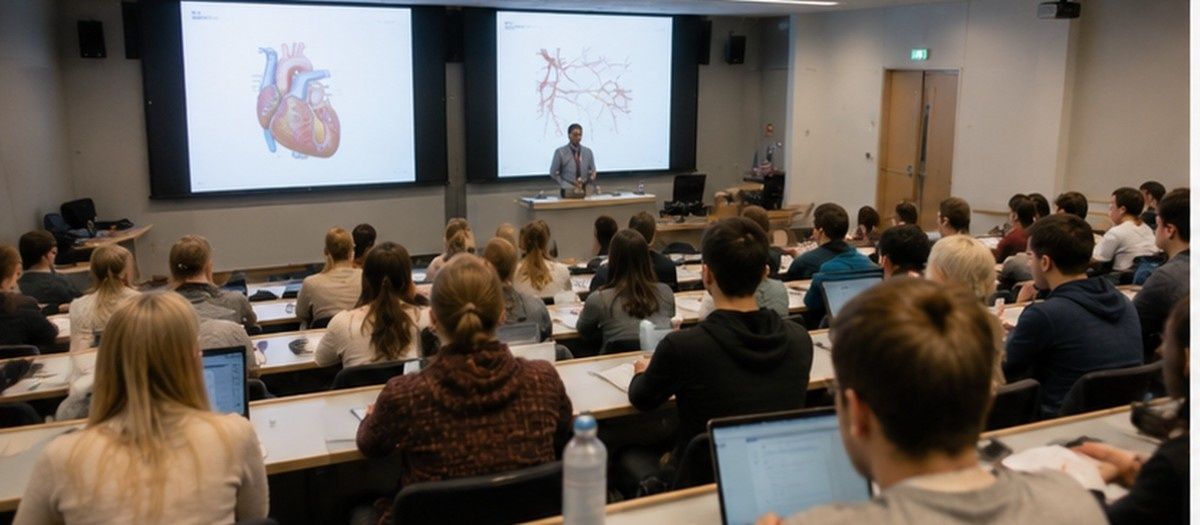

Furnished hostel rooms with Wi-Fi, laundry, 24/7 security, and Indian mess on or near campus.
Indian restaurants and mess facilities serving vegetarian and non-vegetarian home-style food daily.
Strong Indian community with cultural events, festival celebrations, and peer support groups.
Students get hands-on clinical training in government and private hospitals affiliated with the university.
Practical information for students planning to study at MBBS in Newcastle University School of Medicin.
Prepare for all seasons. Thermal wear for winters, light clothing for summers. University provides heating in hostels.
Student visa processed with university invitation letter. Direct and connecting flights from major Indian cities.
Health insurance included in fees. Medical facility on campus plus city hospitals easily accessible.
Local SIM cards available. WhatsApp and video calls keep you connected with family back home.
Average monthly expenses of $150–$250 covering food, transport, and personal needs.
University library, online databases, and study groups. Seniors mentor juniors through academic challenges.
Our team guides you through every step — from application to arriving on campus.
Compare universities based on fees, city, UCAT requirements, and clinical exposure, starting 12–18 months before your intended entry, not the cycle you’re applying in.
Registration opens in May; the testing window runs July–September. Most successful applicants begin focused preparation 3–4 months ahead, alongside board exam preparation.
Book and complete IELTS, PTE, or TOEFL well ahead of the UCAS deadline, allowing time for a retake if needed.
Submit your application, including personal statement and up to 4 medicine choices, before the 15 October deadline.
Prepare for and attend interviews (MMI or Panel format) typically scheduled November through February.
Offers (conditional or unconditional) typically arrive through winter and spring; conditional offers require meeting stated academic and English-score conditions.
Once Class 12 results and any other conditions are confirmed, your university issues the Confirmation of Acceptance for Studies (CAS), which is required for your visa application.
Apply using your CAS reference number; arrange maintenance funds according to the 28-day rule well in advance rather than at the last minute.
Book flights, confirm accommodation, complete any on-arrival formalities during orientation week, open a local bank account, and begin building connections with your university’s Indian/South Asian student community.
Admission Helpline — Contact our counsellors for step-by-step assistance.
“The faculty here is incredibly supportive. The clinical training during hospital rotations has given me real confidence in patient care.”
“Affordable fees without compromising on quality. The campus facilities and hostel life made my transition abroad very smooth.”
“English medium instruction and WHO-recognized curriculum were the deciding factors for me. No regrets so far — excellent experience overall.”
“The university helped with everything from visa to accommodation. Hospital exposure from year three has been invaluable for my FMGE prep.”
“Just cleared my licensing exam on the first attempt. The structured coaching and mock exams during final year were a game-changer.”
“Safe campus, good food options, and a strong Indian student community. The teaching methodology is very practical and hands-on.”
A: Its case-based, integrated curriculum and a flat annual tuition fee that does not rise between pre-clinical and clinical years, unlike most comparable UK schools.
A: Yes, entirely in English. International applicants need an IELTS score of at least 7.0 overall with at least 7.0 in every component.
A: Yes. All applicants sit the UCAT, and international A100 applicants are shortlisted for interview on their UCAT score alone.
A: Not on CBSE or ISC marks alone; most successful Indian applicants arrive via A-levels, an IB Diploma, or an equivalent recognised qualification.
A: Yes, for future NMC registration in India, although Newcastle's own admissions process does not ask for a NEET score.
A: Only if you don't first obtain a UK medical licence; graduates who complete GMC registration are currently exempt from FMGE.
A: Tuition alone comes to about GBP 235,000 over five years at the flat GBP 47,000 annual rate, before accommodation and living costs.
A: No. Final assessments are aligned with the GMC's Medical Licensing Assessment, so no additional external exam is required.
A: Placements begin in GP practices from Year 1 and expand to full-time hospital rotations from Year 3, centred on the Royal Victoria Infirmary.
A: Generally no. Resit qualifications are only considered in exceptional, well-documented circumstances.
Our expert counsellors will guide you through the complete admission process — from documents to airport pickup.