
Q1 When was the University of Oxford founded?
+There's no exact founding date; documented teaching in Oxford dates back to around 1096, making it the oldest university in the English-speaking world.

 Uk | Est. 1096
Uk | The BM BCh degree is recognised by the UK's General Medical Council as a qualification enabling registration to practise medicine in the UK. | English medium
Expert will call you within 2 hours
People mostly just call it Oxford for short. It's a genuinely unusual institution to describe factually, because it has no single, clear founding date at all. Documented teaching in the town of Oxford stretches back to around 1096, making it the oldest university in the entire English-speaking world, and the world's second-oldest university still in continuous operation, after the University of Bologna. So, unlike most universities covered in comparable guides, Oxford's own age can't be reduced to a single founding year.
The university's early growth is tied to a specific, documented political event rather than a formal founding charter. In 1167, King Henry II banned English students from attending the University of Paris, following a personal quarrel with Thomas Becket, and many English scholars returned home, settling in Oxford. In 1188, the historian Gerald of Wales gave what's recorded as the first public lecture to Oxford's assembled dons. Around 1190, Emo of Friesland arrived as Oxford's first known overseas student, quietly beginning a tradition of international scholarship that continues today. By 1201, the university was headed by a magister scholarum Oxonie, with the title of Chancellor formally conferred from 1214, and in 1231 its masters were recognised as a universitas, a formal corporation.
Here's a fact most guides skip entirely. In 1209, a dispute between Oxford's students and the town's own residents caused some scholars to flee northeast, where they went on to found what became the University of Cambridge. So, one of the world's most famous academic rivalries traces directly back to a documented, dated falling-out within Oxford itself, not a separate, unrelated founding.
Oxford today is organised as a collegiate research university, comprising 39 semi-autonomous constituent colleges and four permanent private halls, alongside a central administrative structure split into four academic divisions. The Medical Sciences Division, which includes the School of Medicine and Biomedical Sciences, is the largest of these four divisions, and has been ranked first in the world for Clinical, Pre-Clinical, and Health subjects in the Times Higher Education World University Rankings for 13 consecutive years running, as of the most recent published cycle.
Oxford's connection to medical breakthroughs is genuinely current, not purely historical. The university played a central role in the global COVID-19 response, developing the Oxford-AstraZeneca vaccine, estimated to have helped prevent around 50 million COVID-19 cases and 5 million hospitalisations, and to have saved more than 1 million lives worldwide. Across its longer history, Oxford also counts 16 Nobel Prize winners in Medicine among its alumni and staff, including Sir Charles Sherrington, Sir Peter Medawar, and Sir Peter J. Ratcliffe.
Oxford's medical students train through the university's own teaching hospitals, closely integrated with the Medical Sciences Division. A genuinely central feature of studying at Oxford is its college tutorial system: students meet weekly with their tutors in genuinely small groups, sometimes just two students to one tutor, allowing teaching to be closely tailored to individual needs and interests. With an annual intake of roughly 150 to 160 students, the School of Medicine and Biomedical Sciences remains comparatively small, creating a genuinely close-knit academic community.
Accommodation arrangements reflect Oxford's distinctive collegiate structure. College accommodation costs roughly GBP 4,500 to 5,000, but only covers the three eight-week academic terms, since students must vacate their college rooms at the end of each term. Private accommodation for a full twelve months runs to roughly GBP 6,500, depending on location, with most areas of Oxford within reasonable walking or cycling distance of the university's central facilities.
Oxford's standard-entry medicine course, known by its UCAS code A100, splits genuinely distinctly into a pre-clinical and a clinical stage. The first three years cover the First BM, the first five terms, addressing the scientific principles underpinning medicine, including the body's major systems, their structure and function, and the disease processes that can arise when they go wrong, alongside early clinical exposure through regular GP tutor visits. This leads into the Final Honour School, a further four terms of specialised biomedical science study, during which every student completes an original experimental research project. Successful completion of these first three years leads to a BA Honours degree in Medical Sciences, before students move into three years of full clinical training, concluding in Oxford's own version of the MBBS degree, the BM BCh.
Admission runs through UCAS, the UK's centralised university application system, rather than direct application to Oxford itself. Applicants must sit the UCAT, the University Clinical Aptitude Test, and typically need at least a grade A in Chemistry plus a further A in one of Biology, Physics, Mathematics, or Further Mathematics. Some practical coursework involving living animal tissue forms a compulsory part of the course.
Fee figures here are genuinely significant, and worth understanding precisely, since they've risen noticeably in recent years. UK, or Home, students pay a fixed GBP 9,250 a year, fully covered by UK government tuition fee loans that don't need to be paid upfront. International, or Overseas, students pay considerably more, and on a two-tier structure: a lower pre-clinical rate for the first three years, and a higher clinical rate for the remaining three. For 2024 entry, these rates were reported at roughly GBP 36,800 for pre-clinical years and GBP 48,600 for clinical years; for 2026 entry, official rates have risen to GBP 49,400 for pre-clinical years and GBP 65,250 for clinical years. So, applicants should expect these figures to continue rising, and should confirm the exact current rate for their own entry year directly with Oxford rather than relying on either historical figure.
Working from the most recent 2026 entry rates, total tuition alone across the full six-year programme comes to roughly GBP 343,950 for an overseas student, before accommodation and other living costs. Oxford itself is notably candid about funding limitations here: the university states plainly that there are few, if any, scholarships available specifically for the A100 Medicine course, given the length and overall cost of the programme. NEET remains a genuine requirement for Indian applicants, exactly as it does for MBBS study in most other countries, and Indian graduates would still need to clear the FMGE or NExT exam to practise medicine back in India.
Parameter | Details |
Established | No exact founding date; teaching documented from around 1096, making Oxford the oldest university in the English-speaking world |
Institution Type | Public, collegiate research university (39 constituent colleges plus 4 permanent private halls) |
Location | Oxford, England, United Kingdom |
Programme | A100 Medicine (standard entry), leading to a BA in Medical Sciences after Year 3, then a BM BCh degree (Oxford's equivalent of an MBBS) |
Duration | 6 years: Years 1-3 pre-clinical (First BM and Final Honour School), Years 4-6 clinical |
Medium of Instruction | English |
Foreign Quota Note | NEET required for Indian applicants; overseas students pay separate, considerably higher tuition rates than UK students |
Teaching Hospitals | Oxford's teaching hospitals, integrated with the University's Medical Sciences Division |
Fee Component | Amount | Notes |
Tuition Fee (Home/UK students) | GBP 9,250 per year | Covered in full by UK government tuition fee loans; not paid upfront |
Tuition Fee (Overseas, pre-clinical years, 2026 entry) | GBP 49,400 per year (Years 1-3) | Recent official rate; a genuine rise from approx. GBP 36,800 reported for 2024 entry |
Tuition Fee (Overseas, clinical years, 2026 entry) | GBP 65,250 per year (Years 4-6) | Recent official rate; a genuine rise from approx. GBP 48,600 reported for 2024 entry |
College Accommodation | Approx. GBP 4,500 to 5,000 for three 8-week terms | Students must vacate college rooms between terms; private accommodation runs separately |
Scholarships | Very limited for the A100 Medicine course | Oxford itself notes there are few, if any, scholarships available for this course, given its length and cost |
Most rival pages describe Oxford's age in the abstract. Here's a specific, dated event most guides skip: a 1209 dispute between Oxford's own students and local townsfolk sent scholars fleeing to found what became the University of Cambridge. So, one of academia's most famous rivalries has a genuinely documented, traceable origin point sitting inside Oxford's own history.
Most guides list Nobel laureates and stop there. Oxford's Medical Sciences Division led the development of the Oxford-AstraZeneca COVID-19 vaccine, credited with preventing an estimated 50 million cases and saving over a million lives worldwide. So, this university's medical impact is measurable within the last few years, not confined to its nine centuries of history.
Be very clear about the real costs here. Overseas tuition alone runs to roughly GBP 343,950 across the six-year programme at current 2026 rates, before accommodation and living costs, genuinely among the most expensive medical degrees an international applicant is likely to consider anywhere. Oxford itself openly states that few, if any, scholarships exist for this specific course. Admission is also extraordinarily competitive, with an annual intake of only around 150 to 160 students against a genuinely large global applicant pool.
So, who fits here best? Exceptionally strong applicants able to secure funding for one of the world's most expensive and most competitive medical degrees, drawn to Oxford's genuinely distinctive small-group tutorial system and built-in research requirement, fit well here. Students who value studying within a nine-century-old collegiate community, with real, current medical breakthroughs to its name, fit well too. However, applicants who need a lower-cost route into medicine, or genuinely available scholarship funding, should look elsewhere, since Oxford is explicit about the scarcity of financial support for this course. Still, the calibre of teaching, the tutorial system, and Oxford's documented, world-leading Medical Sciences Division are real, exceptional strengths.
No hidden charges, no donation. The full picture of costs at MBBS in University of Oxford School of Medicine and Biomedical Sciences.
Tuition Fee
Approx. GBP 4,500 to 5,000 per year — approx. GBP 27,000 to 30,000 over 6 years
GBP 49,400 per year — approx. GBP 148,200 over 3 years
Hostel Fee
£825 to £990 per month
GBP £825 - £990 per month
Food & Meals
GBP £200 - £400
per month
Insurance
GBP £776
per year
Donation
No Donation
No Hidden fee
Total Estimated Cost
Roughly GBP 371,000 - 374,000
6 year
25–35%
Average FMGE first-attempt pass rates for students from many overseas medical universities. Students from structured programs consistently score higher.
Students returning to India need to clear the FMGE/NExT exam. MBBS in University of Oxford School of Medicine and Biomedical Sciences integrates exam-oriented coaching into the regular curriculum so students are prepared from day one.
A structured program that takes you from foundational sciences to clinical mastery.
Introduces early clinical exposure through regular visits to GP tutors.
Covers the major body systems, their structure and function, and the principles of disease processes underlying them.
Requires every student to complete an original experimental research project.
Allows students to specialise in a chosen area of biomedical science, culminating in the BA Honours in Medical Sciences.
Runs through Oxford's own teaching hospitals, closely integrated with the Medical Sciences Division.
Covers Medicine, Surgery, and allied clinical subjects through hands-on hospital placements.
Concludes with the award of the BM BCh degree, Oxford's equivalent of the MBBS.
Builds toward independent clinical competence ahead of graduation and professional registration.
International graduates returning home face their own country's separate licensing requirements, such as India's FMGE or NExT.
Graduates must complete the UK Foundation Programme and register with the General Medical Council before practising independently.
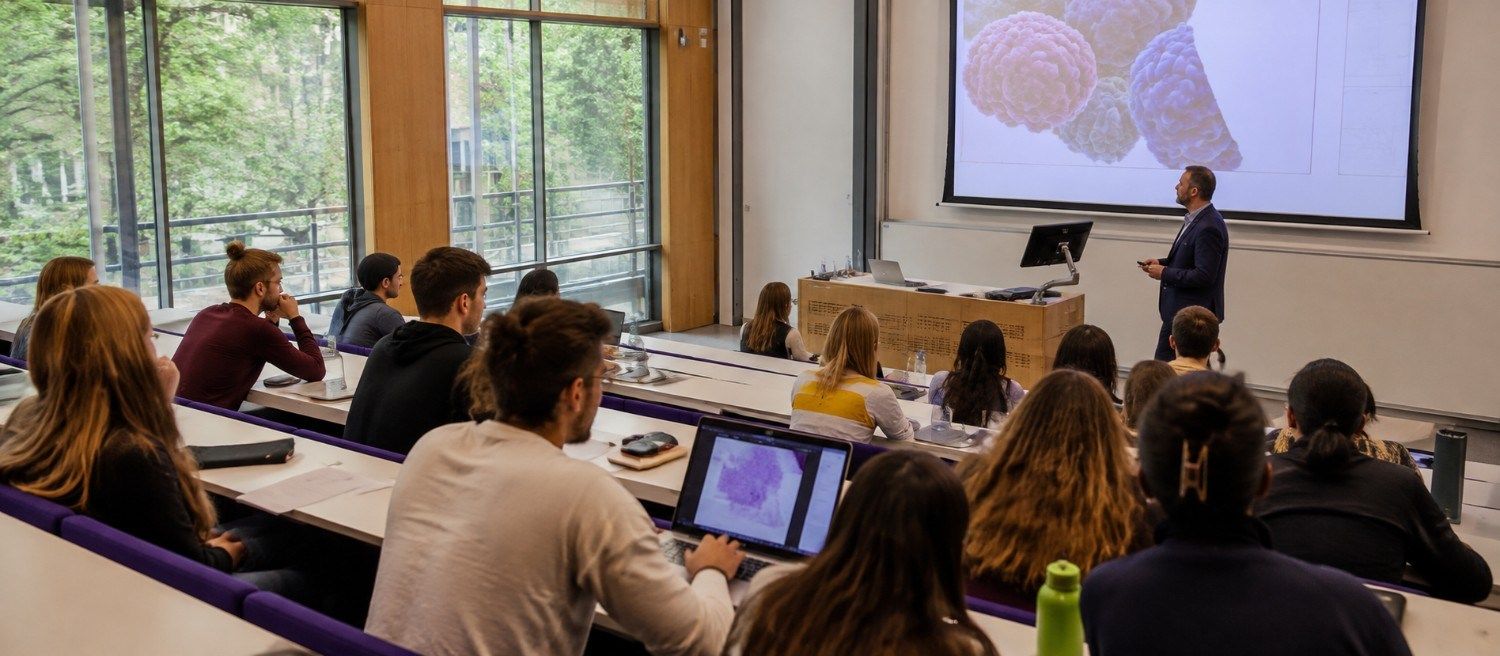
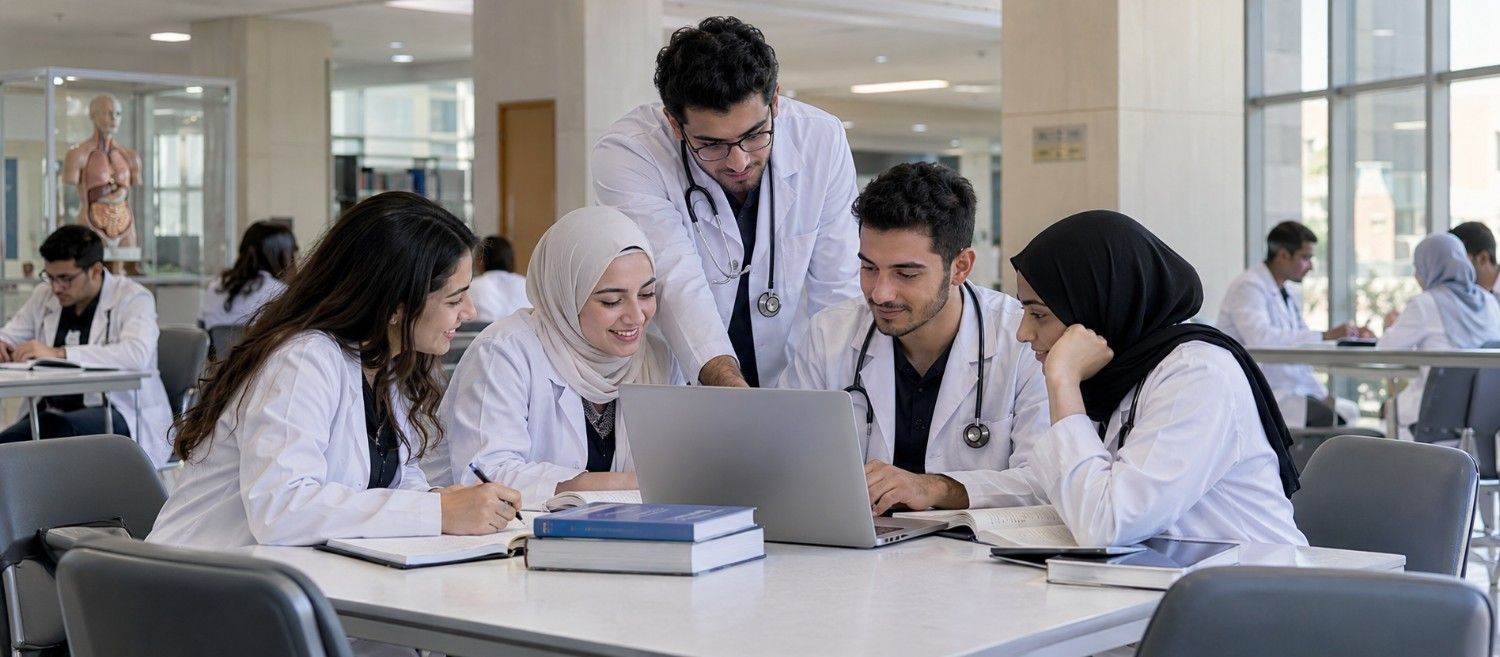
Furnished hostel rooms with Wi-Fi, laundry, 24/7 security, and Indian mess on or near campus.
Indian restaurants and mess facilities serving vegetarian and non-vegetarian home-style food daily.
Strong Indian community with cultural events, festival celebrations, and peer support groups.
Students get hands-on clinical training in government and private hospitals affiliated with the university.
Practical information for students planning to study at MBBS in University of Oxford School of Medicine and Biomedical Sciences.
Prepare for all seasons. Thermal wear for winters, light clothing for summers. University provides heating in hostels.
Student visa processed with university invitation letter. Direct and connecting flights from major Indian cities.
Health insurance included in fees. Medical facility on campus plus city hospitals easily accessible.
Local SIM cards available. WhatsApp and video calls keep you connected with family back home.
Average monthly expenses of $150–$250 covering food, transport, and personal needs.
University library, online databases, and study groups. Seniors mentor juniors through academic challenges.
Our team guides you through every step — from application to arriving on campus.
Compare universities based on fees, city, UCAT requirements, and clinical exposure, starting 12–18 months before your intended entry, not the cycle you’re applying in.
Registration opens in May; the testing window runs July–September. Most successful applicants begin focused preparation 3–4 months ahead, alongside board exam preparation.
Book and complete IELTS, PTE, or TOEFL well ahead of the UCAS deadline, allowing time for a retake if needed.
Submit your application, including personal statement and up to 4 medicine choices, before the 15 October deadline.
Prepare for and attend interviews (MMI or Panel format) typically scheduled November through February.
Offers (conditional or unconditional) typically arrive through winter and spring; conditional offers require meeting stated academic and English-score conditions.
Once Class 12 results and any other conditions are confirmed, your university issues the Confirmation of Acceptance for Studies (CAS), which is required for your visa application.
Apply using your CAS reference number; arrange maintenance funds according to the 28-day rule well in advance rather than at the last minute.
Book flights, confirm accommodation, complete any on-arrival formalities during orientation week, open a local bank account, and begin building connections with your university’s Indian/South Asian student community.
Admission Helpline — Contact our counsellors for step-by-step assistance.
“The faculty here is incredibly supportive. The clinical training during hospital rotations has given me real confidence in patient care.”
“Affordable fees without compromising on quality. The campus facilities and hostel life made my transition abroad very smooth.”
“English medium instruction and WHO-recognized curriculum were the deciding factors for me. No regrets so far — excellent experience overall.”
“The university helped with everything from visa to accommodation. Hospital exposure from year three has been invaluable for my FMGE prep.”
“Just cleared my licensing exam on the first attempt. The structured coaching and mock exams during final year were a game-changer.”
“Safe campus, good food options, and a strong Indian student community. The teaching methodology is very practical and hands-on.”
There's no exact founding date; documented teaching in Oxford dates back to around 1096, making it the oldest university in the English-speaking world.
It runs six years: three pre-clinical years leading to a BA Honours in Medical Sciences, followed by three clinical years leading to the BM BCh degree.
Through UCAS, the UK's centralised university application system, sitting the UCAT admissions test as part of the process.
Yes, a valid, qualifying NEET score is required for Indian applicants under India's own national rules.
At 2026 entry rates, tuition alone runs to GBP 49,400 a year for the first three years and GBP 65,250 a year for the final three, totalling roughly GBP 343,950 across the full six years.
Oxford states there are few, if any, scholarships available specifically for the A100 Medicine course, given its length and cost.
Graduates receive a BM BCh degree, Oxford's equivalent of the MBBS, after completing a BA Honours in Medical Sciences during the earlier pre-clinical years.
The college tutorial system provides weekly small-group teaching, sometimes with just two students per tutor, alongside a compulsory original research project.
The university developed the Oxford-AstraZeneca vaccine, estimated to have prevented around 50 million COVID-19 cases and saved over a million lives worldwide.
Extremely. Annual intake runs to only around 150 to 160 students against a very large global applicant pool.
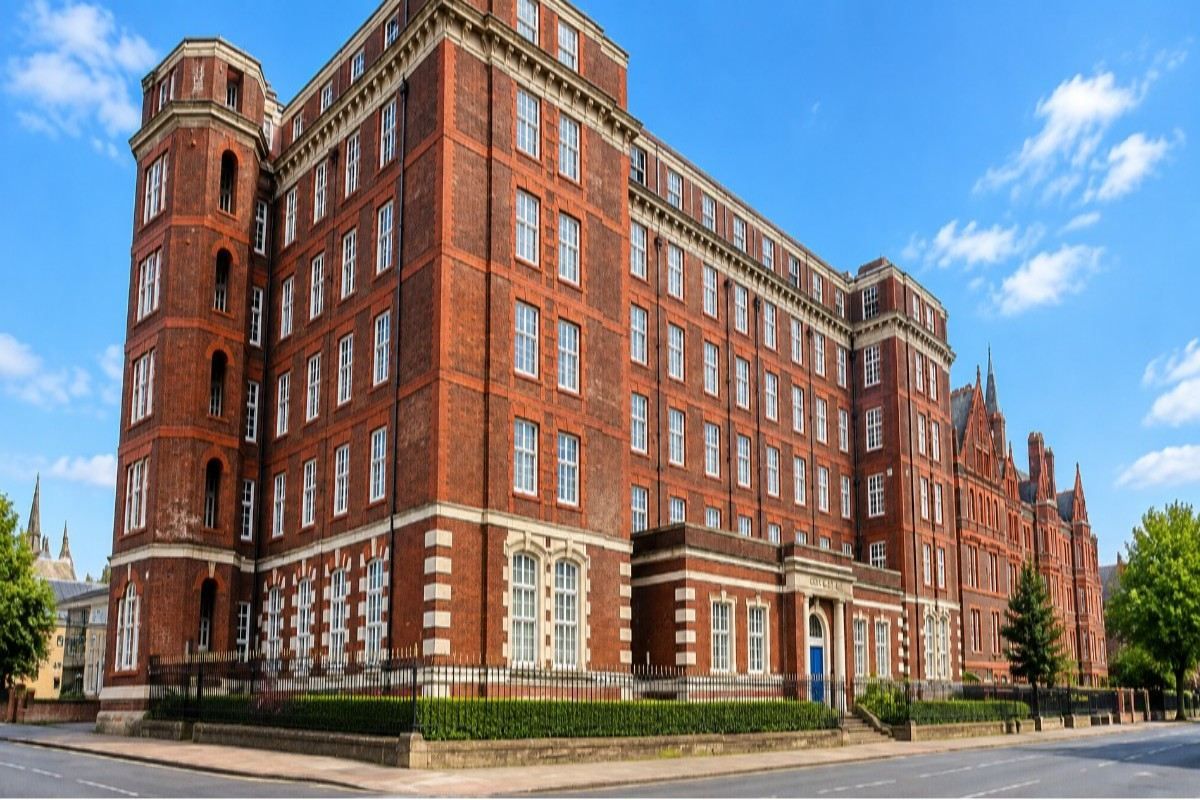
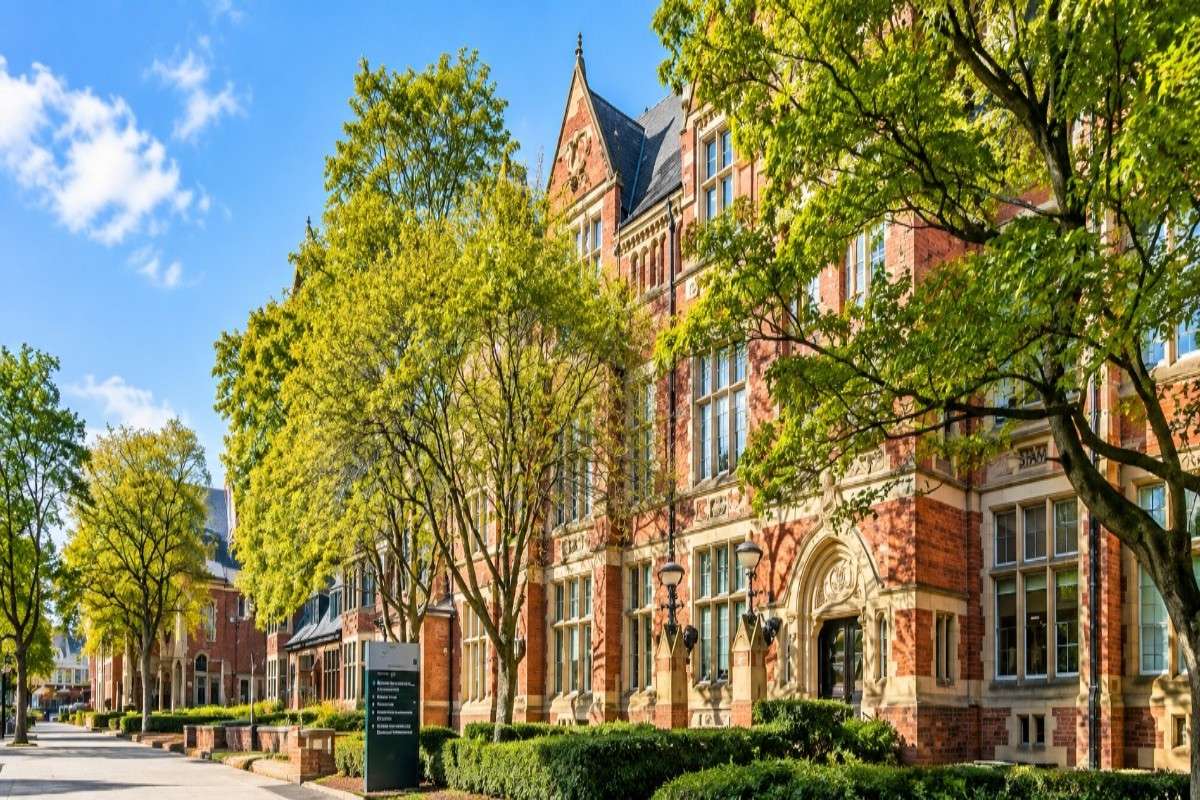
Our expert counsellors will guide you through the complete admission process — from documents to airport pickup.