
Q1. Is this the same as Saint Louis University in the United States?
+No, this is the Philippine Saint Louis University in Baguio City, genuinely different from the separate, unrelated Saint Louis University in Missouri, USA.
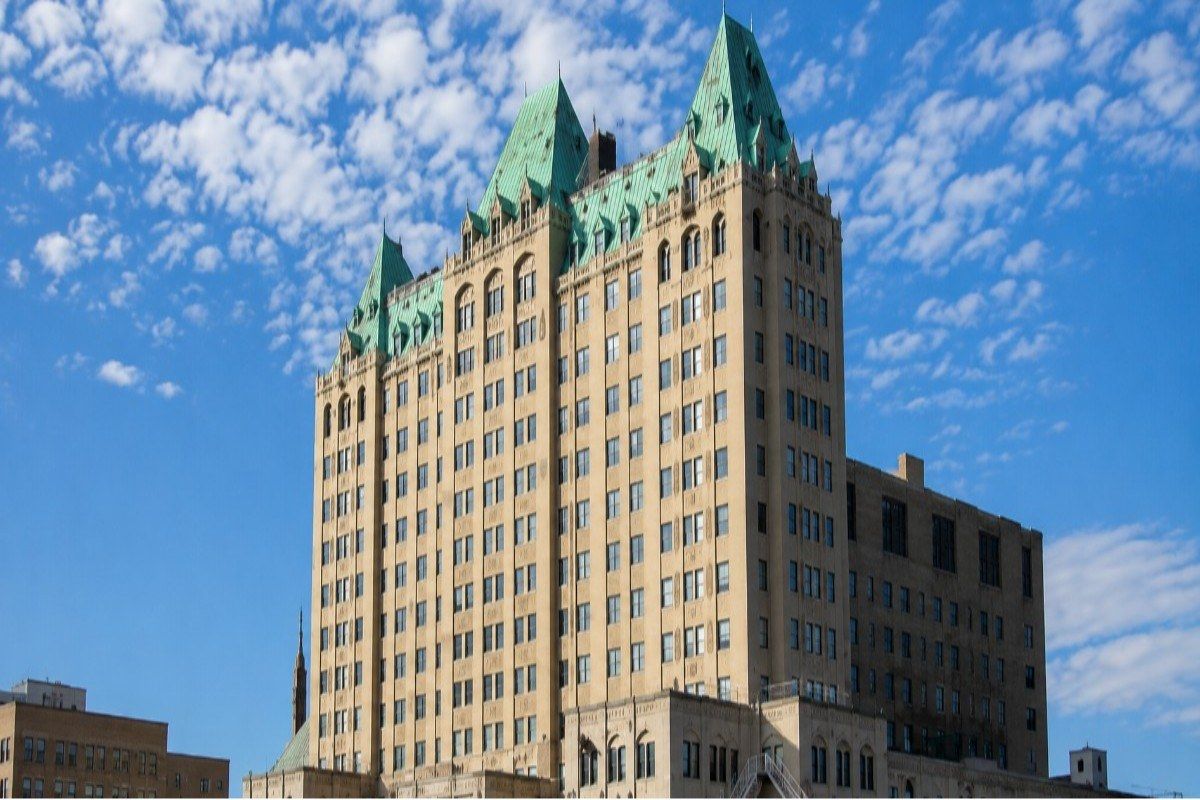
 Philippines | Est. 1911
Philippines | PAASCU-accredited; passed CHED's Institutional Sustainability Assessment for the Cordillera Administrative Region | English medium
Expert will call you within 2 hours
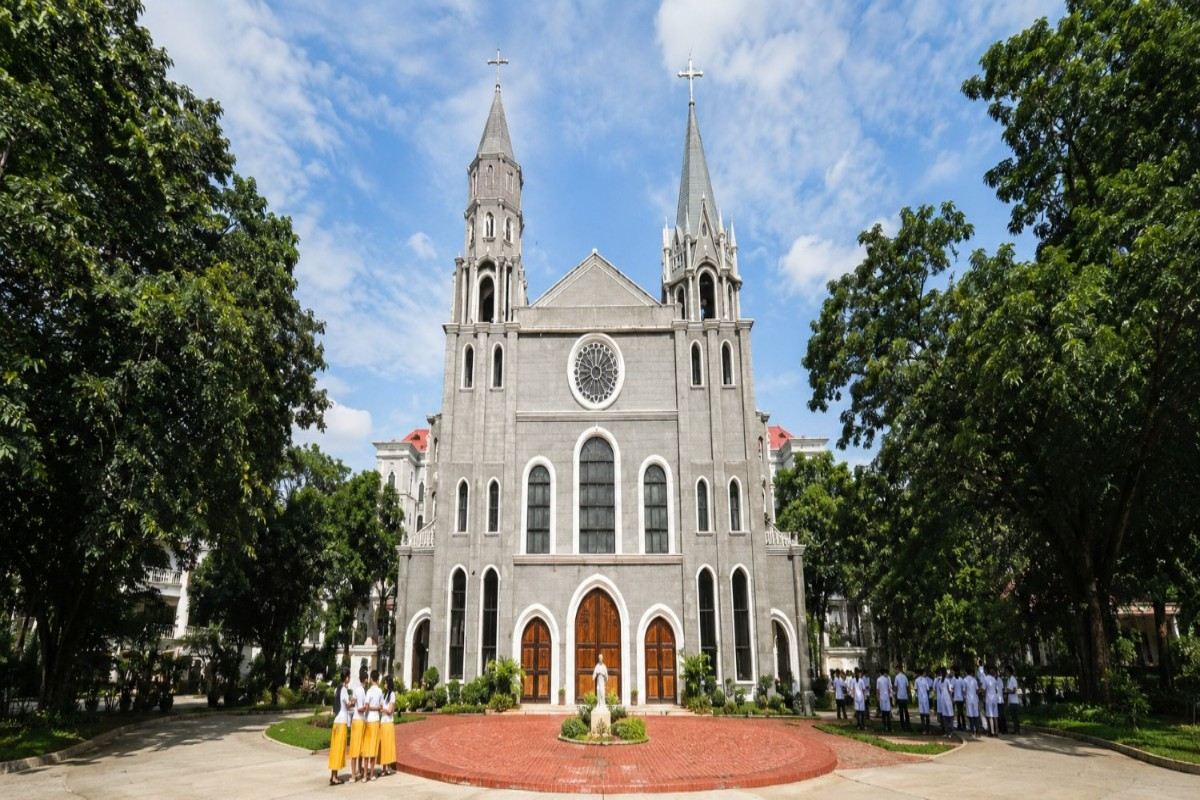
People mostly just call it SLU for short. It was founded on 1 December 1911, by Rev. Fr. Seraphin Devesse, a CICM missionary, specifically for just ten local boys in Baguio City. Alongside his own relocated St. Patrick Church, he established a genuinely modest one-room elementary school at what is now Cathedral Hill, naming it Saint Louis School. This founding traces directly to a broader 1907 CICM missionary effort, when eight missionaries arrived in the Philippines, mandated by the Holy See to serve the northern part of the country.
Here is a fact most guides skip entirely, and it deserves genuine, careful clarification. SLU's own School of Medicine, formally known as the International School of Medicine, was established in 1976, a considerably later, separate milestone from the wider university's own 1911 founding. At least one source instead claims the School of Medicine traces to 1952, but this appears to genuinely conflate the medical school's own founding with a separate, earlier 1952 milestone, when Saint Louis College itself was formally established with three departments, Education, Liberal Arts, and Commerce and Secretarial, none of which was Medicine. Given how internally consistent the 1976 date is with other confirmed details, this profile treats 1976 as the medical school's own accurate founding year.
A genuinely useful, internally consistent detail supporting this 1976 date is that the school's own partner teaching hospital, Saint Louis University Hospital of the Sacred Heart, opened specifically on 10 May 1977, described directly as opening a year after the medical school's own founding, a real, dated detail that checks out precisely against the 1976 founding year. In mid-2022, this hospital was renamed the Saint Louis University Sacred Heart Medical Center, coinciding with the opening of new twin-tower hospital buildings, and in August 2024, SLU's own President, Fr. Gilbert B. Sales, formally inaugurated a further Medical Arts Parking Building and Doctors' Clinics, a real, recent, dated institutional expansion.
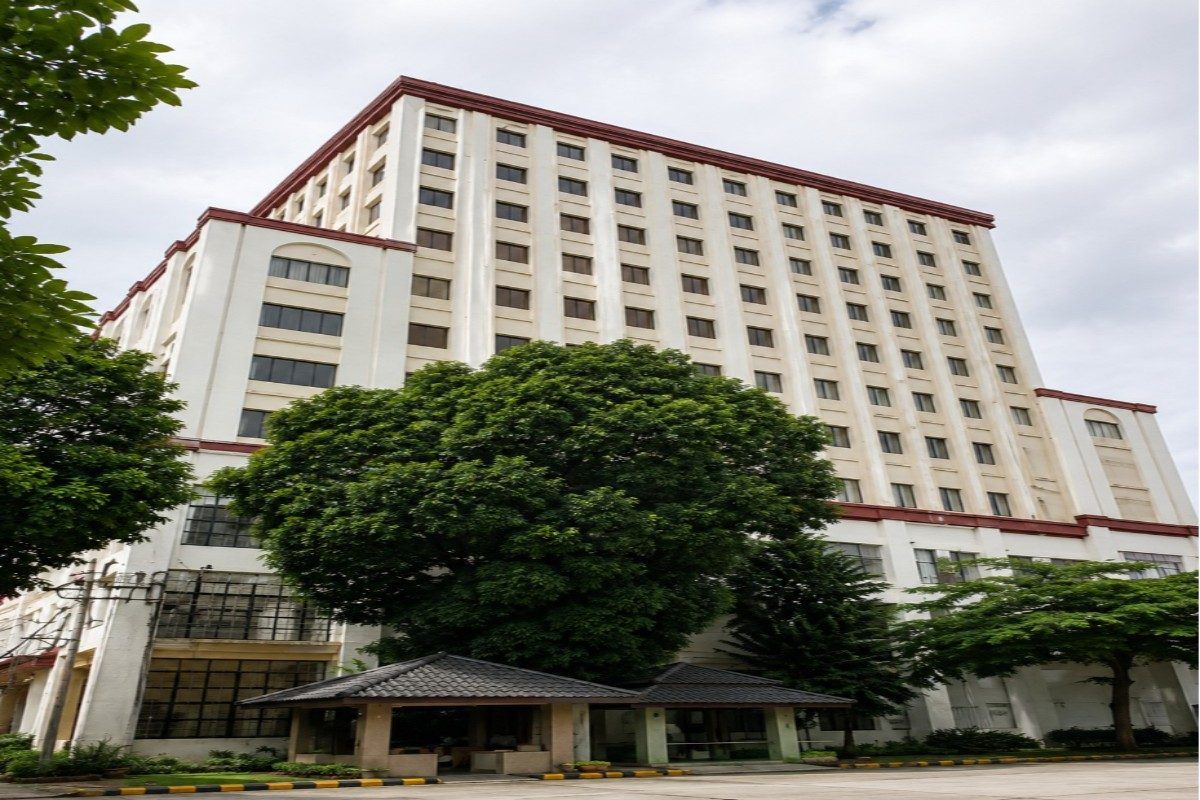
The School of Medicine is housed at the Dr. Jose Rizal Building, named after the Philippines' own national hero, within SLU's Main Campus on A. Bonifacio Street. It is one of nine academic units within the wider university, led by Dean John Anthony Domantay. At least one source describes SLU's School of Medicine as the first, and by far the only, medical school anywhere in the Cordillera Administrative Region, a genuinely specific regional claim worth knowing, though it should be treated as reported rather than independently verified given the source itself flags it as needing further citation.
SLU overall operates across four campuses spanning 24 hectares, roughly 59 acres, with its Main, or Mount Mary, Campus alone covering 6 hectares along Andrés Bonifacio Street. The Commission on Higher Education, CHED, has specifically recognised several of SLU's own graduate programmes as Centers of Excellence, three in total, and Centers of Development, eight in total, genuinely specific national quality distinctions rather than a vague claim of general prestige.
Baguio City itself is a genuinely distinctive setting, sitting roughly 1,540 metres above sea level within the Cordillera Central mountain range, making it one of the highest-elevation cities anywhere in the Philippines. Its own notably cool, temperate climate, rarely exceeding 26 degrees Celsius, has earned it the nickname "Summer Capital of the Philippines," a genuinely distinctive contrast to the tropical heat found across much of the rest of the country.
Admission requires a National Medical Admission Test, NMAT, score, alongside documentation confirming completion of a prior degree, consistent with the Philippines' own standard graduate-entry medical education structure. SLU's own MD programme emphasises service-oriented, ethically grounded, and community-responsive training, with genuine community engagement and outreach commonly integrated directly into student activities.
SLU's own status as a Catholic institution run by the Congregation of the Immaculate Heart of Mary gives its own medical training a genuinely distinctive character, with the school's explicit framing that physicians should be clinically competent, ethically grounded, and socially responsive shaping much of student life alongside the more standard basic-science and clinical curriculum components. This values-oriented approach reflects the wider university's own century-long Catholic missionary heritage, tracing back directly to its own 1911 founding by CICM missionaries.
Given the genuine reliability concerns identified in at least one source describing this university, prospective applicants should treat direct, written confirmation from SLU's own official channels as a genuinely important step here, more so than at institutions where third-party sources have proven more consistently accurate. This is not a reason to dismiss SLU itself, which carries a real, well-documented, more-than-century-long institutional history, but rather a reason to verify specific figures, like tuition and programme duration, directly rather than relying on any single third-party source alone.
Fee figures here require genuine care, since one specific source reporting a considerably lower figure also contains a clear factual error about the university's own location.
Cost Item | Amount | Notes |
Total MD Programme Cost (5 years, one detailed source) | Approx. USD 30,000-35,000 | Reported by a source describing SLU's own correct Baguio City location; treated as the more reliable figure |
Annual Tuition Fee (alternate reported figure) | Approx. USD 5,000/year | Reported by a separate source that also incorrectly places SLU in Manila; treat this figure with genuine caution given that error |
Course Duration (per the same less-reliable source) | "6 years after Class 12 / 4.5 years after graduation" | This dual reported structure is worth treating cautiously, given the same source's own location error |
Scholarships | Available | Confirm current eligibility and amounts directly with SLU |
Application Documents | NMAT results, high school/degree transcripts, passport photos | Standard, confirmed document requirements |
Total Cost | Approx. USD 30,000-35,000, per the more reliable source | Confirm the current, exact figure directly with SLU before finalising a budget |
Note: no capitation fee is confirmed at any stage. Given the genuine reliability concerns found in one specific source, request SLU's own current, official fee schedule directly before finalising a budget.
Most lists mention Saint Louis University without flagging the genuine risk of confusing it with its similarly named American namesake, or the real errors found in some third-party sources describing it. However, they do not explain these specific issues directly. The reason is simple. It is about a real naming overlap most guides skip entirely, and genuine factual errors worth catching before they mislead an applicant.
SLU is not like most other Philippine medical schools when it comes to the risk of naming confusion. In fact, Saint Louis University in Missouri, USA, is a genuinely separate, well-known American institution sharing a nearly identical name. Furthermore, at least one source describing this Philippine university specifically states it is located in Manila, a clear, verifiable error, since every more detailed source confirms Baguio City as the correct location. As a result, applicants researching this specific institution should verify any given source's own basic accuracy before trusting its more specific claims.
The medical school's own founding-date confusion also matters more than most guides let on. For example, most guides assume a university's own reported founding date for its medical school is straightforward. One source describing SLU specifically claims 1952, but this appears to genuinely conflate the medical school's own 1976 founding with the wider university's separate 1952 college-level establishment, which comprised entirely different departments. Moreover, the internally consistent 1977 hospital opening date, described as "a year after" the medical school's own founding, provides real, corroborating evidence for the more accurate 1976 date.
One thing most other blogs miss is how a single source's own location error should make applicants genuinely more cautious about that same source's other specific claims. In addition to the incorrect Manila location, that same source reports a considerably lower annual fee figure and a genuinely unusual dual programme-duration structure. Since a source that gets something as basic as location wrong deserves real scrutiny on its other figures too, applicants should weight the more detailed, internally consistent sources more heavily.
No hidden charges, no donation. The full picture of costs at MBBS in Saint Louis University School of Medicine.
Tuition Fee
approx. USD 30,000-35,000
approx. USD 30,000-35,000
Hostel Fee
$9,219 per year
$9,219 per year
Food & Meals
$5,768
per year
Insurance
$4,652
per year
Donation
no donation
no hidden fee
Total Estimated Cost
$36,868
5 year
25–35%
Average FMGE first-attempt pass rates for students from many overseas medical universities. Students from structured programs consistently score higher.
Students returning to India need to clear the FMGE/NExT exam. MBBS in Saint Louis University School of Medicine integrates exam-oriented coaching into the regular curriculum so students are prepared from day one.
A structured program that takes you from foundational sciences to clinical mastery.
● In addition, this prerequisite is consistent with the Philippines' own standard graduate-entry medical education model
● First, applicants must complete a full bachelor's degree before applying to SLU's MD programme
● Furthermore, genuine community engagement and outreach are commonly integrated directly into student activities
● Next, the MD programme itself emphasises clinical competence alongside ethical grounding and social responsiveness
● Moreover, this hospital has recently expanded, including new twin-tower buildings and a further Medical Arts Parking Building and Doctors' Clinics
● Then, clinical training runs through the Saint Louis University Sacred Heart Medical Center, the school's own dedicated partner hospital
● Also, Indian graduates would still need to clear the FMGE or NExT exam to practise medicine back in India
● Finally, graduates complete the standard Philippine MD structure, including the required internship stage
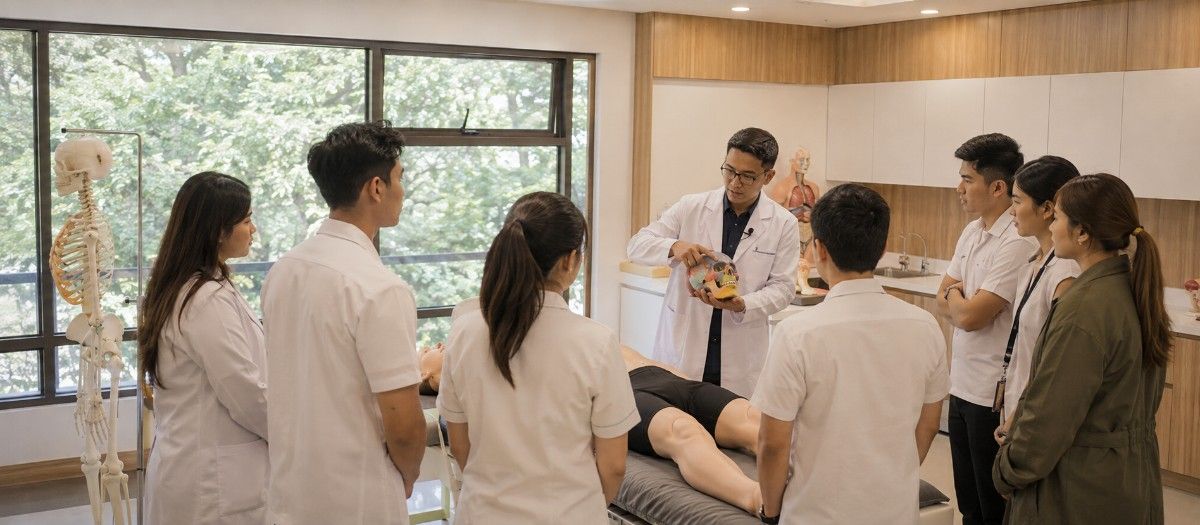
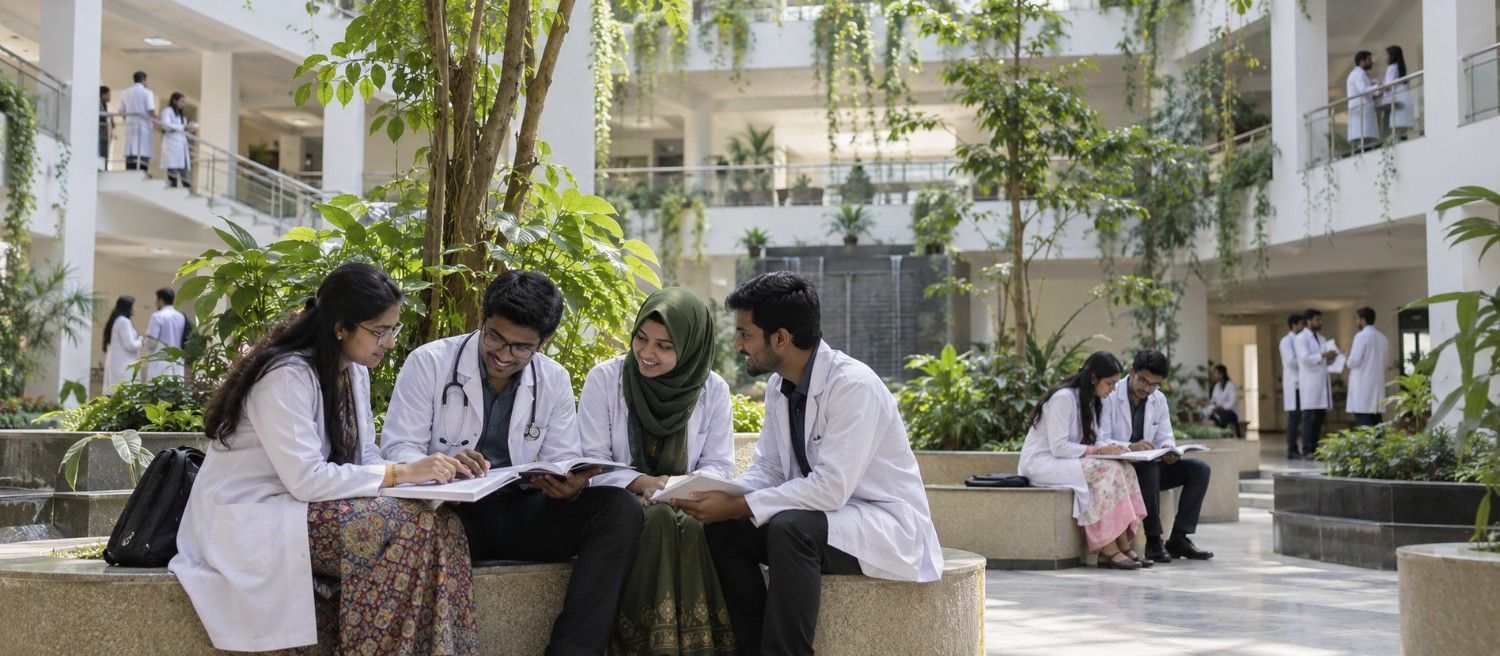
Furnished hostel rooms with Wi-Fi, laundry, 24/7 security, and Indian mess on or near campus.
Indian restaurants and mess facilities serving vegetarian and non-vegetarian home-style food daily.
Strong Indian community with cultural events, festival celebrations, and peer support groups.
Students get hands-on clinical training in government and private hospitals affiliated with the university.
Practical information for students planning to study at MBBS in Saint Louis University School of Medicine.
Prepare for all seasons. Thermal wear for winters, light clothing for summers. University provides heating in hostels.
Student visa processed with university invitation letter. Direct and connecting flights from major Indian cities.
Health insurance included in fees. Medical facility on campus plus city hospitals easily accessible.
Local SIM cards available. WhatsApp and video calls keep you connected with family back home.
Average monthly expenses of $150–$250 covering food, transport, and personal needs.
University library, online databases, and study groups. Seniors mentor juniors through academic challenges.
Our team guides you through every step — from application to arriving on campus.
The first step is to have a free phone counselling session. This is not a sales promotion or sales pitch. Here, we analyse all the universities mentioned side by side. We go through FMGE rates, total fees, city life, and whether the USMLE or NExT path better suits your goals. Most students walk out of this call with a clear first choice and a backup.
Once you pick a university, we will hand you a Philippines-specific document checklist. It is not a generic list. Every item on it is there for a reason, either for the university application, the 9(f) visa conversion, or the ACR I-Card registration. We check everything before a single paper goes anywhere.
Your application goes directly to the university through our partner channel. Most students get an acceptance letter within 10 to 21 days. However, December intake applications move faster than June ones, so timing matters. We follow up on all applications and will be in touch if there is any delay.
Once you receive your offer letter, we will have an in-depth discussion with you on the fees charged. The first instalment of fees will be deposited without any ambiguity. What you pay, when you pay, and what it covers, all of it is clear before any money moves.
Indian students do not need a pre-departure visa for the Philippines. You enter visa-free for 30 days. However, the 9(f) Student Visa conversion must start within the first week of arrival; it is time-sensitive. We also advise on the best flight route, whether Cebu or Manila, depending on your university.
About a week before you fly, we do a full pre-departure briefing. We cover accommodation options, campus location, Indian food sources near your university, how to transfer money from India, which SIM card to buy, and what the first week on campus actually looks like—students who attend this briefing land in the Philippines significantly less stressed than those who skip it.
On arrival day, our local team in the Philippines meets you at the airport, whether in Cebu or Manila. You are not landing in a new country alone. Someone who knows the ground is there from the first minute.
Within the first week, the 9(f) visa conversion process starts. Our team submits your documents to the Bureau of Immigration and closely tracks your application. The ACR I-Card, your official alien registration card, is processed at the same time. This step is strictly managed because delays here cause real problems later.
By the end of Week 2, your university enrollment is complete, your hostel room is confirmed, and your BS pre-medical orientation is done. You know your timetable, your faculty, and where everything is. Furthermore, our team has already flagged your NMAT preparation schedule, so there will be no surprises at the bridge stage.
After enrollment, our on-the-ground team in the Philippines stays in contact throughout all six years. If there is a university issue, a hostel problem, a visa renewal, or a health concern, there is a local contact to call. Moreover, from Year 3 onward, our FMGE and USMLE coaching track begins, because academic support does not stop at the airport.
Admission Helpline — Contact our counsellors for step-by-step assistance.
“The faculty here is incredibly supportive. The clinical training during hospital rotations has given me real confidence in patient care.”
“Affordable fees without compromising on quality. The campus facilities and hostel life made my transition abroad very smooth.”
“English medium instruction and WHO-recognized curriculum were the deciding factors for me. No regrets so far — excellent experience overall.”
“The university helped with everything from visa to accommodation. Hospital exposure from year three has been invaluable for my FMGE prep.”
“Just cleared my licensing exam on the first attempt. The structured coaching and mock exams during final year were a game-changer.”
“Safe campus, good food options, and a strong Indian student community. The teaching methodology is very practical and hands-on.”
No, this is the Philippine Saint Louis University in Baguio City, genuinely different from the separate, unrelated Saint Louis University in Missouri, USA.
No, this is a genuine error found in at least one source; every more detailed source confirms Baguio City as the correct, accurate location.
In 1976; one source instead claims 1952, but this appears to genuinely conflate the medical school's founding with the wider university's separate 1952 college-level establishment, which included entirely different departments.
Yes, applicants must hold a completed bachelor's degree, consistent with the Philippines' own standard graduate-entry medical education structure.
Reported at approximately USD 30,000 to 35,000 for the full five-year programme, per the more reliable source reviewed; a separate, less reliable source citing USD 5,000 a year also contains a clear location error, so treat it with caution.
The Saint Louis University Sacred Heart Medical Center, formerly Saint Louis University Hospital of the Sacred Heart, the school's own dedicated partner hospital.
At least one source describes it as the first and only medical school in the Cordillera Administrative Region, though this specific claim should be treated as reported rather than independently verified.
Sitting roughly 1,540 metres above sea level in the Cordillera Central mountain range, it is known as the "Summer Capital of the Philippines" for its notably cool, temperate climate.
Rev. Fr. Seraphin Devesse, a CICM missionary, who established a one-room elementary school for ten local boys in Baguio City on 1 December 1911.
Our expert counsellors will guide you through the complete admission process — from documents to airport pickup.