
Q1. Is Sapienza University of Rome officially recognised for Medicine?
+Yes. It is a public Italian university recognised by the Ministry of University and Research, and the source states that its Medicine degree is valid across the European Union.
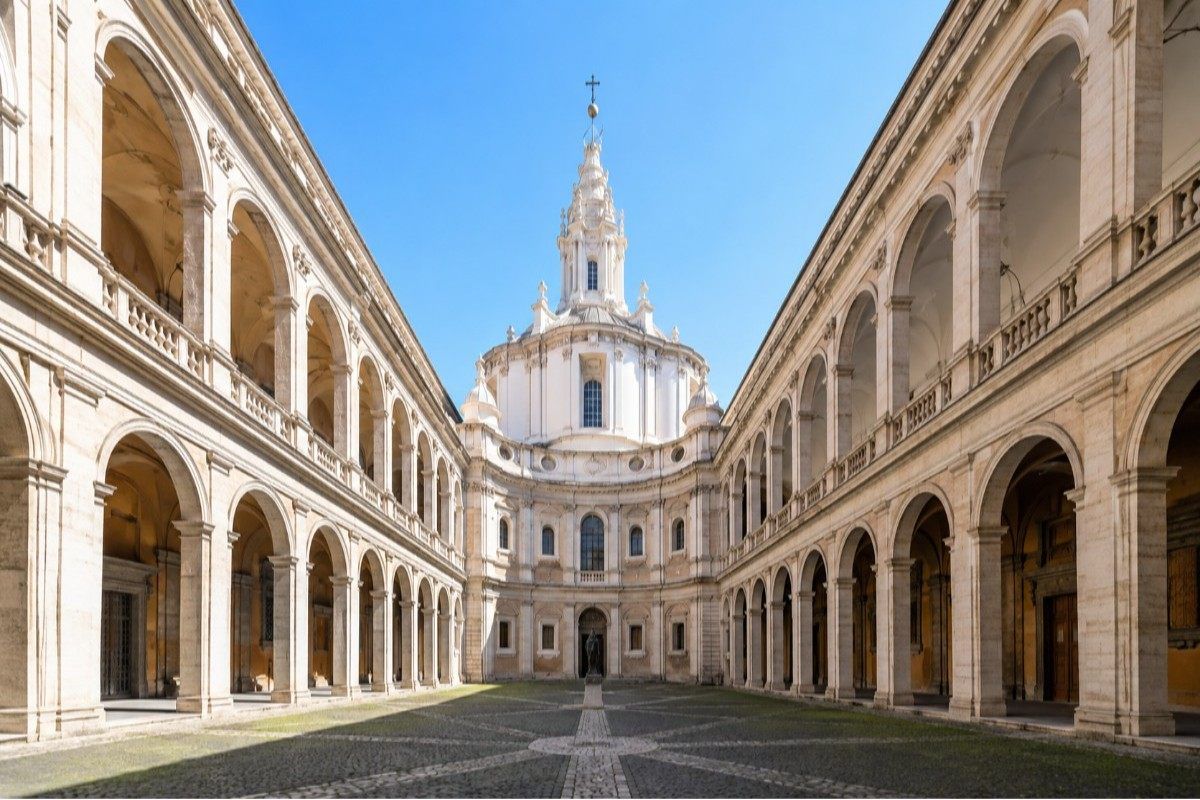
 Italy | Est. 1303
Italy | Recognised by the Italian Ministry of University and Research; degree is valid across the European Union | Medicine and Surgery taught fully in English; minimum B2 English level required at admission medium
Expert will call you within 2 hours
Most pages about Sapienza say the same three things. It was founded in 1303. It is the oldest university in Rome. You need the IMAT exam. All true. But that barely explains why this school is different from other places Indian families look at for a medical degree.
Let me start with the basics. Sapienza sits in the heart of Rome. Its Faculty of Medicine and Dentistry runs alongside Policlinico Umberto I. That is one of the largest teaching hospitals in Italy.
This is not a private college built for foreign students. It is a public Italian university. The Italian Ministry of University and Research funds and regulates it. It also runs a full Medicine and Surgery programme taught entirely in English. That matters when you compare it with private medical schools in other countries.
The university is huge. Sapienza has more than 120,000 students, with around 11,000 coming from outside Italy. It employs over 3,500 faculty members. Within this large system, the Faculty of Medicine and Dentistry stands out as one of the oldest medical faculties in Europe. Its long history is also reflected in its hospital network and strict entrance process.
Admission works very differently here. There is no donation route. There is no management quota. No agent can get you in. Applicants must sit the IMAT, or International Medical Admissions Test. The exam checks areas such as biology, chemistry, physics, basic mathematics, logic and reading skills. Seats for the English programme are limited, and admission depends on the national ranking.
Now for the fees. As a public university, Sapienza uses a different fee structure from private medical colleges. Tuition is linked to the applicable income bracket. For students whose family income is earned abroad, reported tuition for Medicine is around EUR 1,000 to EUR 4,000 per year. Regional tax and stamp duty are added separately.
Clinical training is another major part of the programme. Students do not have to wait until the final year to enter clinical environments. Clinical rotations take place at Policlinico Umberto I and other linked hospitals in Rome. Policlinico Umberto I is a large public hospital with multiple departments, giving students exposure to a broad range of real medical cases.
Then there is Rome itself. This is not a quiet campus town. It is a major European capital with a large student population and a functioning healthcare system. Students interact with people from many backgrounds and gain experience in an international environment.
The language situation also needs to be understood clearly. The Medicine and Surgery programme is taught in English, but everyday life in Rome is in Italian. Clinical years involve interaction with Italian patients, nurses and hospital staff. Therefore, learning Italian early can make clinical training much easier.
Financial support is another point worth considering. The Lazio regional government offers the DSU need-based scholarship to eligible students, including international students. Depending on eligibility, this can significantly reduce the overall cost of studying in Italy.
For Indian students, Sapienza stands out because it combines a public university structure, relatively low reported tuition, a competitive national entrance process and clinical exposure through a major public hospital system. However, students should still verify recognition, licensing and NMC requirements before admission.
Here is the full cost breakdown for the 6-year program. These are the real numbers, not just the tuition line.
Cost Breakdown
Cost Item | Per Year (EUR / INR) | 6-Year Total (INR approx.) |
Tuition Fee | EUR 1,000–4,000 / ₹90,000–₹3.6 lakh | ₹5.4–₹21.6 lakh |
Regional Tax & Stamp Duty | EUR 140–160 / ₹12,600–₹14,400 | ₹75,600–₹86,400 |
Accommodation | EUR 4,800–8,400 / ₹4.3–₹7.6 lakh | ₹25.9–₹45.4 lakh |
Food & Living | EUR 3,000–4,800 / ₹2.7–₹4.3 lakh | ₹16.2–₹25.9 lakh |
Health Insurance | EUR 150–200 / ₹13,500–₹18,000 | ₹81,000–₹1.08 lakh |
Scholarship (DSU, if eligible) | Can offset most of the above / Subject to eligibility | Varies by eligibility |
Donation / Capitation | None / ₹0 | NIL |
Total Estimated | Approx. ₹7.97–₹12.05 lakh before scholarship | ₹45–₹60 lakh approx. |
Note: INR figures are based on an exchange rate of about ₹90 per EUR. Actual costs may vary depending on the year of joining and the area selected for accommodation. DSU scholarship support depends on individual eligibility and should not be treated as guaranteed. No donation or capitation fee is reported in the source.
Why Sapienza University of Rome Deserves a Harder Look Than You've Given It
Most lists rank Sapienza as one of Italy's top public universities for Medicine. However, they do not explain why. The reason is simple: it is about how the university is built.
Sapienza is not like private colleges built mainly around foreign fee income. It uses a national entrance examination, has limited seats and works within Italy's public university and hospital system. As a result, students enter through a competitive academic process rather than through a direct paid admission route.
The cost structure also helps more than most pages explain. Indian students whose families fall into the applicable income brackets may pay considerably less than students at many private medical universities. There is no donation or capitation fee in the stated admission structure. Moreover, the DSU scholarship can reduce the financial burden for eligible students.
Furthermore, the hospital exposure at Policlinico Umberto I is a major part of the university's appeal. It is a functioning public hospital rather than a small college facility. Students therefore encounter a broad range of medical cases during their clinical education.
One thing many other pages miss is the value of studying medicine inside a major European capital. In addition to hospital training, students are surrounded by a large international student population and have access to European academic and research networks. Students also learn to work across languages and cultures from an early stage.
No hidden charges, no donation. The full picture of costs at MBBS in Sapienza University of Rome Faculty of Medicine and Dentistry.
Tuition Fee
EUR 1,000 to EUR 4,000 per year
EUR 1,000 to EUR 4,000 per year
Hostel Fee
EUR 4,800–8,400 per year
EUR 4,800–8,400 per year
Food & Meals
EUR 3,000–4,800
per year
Insurance
EUR 150–200
per year
Donation
no donation
no hidden fee
Total Estimated Cost
Approximately INR 45–60 lakh
6 Year
25–35%
Average FMGE first-attempt pass rates for students from many overseas medical universities. Students from structured programs consistently score higher.
Students returning to India need to clear the FMGE/NExT exam. MBBS in Sapienza University of Rome Faculty of Medicine and Dentistry integrates exam-oriented coaching into the regular curriculum so students are prepared from day one.
A structured program that takes you from foundational sciences to clinical mastery.
• In addition, Medical Informatics and academic study skills begin from the first semester.
• First, Anatomy, Biochemistry, Physics and Biology build the pre-clinical foundation.
• Furthermore, General Pathology is introduced, with formal written and oral examinations.
• Next, Physiology, Histology and Microbiology form the core studies for this year.
• Moreover, early clinical exposure begins at Policlinico Umberto I, alongside communication skills training.
• Then, Pathology, Pharmacology and Pathophysiology are taught with case-based links.
• In addition, Radiology, Emergency Medicine and related specialities are covered through the Policlinico system.
• After that, full rotations begin in Internal Medicine, Surgery, Paediatrics and Obstetrics and Gynaecology.
• Furthermore, research project work and elective clinical placements typically begin during this stage.
• Subsequently, advanced rotations include areas such as Cardiology, Neurology, Oncology and Endocrinology under hospital supervision.
• Also, the final state examination is required to qualify as a Medical Doctor in Italy before further licensing steps abroad.
• Finally, students complete their remaining clinical rotations and prepare their final degree thesis under faculty supervision.
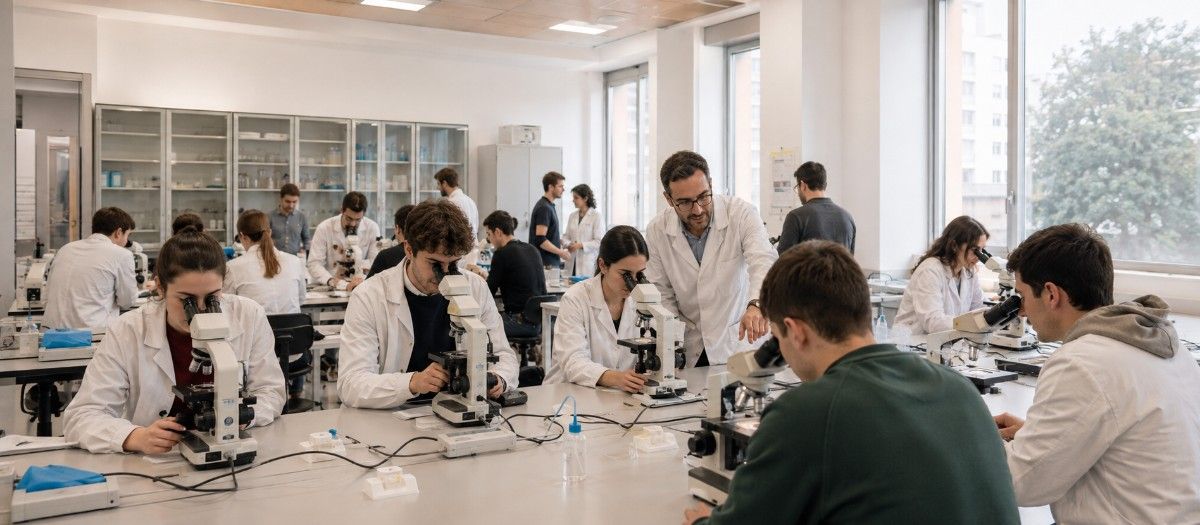
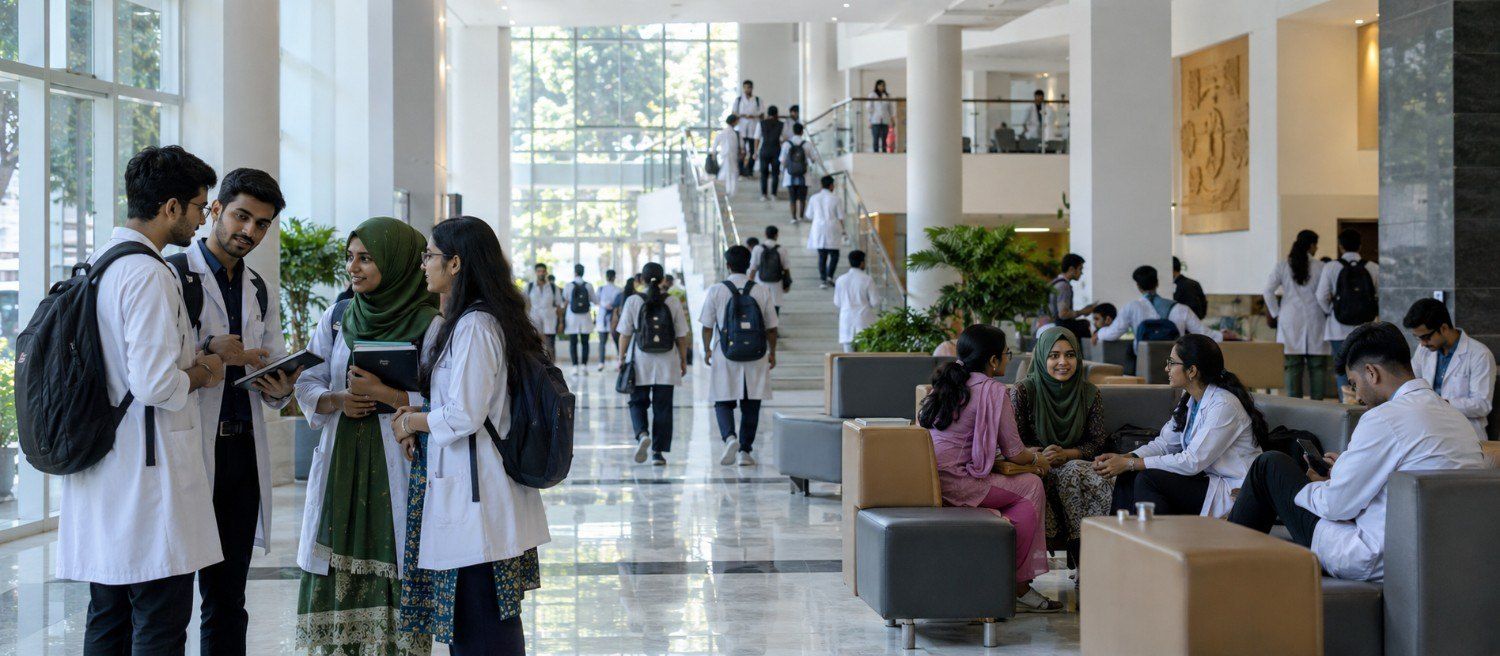
Furnished hostel rooms with Wi-Fi, laundry, 24/7 security, and Indian mess on or near campus.
Indian restaurants and mess facilities serving vegetarian and non-vegetarian home-style food daily.
Strong Indian community with cultural events, festival celebrations, and peer support groups.
Students get hands-on clinical training in government and private hospitals affiliated with the university.
Practical information for students planning to study at MBBS in Sapienza University of Rome Faculty of Medicine and Dentistry.
Prepare for all seasons. Thermal wear for winters, light clothing for summers. University provides heating in hostels.
Student visa processed with university invitation letter. Direct and connecting flights from major Indian cities.
Health insurance included in fees. Medical facility on campus plus city hospitals easily accessible.
Local SIM cards available. WhatsApp and video calls keep you connected with family back home.
Average monthly expenses of $150–$250 covering food, transport, and personal needs.
University library, online databases, and study groups. Seniors mentor juniors through academic challenges.
Our team guides you through every step — from application to arriving on campus.
Our Italy specialist explains the IMAT process, the income-based fee system, Bologna vs Rome vs other universities, and a total cost comparison with Hungary and Poland.
Our team registers you for IMAT (September test) and begins structured coaching. Biology, Chemistry, Physics, Maths, Critical Thinking. Begin preparation at least 6 months before the test.
Full Italian visa and IMAT application document set academic certificates, income documentation if applicable.
IMAT taken at designated test centres. We provide post-test analysis and guidance on university rankings.
Following IMAT ranking, the Italian university issues an admission confirmation. Our team can help with this process.
Full documentation submitted to the Italian Embassy or Consulate. Begin immediately after receiving the admission letter.
Our team advises qualifying families on the income-based fee reduction process.
Bologna /Rome orientation, accommodation, portico culture, Italian transport, Trenitalia app, banking, SIM card.
Our local team in Bologna (BLQ) or Rome (FCO) meets you and manages the first-week settlement.
We manage the Permesso application at the local Post Office within 8 days of arrival with our support, which is renewed annually.
Admission Helpline — Contact our counsellors for step-by-step assistance.
“The faculty here is incredibly supportive. The clinical training during hospital rotations has given me real confidence in patient care.”
“Affordable fees without compromising on quality. The campus facilities and hostel life made my transition abroad very smooth.”
“English medium instruction and WHO-recognized curriculum were the deciding factors for me. No regrets so far — excellent experience overall.”
“The university helped with everything from visa to accommodation. Hospital exposure from year three has been invaluable for my FMGE prep.”
“Just cleared my licensing exam on the first attempt. The structured coaching and mock exams during final year were a game-changer.”
“Safe campus, good food options, and a strong Indian student community. The teaching methodology is very practical and hands-on.”
Yes. It is a public Italian university recognised by the Ministry of University and Research, and the source states that its Medicine degree is valid across the European Union.
Yes. International applicants must sit the IMAT and secure a competitive national ranking within the available seats for the English-medium programme.
The source estimates the overall cost at approximately INR 45–60 lakh, covering tuition and basic living expenses. Scholarship support may reduce the cost for eligible students.
Indian students must qualify NEET-UG under the applicable Indian regulations, separately from the IMAT required for admission to the English-medium programme.
Students train at Policlinico Umberto I, a major public teaching hospital in Rome, along with other affiliated hospitals during later clinical years.
Early clinical exposure begins around Year 3, with full clinical rotations starting from approximately Year 4 onward.
Indian graduates may pursue the applicable FMGE or NExT pathway provided they satisfy the NMC requirements that apply to their admission year and programme.
Yes. The programme is taught in English. However, functional Italian is important for clinical work and everyday life in Rome.
Yes. The DSU scholarship offered through the Lazio regional system is available to eligible students based on financial and other applicable criteria.
Yes. The Faculty of Medicine and Dentistry also offers Dentistry and other degree programmes, including programmes taught in Italian.

Our expert counsellors will guide you through the complete admission process — from documents to airport pickup.