
Q1. When was the University of St Andrews founded?
+It was founded in 1413, making it Scotland's oldest university and the third oldest in the English-speaking world.
 Uk | Est. 1897
Uk | The eventual MBChB/MBBS, awarded by the partner medical school, is recognised by the UK's General Medical Council. | English medium
Expert will call you within 2 hours
People mostly just call it St Andrews for short. It's Scotland's oldest university, and the third oldest in the entire English-speaking world, after Oxford and Cambridge, with teaching present in the town from as early as 1410 and the university formally constituted in 1413. The founding story here is genuinely unusual: the institution was raised to university status by Pope Benedict XIII, a claimant during the Papal Schism, in return for Scottish loyalty, with the papal authorisation taking a full five months to reach the small group of clergy in St Andrews who had themselves been driven out of the universities of Paris, Oxford, and Cambridge. King James I of Scotland later confirmed the university's charter in 1432.
Medicine was actually the third subject taught at St Andrews, introduced from 1450, and originally intended to be taught at St Mary's College. However, when Scotland formally broke from the Papacy in 1560, St Mary's role was restricted purely to Theology, and medicine moved instead to St Salvator's College. So, medicine's place within the university shifted as a direct result of the Scottish Reformation, a genuinely specific historical pivot most guides skip entirely.
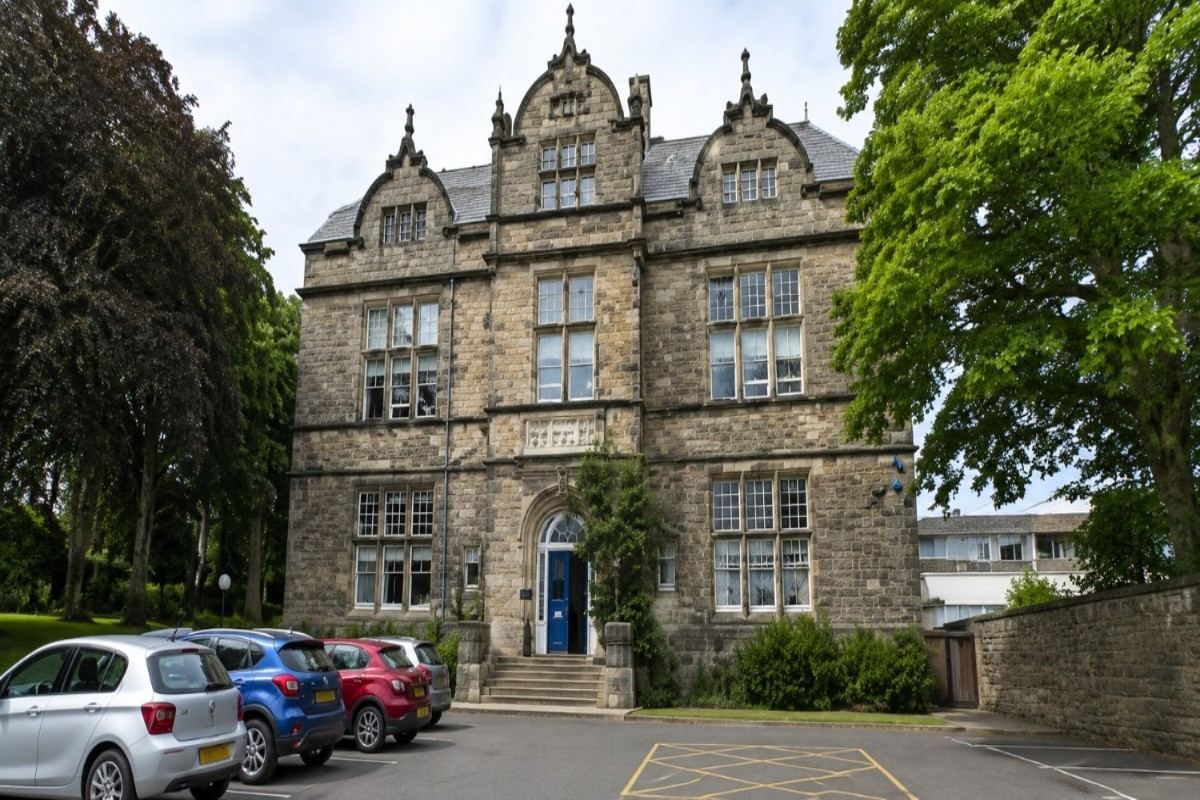
Here's a fact most guides skip entirely. The School of Medicine as it's formally recognised today, originally named the Bute Medical School, was only established in 1897. The 3rd Marquess of Bute, then Rector of the University, funded construction of the Bute Medical Buildings, completed in 1899, and endowed a new Bute Chair of Medicine specifically to establish a regular medical school capable of both teaching and examining students. A later gift from the American industrialist and philanthropist Andrew Carnegie funded further laboratory buildings, now known as the Carnegie Building. So, this school's formal medical identity, distinct from the university's own founding, is barely 130 years old, even though medicine has been taught somewhere at St Andrews since 1450.
St Andrews' medical faculty carries a genuinely notable modern connection too: Sir James Black, the pharmacologist who developed beta blockers and H2 antagonists, and who later won the Nobel Prize in Physiology or Medicine in 1988, is closely associated with the school. So, this small, historic medical school's legacy reaches into genuinely significant modern pharmaceutical breakthroughs, not just medieval academic history.
St Andrews itself is a small seaside town in Fife, Scotland, known internationally for its historic golf course and its beach, alongside the university's own collegiate atmosphere, an experience genuinely unlike most other UK universities. The School of Medicine remains deliberately small and close-knit, with only around 464 students, a fraction of the size of most UK medical schools, and the wider university is described as Scotland's most international, drawing applications from 183 different countries.
The single most important thing to understand about medicine at St Andrews, more than any other detail, is its "3+3" structure. Unlike almost every other UK medical school, St Andrews does not itself award the final MBChB or MBBS medical degree for its main A100 route. Instead, students spend their first three years at St Andrews studying toward a BSc (Hons) in Medicine, an intensive, science-heavy pre-clinical education, before transferring to a partner clinical medical school, Manchester, Edinburgh, Glasgow, or an approved overseas partner, to complete three further clinical years. Graduates finish with two separate degrees: the St Andrews BSc (Hons), and the MBChB or MBBS awarded by whichever partner school they transferred to. So, choosing St Andrews for medicine genuinely means choosing two institutions, not one, across the full six years.
Separately, St Andrews also runs a five-year Medicine MBChB, known as ScotCOM, focused specifically on community-based clinical teaching, giving students a comprehensive grounding in primary care services alongside hospital-based experience.
The A100 route at St Andrews runs six years in total: three years earning the BSc (Hons) in Medicine at St Andrews itself, followed by three clinical years at the partner school a student transfers to. All applicants must sit the UCAT, and the test format itself changed in July 2025, with the removal of the Abstract Reasoning section, reducing the maximum possible score from 3,600 to 2,700, meaning older cut-off statistics from before this change shouldn't be assumed to apply directly to current cycles.
St Andrews also runs a Gateway to Medicine programme, UCAS code LQV9, a one-year widening-access route specifically for Scottish-resident students from underrepresented backgrounds who narrowly miss the standard entry requirements, offering guaranteed progression onto either the six-year A100 or the five-year ScotCOM route on successful completion. This Gateway programme is explicitly not open to international applicants, who may instead be considered for a separate International Foundation for Medicine programme.
Fee figures here need to be understood in two genuinely separate parts, given the 3+3 structure. For the years spent at St Andrews itself, the university's own official 2026-27 rate for the Faculty of Medicine is GBP 39,620 a year for overseas students, a figure the university states explicitly includes a mandatory Scottish Government levy applied to overseas medical students specifically to cover NHS clinical teaching costs. Home Scotland students pay a nominal GBP 1,820 a year, though this is paid directly to the university by the Student Awards Agency for Scotland for most eligible students, effectively making stationary Scottish study free. Rest of UK students pay GBP 9,790 for 2026/27, in line with the equivalent English fee cap.
Crucially, tuition for Years 4 through 6 isn't set by St Andrews at all, since students are, by that point, enrolled at their partner medical school instead. Manchester, Edinburgh, Glasgow, and any overseas partner each set their own separate international tuition rates for their clinical years, which can vary considerably and would need to be confirmed directly once a student's specific transfer destination is known. So, applicants should budget for St Andrews' own confirmed GBP 39,620 a year across the first three years, roughly GBP 118,860 in total, while treating the final three years' cost as a genuinely open, partner-dependent variable rather than a single fixed figure. NEET remains a genuine requirement for Indian applicants here, exactly as it does for MBBS study in most other countries, and Indian graduates would still need to clear the FMGE or NExT exam to practise medicine back in India.
Parameter | Details |
Established | University founded 1413 (Scotland's oldest); Medicine taught from 1450; formal School of Medicine (Bute Medical School) established 1897 |
Institution Type | Public, collegiate university |
Location | St Andrews, Fife, Scotland, United Kingdom |
Programme | A100 Medicine, a distinctive "3+3" structure: BSc (Hons) Medicine at St Andrews, then transfer to a partner medical school for clinical training |
Duration | 6 years total: 3 years at St Andrews (BSc Hons), then 3 clinical years at a partner school (Manchester, Edinburgh, Glasgow, or an overseas partner) |
Medium of Instruction | English |
Foreign Quota Note | NEET required for Indian applicants; the Gateway to Medicine widening-access route is not open to international students |
Teaching Hospital | Clinical training runs at whichever partner medical school a student transfers to for Years 4-6 |
Fee Structure
Fee Component | Amount | Notes |
Tuition Fee (Home/Scotland students) | GBP 1,820 per year, nominally | Paid directly by the Student Awards Agency for Scotland (SAAS) for most eligible first-degree students, effectively free |
Tuition Fee (Rest of UK students) | GBP 9,790 per year (2026/27) | In line with the equivalent English fee cap |
Tuition Fee (International/Overseas, Faculty of Medicine, Years 1-3) | GBP 39,620 per year (2026/27) | Official rate confirmed on St Andrews' own site; includes a mandatory Scottish Government levy for overseas medical students covering NHS clinical teaching costs |
Tuition Fee (Years 4-6, partner medical school) | Varies considerably by partner institution | Set independently by Manchester, Edinburgh, Glasgow, or the relevant overseas partner; confirm directly once a transfer destination is known |
Living Costs | Approx. GBP 1,000 to 1,200 per month | St Andrews is a small, relatively expensive Scottish town given its size and popularity |
Most rival pages describe UK medical schools as single, self-contained programmes. St Andrews is structurally different from nearly every other option: its main medicine route deliberately splits across two institutions, with a guaranteed transfer to a partner clinical school built into the programme's own design. So, this isn't a marketing description; it's a genuinely distinctive academic structure that shapes the entire experience.
Most guides describe a medical school's establishment in vague institutional terms. St Andrews' School of Medicine traces its formal 1897 founding directly to the 3rd Marquess of Bute, who personally funded the Bute Medical Buildings and endowed the Bute Chair of Medicine, with further expansion funded by a specific, named gift from Andrew Carnegie. So, this school's founding rests on two specific, documented acts of philanthropy, not an anonymous institutional decision.
Be very clear about the real structural trade-off here. Choosing St Andrews for medicine means committing to two separate institutions across six years, with the final three years' cost, location, and exact curriculum genuinely dependent on which partner school a student transfers to, a real source of uncertainty compared to a single, self-contained medical degree. The confirmed St Andrews portion alone, at GBP 39,620 a year for three years, already totals close to GBP 119,000, before any partner-school clinical-year fees are added. The School of Medicine here is also genuinely small, at only around 464 students, which some applicants may see as an advantage and others as a limitation.
So, who fits here best? Students drawn to an unusually thorough, science-heavy pre-clinical grounding, within one of the UK's most historic and internationally diverse small universities, fit well here, provided they're comfortable with the genuine uncertainty of a later institutional transfer. Students who value St Andrews' small, close-knit School of Medicine and its documented Nobel Prize-connected legacy fit well too. However, applicants who need a single, fully self-contained medical degree with one fixed fee schedule across all six years should weigh this genuine structural difference carefully. Still, St Andrews' documented academic rigour, its guaranteed transfer arrangement, and its genuinely unique place in UK medical education are real, well-established strengths.
No hidden charges, no donation. The full picture of costs at MBBS in University of St Andrews School of Medicine.
Tuition Fee
GBP £39,620 per Year
GBP £39,620 per year
Hostel Fee
Approx. GBP 1,000 to 1,200 per month
Approx. GBP 36,000 - 43,200 over 3 years
Food & Meals
GBP £380 - £415 per month
per month
Insurance
GBP £1,000
per year
Donation
No Donation
No Hidden fee
Total Estimated Cost
Roughly GBP 155,000 to 162,000 for the first 3 years — Years 4-6 costs depend entirely on the chosen partner school
6 year
25–35%
Average FMGE first-attempt pass rates for students from many overseas medical universities. Students from structured programs consistently score higher.
Students returning to India need to clear the FMGE/NExT exam. MBBS in University of St Andrews School of Medicine integrates exam-oriented coaching into the regular curriculum so students are prepared from day one.
A structured program that takes you from foundational sciences to clinical mastery.
Runs within St Andrews' collegiate teaching environment, distinct from a typical hospital-based first year.
Covers Anatomy, Physiology, and Biochemistry, forming an intensive scientific foundation.
Continues to prepare students for the guaranteed transfer to a partner clinical school.
Builds on the foundational sciences with deeper biomedical study.
Concludes the pre-clinical stage before transfer to a partner medical school.
Completes the Honours-level BSc, the qualification St Andrews itself awards on this route.
Runs through that partner school's own teaching hospitals and clinical placement network.
Covers Medicine, Surgery, and allied clinical subjects at whichever partner institution a student transfers to.
Graduates complete the UK Foundation Programme and register with the General Medical Council before practising independently.
Graduates receive an MBChB or MBBS from the partner medical school, alongside their earlier St Andrews BSc (Hons).

Furnished hostel rooms with Wi-Fi, laundry, 24/7 security, and Indian mess on or near campus.
Indian restaurants and mess facilities serving vegetarian and non-vegetarian home-style food daily.
Strong Indian community with cultural events, festival celebrations, and peer support groups.
Students get hands-on clinical training in government and private hospitals affiliated with the university.
Practical information for students planning to study at MBBS in University of St Andrews School of Medicine.
Prepare for all seasons. Thermal wear for winters, light clothing for summers. University provides heating in hostels.
Student visa processed with university invitation letter. Direct and connecting flights from major Indian cities.
Health insurance included in fees. Medical facility on campus plus city hospitals easily accessible.
Local SIM cards available. WhatsApp and video calls keep you connected with family back home.
Average monthly expenses of $150–$250 covering food, transport, and personal needs.
University library, online databases, and study groups. Seniors mentor juniors through academic challenges.
Our team guides you through every step — from application to arriving on campus.
Compare universities based on fees, city, UCAT requirements, and clinical exposure, starting 12–18 months before your intended entry, not the cycle you’re applying in.
Registration opens in May; the testing window runs July–September. Most successful applicants begin focused preparation 3–4 months ahead, alongside board exam preparation.
Book and complete IELTS, PTE, or TOEFL well ahead of the UCAS deadline, allowing time for a retake if needed.
Submit your application, including personal statement and up to 4 medicine choices, before the 15 October deadline.
Prepare for and attend interviews (MMI or Panel format) typically scheduled November through February.
Offers (conditional or unconditional) typically arrive through winter and spring; conditional offers require meeting stated academic and English-score conditions.
Once Class 12 results and any other conditions are confirmed, your university issues the Confirmation of Acceptance for Studies (CAS), which is required for your visa application.
Apply using your CAS reference number; arrange maintenance funds according to the 28-day rule well in advance rather than at the last minute.
Book flights, confirm accommodation, complete any on-arrival formalities during orientation week, open a local bank account, and begin building connections with your university’s Indian/South Asian student community.
Admission Helpline — Contact our counsellors for step-by-step assistance.
“The faculty here is incredibly supportive. The clinical training during hospital rotations has given me real confidence in patient care.”
“Affordable fees without compromising on quality. The campus facilities and hostel life made my transition abroad very smooth.”
“English medium instruction and WHO-recognized curriculum were the deciding factors for me. No regrets so far — excellent experience overall.”
“The university helped with everything from visa to accommodation. Hospital exposure from year three has been invaluable for my FMGE prep.”
“Just cleared my licensing exam on the first attempt. The structured coaching and mock exams during final year were a game-changer.”
“Safe campus, good food options, and a strong Indian student community. The teaching methodology is very practical and hands-on.”
It was founded in 1413, making it Scotland's oldest university and the third oldest in the English-speaking world.
Not for the main A100 route. Students earn a BSc (Hons) Medicine at St Andrews after 3 years, then transfer to a partner medical school for 3 clinical years to earn their MBChB or MBBS.
Manchester, Edinburgh, Glasgow, or an approved overseas partner, depending on the student's transfer arrangements.
Yes, a valid, qualifying NEET score is required for Indian applicants under India's own national rules.
The university's own confirmed 2026-27 rate for overseas Medicine students is GBP 39,620 a year, working out to roughly GBP 118,860 across the first three years.
This depends entirely on which partner medical school a student transfers to, since Manchester, Edinburgh, Glasgow, and overseas partners each set their own separate fees.
In 1897, as the Bute Medical School, funded by the 3rd Marquess of Bute, with later expansion funded by a gift from Andrew Carnegie.
Yes, the Gateway to Medicine programme, though it's explicitly not open to international applicants.
The School of Medicine is genuinely small, with around 464 students in total.
The UCAT format changed in July 2025, removing the Abstract Reasoning section and reducing the maximum possible score from 3,600 to 2,700.
Our expert counsellors will guide you through the complete admission process — from documents to airport pickup.