
Q1. When was the University of Ioannina's Medical School established?
+It was founded in 1977, under Law 63/77, the same year as the medical schools at the University of Patras and Democritus University of Thrace.
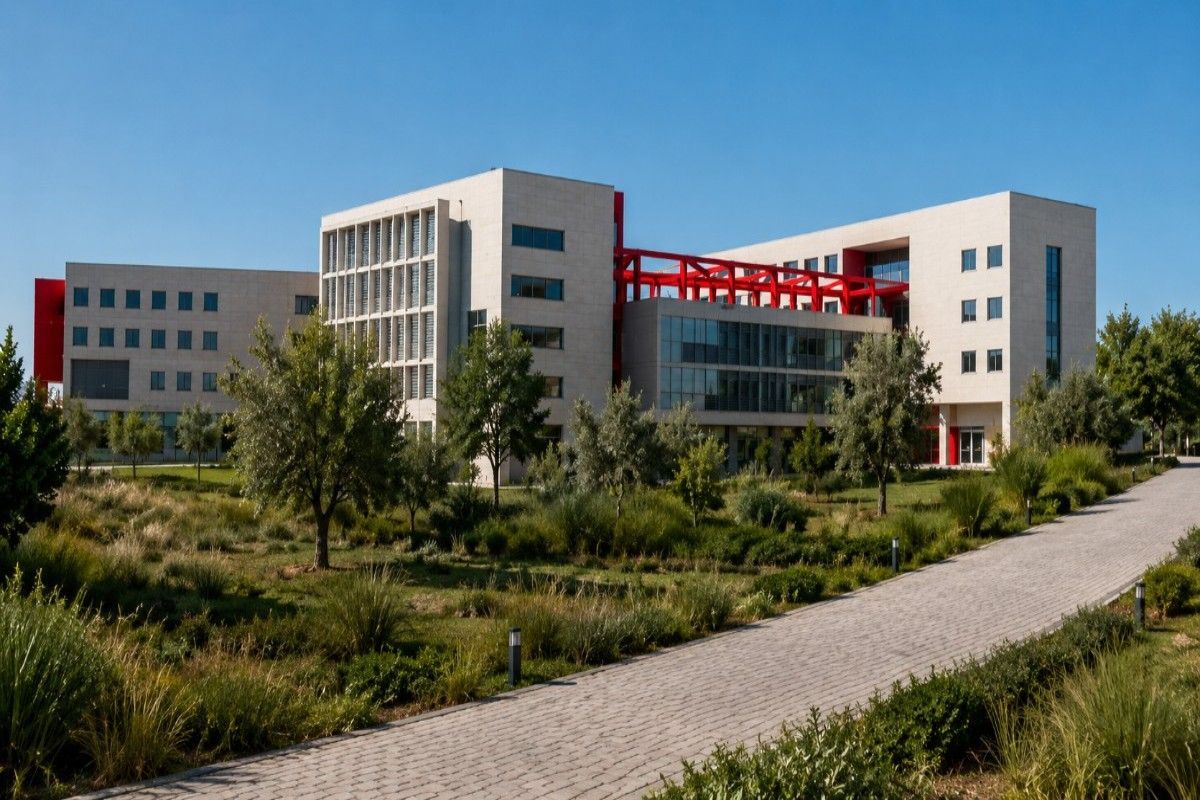
 Greece | Est. 1964
Greece | Recognised by Greece's Ministry of Education, Religious Affairs and Sports. | Greek runs through the entire programme. No English-medium undergraduate medical track exists at this university. medium
Expert will call you within 2 hours
People mostly just call it UoI for short. It began life in 1964, not as an independent institution, but as an extension of the Aristotle University of Thessaloniki, opening its very first department, Physics, with just two hundred students. It only became a fully independent university in 1970, under Legislative Decree 746/70. So, unlike universities that launch fully formed, UoI genuinely grew out of a larger, older institution before establishing its own separate identity.
UoI is officially recognised as the third oldest public university in Greece, and it has spent more than half a century building out its academic offer since that independent 1970 founding. The university now comprises 11 schools, including Philosophy, Sciences, Health Sciences, Education, and Engineering, among others, teaching a student population reported at anywhere between roughly 18,000 and 33,000, depending on how active versus registered enrolment is counted.
Here's a fact most guides skip entirely. The School of Medicine was founded in 1977, under Law 63/77, the very same year as two sister medical schools, at the University of Patras and the Democritus University of Thrace. UoI's own account of this shared founding year describes its medical school's subsequent development as genuinely impressive, given its achievements and reputation within such a comparatively short time period since.
The university's campus itself is genuinely distinctive: it sits roughly six kilometres outside Ioannina's city centre, on a wooded plateau above Lake Pamvotis, covering almost 850 acres, one of the largest university campuses in the whole of Greece. Several small museums operate directly on campus, including a dedicated History of Medicine Museum, alongside a Folklore Museum and a Typography Museum, reflecting the university's genuinely broad cultural, not purely academic, footprint.
Ioannina itself is a historic city in Greece's northwestern Epirus region, built around Lake Pamvotis, with a well-preserved Ottoman-era old quarter, including the city's ancient walls and the Aslan Pasha mosque, whose minaret reflects in the lake. A small island in the lake itself holds real historical weight too, since it's where the Ottoman-era ruler Ali Pasha was killed in 1822. So, students here study in a genuinely historic, visually striking setting, quite different from Greece's larger, busier cities.
Clinical training runs through the University Hospital of Ioannina, located directly within the university's own campus rather than as a separate off-site facility. This close physical integration means medical students train within genuine walking distance of their classrooms and laboratories, rather than needing to commute across the city for clinical placements.
One detailed independent source specifically describes Ioannina as Greece's cheapest student city, a genuinely useful, specific claim for cost-conscious applicants weighing living expenses alongside tuition. So, beyond the academic offer itself, the city's overall affordability is a real, documented factor worth considering.
The medical degree at UoI, the Ptychion Iatrikes, runs at least six years, following Greece's standard national medical curriculum, with roughly 200 students admitted to the School of Medicine each year through Greece's national-wide examinations. The programme is taught entirely in Greek; one detailed independent guide specifically warns that Ioannina's medical school is "Greek-only, not the English MD that international students often assume Greece offers everywhere," a genuinely important clarification for applicants comparing Greek medical schools.
Admission for Greek nationals runs through the national Panhellenic Examinations. International applicants who haven't completed their secondary education in Greece instead apply through a separate Ministry of Education international admissions pathway, evaluated on their own academic records and language proficiency rather than competing directly against Panhellenic Exam candidates. Requirements typically include a secondary school qualification recognised by DOATAP as equivalent to the Greek Apolytirio, and proof of Greek language proficiency, generally at B2 level or above, for non-Greek speakers.
Fee figures here follow the same genuine pattern of conflict found across Greek public universities generally. One detailed, university-specific source describes UoI's Greek-taught undergraduate degrees as tuition-free for both EU and non-EU students alike, a genuinely unusual feature within Europe. Other, more general sources on Greek public university fees report a typical non-EU fee of roughly EUR 1,500 a year. Given this real discrepancy, applicants should confirm the exact current fee status directly with UoI before assuming either figure applies.
Living costs form the more consistently documented expense here, reported at somewhere between EUR 450 and 650 a month, reflecting Ioannina's specific reputation as one of Greece's most affordable university cities. NEET remains a genuine requirement for Indian applicants here, exactly as it does for MBBS study in most other countries, and Indian graduates would still need to clear the FMGE or NExT exam to practise medicine back in India.
Parameter | Details |
Established | University founded 1964 as an extension of Aristotle University of Thessaloniki; independent since 1970; School of Medicine founded 1977 (Law 63/77) |
Institution Type | Public, state-run university (third oldest public university in Greece) |
Location | Ioannina, Epirus, Greece (campus 6 km outside the city centre) |
Ptychion Iatrikes (Greek medical degree), equivalent to an MBBS/MD | |
Duration | 6 years, following Greece's standard medical curriculum |
Medium of Instruction | Greek |
Foreign Quota Note | NEET required for Indian applicants under India's own national rules; admission for non-Greek-educated applicants runs through a special international quota |
Teaching Hospital | University Hospital of Ioannina, located directly within the university's own campus |
Fee Component | Amount | Notes |
Tuition Fee (Greek/EU students) | None | Greek public university undergraduate education is constitutionally free for Greek and EU/EEA citizens |
Tuition Fee (non-EU students, Greek-taught route) | Reported inconsistently: EUR 0 to approx. EUR 1,500 per year | Some sources describe this specific university's Greek-taught degrees as free for all nationalities; others cite a general non-EU public-university fee near EUR 1,500 a year |
Application/Administrative Fee | A small registration fee applies at enrolment | Amount not consistently published; confirm directly |
Living Costs | Approx. EUR 450 to 650 per month | Ioannina is described by one detailed source as Greece's cheapest student city |
Greek Language Preparation | Often required before or alongside enrolment (B2 level) | Additional cost and time investment for non-Greek-speaking applicants |
Most rival pages describe living costs in vague, generic terms. One detailed independent guide specifically names Ioannina as Greece's cheapest student city, a real, specific ranking claim rather than a general impression. So, cost-conscious applicants get a genuinely documented affordability advantage here, beyond whatever tuition figure ultimately applies.
Most guides describe clinical training as running through a separate hospital site across town. Here, the University Hospital of Ioannina sits directly within the university's own campus, alongside the classrooms and laboratories students use throughout their preclinical years. So, the clinical training relationship here is genuinely, physically integrated, not a commute-dependent arrangement.
Be upfront about a few real gaps here. Tuition status for non-EU students genuinely conflicts across sources, so this needs direct confirmation before committing. The programme runs entirely in Greek, requiring B2-level proficiency, and one detailed guide specifically warns against assuming an English-taught option exists here, since it doesn't. The university's own reported student numbers vary considerably, from roughly 18,000 to 33,000, depending on counting method, so treat any single enrolment figure with some caution.
So, who fits here best? Students willing to invest in Greek language preparation, and drawn to a genuinely affordable, historically distinctive university city with a medical school integrated directly into campus, fit well here. Students who value studying near real ancient and Ottoman-era historical sites fit well too. However, applicants who need an English-taught programme, or a single, fully confirmed tuition figure from the outset, should approach this school with those caveats in mind. Still, UoI's genuine 1977 founding alongside two sister medical schools, its campus-integrated teaching hospital, and its documented affordability are real, well-established strengths.
No hidden charges, no donation. The full picture of costs at MBBS in University of Ioannina Medical School.
Tuition Fee
EUR 0 to approx. EUR 1,500 per year
EUR 0 to approx. EUR 1,500 per year
Hostel Fee
$2,580 – $4,560 per year
$2,580 – $4,560 per year
Food & Meals
N/A
PER MONTH
Insurance
$240 – $540
per year
Donation
no donation
no hidden fee
Total Estimated Cost
EUR 32,400 to 55,800
6 year
25–35%
Average FMGE first-attempt pass rates for students from many overseas medical universities. Students from structured programs consistently score higher.
Students returning to India need to clear the FMGE/NExT exam. MBBS in University of Ioannina Medical School integrates exam-oriented coaching into the regular curriculum so students are prepared from day one.
A structured program that takes you from foundational sciences to clinical mastery.
Builds the base knowledge that all later clinical learning depends on.
Covers Anatomy, Physiology, and Biochemistry, forming the scientific foundation for everything that follows.
Links basic disease science with population health and the drugs used to treat illness.
Covers Pathology, Microbiology, Pharmacology, and Community Medicine.
Runs directly through the University Hospital of Ioannina, integrated within the campus itself.
Covers Medicine, Surgery, and Obstetrics and Gynaecology, plus allied clinical subjects, with roughly half the programme's teaching time dedicated to clinical training.
Graduates must complete Greece's standard licensing steps before practising independently.
No separate internship year is appended; clinical training runs throughout the six-year programme itself.
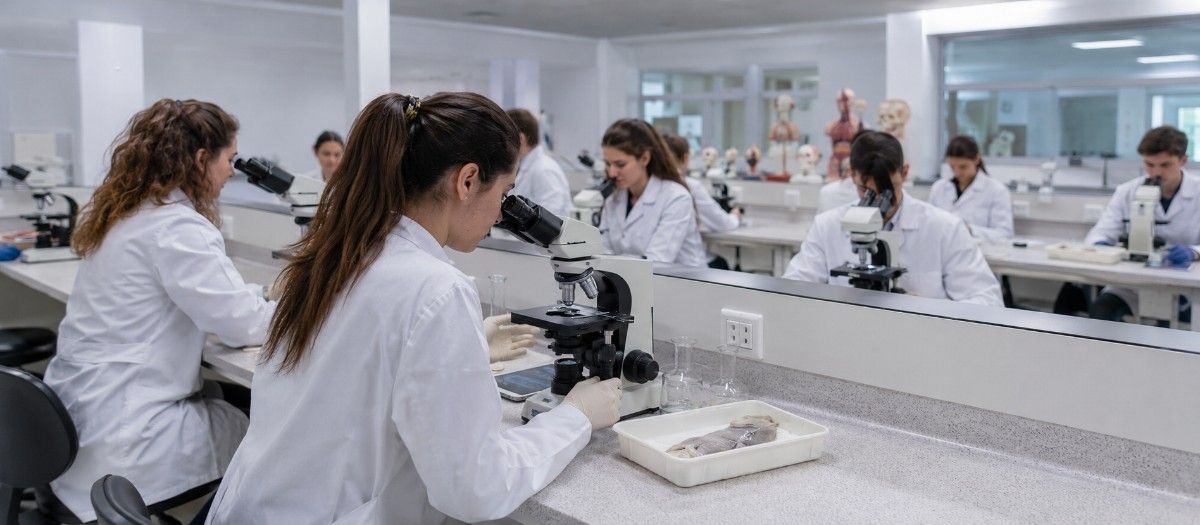

Furnished hostel rooms with Wi-Fi, laundry, 24/7 security, and Indian mess on or near campus.
Indian restaurants and mess facilities serving vegetarian and non-vegetarian home-style food daily.
Strong Indian community with cultural events, festival celebrations, and peer support groups.
Students get hands-on clinical training in government and private hospitals affiliated with the university.
Practical information for students planning to study at MBBS in University of Ioannina Medical School.
Prepare for all seasons. Thermal wear for winters, light clothing for summers. University provides heating in hostels.
Student visa processed with university invitation letter. Direct and connecting flights from major Indian cities.
Health insurance included in fees. Medical facility on campus plus city hospitals easily accessible.
Local SIM cards available. WhatsApp and video calls keep you connected with family back home.
Average monthly expenses of $150–$250 covering food, transport, and personal needs.
University library, online databases, and study groups. Seniors mentor juniors through academic challenges.
Our team guides you through every step — from application to arriving on campus.
Our Greece specialist assesses Greek language readiness and academic profile, and the public Greek-medium pathway vs the English-medium private option.
For the public pathway, we connect you with certified Greek language instructors. B2 proficiency target before admission.
Full Greek admission and visa document set, which includes translated academic certificates.
We submit documents to Aristotle University of Thessaloniki or an approved Greek partner.
Receives offer letter from the university, explains terms, and manages initial fee payment.
Full visa documentation prepared and submitted to the Greek Embassy in New Delhi.
Thessaloniki or Athens city orientation, accommodation, transport, banking, SIM card, and first-week logistics
We advise on routing to Thessaloniki (SKG) or Athens (ATH). Local team confirms arrival.
Our local Greece team coordinates pickup and first-week setup.
We manage Greek residence permits for studies filed and renewed annually.
Admission Helpline — Contact our counsellors for step-by-step assistance.
“The faculty here is incredibly supportive. The clinical training during hospital rotations has given me real confidence in patient care.”
“Affordable fees without compromising on quality. The campus facilities and hostel life made my transition abroad very smooth.”
“English medium instruction and WHO-recognized curriculum were the deciding factors for me. No regrets so far — excellent experience overall.”
“The university helped with everything from visa to accommodation. Hospital exposure from year three has been invaluable for my FMGE prep.”
“Just cleared my licensing exam on the first attempt. The structured coaching and mock exams during final year were a game-changer.”
“Safe campus, good food options, and a strong Indian student community. The teaching methodology is very practical and hands-on.”
It was founded in 1977, under Law 63/77, the same year as the medical schools at the University of Patras and Democritus University of Thrace.
No, the entire programme runs in Greek; one detailed guide specifically warns against assuming an English-taught option exists here.
International applicants not educated in Greece apply through a separate Ministry of Education pathway, rather than sitting the Panhellenic Examinations.
Yes, a valid, qualifying NEET score is required for Indian applicants under India's own national rules.
Reports genuinely conflict: some sources describe tuition here as free for all nationalities, while others cite a general non-EU public-university fee of roughly EUR 1,500 a year. Confirm directly.
Training runs through the University Hospital of Ioannina, located directly within the university's own campus.
Approximately 200 students are admitted annually through Greece's national-wide examinations.
Yes, one detailed independent guide specifically describes Ioannina as Greece's cheapest student city.
It began as an extension of Aristotle University of Thessaloniki in 1964, becoming fully independent in 1970, making it Greece's third oldest public university.
No, clinical placements sit inside the six-year programme itself, with no separate internship year afterward.


Our expert counsellors will guide you through the complete admission process — from documents to airport pickup.