1. When was Tan Tao University's School of Medicine established?
+Sources disagree: one reports 2008, another 2013. The wider university's construction began in 2004; confirm the exact School of Medicine date directly.
 Vietnam | Est. 2003
Vietnam | Recognised by Vietnam's Ministry of Education and Training; the School of Medicine holds ECFMG certification from the United States, granted in 2019. | Bilingual teaching in English and Vietnamese throughout the MD programme. medium
Expert will call you within 2 hours
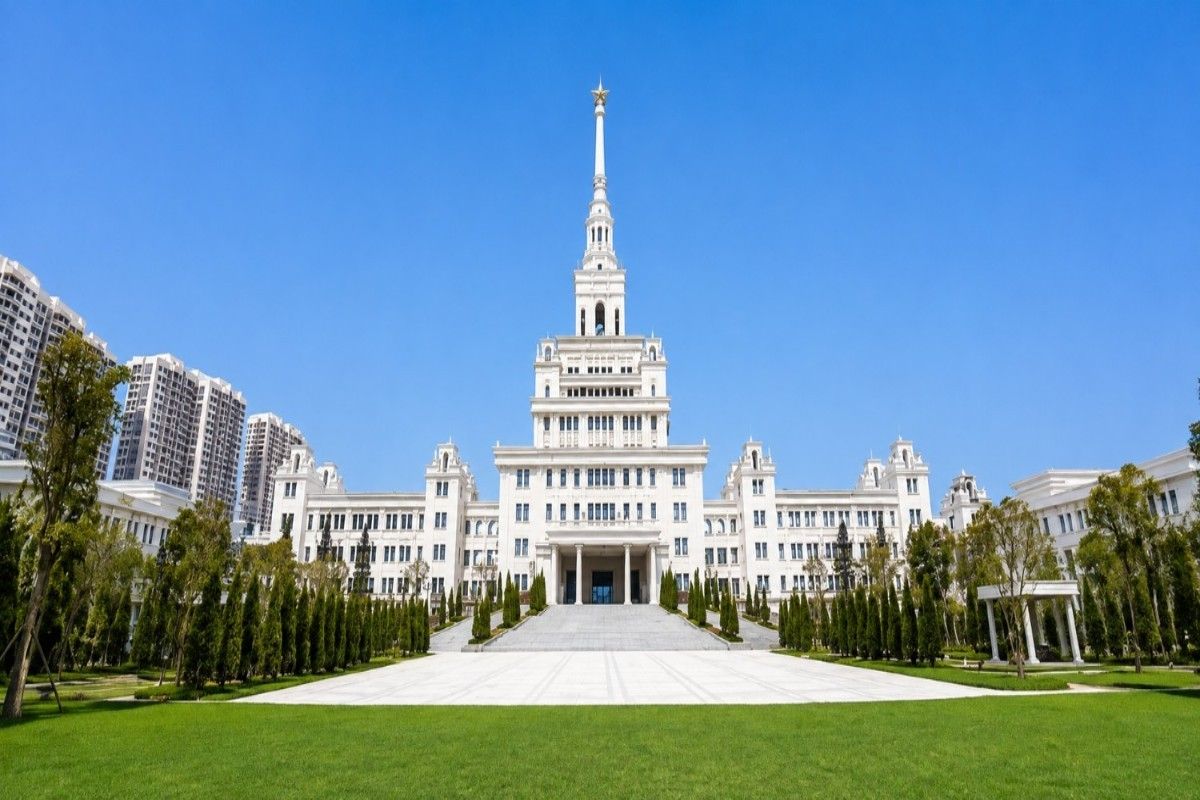
People mostly just call it TTU. It's a genuinely distinctive institution among Vietnamese medical schools, since it was founded as the country's first private, non-profit, US-style university, deliberately modelled on Duke University in the United States. So, unlike most Vietnamese medical schools, which are public institutions run by the state, TTU was built from the ground up as a private philanthropic project.
The founder, Dang Thi Hoang Yen, also known as Maya Dangelas, built her career first in Vietnam's government sector for 13 years, before founding Tan Phuong Dong Company Ltd in 1993, the forerunner of the Tan Tao Group, which grew into one of Vietnam's leading industrial park and infrastructure developers. In 2002, she travelled to the United States specifically to study the American non-profit liberal arts university model, attracting well-known American professors before returning to Vietnam in 2007 to bring that vision to life. So, TTU's founding story traces to a specific, documented personal mission, not a generic institutional expansion.
Construction itself began on 2 October 2004, transforming what's described as a flooded, blackish-water area into the university's current 503-acre campus in Tan Duc E.City. The School of Medicine's own founding date is reported inconsistently across sources, with one listing it as 2008 and another describing it as established in 2013 as Vietnam's first non-profit university to adopt the American liberal-education model for medicine specifically. So, applicants should treat the exact founding year as a genuinely open question and confirm it directly with the university.
Here's a fact most guides skip entirely. In 2016, Professor Thach Nguyen, a Vietnamese-American cardiologist and a genuine pioneer of interventional cardiology in Vietnam, agreed to become Dean of TTU's Faculty of Medicine. He had already been elected to the executive committees of both the American Heart Association and the American Society of Interventional Cardiology, and served as Director of Cardiovascular Research at Methodist Hospital in Merrillville, Indiana. Under his leadership, TTU developed an improved medical curriculum modelled on the Faculty of Medicine at the University of Illinois, Chicago, and the programme moved to bilingual English-and-Vietnamese teaching specifically to give students the language skills needed to access international medical opportunities.
A genuinely notable, independently verifiable milestone followed in spring 2019, when TTU's School of Medicine received certification from the United States' Educational Commission on Foreign Medical Graduates, ECFMG. This certification, in place since the 1950s as a quality-control measure for doctors trained outside the US, meant that the School of Medicine's 2019 graduates became eligible to sit the United States Medical Licensing Examination, USMLE. At the time, only 11 major and specialised medical universities across the whole of Vietnam had students eligible for the USMLE, a group that included some of the country's oldest and most established medical schools. So, this ECFMG certification places TTU in genuinely select company among Vietnamese medical institutions, not just among private ones.
TTU was also the first university in Vietnam, and the second in Southeast Asia, to introduce the Anatomage 3D digital dissection system into its teaching, starting in the 2016/17 academic year. So, students here train with genuinely current anatomical visualisation technology rather than relying solely on traditional cadaver-based teaching.
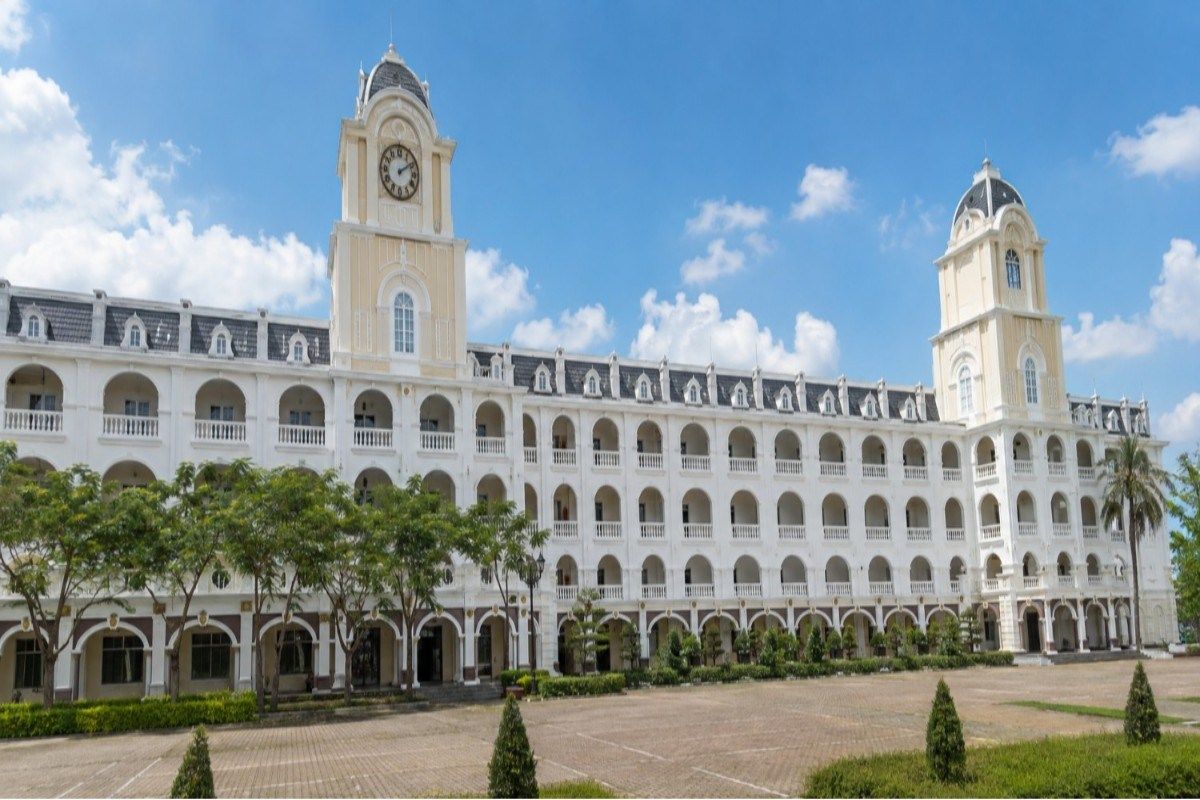
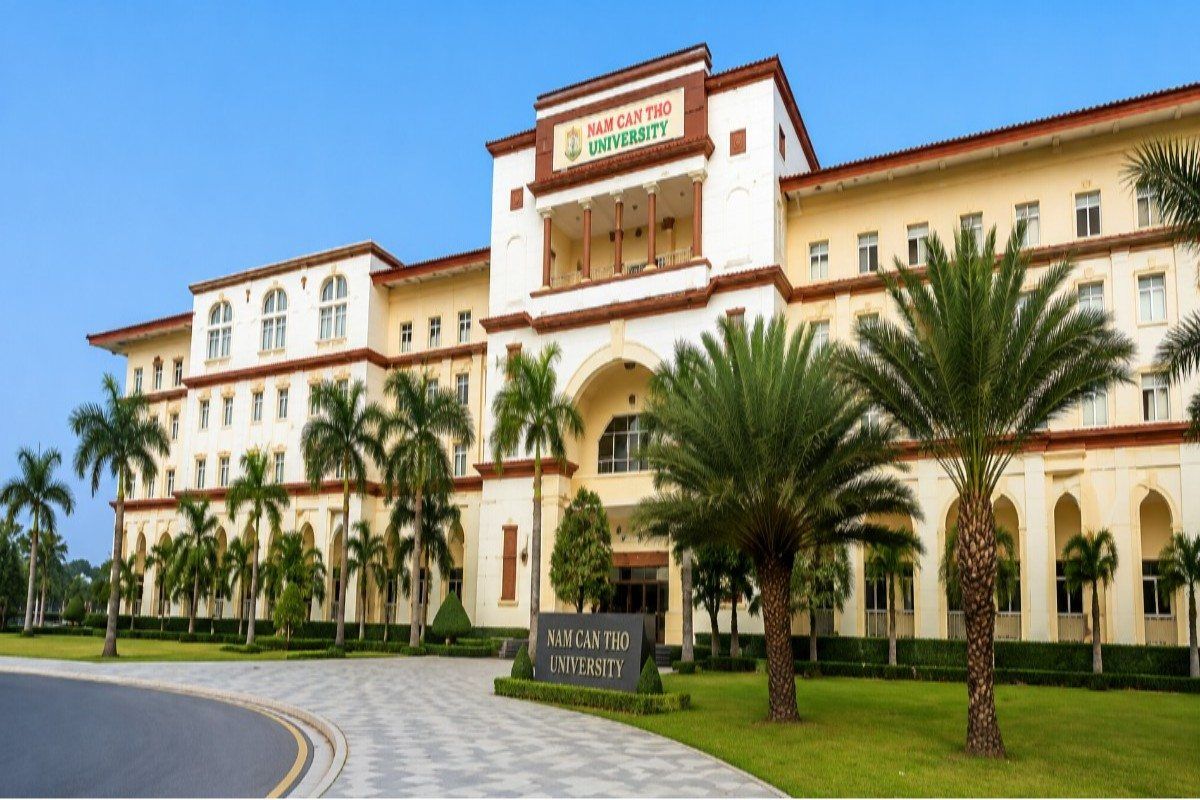
TTU sits on a 503-acre campus in Tan Duc E.City, in Duc Hoa, an area that was administratively reorganised from Long An Province into Tay Ninh Province on 1 July 2025. So, if older material refers to the university as being in Long An Province, it's describing the same physical campus under an earlier provincial boundary. The campus itself was designed and master-planned by American architectural firms, including Morris Architects, reflecting the university's deliberate US-style approach from the very beginning.
The campus's long-term plan envisions ten schools across sixty-four faculty buildings, with capacity for up to ten thousand students once fully built out, a construction plan originally projected to take around fifteen years. So, students enrolling today are joining a campus that's still growing toward its full envisioned scale, rather than one that's already reached its final built form.
TTU's Doctor of Medicine programme runs six years in total, combining five years of academic study with a further year of clinical internship, broadly matching the standard Vietnamese medical education structure. Teaching runs bilingually in English and Vietnamese, a deliberate design choice intended to prepare graduates for both domestic practice and international opportunities, including the USMLE pathway opened up by the school's 2019 ECFMG certification.
Admission requires a high school diploma or equivalent, including prerequisite coursework in science subjects, along with proof of English or Vietnamese language proficiency for international applicants; some programmes, particularly Medicine, may also require an entrance assessment. The academic year begins in September.
Tuition fees here are genuinely well-documented and consistent across sources. One detailed, recently verified figure places annual tuition at approximately USD 3,000 a year, equivalent to roughly VND 76,350,000, with a broader reported range across other sources running from USD 2,000 to 4,000 a year. In 2023, TTU publicly committed to holding tuition fees stable for the full six years of the Medicine programme for that year's admitted cohort, rather than raising fees annually as many universities do, alongside launching a scholarship fund worth VND 38 billion aimed at academically strong students facing financial hardship.
NEET remains a genuine requirement for Indian applicants here, exactly as it does for MBBS study in most other countries, and Indian graduates would still need to clear the FMGE or NExT exam to practise medicine back in India.
Parameter | Details |
Established | University construction began 2004; School of Medicine established (reported as either 2008 or 2013, depending on source) |
Institution Type | Private, non-profit university, modelled on the US liberal-arts university system |
Location | Tan Duc E.City, Duc Hoa, Tay Ninh Province (formerly Long An Province until 1 July 2025), Vietnam |
Programme | Doctor of Medicine (MD), equivalent to MBBS, taught bilingually in English and Vietnamese |
Duration | 6 years (5 years academic study plus 1 year of clinical internship) |
Medium of Instruction | Bilingual: English and Vietnamese |
Foreign Quota Note | NEET required for Indian applicants under India's own national rules; no SAARC-style quota |
Teaching Hospital | Clinical training runs through partner hospitals; specific bed capacity not consistently published |
Fee Component | Amount | Notes |
Annual Tuition (reported, official) | Approx. USD 3,000 per year (approx. VND 76,350,000) | Figure verified by an education-consultancy source against the university's own published rate |
Annual Tuition (broader reported range) | Approx. USD 2,000 to 4,000 per year | Range reported across several independent sources; treat USD 3,000 as the central estimate |
Total Tuition (6 years) | Approx. USD 18,000 | Tuition only; based on the USD 3,000/year figure held stable across the programme |
Scholarships | "100 Talent Scholarships" programme, VND 38 billion total fund (reported for the 2023 cohort) | Merit- and need-based; awarded to students with financial difficulty and strong academic records |
Living Costs | Not consistently reported | Confirm directly; Duc Hoa is a semi-rural area outside Ho Chi Minh City with generally lower living costs |
Most rival pages describing Vietnamese medical schools make vague claims about international recognition. TTU's School of Medicine can point to a specific, dated 2019 ECFMG certification from the United States, placing its graduates among a genuinely small group of Vietnamese medical students eligible to sit the USMLE. So, this claim rests on an independently issued American credential, not marketing language.
Most guides describe university founders in passing. TTU's founder spent years studying the American university model firsthand before building this campus from reclaimed, flooded land, and later recruited a genuinely eminent Vietnamese-American cardiologist to lead the medical faculty's development. So, the university's identity traces to real, individually documented decisions, not an anonymous institutional origin.
Be upfront about a few real gaps here. The School of Medicine's own founding year is reported inconsistently, as either 2008 or 2013, depending on the source, so this should be confirmed directly. As a private university still growing toward its full planned campus scale, TTU doesn't yet carry the multi-generational public-university track record of Vietnam's oldest state medical schools. Specific details on teaching hospital names and bed capacity also aren't consistently published.
So, who fits here best? Students drawn to a genuinely private, US-inspired liberal arts approach to medical education, with real ECFMG-backed international pathways, fit well here. Students comfortable with a still-developing campus and a bilingual English-Vietnamese teaching model fit well too. However, applicants who need a long, single-narrative institutional history should confirm the School of Medicine's exact founding date directly first. Still, the ECFMG certification and the stable, well-documented tuition structure are genuine, verifiable strengths.
No hidden charges, no donation. The full picture of costs at MBBS in Tan Tao University School of Medicine.
Tuition Fee
approximately USD~ 5,880 per year
Approx. USD 3,000 per year
Hostel Fee
approximately $1,500 - $2,200 USD per year
approx. $1,500 - $2,200 USD per year
Food & Meals
Aprox. USD $1,200 - $1,800
per Year
Insurance
Typically bundled or handled via local health policies.
per Year
Donation
No donation fee
No hidden fee
Total Estimated Cost
approximately $35,280 USD (INR ₹28–30 Lakhs)
6 year
25–35%
Average FMGE first-attempt pass rates for students from many overseas medical universities. Students from structured programs consistently score higher.
Students returning to India need to clear the FMGE/NExT exam. MBBS in Tan Tao University School of Medicine integrates exam-oriented coaching into the regular curriculum so students are prepared from day one.
A structured program that takes you from foundational sciences to clinical mastery.
Uses the Anatomage 3D digital dissection system, introduced in the 2016/17 academic year.
Covers Anatomy, Physiology, and Biochemistry, forming the scientific foundation for everything that follows.
Taught bilingually, reflecting the curriculum's University of Illinois, Chicago-influenced structure.
Covers Pathology, Microbiology, Pharmacology, and Community Medicine.
Builds toward eligibility for USMLE-track opportunities via the school's ECFMG certification
Covers Medicine, Surgery, and Obstetrics and Gynaecology, plus allied clinical subjects.
Interns rotate through major clinical departments before receiving the final degree.
A one-year internship follows the five years of academic study, matching Vietnam's standard medical education pattern.
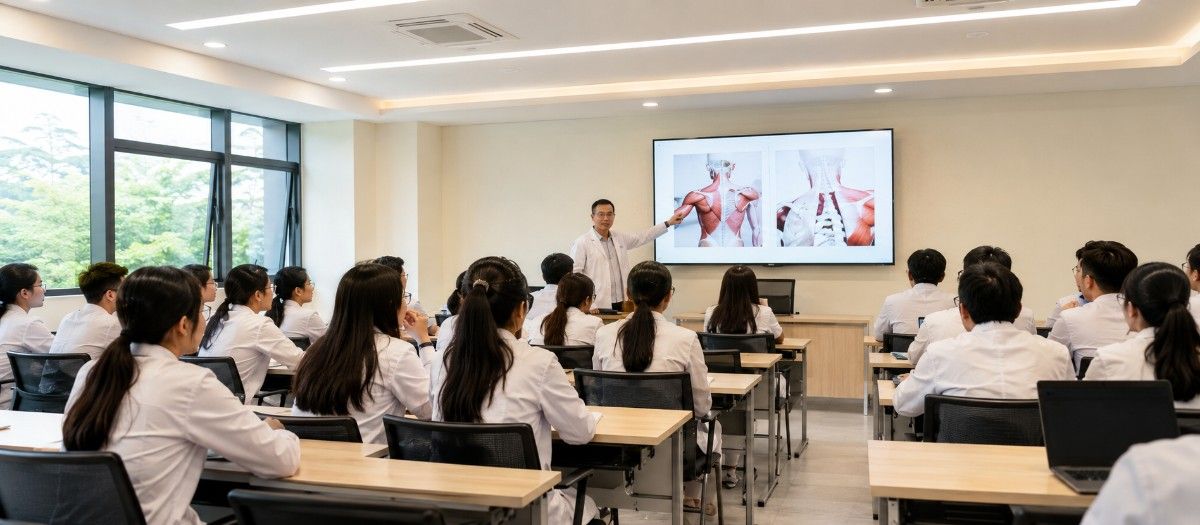

Furnished hostel rooms with Wi-Fi, laundry, 24/7 security, and Indian mess on or near campus.
Indian restaurants and mess facilities serving vegetarian and non-vegetarian home-style food daily.
Strong Indian community with cultural events, festival celebrations, and peer support groups.
Students get hands-on clinical training in government and private hospitals affiliated with the university.
Practical information for students planning to study at MBBS in Tan Tao University School of Medicine.
Prepare for all seasons. Thermal wear for winters, light clothing for summers. University provides heating in hostels.
Student visa processed with university invitation letter. Direct and connecting flights from major Indian cities.
Health insurance included in fees. Medical facility on campus plus city hospitals easily accessible.
Local SIM cards available. WhatsApp and video calls keep you connected with family back home.
Average monthly expenses of $150–$250 covering food, transport, and personal needs.
University library, online databases, and study groups. Seniors mentor juniors through academic challenges.
Our team guides you through every step — from application to arriving on campus.
Compare based on fees, clinical exposure starting year, city, and current NMC/WDOMS status, not just the cheapest headline number. This comparison step is where most of the confusion about MBBS in Vietnam and the fees for Indian students is actually resolved.
Submit academic transcripts and NEET scorecard to the university, either directly or through an authorised admission partner.
The university's international admissions office verifies submitted documents and academic eligibility.
Most universities issue this within 5–10 working days of document approval, though this can take longer during peak intake season.
Pay the first-year fee or an agreed-upon advance to confirm your seat.
The university registers your Letter of Invitation with the relevant Vietnamese education authority before the visa stage begins.
Apply for the student visa at the Vietnamese embassy/consulate in India; realistic processing time is 10–20 working days.
Book travel, confirm arrival dates with the university's international office, finalise documents, and arrange insurance in the final 30 days.
Complete on-arrival registration with local authorities within the required window (commonly 3–5 working days) — this is what legally covers your stay for the semester, not the entry visa alone.
Open a local bank account, get a local SIM card, attend orientation (including basic language sessions where offered), and start building routine and community connections.
Admission Helpline — Contact our counsellors for step-by-step assistance.
“The faculty here is incredibly supportive. The clinical training during hospital rotations has given me real confidence in patient care.”
“Affordable fees without compromising on quality. The campus facilities and hostel life made my transition abroad very smooth.”
“English medium instruction and WHO-recognized curriculum were the deciding factors for me. No regrets so far — excellent experience overall.”
“The university helped with everything from visa to accommodation. Hospital exposure from year three has been invaluable for my FMGE prep.”
“Just cleared my licensing exam on the first attempt. The structured coaching and mock exams during final year were a game-changer.”
“Safe campus, good food options, and a strong Indian student community. The teaching methodology is very practical and hands-on.”
Sources disagree: one reports 2008, another 2013. The wider university's construction began in 2004; confirm the exact School of Medicine date directly.
It runs six years: five years of academic study plus one year of compulsory clinical internship.
Yes, teaching runs bilingually in English and Vietnamese throughout the programme.
Yes, a valid, qualifying NEET score is required for Indian applicants under India's own national rules.
One verified figure reports approximately USD 3,000 a year, with a broader range of USD 2,000 to 4,000 a year reported across sources, totalling roughly USD 18,000 over six years.
Its School of Medicine received ECFMG certification from the United States in 2019, allowing graduates to sit the USMLE.
In Tan Duc E.City, Duc Hoa, an area reclassified from Long An Province into Tay Ninh Province on 1 July 2025.
It's a private, non-profit university, Vietnam's first built specifically on the US liberal arts model.
Professor Thach Nguyen, a Vietnamese-American cardiologist and pioneer of interventional cardiology in Vietnam, has served as Dean since 2016.
TTU was the first university in Vietnam to introduce the Anatomage 3D digital dissection system, starting in 2016/17.
Our expert counsellors will guide you through the complete admission process — from documents to airport pickup.