The University and What Makes It Different
People mostly just call it TVU for short. Its origins are genuinely distinctive among Vietnamese universities: it began life in 2001 as Tra Vinh Community College, established through an international partnership between the Vietnamese and Canadian governments. It became Tra Vinh University in 2006. So, unlike most Vietnamese medical universities, which trace back to purely domestic state planning, this one carries a documented international partnership right at its founding.
Here's a fact most guides skip entirely. Medicine at TVU didn't start as a full standalone school; it began as a Faculty of Medicine and Pharmacy within the wider university, and only in 2024 was it formally elevated to become a full constituent School of Medicine and Pharmacy, the fourth such constituent school within Tra Vinh University's structure. So, this school's current standalone status is genuinely recent, even though medical training itself had been running at TVU for longer under the earlier faculty structure.
TVU carries a genuinely distinctive social mission tied to its location. Tra Vinh Province is home to a significant ethnic Khmer population, and the wider university runs a dedicated School of Southern Khmer Language, Culture, Art and Humanity alongside its medical training. The School of Medicine and Pharmacy's own healthcare mission is explicitly connected to serving this ethnic-Khmer community, a genuinely specific social purpose not found at most other Vietnamese medical schools.
Today, Tra Vinh University overall teaches somewhere between 20,000 and 25,000 students across roughly 12 to 13 schools, covering fields as varied as Nanotechnology, Agri-aquaculture, Engineering and Technology, Economics and Law, and Foreign Languages, alongside Medicine and Pharmacy. The wider university holds accreditation from Vietnam's national education-quality body, as well as FIBAA accreditation for several Economics and Business Administration programmes and AUN-QA accreditation for programmes in Agri-Aquaculture, reflecting a genuinely broad institutional commitment to quality assurance beyond medicine alone.
The Tra Vinh Campus and Its Setting
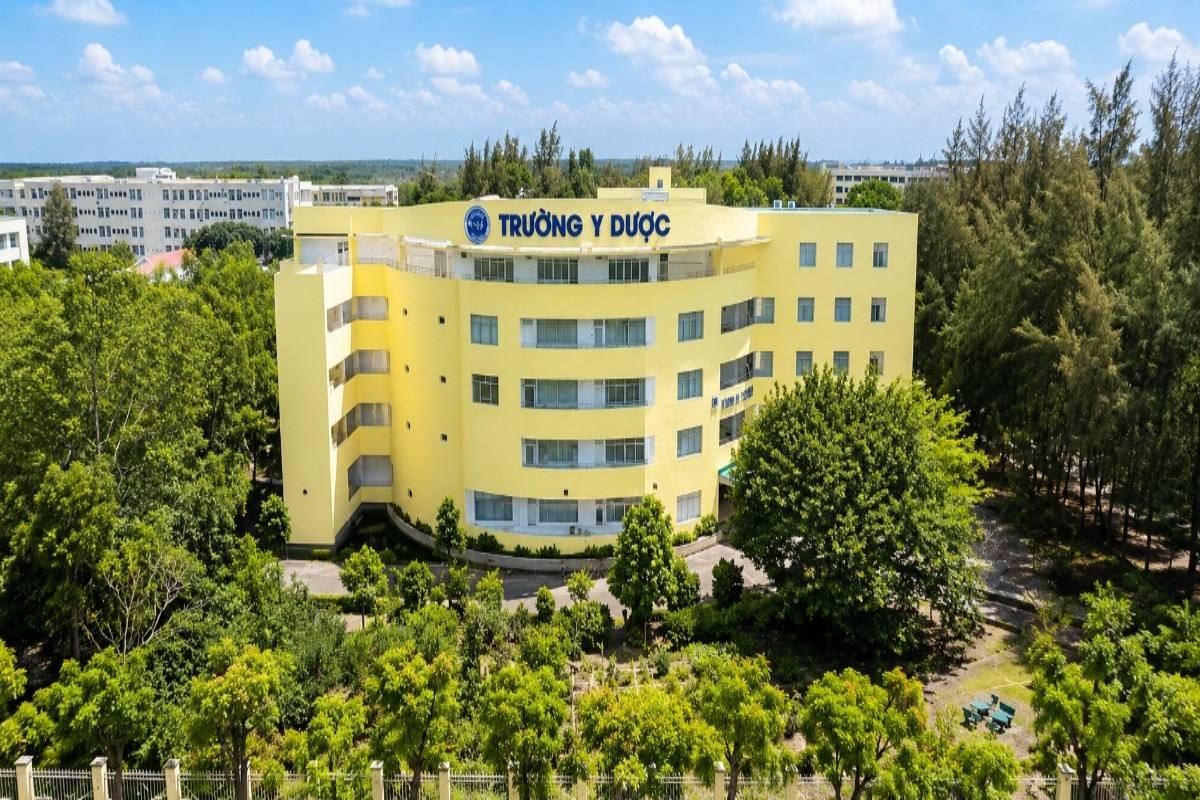
The School of Medicine and Pharmacy is based at Tra Vinh University's main site, No. 126 Nguyen Thien Thanh Street, Ward 5, in Tra Vinh City, a city in Vietnam's Mekong Delta region known locally as the City of Greenery, thanks to the thousands of mature, ancient trees that line its streets. So, students here study in a genuinely green, smaller Mekong Delta city, quite different in character from Vietnam's larger coastal or northern cities.
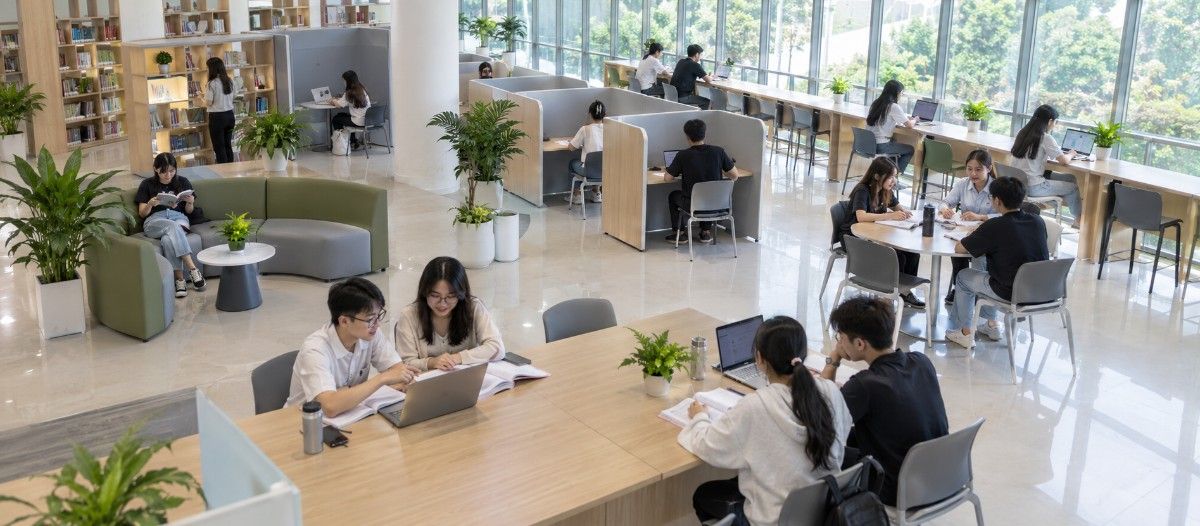
Clinical training runs through Tra Vinh University's own affiliated hospital, alongside rotations at major provincial hospitals and specialised centres both within Tra Vinh itself and in Ho Chi Minh City. So, students get a mix of local, university-run clinical exposure and placements in one of Vietnam's largest cities, giving a genuinely broader range of clinical settings than a single-city programme would offer. The School also maintains standardised medical practice rooms and morphological laboratories specifically designed to bridge classroom theory with real hospital practice.
Course Structure, Cost, and Practical Details
The General Medicine programme at Tra Vinh University's School of Medicine and Pharmacy runs six years, matching Vietnam's standard national medical education structure. The School also offers Dentistry, Pharmacy, Preventive Medicine, Nursing, and Public Health alongside its core Medicine programme.
Teaching runs primarily in Vietnamese; applicants specifically requiring English-medium instruction should confirm the current state of any English-taught provision directly with the School, since this isn't consistently documented as a fully established, separate track in the sources reviewed.
Tuition fees here are genuinely notable, since they're reported as among the lowest of any Vietnamese medical programme covered in comparable guides. Annual tuition for General Medicine specifically is reported at approximately USD 2,330 a year, equivalent to roughly VND 54,000,000, while the School's other health programmes, Nursing and Pharmacy, run somewhat lower still, at approximately USD 1,930 to 2,100 a year. A one-time registration and administrative fee of approximately USD 500 to 1,000 applies, with the exact amount reported to vary depending on the specific intake. Put together, the total tuition-only cost for the full six-year General Medicine programme is estimated at roughly USD 14,000 to 16,000, a genuinely lower figure than most other Vietnamese medical universities covered in similar guides.
NEET remains a genuine requirement for Indian applicants here, exactly as it does for MBBS study in most other countries, and Indian graduates would still need to clear the FMGE or NExT exam to practise medicine back in India.
Quick Overview
Parameter | Details |
Established | Tra Vinh University founded 2001 (as Tra Vinh Community College), became a university in 2006; School of Medicine and Pharmacy elevated to a constituent school in 2024 |
Institution Type | Public university, originally formed through a Vietnamese-Canadian government partnership |
Location | No. 126 Nguyen Thien Thanh Street, Ward 5, Tra Vinh City, Tra Vinh Province, Vietnam (Mekong Delta) |
Programme | General Medicine (MD equivalent), part of the School of Medicine and Pharmacy |
Duration | 6 years, matching Vietnam's standard national medical education structure |
Medium of Instruction | Primarily Vietnamese; confirm current English-medium provision directly for international applicants |
Foreign Quota Note | NEET required for Indian applicants under India's own national rules; no SAARC-style quota |
Teaching Hospitals | Tra Vinh University's own affiliated hospital, plus provincial hospitals in Tra Vinh and Ho Chi Minh City |
Fee Structure
Fee Component | Amount | Notes |
Annual Tuition (General Medicine, reported) | Approx. USD 2,330 per year (approx. VND 54,000,000) | One of the lowest reported medical tuition rates among Vietnamese universities covered in comparable guides |
Annual Tuition (Nursing, Pharmacy) | Approx. USD 1,930 to 2,100 per year | Reported for other health programmes within the same School |
One-Time Registration/Admin Fee | Approx. USD 500 to 1,000 | Amount reported to vary depending on the specific intake |
Total Programme Cost (6 years, reported) | Approx. USD 14,000 to 16,000 | Tuition-only estimate for the full General Medicine programme |
Living Costs | Not consistently reported | Tra Vinh is a smaller Mekong Delta city; costs are generally lower than Hanoi or Ho Chi Minh City |
Why This School Deserves a Harder Look Than You've Given It
Genuinely Among the Lowest Tuition Rates in Vietnam
Most rival pages describing MBBS-abroad options in Vietnam quote figures well above USD 3,000 a year. TVU's General Medicine programme is reported at roughly USD 2,330 a year, with its Nursing and Pharmacy programmes running even lower, genuinely undercutting most other Vietnamese medical universities covered in comparable guides. So, cost-conscious applicants get a real, documented pricing advantage here.
A Specific, Documented Social Mission
Most guides describe a university's mission in generic terms about serving the public. TVU's location and structure, including its dedicated Southern Khmer language and culture school running alongside the medical school, reflect a genuinely specific commitment to serving Tra Vinh's significant ethnic-Khmer population. So, the school's social purpose here is concrete and locally rooted, not a generic mission statement.
Honest Assessment
Be upfront about a few real gaps here. The School of Medicine and Pharmacy only became a full constituent school in 2024, so it carries a shorter standalone track record than some of Vietnam's older, longer-established medical universities, even though medical training itself predates this structural change. English-medium provision isn't consistently documented as a fully established track, so applicants relying entirely on English should confirm this directly. Tra Vinh is a genuinely smaller city, so students shouldn't expect Hanoi- or Ho Chi Minh City-level facilities.
So, who fits here best? Cost-conscious students drawn to genuinely the lowest tuition figures among comparable Vietnamese medical programmes fit well here. Students interested in a university with a specific, documented ethnic-Khmer community health mission fit well too. However, applicants who need a long-established, standalone medical school with confirmed English-medium teaching should verify these details directly before committing. Still, TVU's genuinely low cost and its documented, locally rooted social mission are real, well-established strengths.