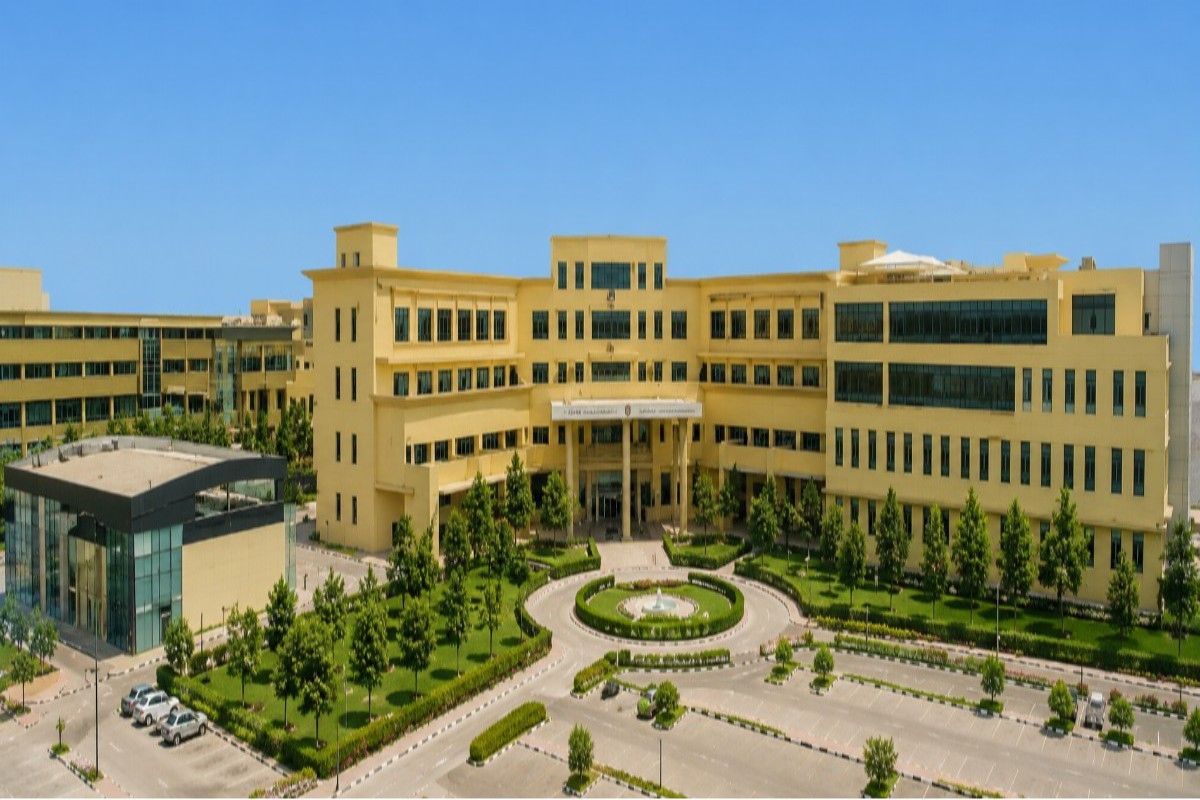
The College of Medicine and Health Sciences (CMHS) at United Arab Emirates University (UAEU) is the oldest and one of the most prestigious medical schools in the United Arab Emirates. Internationally recognised for excellence in medical education, biomedical research, clinical training, and healthcare innovation, the college has played a pivotal role in developing the UAE's healthcare workforce since its establishment. Located in Al Ain, a UNESCO World Heritage city known as the "Garden City" of the UAE, the university combines modern medical education with advanced research and strong clinical partnerships to prepare future physicians capable of meeting global healthcare challenges.
Founded in 1976 as the first national university of the UAE, United Arab Emirates University has become one of the country's leading research-intensive institutions. The College of Medicine and Health Sciences was established in 1984 and has since evolved into a centre of excellence for medical education, scientific discovery, and healthcare innovation. Today, the college attracts students and faculty from around the world while maintaining a strong commitment to improving healthcare across the Middle East and beyond.
The Doctor of Medicine (MD) programme follows an integrated curriculum that combines biomedical sciences, clinical medicine, research, professionalism, and community healthcare. The programme is designed according to internationally recognised medical education standards and focuses on developing physicians with strong scientific knowledge, advanced clinical competence, ethical values, communication skills, and lifelong learning abilities.
Students begin their education by studying anatomy, physiology, biochemistry, molecular biology, histology, embryology, genetics, pathology, microbiology, immunology, pharmacology, behavioural sciences, and medical ethics. Rather than studying these disciplines independently, the curriculum integrates biomedical sciences with clinical cases, allowing students to understand the relationship between disease mechanisms and patient care from the earliest stages of their education.
The university employs modern educational methodologies that promote active learning and critical thinking. Traditional lectures are supplemented by problem-based learning, team-based learning, anatomy laboratories, simulation exercises, clinical skills laboratories, digital learning platforms, small-group tutorials, and interdisciplinary discussions. This educational approach enables students to develop analytical thinking, diagnostic reasoning, teamwork, and communication skills alongside scientific knowledge.
Early clinical exposure is a defining feature of the programme. Students begin interacting with patients and healthcare professionals during the pre-clinical years through structured clinical experiences, communication training, and clinical skills sessions. These opportunities help students develop confidence and professionalism before entering full-time hospital rotations.
Clinical education is conducted through Tawam Hospital, Sheikh Khalifa Medical City, Al Ain Hospital, and several affiliated teaching hospitals and healthcare centres throughout the UAE. Students complete comprehensive rotations in internal medicine, general surgery, paediatrics, obstetrics and gynaecology, psychiatry, neurology, cardiology, oncology, emergency medicine, orthopaedics, anaesthesiology, radiology, dermatology, ophthalmology, family medicine, intensive care, and other medical specialties.
These hospitals provide access to advanced healthcare technologies including robotic surgery, sophisticated imaging systems, transplant services, specialised oncology centres, cardiovascular institutes, neonatal intensive care, emergency medicine, and multidisciplinary healthcare teams. Students gain practical experience managing a wide range of medical conditions under the supervision of experienced physicians while developing clinical competence across multiple specialties.
Biomedical research represents one of the university's greatest strengths. Faculty members conduct internationally recognised research in oncology, cardiovascular medicine, neuroscience, genetics, molecular medicine, diabetes, endocrinology, infectious diseases, immunology, regenerative medicine, precision medicine, public health, biomedical engineering, and artificial intelligence in healthcare. The university houses modern research centres equipped with advanced laboratories that support both basic science and translational medical research.
Students are encouraged to become involved in research throughout their medical education. Opportunities include faculty-supervised research projects, student scientific conferences, laboratory placements, innovation competitions, international collaborations, and publication of scientific papers. These experiences develop scientific inquiry, critical thinking, and evidence-based clinical practice while preparing students for future careers in academic medicine and healthcare innovation.
International collaboration is a major component of the university's academic mission. UAEU maintains partnerships with leading universities, research institutes, hospitals, and healthcare organisations throughout Europe, North America, Asia, and Australia. Exchange programmes, international electives, collaborative research, visiting faculty initiatives, and global healthcare projects expose students to diverse medical systems and international best practices.
The curriculum aligns with internationally accepted medical education standards while emphasising evidence-based medicine, patient safety, ethics, healthcare leadership, digital medicine, community health, interdisciplinary collaboration, and continuous professional development. Students graduate with the skills necessary to practise medicine in technologically advanced healthcare environments while maintaining a strong commitment to compassionate patient care.
Simulation-based education plays an increasingly important role within the curriculum. Advanced clinical simulation centres equipped with high-fidelity patient simulators allow students to practice emergency procedures, advanced life support, surgical techniques, communication, teamwork, and diagnostic decision-making before interacting with real patients. These facilities significantly improve both competence and patient safety.
Al Ain offers an outstanding educational environment with modern infrastructure, a safe community, beautiful parks, excellent healthcare facilities, and convenient access to Abu Dhabi and Dubai. The city provides an affordable cost of living compared with many international study destinations while offering excellent recreational, sporting, and cultural opportunities.
International students receive comprehensive support through orientation programmes, academic advising, career counselling, visa assistance, language support, student organisations, extracurricular activities, and modern residential facilities. These services help students adapt quickly while supporting their academic and personal development.
Graduates of the College of Medicine and Health Sciences are recognised for their strong scientific knowledge, clinical competence, research experience, and professional ethics. Many continue into competitive residency programmes, specialist training, postgraduate research, academic medicine, and healthcare leadership positions throughout the UAE and internationally.
Today, the College of Medicine and Health Sciences at United Arab Emirates University continues to strengthen its reputation as one of the Middle East's leading medical schools through excellence in education, innovative research, advanced clinical training, and international collaboration. Its commitment to producing highly skilled physicians and advancing healthcare innovation makes it one of the region's premier destinations for medical education.