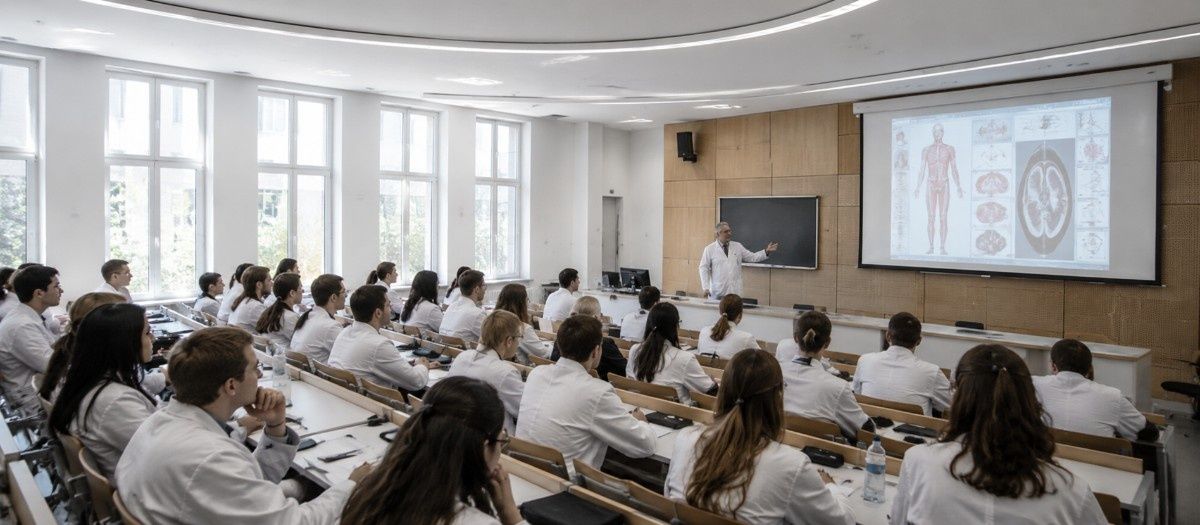
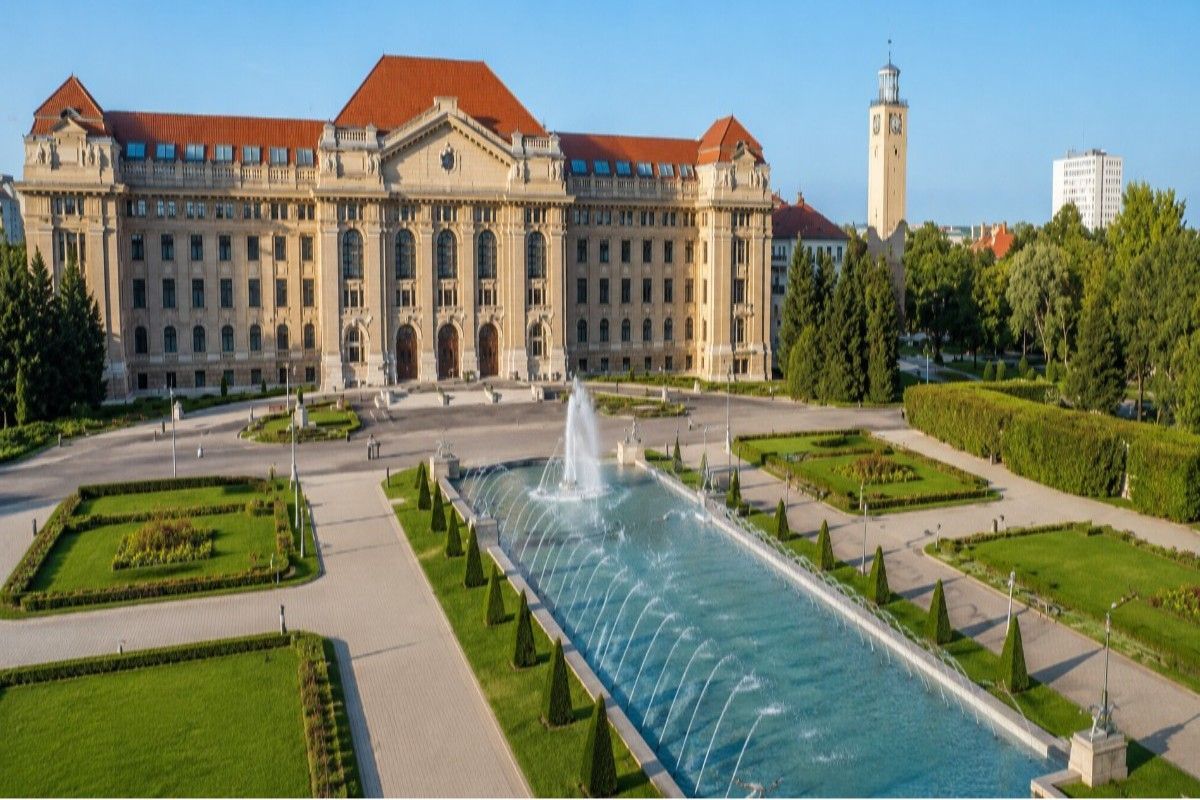
The Faculty of Medicine at the University of Debrecen is one of Central Europe's oldest and most respected medical schools, internationally recognised for excellence in medical education, biomedical research, and clinical training. Located in Debrecen, Hungary's second-largest city, the university has built a global reputation for producing competent physicians, researchers, and healthcare professionals through a combination of rigorous academics, modern teaching methodologies, and extensive clinical exposure. With students representing more than 120 countries, the University of Debrecen has become one of Europe's most popular destinations for international medical education.
Founded in 1912, the University of Debrecen has over a century of academic excellence. The Faculty of Medicine has played a pioneering role in Hungarian medical education, continuously adapting its curriculum to meet international healthcare standards while embracing scientific innovation and technological advancement. Today, it remains one of Hungary's leading centres for medical education and biomedical research.
The six-year Doctor of Medicine (MD) programme is designed to provide students with a comprehensive understanding of biomedical sciences, clinical medicine, medical ethics, communication, and research. The curriculum follows European Union educational standards and is fully taught in English for international students, allowing graduates to pursue medical careers and postgraduate training across numerous countries.
Medical education begins with a thorough study of anatomy, physiology, biochemistry, histology, embryology, molecular biology, genetics, pathology, microbiology, immunology, pharmacology, and behavioural sciences. These subjects provide students with a strong scientific foundation while helping them understand the biological mechanisms underlying health and disease.
The university adopts a modern educational philosophy that combines traditional lectures with practical laboratory sessions, anatomy dissections, small-group tutorials, simulation-based learning, clinical case discussions, and problem-based learning. Students are encouraged to develop analytical thinking, clinical reasoning, teamwork, and communication skills alongside scientific knowledge.
Clinical exposure begins early in the programme through clinical skills laboratories, patient communication exercises, and supervised hospital visits. As students progress through the curriculum, they gradually transition into full-time clinical rotations, enabling them to confidently apply theoretical knowledge in real healthcare settings.
Clinical training is conducted primarily through the University of Debrecen Clinical Centre, one of Hungary's largest integrated academic healthcare systems. The Clinical Centre consists of numerous specialised hospitals and departments, providing students with comprehensive exposure to internal medicine, surgery, paediatrics, obstetrics and gynaecology, psychiatry, neurology, cardiology, oncology, emergency medicine, orthopaedics, anaesthesiology, dermatology, ophthalmology, radiology, infectious diseases, and intensive care medicine.
The Clinical Centre is equipped with advanced diagnostic imaging technologies, robotic surgical systems, specialised transplant programmes, cardiovascular institutes, oncology centres, intensive care units, and modern laboratories. Students gain practical experience managing diverse patient populations while learning from experienced physicians, surgeons, and healthcare specialists.
Biomedical research represents one of the university's greatest strengths. Faculty members actively contribute to international scientific advancement through research in oncology, neuroscience, cardiovascular medicine, immunology, molecular medicine, genetics, endocrinology, regenerative medicine, stem cell biology, transplantation, pharmaceutical sciences, infectious diseases, and public health. The university maintains numerous specialised research institutes and laboratories that support innovative scientific discovery.
Students are encouraged to participate in research from the early years of their education. Opportunities include laboratory placements, student scientific associations, faculty research projects, international conferences, publications, and collaborative research initiatives. These experiences strengthen scientific reasoning while preparing students for careers in academic medicine and medical innovation.
Internationalisation is a defining feature of the University of Debrecen. The university collaborates with hundreds of universities, hospitals, and research institutions across Europe, North America, Asia, and the Middle East. Exchange programmes, Erasmus+ initiatives, international electives, collaborative research, and visiting faculty programmes expose students to different healthcare systems while broadening their global perspectives.
The curriculum complies with the Bologna Process and European Union educational standards. Students receive education in evidence-based medicine, professionalism, healthcare ethics, patient safety, digital health technologies, interdisciplinary collaboration, communication, and lifelong professional development.
Simulation-based education plays an increasingly important role in medical training. Modern simulation centres equipped with high-fidelity patient simulators allow students to practice emergency medicine, advanced life support, surgical procedures, communication skills, teamwork, and clinical decision-making before entering hospital environments. These facilities significantly improve competence while enhancing patient safety.
Debrecen offers an excellent environment for international students. As one of Hungary's largest university cities, it combines rich cultural heritage with modern infrastructure, affordable living costs, efficient public transportation, extensive green spaces, sports facilities, museums, restaurants, and vibrant student life. Compared with many Western European cities, Debrecen provides outstanding educational value while maintaining a high quality of life.
International students benefit from comprehensive support services including orientation programmes, academic advising, visa assistance, counselling, language support, career guidance, student organisations, and cultural events. Modern student residences, libraries, research centres, sports complexes, and recreational facilities further enhance the overall educational experience.
Graduates of the Faculty of Medicine are recognised for their strong scientific knowledge, clinical competence, research experience, and professionalism. Many continue into competitive residency programmes, specialist training, doctoral research, academic medicine, pharmaceutical industries, and healthcare leadership positions across Europe and internationally.
Today, the Faculty of Medicine at the University of Debrecen continues to strengthen its reputation as one of Central Europe's leading medical schools. Through academic excellence, innovative research, advanced clinical training, and international collaboration, the university prepares future physicians to meet the evolving demands of modern healthcare while contributing to global medical progress.