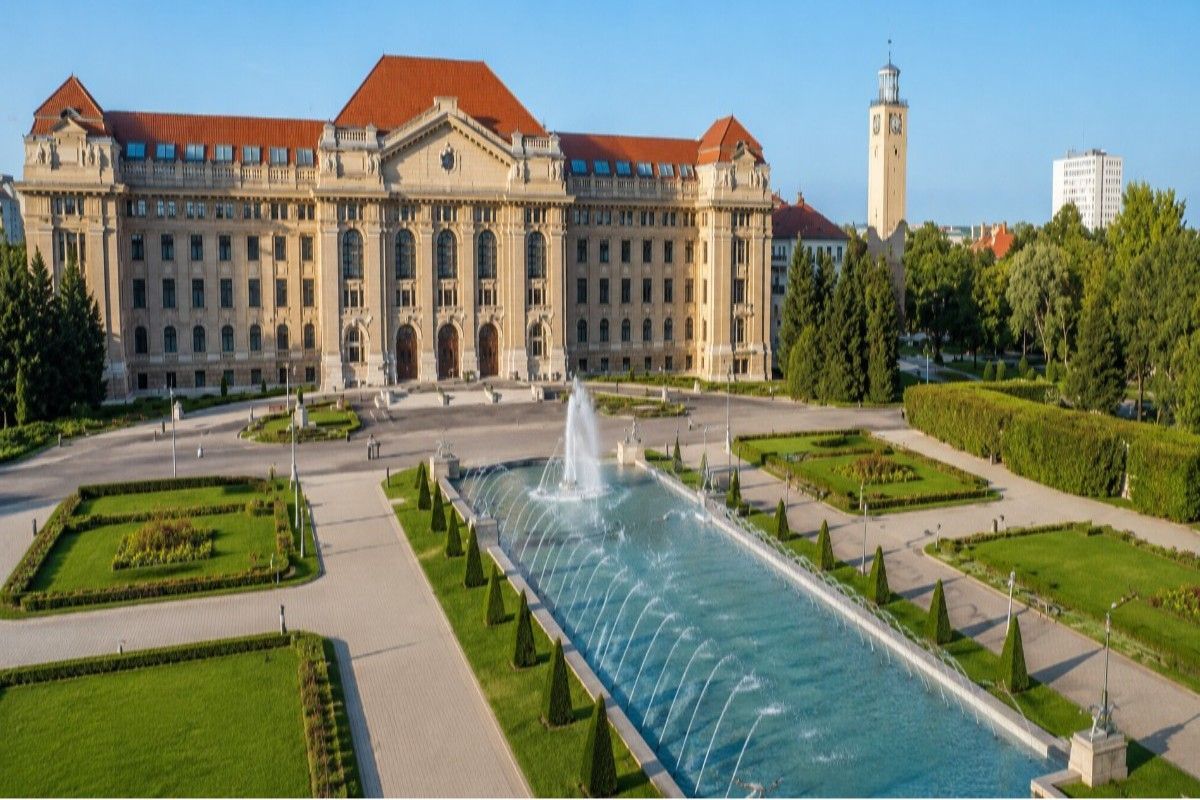
The Faculty of Medicine at the University of Szeged is one of Hungary's most distinguished medical schools and among Central Europe's leading institutions for medical education, biomedical research, and clinical excellence. Located in the vibrant university city of Szeged, the institution has earned an outstanding international reputation for delivering high-quality English-language medical education, innovative scientific research, and comprehensive clinical training. With students from more than 130 countries, the university has become one of Europe's most sought-after destinations for aspiring physicians seeking internationally recognised medical qualifications.
The University of Szeged traces its origins to 1581, making it one of Hungary's oldest higher education institutions. Throughout its history, the university has played a major role in advancing medicine and scientific discovery. It is closely associated with Nobel Prize-winning scientist Albert Szent-Györgyi, who discovered Vitamin C while conducting research at the university. This rich scientific legacy continues to influence the Faculty of Medicine's commitment to research-driven education and medical innovation.
The six-year Doctor of Medicine (MD) programme is structured to develop highly competent physicians equipped with strong scientific knowledge, clinical expertise, ethical values, communication skills, and research experience. Fully taught in English for international students, the programme follows European Union educational standards and prepares graduates for postgraduate training and medical careers across Europe and internationally.
Medical education begins with comprehensive instruction in anatomy, physiology, biochemistry, histology, embryology, molecular biology, genetics, pathology, microbiology, immunology, pharmacology, behavioural sciences, and medical ethics. These foundational subjects establish a strong understanding of human biology and disease mechanisms while preparing students for the transition into clinical medicine.
The university adopts an integrated educational approach that combines traditional lectures with anatomy dissections, laboratory practicals, simulation-based learning, clinical case discussions, problem-based learning, small-group tutorials, and digital learning technologies. Students are encouraged to develop analytical thinking, scientific reasoning, teamwork, leadership, and effective communication alongside their medical knowledge.
Early clinical exposure forms an important part of the curriculum. Students begin learning patient communication, history taking, physical examination, and professional behaviour during the pre-clinical years through structured clinical skills training and supervised patient interactions. This gradual transition ensures confidence before entering full clinical practice.
Clinical education takes place primarily at the University of Szeged Albert Szent-Györgyi Clinical Centre, one of Hungary's largest and most advanced academic healthcare systems. The Clinical Centre consists of numerous specialised departments and teaching hospitals where students complete rotations in internal medicine, general surgery, paediatrics, obstetrics and gynaecology, psychiatry, neurology, cardiology, oncology, emergency medicine, orthopaedics, anaesthesiology, dermatology, ophthalmology, radiology, infectious diseases, intensive care, and family medicine.
The Clinical Centre provides access to advanced diagnostic imaging, robotic-assisted surgery, transplant programmes, cardiovascular institutes, specialised oncology units, neonatal intensive care, emergency medicine departments, and multidisciplinary treatment facilities. Students gain hands-on clinical experience while working alongside experienced physicians managing a wide spectrum of medical conditions.
Biomedical research is one of the university's greatest strengths. Faculty members conduct internationally recognised research across numerous disciplines including oncology, neuroscience, cardiovascular medicine, molecular biology, genetics, immunology, regenerative medicine, stem cell biology, endocrinology, diabetes, pharmaceutical sciences, infectious diseases, transplantation, public health, precision medicine, and artificial intelligence in healthcare. The university operates numerous research institutes and laboratories equipped with advanced scientific infrastructure that support both fundamental and translational medical research.
Students are actively encouraged to participate in research throughout their studies. Opportunities include faculty-supervised research projects, laboratory placements, student scientific associations, innovation programmes, international conferences, collaborative publications, and research exchange programmes. These experiences strengthen scientific inquiry while preparing graduates for careers in academic medicine, biomedical innovation, and healthcare leadership.
International collaboration is deeply integrated into the university's academic mission. The University of Szeged maintains partnerships with leading universities, hospitals, and research institutes across Europe, North America, Asia, and Australia. Student exchange programmes, Erasmus+ mobility initiatives, international electives, visiting faculty programmes, and collaborative research projects expose students to diverse healthcare systems while enhancing their global perspectives.
The curriculum follows the Bologna Process and European Higher Education Area framework while incorporating evidence-based medicine, patient safety, healthcare ethics, professionalism, communication, healthcare management, digital medicine, interdisciplinary teamwork, and lifelong learning. This ensures graduates possess the knowledge and adaptability required for modern healthcare environments.
Simulation-based education is extensively incorporated throughout the programme. Modern clinical simulation centres equipped with high-fidelity patient simulators allow students to practice emergency medicine, advanced life support, procedural skills, surgical techniques, teamwork, and communication before treating real patients. These facilities significantly improve clinical competence while enhancing patient safety.
Szeged offers an exceptional quality of life for international students. Often referred to as the "City of Sunshine," it is known for its pleasant climate, affordable living costs, safe environment, modern infrastructure, vibrant cultural scene, excellent public transportation, parks, theatres, museums, restaurants, and one of Hungary's largest student populations. The city's welcoming atmosphere makes it particularly attractive for international students.
The university provides comprehensive student support services including orientation programmes, academic advising, visa assistance, counselling, career guidance, language support, sports facilities, student organisations, libraries, research centres, and modern accommodation. These services help students integrate successfully while supporting both academic achievement and personal development.
Graduates of the Faculty of Medicine are recognised worldwide for their scientific knowledge, clinical competence, research experience, and professionalism. Many pursue residency programmes, specialist training, doctoral studies, academic medicine, pharmaceutical industries, biotechnology companies, and healthcare leadership positions across Europe and around the world.
Today, the Faculty of Medicine at the University of Szeged continues to strengthen its position among Europe's leading medical schools through excellence in education, internationally recognised research, advanced clinical training, and global collaboration. Its longstanding tradition of academic excellence and scientific innovation makes it one of Hungary's premier destinations for medical education.