
Q. Is Szeged's medical program taught in English?
+Yes. The General Medicine program has run fully in English since 1985, one of the earliest such programs in Hungary. A separate German-language track also runs.

 Hungary | Est. 1872
Hungary | VApproved by the Hungarian Accreditation Board. It follows shared EU study rules, known as the Bologna Process. The English program has run since 1985. | English, for the international General Medicine program. A separate German-language program also runs at the Faculty. It medium
Expert will call you within 2 hours
Szeged does not brag about its history. It does not need to. This is the school where a Hungarian scientist first pulled Vitamin C out of paprika. That finding won a Nobel Prize. Years later, another Szeged-linked researcher helped build the science behind mRNA vaccines. She won a Nobel Prize, too. Two Nobel winners, one medical school. That is a rare claim for any university, anywhere.
The story here goes back further than most people think. Its roots trace to 1775. That year, under Empress Maria Theresa, a Faculty of Medicine-Surgery was set up. This happened in Kolozsvár, a city now called Cluj-Napoca, in Romania. Back then, it sat inside Hungary's borders. In 1872, the school became a full university. It first carried the name Hungarian Royal University. Political change forced a move. This happened in 1921. The Trianon Treaty redrew Hungary's borders. After that, the university moved to Szeged. It has stayed there ever since.
Medicine grew into its own path over the years that followed. In 1951, the Faculty of Medicine broke away. It became its own school, the Medical University of Szeged. Pharmacy took the same path in 1957. It split into its own faculty. In 1987, the medical school took a new name. It became Albert Szent-Györgyi Medical University. This honoured its former teacher. He once served as dean and rector. He had studied body chemistry too. Szent-Györgyi had already won his Nobel Prize back in 1937. He earned it for pulling out Vitamin C, straight from Szeged's famous local paprika.
In 2000, Hungary changed its universities again. The medical school folded back into one shared University of Szeged. Dentistry split into its own faculty in 2007. That same year, the old Medical and Pharmaceutical Center became the Albert Szent-Györgyi Clinical Center. This centre still anchors the school's clinical training today.
English teaching runs deep here. The English program began in 1985. That makes it one of Hungary's earliest English-taught medical courses. A German-language program followed in 1999. Today, the wider University of Szeged teaches around 21,000 students. Over 4,100 of them come from outside Hungary. They stand for more than 100 countries combined. That is a genuinely global mix for a mid-sized Hungarian city.
Rankings place Szeged well among Hungary's stronger universities. It sits around 633rd in the QS World University Rankings. This reflects the whole university, not just medicine. Still, Szeged holds a strong local name. National surveys have named its Medical School the best faculty inside the university itself. The student-to-teacher ratio runs close to ten to one. That is a fairly tight ratio for a school this size.
The General Medicine program runs six years, taught fully in English. Its shape looks familiar. The first two years cover a Basic Module. This builds core science knowledge. It happens before clinical work starts. A Pre-Clinical Module comes next. Then comes the Clinical Module, starting around year three. Regular hospital work begins here. Students work right inside clinical departments and teaching hospitals. The Final Year closes out the degree with deeper clinical work.
Getting in is not a sure thing. Still, there is real flexibility built into the process. Most applicants sit a written and spoken entrance test. This checks your English, plus your grasp of science. You get up to two tries in one round. Some students skip the exam fully, though. Certain grades earn a direct pass. Strong GCE A-Level grades in science subjects count. So does a high IB Diploma score in two science subjects. A first-class science degree can count too. If none of these fit you, the standard exam path still works.
Tuition here is clearly published and easy to check. The current rate sits at 7,900 euros a term. That works out to 15,800 euros a year. This figure comes straight from the university's own fee page. It is for the 2026/2027 school year. Health cover valid in Hungary is already built into this fee. Textbooks, housing, and daily living costs sit outside the fee, though, so plan for those apart. A deposit of 800 euros counts as part of your first term's fee. It is not paid back if you cancel your place after certain dates.
A few extra costs show up around clinical practice too. Summer practice sessions carry their own small fees. A four-week nursing practice after year one runs 500 euros. Internal medicine and surgery practices in later years run 1,000 euros each. Each one covers roughly four weeks. If you do these placements in Szeged itself, they sit inside your normal tuition. Some students choose to do more of their sixth-year work at the university hospital. Doing more than the usual half adds a matched extra cost.
Grants exist here, though they mostly favour Hungarian and Central European applicants. The Stipendium Hungaricum program offers full tuition waivers plus a monthly stipend. But who can get it shifts. This depends on deals between Hungary and specific countries. A smaller SZTE Start Scholarship gives new students a modest one-time gift. Most international medical applicants sit outside these set programs. For them, standard tuition stays the norm.
Recognition here runs wide. Graduates qualify for ECFMG certification in the United States. This opens the door to US tests for a medical licence. The degree carries EU backing too, since Hungary sits inside the European Higher Education Are a.Indian students still need to pass a set exam. Graduates can sit India's FMGE, or the newer NExT test, to sign up and work back home. Job numbers look solid across the wider university. More than 85 percent of graduates find work.
Szeged the city adds its own feel to student life. It is Hungary's third-largest city, sitting in the country's sunny south. Locals sometimes call it the sunniest city in Hungary. It sees an unusually high count of clear days each year. Despite its size, it keeps a quiet, easy pace. This holds outside the busiest festival weeks. The Faculty's pre-clinical buildings sit around Cathedral Square. Clinical departments spread along the banks of the River Tisza nearby. This gives the whole medical campus a compact feel. You can walk most of it.
Picking Szeged over Hungary's other medical schools often comes down to a few plain factors. Its entrance test exemptions give real freedom. Strong students with the right past grades benefit most. Its published, term-based tuition plan is refreshingly clear. Some rival schools are far less clear. And its school name carries real weight too. Two Nobel winners tie back to this school. That matters in a crowded field. Many Eastern EU medical schools compete here. They all fight for the same pool of foreign applicants.
Day-to-day support runs through several routes for new arrivals. The International Student Union of Szeged runs events all year. This helps foreign students meet each other early. It happens before classes ramp up. The university library, called the Klebelsberg Library, ranks as the biggest university library in Central Europe. It is a truly useful spot for six years of hard study. It is not just a nice-sounding fact.
Housing works through university dorms or private rentals. Dorm options tend to run cheaper than private flats. Most students start in university housing during their first year. Many move to private flats later. This happens once they have settled in and found roommates they trust. Szeged's compact size makes most student housing a short bike ride or walk from the main teaching buildings.
No hidden charges, no donation. The full picture of costs at MBBS in University of Szeged Albert Szent-Györgyi Medical School, Hungary.
Tuition Fee
€15,800 a year (€7,900 a term). The university's own official fee page confirms this. This fee already covers health insurance valid in Hung
€15,800 / USD 16,906 / INR 10.29 lakh
Hostel Fee
An exact current published rate was not confirmed for medical students specifically. Plan to spend roughly €2,000-€2,800 a year (USD 2,140-2
€2,400 / USD 2,568 / INR 1.56 lakh
Food & Meals
€2,600 / USD 2,782 / INR 1.69 lakh
per year
Insurance
Included in tuition fee
per year
Donation
No donation fees
No capitation fees
Total Estimated Cost
~€20,800 / USD 22,256 / INR 13.55 lakh
6 year
25–35%
Average FMGE first-attempt pass rates for students from many overseas medical universities. Students from structured programs consistently score higher.
Students returning to India need to clear the FMGE/NExT exam. MBBS in University of Szeged Albert Szent-Györgyi Medical School, Hungary integrates exam-oriented coaching into the regular curriculum so students are prepared from day one.
A structured program that takes you from foundational sciences to clinical mastery.
Introduces morphological sciences with courses in Anatomy and Histology, alongside mandatory practical lab sessions.
Focuses on laying the theoretical groundwork in foundational sciences like Medical Biology, Biophysics, and Medical Chemistry.
Shifts into functional medical sciences through rigorous coursework in Medical Biochemistry, Physiology, and Medical Psychology.
Continues the in-depth study of human morphology with advanced Macroscopic Anatomy, Histology, and Embryology
Introduces practical clinical skills through patient examination (Propedeutics) in specialties like Internal Medicine and Surgery.
Transitions students from healthy biological systems to pathology by taking courses in Pathophysiology and General Pathology.
Involves direct work in hospital wards and specialized departments to connect textbook theory with real-world patient care
Covers comprehensive clinical theory and practice across major medical branches including Pediatrics, Neurology, Obstetrics, and Gynecology.
Includes specialized short clinical rotations and mandatory summer practical placements at authorized teaching hospitals
Delves into specialized medical and surgical disciplines such as Ophthalmology, Dermatology, Urology, and Infectious Diseases.
Final year practical training anCulminates in hands-on hospital rotations and requires the completion and defense of a thesis before graduation.d structured exam preparation.
Consists of an uninterrupted, 40-week academic year where students act as clinical clerks in major departments.
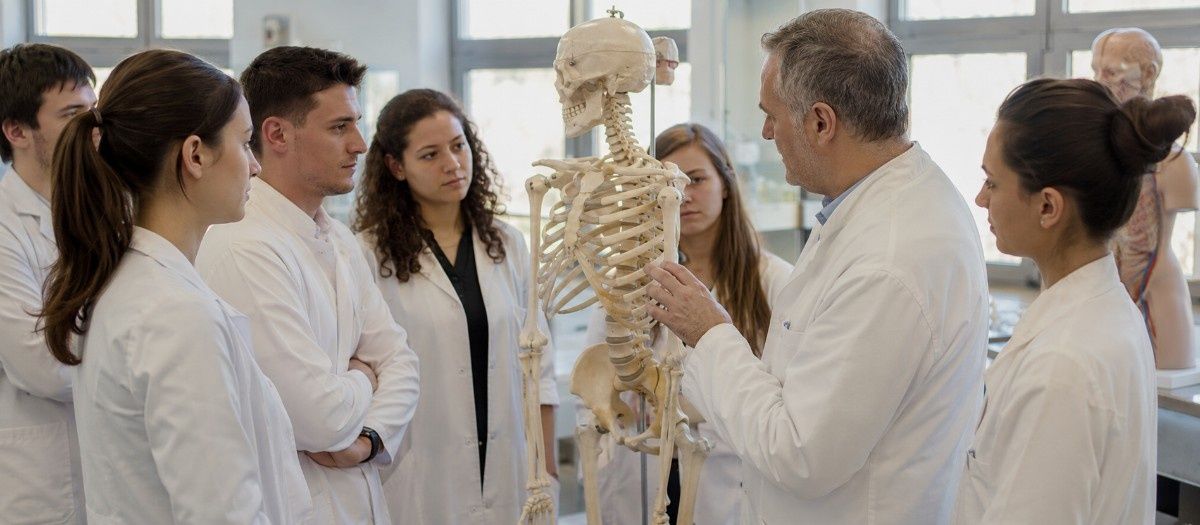

Furnished hostel rooms with Wi-Fi, laundry, 24/7 security, and Indian mess on or near campus.
Indian restaurants and mess facilities serving vegetarian and non-vegetarian home-style food daily.
Strong Indian community with cultural events, festival celebrations, and peer support groups.
Students get hands-on clinical training in government and private hospitals affiliated with the university.
Practical information for students planning to study at MBBS in University of Szeged Albert Szent-Györgyi Medical School, Hungary.
Prepare for all seasons. Thermal wear for winters, light clothing for summers. University provides heating in hostels.
Student visa processed with university invitation letter. Direct and connecting flights from major Indian cities.
Health insurance included in fees. Medical facility on campus plus city hospitals easily accessible.
Local SIM cards available. WhatsApp and video calls keep you connected with family back home.
Average monthly expenses of $150–$250 covering food, transport, and personal needs.
University library, online databases, and study groups. Seniors mentor juniors through academic challenges.
Our team guides you through every step — from application to arriving on campus.
Confirm 10+2 PCB marks and age criteria against your target university.
Appear for and qualify NEET-UG, required for eventual India recognition, even though not asked at the Hungarian application stage.
Shortlist Semmelweis, Debrecen, Pécs, or Szeged based on budget, city preference, and scholarship eligibility.
Application windows vary; Semmelweis closes on 31 May, Debrecen on 15 June, Pécs on ~30 June, and Szeged rolling through June. Apply online via the university's portal or an authorized partner.
Prepare academic transcripts, passport, photographs, and a medical certificate as detailed in the Documents Checklist above.
Sit the written test (Biology, Chemistry, English) plus an oral interview, generally conducted online from India.
Issued after successful entrance exam and document verification, typically 2-6 weeks later depending on the university.
Pay the deposit and/or first-semester tuition strictly through the university's official payment channel.
Apply for the Hungarian national D-visa/residence permit at the nearest Hungarian consulate or VFS center.
Confirm dormitory placement, book flights ahead of the registration date, and complete in-person registration and enrollment formalities on campus
Admission Helpline — Contact our counsellors for step-by-step assistance.
“The faculty here is incredibly supportive. The clinical training during hospital rotations has given me real confidence in patient care.”
“Affordable fees without compromising on quality. The campus facilities and hostel life made my transition abroad very smooth.”
“English medium instruction and WHO-recognized curriculum were the deciding factors for me. No regrets so far — excellent experience overall.”
“The university helped with everything from visa to accommodation. Hospital exposure from year three has been invaluable for my FMGE prep.”
“Just cleared my licensing exam on the first attempt. The structured coaching and mock exams during final year were a game-changer.”
“Safe campus, good food options, and a strong Indian student community. The teaching methodology is very practical and hands-on.”
Yes. The General Medicine program has run fully in English since 1985, one of the earliest such programs in Hungary. A separate German-language track also runs.
Yes, for most applicants, a written and spoken test covering English and science knowledge. Certain strong grades can earn an automatic pass. This includes results of set GCE A-Level or IB Diploma;
Yes. Indian students need a valid NEET score to study medicine abroad and a passing test like the FMGE or NExT is needed to enroll and work in India post graduation.
The current published rate is €7,900 a term, or €5,800 a year, confirmed directly on the university's official fee page for 2026–27.
Yes, for certain summer practice spells outside Szeged. Standard placements done in Szeged itself sit inside regular tuition. Placements done elsewhere carry small extra fees.
Maybe. Some applicants may earn an automatic pass. This covers strong GCE A-Level grades, a high IB Diploma score in science subjects, or a first-class science degree.
Mainly through the Albert Szent-Györgyi Clinical Center, the main health hub for Southern Hungary, set along the River Tisza near the old Cathedral Square.
Yes. Graduates qualify for ECFMG certification, for US licensing paths. The degree is also known across the EU. It is listed with the WHO's World Directory of Medical Schools too.
Some grants exist. Still, most favour Hungarian and Central European applicants, through programs like Stipendium Hungaricum. A smaller SZTE Start Scholarship gives new students a modest one-time gift.
Calm and compact. Szeged is Hungary's sunniest city, with a walkable medical campus along the River Tisza, and Budapest is a short train ride away for a change of pace.


Our expert counsellors will guide you through the complete admission process — from documents to airport pickup.