
Q1 Is the MBChB taught in English?
+Yes. All teaching, clinical placements, and assessments for the five-year MBChB are conducted entirely in English.
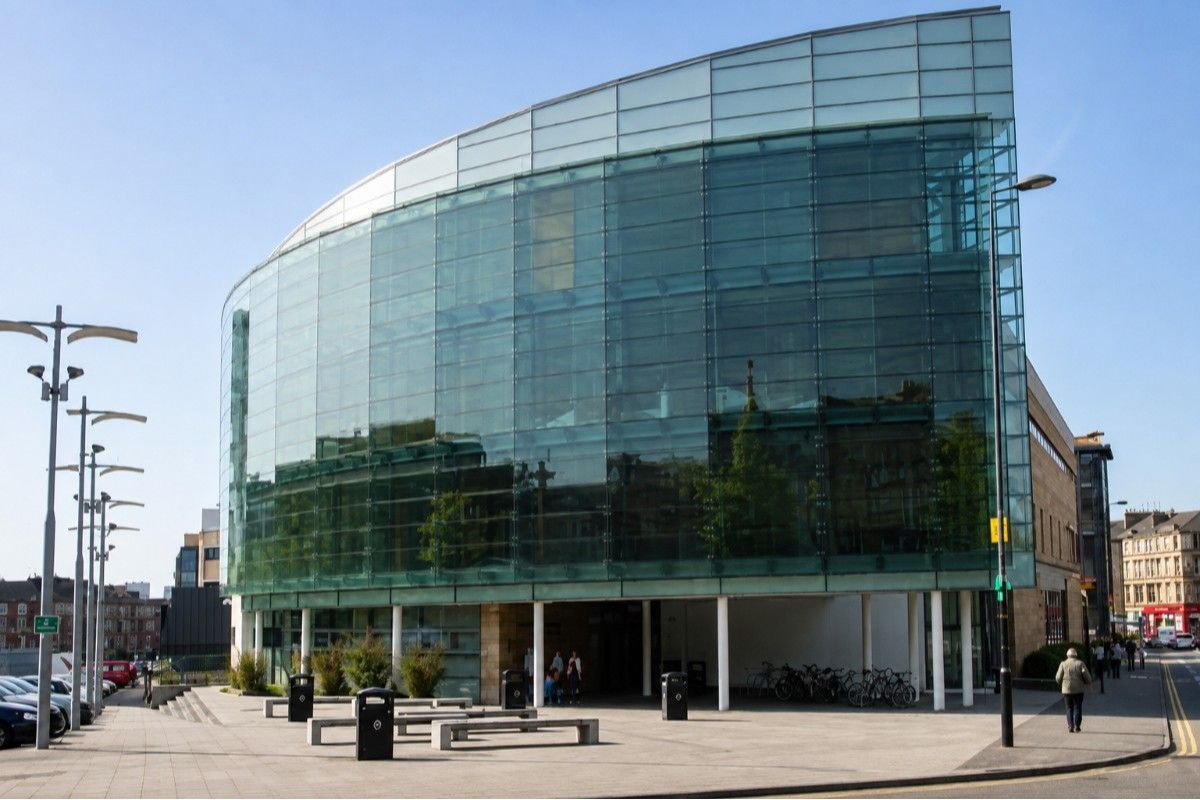
 Uk | Est. 1451
Uk | General Medical Council (GMC), United Kingdom | English medium
Expert will call you within 2 hours
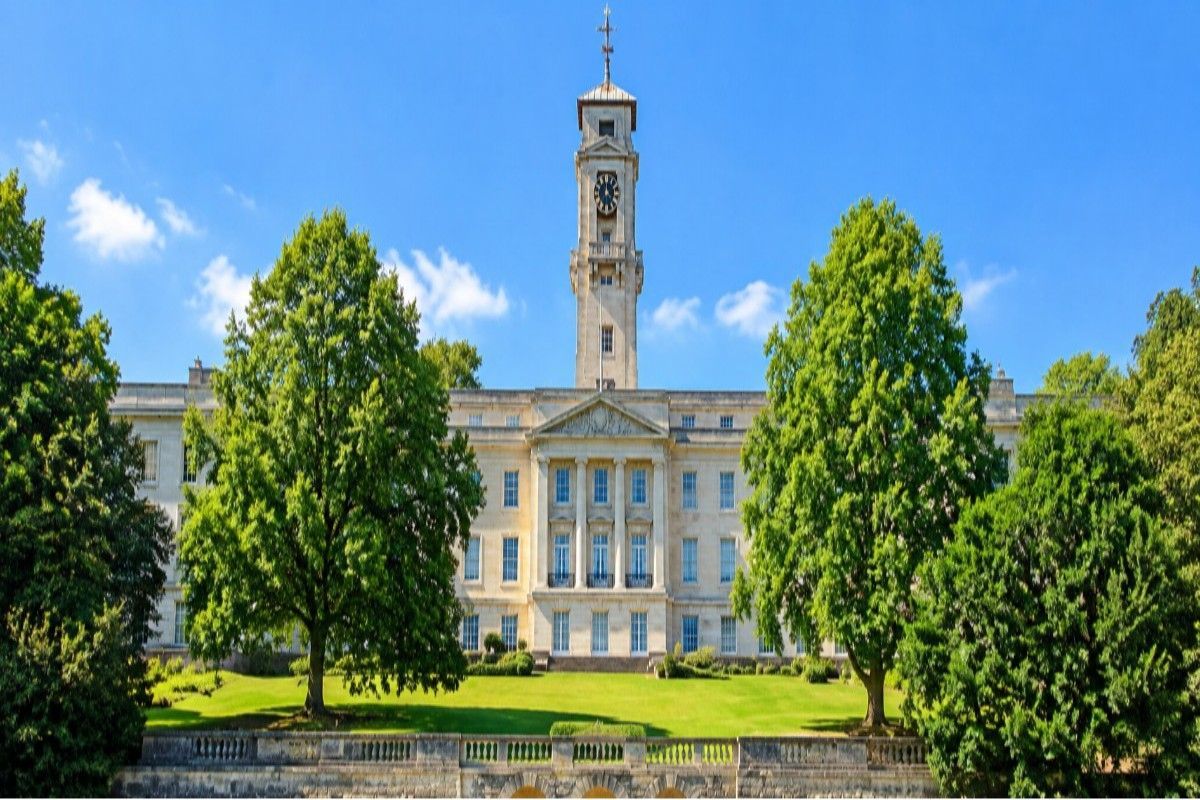
Teaching in Glasgow University's School of Medicine goes back to 1751, three centuries after the institution had been founded by papal bull in 1451 and thus becomes one of the oldest in the English speaking world – older than all med schools of the Ivy League and predating such major advances in medicine as a stethoscope, anaesthesia and the NHS by well over a century. While this historical aspect may not be particularly relevant per se, it explains why the school became as it is: a massive research-oriented faculty within one of the UK's oldest universities rather than a self-contained campus designed to serve a single group of international students paying for education.
When Indian families discuss 'MBBS abroad' programmes, they start from an assumption of value – an alternative route to a medical degree, cheaper than private seats in India. Glasgow breaks this paradigm almost entirely: tuition for a new international entrant in 2026/27 is GBP 62,730 per year, and that amount is likely to keep rising for incoming cohorts of students as has been the case for many recent years. Over the period of five years of the programme, tuition fees alone amount to nearly GBP 300,000 before a single penny is paid for housing, food or insurance. However, the key limitation here is not the fee, as students that could afford it are never denied due to lack of money. The limitation is a seat. The UK government limits the number of non-EU international applicants to a low single-digit percentage per national medical school intake, so Glasgow medicine course remains one of the most oversubscribed and competitive ones for the non-EU applicants regardless of the fees they are ready to pay.
The programme in the MBChB has been running since 2012 under what is called the Spiral Curriculum: key subjects are taught multiple times with increasing depth throughout the five years rather than taught once and moved forward. In the first two years of the course, problem-based learning in small groups is predominant, with early patient contact built into the first weeks rather than the clinical years. The third year features a shift to case-based learning, solving realistic cases in structured weekly sessions. The last two years include clinical placements across the West of Scotland with focus on the Glasgow Royal Infirmary and Queen Elizabeth University Hospital with three five week Student Selected Components and two four week elective blocks, one of which is typically used for placement abroad. The students can take a year off either after year 2 or year 3 and obtain an intercalated BSc, a year which the majority of Glasgow's graduates spend doing research for their CV before completing the clinical years.
So, why choose Glasgow among all the other cheaper and quicker routes to the same MBBS-equivalent qualification? Well, the true reason for that lies in the fact that this programme gives a qualification which allows to access certain doors closed for other programmes. Namely, the General Medical Council accreditation allows its holder to enter directly the UK Foundation Year training programme and then specialize across most of the English speaking world, avoiding the need of additional verification in case of a graduate of any other country. However, the programme does not allow its holder to bypass the NExT requirement in India: an Indian graduate of Glasgow who wants to continue practice in India still has to pass the National Exit Test of the National Medical Commission, exactly as a graduate of any other medical school in the world. Glasgow provides a chance to build an international career but does not allow to build an Indian career easier than a graduate of another country could.
The city of Glasgow itself has a population of 635,000 people and a somewhat cheaper cost of living than London, even though Scotland remains above the UK average on this measure. The university estimates the cost of living in the city to be somewhere in the range of GBP 1,100 – 1,700 per month depending on various factors, with accommodation being the single biggest factor of variability – the cost of a shared room in a private flat can be below GBP 500 per month, while university halls provide studios at a price point close to GBP 900. The travel of students under 22 on city buses is free, and the airport connects the city to various Indian destinations with a single transfer. This means five years for the families to plan their visits.
Thus, this is a programme designed specifically for one type of the applicant – with good enough UCAT score and A-Level or IB results to pass a fairly competitive medical admissions process in one of the most developed countries of the world and with parents capable of paying a high enough fee, likely to exceed GBP 60,000 per year by the graduation time, for a global, GMC accredited medical qualification. This is not the programme for those families which seek an affordable MBBS path back to India – in this case, the fee, admissions bottleneck and the NExT requirement become considerable obstacles on the road.
No hidden charges, no donation. The full picture of costs at MBBS in University of Glasgow School of Medicine Dentistry and Nursing.
Tuition Fee
Approximately GBP 62,730
Approximately GBP 62,730 per year
Hostel Fee
Approximately GBP 6,500-9,500 per year
Approximately GBP 6,500-9,500 per year
Food & Meals
Approximately GBP 2,800-3,200
per year
Insurance
Approximately GBP 776
per year
Donation
No Donation
No Hidden fee
Total Estimated Cost
Approx. GBP 72,800-76,200 (Approx. Rs. 89.5 lakh-93.7 lakh)
5 Year
25–35%
Average FMGE first-attempt pass rates for students from many overseas medical universities. Students from structured programs consistently score higher.
Students returning to India need to clear the FMGE/NExT exam. MBBS in University of Glasgow School of Medicine Dentistry and Nursing integrates exam-oriented coaching into the regular curriculum so students are prepared from day one.
A structured program that takes you from foundational sciences to clinical mastery.
• Early patient contact and vocational studies in communication skills, ethics, and law
• Problem-based learning in small groups covering anatomy, physiology, biochemistry, and cell biology
• Clinical skills training in venepuncture, arterial blood gas sampling, injections, and ECG recording
• Systems-based study of pharmacology, pathology, microbiology, and disease mechanisms
• First Student Selected Component (5 weeks) and first elective period (4 weeks, often taken abroad) • Practical procedures training including catheterisation, nasogastric tube insertion, suturing, and IV cannulation
• Shift to case-based learning built around real clinical scenarios each week
• Rotations through medicine, surgery, obstetrics and gynaecology, paediatrics, and psychiatry • Second Student Selected Component and option to complete an intercalated BSc year
• Clinical rotations across the West of Scotland, based at Glasgow Royal Infirmary and Queen Elizabeth University Hospital
• Second elective period, final Student Selected Component, and preparation for the Medical Licensing Assessment • Final clinical and written examinations leading to the MBChB degree and provisional GMC registration
• Extended clinical placements in specialist and acute settings, including emergency medicine and general practice
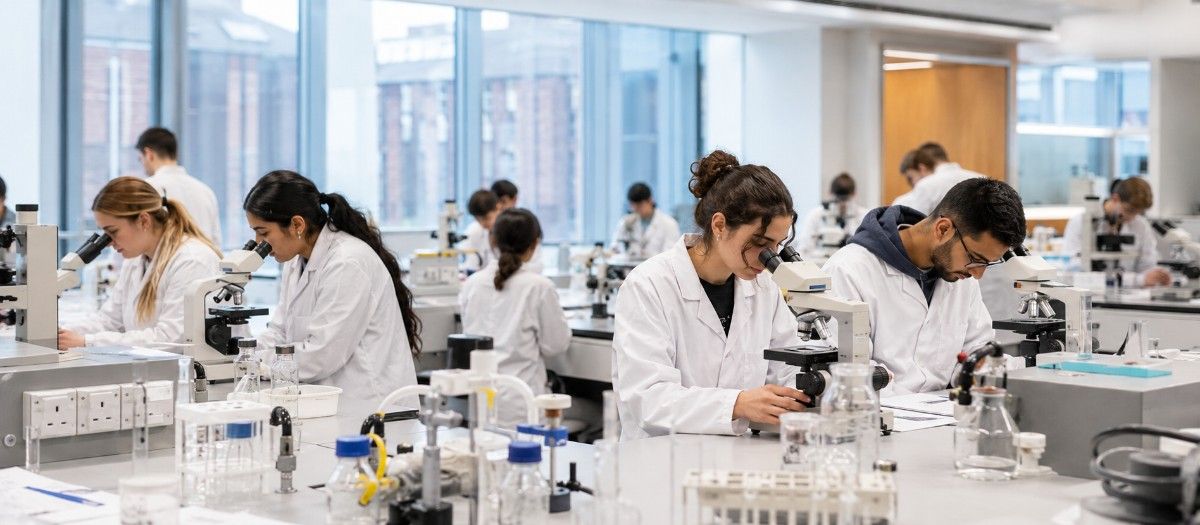

Furnished hostel rooms with Wi-Fi, laundry, 24/7 security, and Indian mess on or near campus.
Indian restaurants and mess facilities serving vegetarian and non-vegetarian home-style food daily.
Strong Indian community with cultural events, festival celebrations, and peer support groups.
Students get hands-on clinical training in government and private hospitals affiliated with the university.
Practical information for students planning to study at MBBS in University of Glasgow School of Medicine Dentistry and Nursing.
Prepare for all seasons. Thermal wear for winters, light clothing for summers. University provides heating in hostels.
Student visa processed with university invitation letter. Direct and connecting flights from major Indian cities.
Health insurance included in fees. Medical facility on campus plus city hospitals easily accessible.
Local SIM cards available. WhatsApp and video calls keep you connected with family back home.
Average monthly expenses of $150–$250 covering food, transport, and personal needs.
University library, online databases, and study groups. Seniors mentor juniors through academic challenges.
Our team guides you through every step — from application to arriving on campus.
Compare universities based on fees, city, UCAT requirements, and clinical exposure, starting 12–18 months before your intended entry, not the cycle you’re applying in.
Registration opens in May; the testing window runs July–September. Most successful applicants begin focused preparation 3–4 months ahead, alongside board exam preparation.
Book and complete IELTS, PTE, or TOEFL well ahead of the UCAS deadline, allowing time for a retake if needed.
Submit your application, including personal statement and up to 4 medicine choices, before the 15 October deadline.
Prepare for and attend interviews (MMI or Panel format) typically scheduled November through February.
Offers (conditional or unconditional) typically arrive through winter and spring; conditional offers require meeting stated academic and English-score conditions.
Once Class 12 results and any other conditions are confirmed, your university issues the Confirmation of Acceptance for Studies (CAS), which is required for your visa application.
Apply using your CAS reference number; arrange maintenance funds according to the 28-day rule well in advance rather than at the last minute.
Book flights, confirm accommodation, complete any on-arrival formalities during orientation week, open a local bank account, and begin building connections with your university’s Indian/South Asian student community.
Admission Helpline — Contact our counsellors for step-by-step assistance.
“The faculty here is incredibly supportive. The clinical training during hospital rotations has given me real confidence in patient care.”
“Affordable fees without compromising on quality. The campus facilities and hostel life made my transition abroad very smooth.”
“English medium instruction and WHO-recognized curriculum were the deciding factors for me. No regrets so far — excellent experience overall.”
“The university helped with everything from visa to accommodation. Hospital exposure from year three has been invaluable for my FMGE prep.”
“Just cleared my licensing exam on the first attempt. The structured coaching and mock exams during final year were a game-changer.”
“Safe campus, good food options, and a strong Indian student community. The teaching methodology is very practical and hands-on.”
Yes. All teaching, clinical placements, and assessments for the five-year MBChB are conducted entirely in English.
The programme runs for five years, structured across four teaching phases with clinical placements from year 3 onward.
Yes. A competitive UCAT score, alongside AAA at A-Level or 36-38 at IB, is required before an interview offer is considered.
Only after clearing the National Exit Test (NExT) under the National Medical Commission, the same requirement that applies to any foreign medical graduate.
79th overall in the QS World University Rankings 2026, and 41st in the world for Life Sciences and Medicine.
Yes. The UK government caps the share of non-EU international places at each medical school to a small percentage of the total intake nationally.
Primarily the Glasgow Royal Infirmary and the Queen Elizabeth University Hospital, alongside other sites across the West of Scotland.
Yes, typically for each new incoming international cohort; fees for continuing students in a given cohort are usually held at their entry-year rate.
Yes. Students complete two four-week elective periods, and many choose to spend at least one of these training abroad, including in India.
A one-time student visa fee of approximately GBP 524, plus the Immigration Health Surcharge of GBP 776 per year, paid upfront for the full visa duration.
Our expert counsellors will guide you through the complete admission process — from documents to airport pickup.