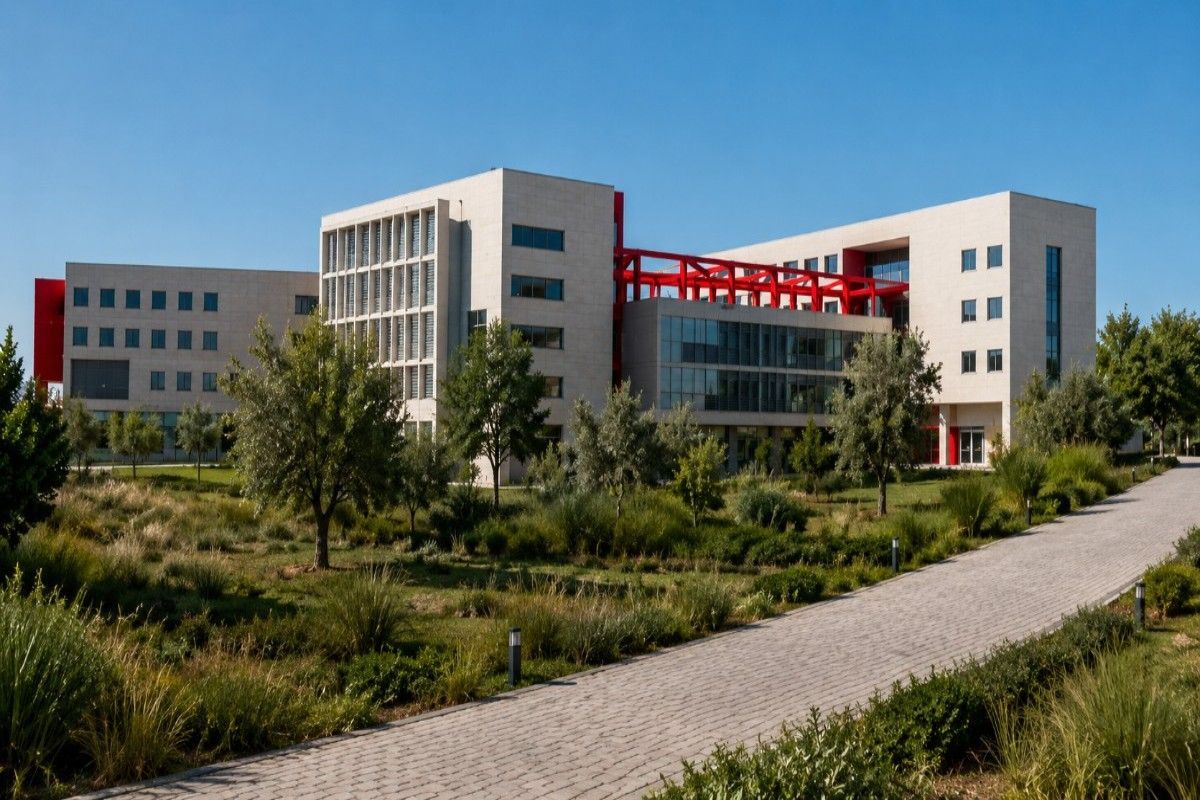
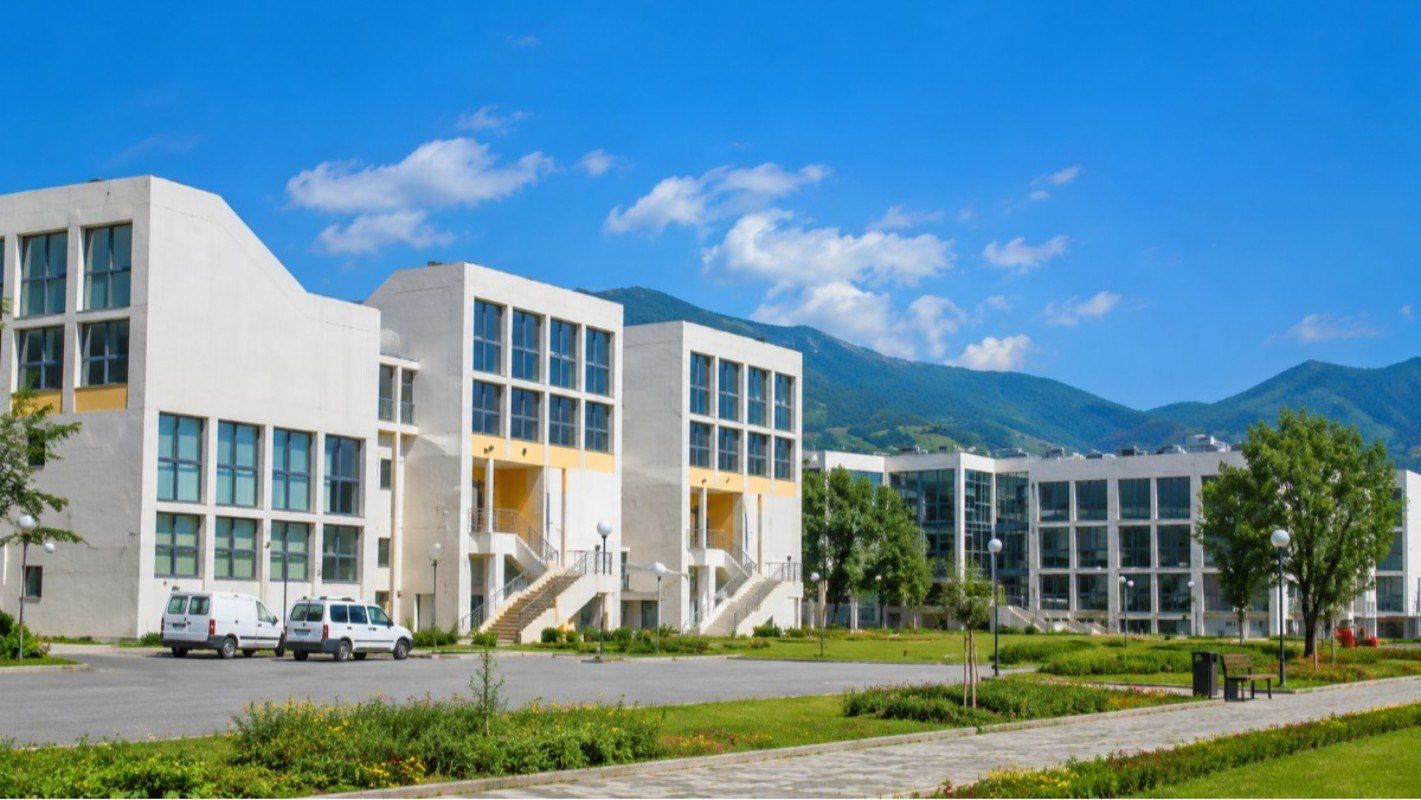
The School of Medicine at the University of Patras is one of Greece's well-regarded public medical institutions. It was established in 1977 as part of the University of Patras, which itself was founded in 1964. The School sits on the university's main campus in Rion. Rion is a suburb about seven kilometres northeast of Patras city centre. It is a calm andgreen area, which makes it a comfortable place to study. What makes the location practical for students is that the campus is physically next to the University General Hospital of Patras. This means clinical training happens right there. Students don't spend time commuting to distant hospitals once they enter rotations. They can walk to class one minute and walk into a hospital ward the next. This saves time. It also helps students build real confidence early in their training.
The University of Patras is the third-largest university in Greece. It currently has around 28,000 students across seven schools and thirty-one departments. That is a large and lively student community. In terms of global rankings, it sits at position 721 in the QS World University Rankings 2026. This makes it one of the more internationally recognised public universities in Greece. The School of Medicine specifically holds an 'Excellent' certification for its undergraduate programme. This certification comes from the Hellenic Authority for Higher Education (HQA). HQA is the national quality assurance body in Greece. In simple terms, this means the programme has passed strict checks for teaching quality.
For a long time, the School of Medicine offered its six-year medical programme only in Greek. That has recently changed, and it is good news for international students. The University has launched the English Medical Program (EMP). This is a full six-year undergraduate medical degree. It is delivered entirely in English. This is a significant step. It opens the door for international students, including those from India, who may not have Greek language skills. The programmeadmits fifty students per year from around the world. This keeps cohorts small.
Small class sizes allow for closer interaction with faculty. Teachers can give more personal attention to each student. During the first three years, students also take Greek language courses. This is a practical choice. It helps students communicate with patients and hospital staff once they enter clinical rotations. By the time students reach the wards, they already know enough Greek to get by in everyday clinical situations.
The EMP is built around 360 ECTS credits. It is fully compliant with EU standards. This means the degree is structured the same way as other recognised EU medical degrees. Teaching methods include lectures, laboratory work, case-based discussions, and small-group sessions.
Learning is not limited to textbooks. The School makes deliberate use ofsimulation-based clinical skills training from the very first semesters. This is something many medical programmes delay until later years, so it gives Patras students an early head start. Students practise on models and in simulated settings before they ever step into a real ward, which builds confidence and reduces mistakes later on. Research within the School spans molecular biology, genetics, neurosciences, oncology, cardiovascular medicine, medical physics, and public health. These research areas directly feed into teaching. This means the curriculum stays connected to current developments in medicine, and students learn material that is genuinely up to date rather than outdated theory.
The University General Hospital of Patras (PGNP) is where clinical training takes place. It has over 700 beds, more than 25 departments, and over 20 diagnostic laboratories. It is a large, busy, and modern facility. It handles tertiary referrals from across the wider region of Western Greece. This means students are exposed to complex and varied cases during their rotations. They see real patients with real conditions, not just simple textbook cases. The hospital is close enough to the School that students can walk between the two. This is an advantage that few medical schools in Europe can offer to the same degree. Many students elsewhere lose valuable time travelling between lecture halls and hospitals. At Patras, that problem simply does not exist.
Patras itself is worth knowing about if you're considering studying there. It is a coastal city of around 200,000 people. It's the third-largest city in Greece and one of the country's main port cities. It sits at the entrance to the Gulf of Corinth, with the sea close by and a relaxed, friendly atmosphere. The city has a long student tradition. It is a university city in a very real sense, with a young and active population. The cost of living is significantly lower than Athens or most Western European cities. Accommodation, food, and daily expenses are affordable. This matters a great deal over a six-year programme, since smaller monthly costs add up to big savings over time. The university campus in Rion has its own sports facilities, library, canteens, student residences, and various student associations. Everything a student needs is close at hand. There is also access to the Erasmus+ network for exchanges across Europe, which gives students the chance to study briefly in another European country during their degree.
For Indian students, the EMP at Patras represents a genuine option in the EU. The degree awarded is the same Medical Degree issued by the University of Patras for all its medicine graduates. There is no distinction on the diploma between the English and Greek tracks. This means an EMP graduate holds exactly the same qualification as a graduate of the Greek-language programme. Because the degree comes from a Greek public university accredited by HQA, it is recognised across the EU. This recognition falls under Directive 2005/36/EC, which covers mutual recognition of professional qualifications. In plain terms, this means graduates can pursue medical registration in any EU/EEA member state without extra hurdles.
Beyond the EU, the programme is designed to prepare students for international licensing pathways. These include the USMLE in the United States, the PLAB/UKMLA in the United Kingdom, and the MCCQE in Canada. So the degree opens doors well beyond Europe too. Indian students who wish to return home and practice in India must clear NExT after completing the programme. NEET is mandatory at the application stage, just as it is for any medical study abroad. The School is listed in the World Directory of Medical Schools (WDOMS). This listing is the requirement for NMC-eligibility verification, so it is an important box to tick for any Indian applicant.
Tuition for the EMP is EUR 12,000 per year. This fee is clear and fixed, with no hidden surprises. The programme also offers five merit- and need-based scholarships annually, which can ease the financial load for strong or deserving students. Living costs in Patras are moderate. Accommodation ranges from EUR 200 to EUR 450 per month, depending on whether a student is in a shared apartment or a private room. Food and daily expenses are manageable, and students generally find that their budget stretches further here than in bigger European cities. The overall cost of studying medicine in Patras compares well against UK, Australian, or private-college alternatives. At the same time, the degree carries EU recognition that many cheaper offshore programmes simply cannot match. In short, Patras offers a rare mix of affordability, quality, and genuine EU-wide recognition, which makes it a strong and sensible choice for students planning a long medical career.