
Q1. How old is the University of Pisa?
+It was founded in 1343 by papal bull, with legal instruction documented even earlier, from the 12th century.
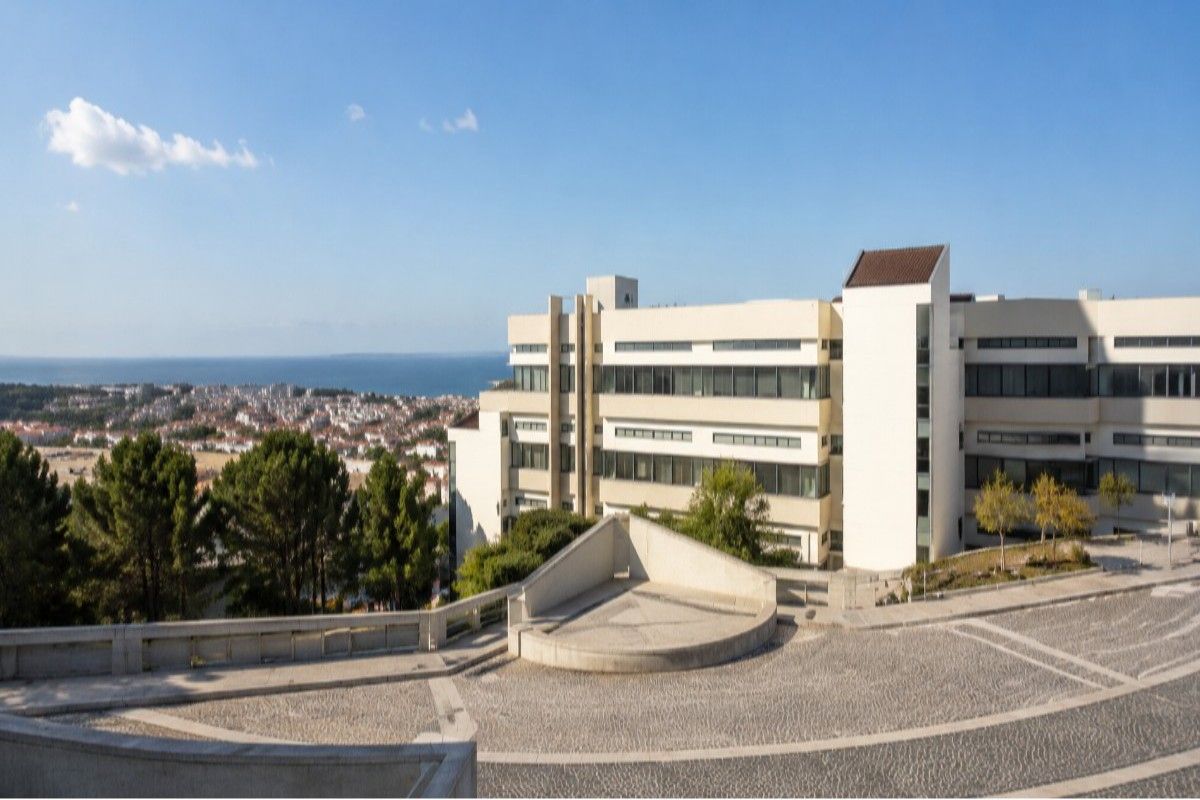
 Italy | Est. 1343
Italy | Recognised under Italy's national MUR framework as a nationally programmed (numero programmato) course. A confirmed World Directory of Medical Schools listing could not be verified in this research. | Primarily Italian; no dedicated English-taught medicine track was found, though this wasn't ruled out with complete cert medium
Expert will call you within 2 hours
The University and What Makes It Different
Pisa's university dates back an extraordinarily long way, to 1343, when Pope Clement VI issued the papal bull that formally granted it Studio Generale status. Legal instruction here actually goes back even further, documented from the second half of the 12th century, and medical and surgical doctors are attested from the century after that, with named professors from the 1300s, Guido da Prato and Ugolino da Montecatini among them. This is a genuinely deep medical history, not just an old university that happens to also teach medicine.
There's a naming detail worth getting right rather than repeating outdated language. Following Italy's 2010 university reform, the old "Facoltà di Medicina e Chirurgia" structure was replaced nationally, and Pisa's medical teaching is now formally organised as the Scuola di Medicina, spread across departments covering translational research, surgical and molecular pathology, and clinical medicine. "Facoltà" survives as informal, commonly used language, but it's not the current official structure here.
The degree itself is the standard Laurea Magistrale a Ciclo Unico in Medicina e Chirurgia, LM-41, 360 credits across twelve semesters, with admissions run jointly alongside Odontoiatria e Protesi Dentaria, dentistry, in some university documentation. No dedicated English-taught or IMAT-based international track for medicine turned up in research for this page, though this wasn't ruled out with absolute certainty either, so worth a direct check if that's specifically what you're after.
One detail worth being genuinely careful about, since it's easy to overstate. Galileo Galilei was born in Pisa and studied at the university from 1580, initially with medicine in mind, following his father's wishes, before shifting decisively toward mathematics and eventually holding that chair here before moving on to Padua. Galileo belongs much more properly to Pisa's mathematics and physics tradition than to its medical one, so treat any "Galileo studied medicine here" framing as technically true but genuinely misleading if it's used to claim some deep Galilean medical pedigree.
Pisa's Two Hospital Sites and a Consolidation Under Way
Clinical training currently splits across two hospital sites, worth understanding clearly. Ospedale Santa Chiara, the older, more central site, and Ospedale Cisanello, a newer facility toward the edge of the city, both operate under the Azienda Ospedaliero-Universitaria Pisana, AOUP. There's a genuinely significant change coming, though: a new Santa Chiara building is planned for inauguration at the Cisanello site in November 2026, with a full transfer of services expected by 2027, consolidating what's currently a two-site operation onto one campus. Treat that timeline as a forward-looking plan rather than a done deal, since these things can slip.
AOUP itself carries real institutional weight. One set of Agenas rankings, reported through secondary press coverage rather than pulled directly from Agenas's own published tables, placed it third among all Italian hospitals overall, with particular strength cited in endocrinology, general surgery, cardiovascular surgery, and renal surgery, the last concentrated specifically at the newer Cisanello site.
Pisa the city carries enormous name recognition well beyond its actual size, largely thanks to the Leaning Tower and Galileo's association with it, though as covered above, that association runs stronger through mathematics than medicine specifically. Mathematician Leonardo Fibonacci was also born and worked here, adding another layer to the city's broader scientific reputation, separate from its medical school specifically.
Living costs run genuinely reasonable for a well-known Italian university city. Third-party estimates put a shared room around 300 to 400 euros a month, sometimes up to 400 in pricier pockets, with total monthly costs including utilities estimated around 800 to 850 euros. Regional press has described Pisa's rent increases as comparatively modest next to other major Italian university cities, though no official university cost-of-living page confirming these figures directly was located.
Course Structure, Cost, and Practical Details
On structure: six years, 360 credits, the standard national framework. Since the 2020 reform, the degree carries qualifying status directly, and the practical component built into the final part of the course, rather than a separate post-graduation internship, is a 300-hour Tirocinio Pratico-Valutativo across medical, surgical, and general-medicine placements.
Admission runs through Italy's national semestre filtro system, confirmed directly by Pisa's own admissions page, which explicitly titles the process "Semestre Aperto" for Medicine, Dentistry, and Veterinary Medicine together. Same national structure as elsewhere: open first-semester enrolment, no upfront test, three common exams in chemistry and biochemistry, physics, and biology determining national ranking.
Tuition is genuinely unclear in the specifics here, worth being upfront about. An official fee regulation document exists on the university's site, but the exact euro figures inside it weren't accessible during research. Third-party estimates, not the primary source itself, suggest a no-tax threshold somewhere around an ISEE of 26,000 to 27,000 euros, with a comprehensive contribution reportedly ranging up to roughly 2,900 euros at higher income brackets, though these specific numbers should be confirmed directly with the university rather than taken as settled. A regional right-to-study tax of 140 euros is more solidly, if still secondarily, confirmed.
Between the genuine depth of Pisa's medical history, AOUP's real clinical strength, and living costs that run kinder than many comparable Italian cities, this is a solid, well-established option, worth watching closely as the Santa Chiara-Cisanello consolidation plays out over the next couple of years.
Quick Overview
Parameter | Details |
Founded | University founded 1343; medical teaching documented from the 14th century |
Institution Type | Public university |
Location | Pisa, Tuscany, Italy |
Laurea Magistrale a Ciclo Unico in Medicina e Chirurgia (LM-41), officially under "Scuola di Medicina" | |
Duration | 6 years, 360 credits, 12 semesters |
Medium of Instruction | Italian; no dedicated English-taught medicine track found |
Semestre filtro / "Semestre Aperto" (national reform, from AY 2025/26) | |
Teaching Hospital | Ospedale Santa Chiara and Ospedale Cisanello, via AOUP |
Fee Structure
Fee Component | Amount | Notes |
Tuition Fee (ISEE-based, general estimate) | No-tax threshold approx. ISEE EUR 26,000-27,000; up to approx. EUR 2,900 at higher brackets | Third-party estimate, not confirmed against the primary fee document |
Regional Tax | EUR 140 | Standard across Tuscan public universities |
Living Costs (rent) | Approx. EUR 300 to 400 per month (shared room) | Third-party estimate |
Total Monthly Living Cost | Approx. EUR 800 to 850 | Including utilities, third-party estimate |
Total Cost | Best obtained from the university itself | Exact ISEE bracket figures were not confirmed in research |
Why Pisa's Medical School Deserves a Harder Look Than You've Given It
Medical History Older Than the University's Own Charter
Legal instruction is documented in Pisa from the 12th century, and named medical professors like Guido da Prato were teaching within a century of the 1343 charter. Despite Galileo's Pisan ties, he belongs to the mathematics tradition, not medicine.
A Teaching Hospital Mid-Consolidation
Training currently runs across two sites, the historic Santa Chiara and the newer Cisanello complex. A new Santa Chiara building at Cisanello is planned, aimed at consolidating services onto a single site.
Honest Assessment
There's no dedicated English-taught track, and exact ISEE fee bands weren't fully confirmed. What you get is one of the world's oldest universities, with medicine documented remarkably early.
No hidden charges, no donation. The full picture of costs at MBBS in University of Pisa Faculty of Medicine and Surgery.
Tuition Fee
€580 per year
EUR 26,000-27,000 per year
Hostel Fee
€600 to €850 per month.
€600 to €850 per month
Food & Meals
€1,680–€5,100
per year
Insurance
€700
per year
Donation
no donation
no hidden fee
Total Estimated Cost
₹74–₹78 lakh
6 year
25–35%
Average FMGE first-attempt pass rates for students from many overseas medical universities. Students from structured programs consistently score higher.
Students returning to India need to clear the FMGE/NExT exam. MBBS in University of Pisa Faculty of Medicine and Surgery integrates exam-oriented coaching into the regular curriculum so students are prepared from day one.
A structured program that takes you from foundational sciences to clinical mastery.
• Admission runs jointly with Odontoiatria e Protesi Dentaria in some university documentation.
• Open enrolment with no upfront entrance exam, followed by three national common exams in chemistry/biochemistry, physics, and biology.
• Builds toward hospital-based clinical training in later years.
• Foundation medical sciences across 35 integrated courses within the Scuola di Medicina's departmental structure.
• A 300-hour Tirocinio Pratico-Valutativo runs across the final years, integrated into the degree rather than following it.
• Clinical training split across Ospedale Santa Chiara and Ospedale Cisanello, consolidating onto one site from around 2027.
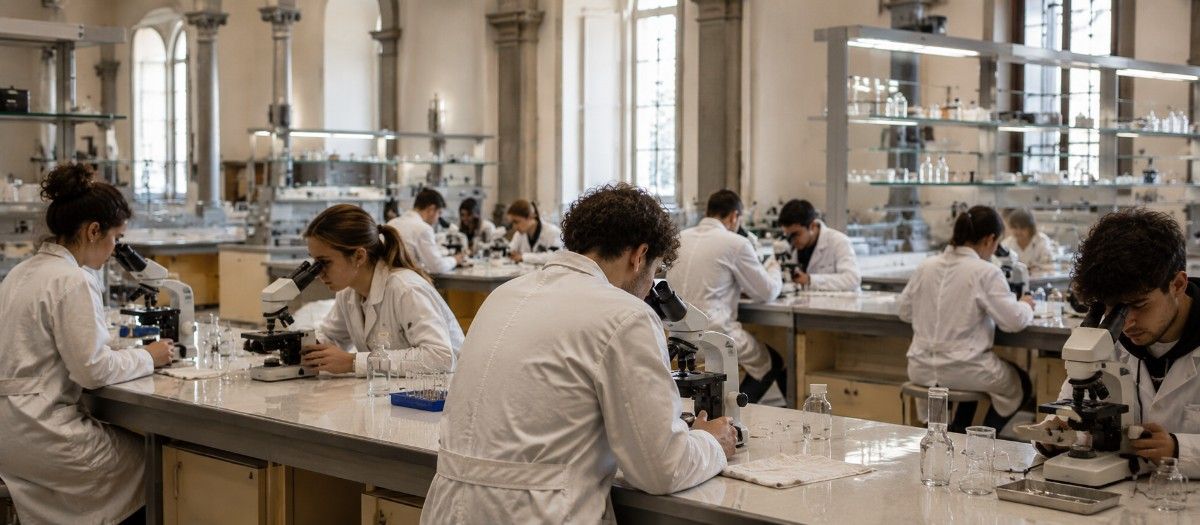
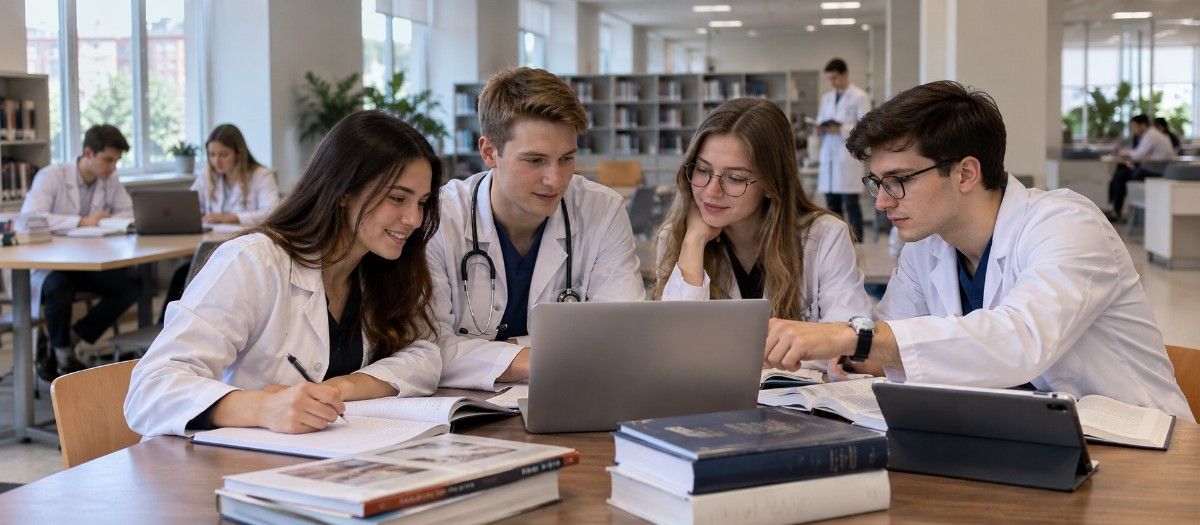
Furnished hostel rooms with Wi-Fi, laundry, 24/7 security, and Indian mess on or near campus.
Indian restaurants and mess facilities serving vegetarian and non-vegetarian home-style food daily.
Strong Indian community with cultural events, festival celebrations, and peer support groups.
Students get hands-on clinical training in government and private hospitals affiliated with the university.
Practical information for students planning to study at MBBS in University of Pisa Faculty of Medicine and Surgery.
Prepare for all seasons. Thermal wear for winters, light clothing for summers. University provides heating in hostels.
Student visa processed with university invitation letter. Direct and connecting flights from major Indian cities.
Health insurance included in fees. Medical facility on campus plus city hospitals easily accessible.
Local SIM cards available. WhatsApp and video calls keep you connected with family back home.
Average monthly expenses of $150–$250 covering food, transport, and personal needs.
University library, online databases, and study groups. Seniors mentor juniors through academic challenges.
Our team guides you through every step — from application to arriving on campus.
Our Italy specialist explains the IMAT process, the income-based fee system, Bologna vs Rome vs other universities, and a total cost comparison with Hungary and Poland.
Our team registers you for IMAT (September test) and begins structured coaching. Biology, Chemistry, Physics, Maths, Critical Thinking. Begin preparation at least 6 months before the test.
Full Italian visa and IMAT application document set academic certificates, income documentation if applicable.
IMAT taken at designated test centres. We provide post-test analysis and guidance on university rankings.
Following IMAT ranking, the Italian university issues an admission confirmation. Our team can help with this process.
Full documentation submitted to the Italian Embassy or Consulate. Begin immediately after receiving the admission letter.
Our team advises qualifying families on the income-based fee reduction process.
Bologna /Rome orientation, accommodation, portico culture, Italian transport, Trenitalia app, banking, SIM card.
Our local team in Bologna (BLQ) or Rome (FCO) meets you and manages the first-week settlement.
We manage the Permesso application at the local Post Office within 8 days of arrival with our support, which is renewed annually.
Admission Helpline — Contact our counsellors for step-by-step assistance.
“The faculty here is incredibly supportive. The clinical training during hospital rotations has given me real confidence in patient care.”
“Affordable fees without compromising on quality. The campus facilities and hostel life made my transition abroad very smooth.”
“English medium instruction and WHO-recognized curriculum were the deciding factors for me. No regrets so far — excellent experience overall.”
“The university helped with everything from visa to accommodation. Hospital exposure from year three has been invaluable for my FMGE prep.”
“Just cleared my licensing exam on the first attempt. The structured coaching and mock exams during final year were a game-changer.”
“Safe campus, good food options, and a strong Indian student community. The teaching methodology is very practical and hands-on.”
It was founded in 1343 by papal bull, with legal instruction documented even earlier, from the 12th century.
Officially it's now the Scuola di Medicina, following a national 2010 reform, though 'Facoltà' remains common informal usage.
He initially enrolled with medicine in mind but shifted decisively to mathematics, so his legacy belongs more to that field.
No dedicated English-taught medicine track was found, though this wasn't ruled out with complete certainty.
Through the national semestre filtro system, which Pisa's own page calls "Semestre Aperto": open enrolment, then three common exams determining national ranking.
Exact figures weren't confirmed in research; third-party estimates suggest a no-tax threshold around ISEE EUR 26,000-27,000, but confirm directly with the university.
Across Ospedale Santa Chiara and Ospedale Cisanello, set to consolidate onto one site around 2026-2027.
Yes, reported among Italy's top hospitals in secondary coverage of national rankings.
No, not automatically. India's standard foreign-degree licensing route, including NExT, would still apply.
Public, operating under Italy's national higher education framework.

Our expert counsellors will guide you through the complete admission process — from documents to airport pickup.